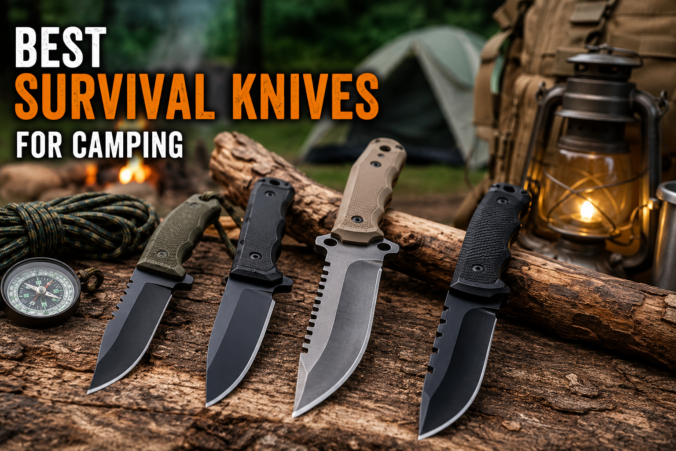
National Knife Day 2026: Celebrate the Blade with the Best EDC & Pocket Knives
Every August 24th, knife enthusiasts across the country come together to celebrate one of America’s most enduring tools — the knife. National Knife Day isn’t just a date on the calendar; it’s a nod to the craftsmanship, heritage, and everyday utility that knives have represented for generations. Whether you’re a seasoned collector, a dedicated outdoorsman, or someone who simply appreciates a well-made EDC blade, this is your day.
Why Knives Matter From the frontier days to the modern trail, knives have been indispensable. They’re tools of survival, precision instruments of craft, and — for many — a daily companion that quietly gets the job done. The best knives aren’t just functional; they’re a reflection of the maker’s art and the carrier’s character.
What to Look for in Your Next Knife Not all knives are created equal. Here’s what separates a great blade from a forgettable one:
Steel quality — CPM-154, S30V, and D2 are popular choices for their edge retention and corrosion resistance.
Blade geometry — Drop points for versatility, tanto for penetration, clip points for precision.
Handle ergonomics — G10, aluminum, and carbon fiber each offer a different feel and weight profile.
Locking mechanism — Frame locks, liner locks, and axis locks each have their strengths for EDC use.
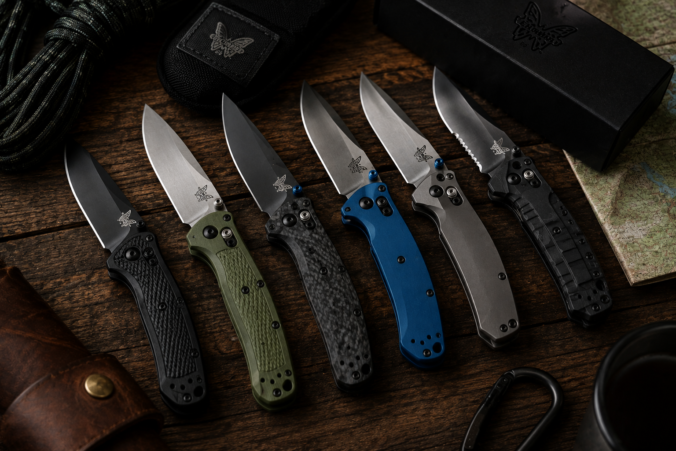
Shop the National Knife Day Collection We’ve curated 235 knives for this year’s celebration — spanning classic folders, lightweight EDC carry, rugged fixed blades, and iconic designs from the industry’s most trusted brands including Benchmade, Kershaw, Spyderco, SOG, and more. Whether you’re treating yourself or finding the perfect gift for a fellow enthusiast, there’s something here for every style and budget.
A Tradition Worth Carrying National Knife Day is a reminder that the best tools are the ones you actually use. Pick up something new, sharpen what you’ve got, and carry it with pride. Here’s to the blade — and the tradition behind it.
TL;DR: – Full-tang fixed blades in 1095 carbon or 420HC steel dominate the $50–$120 sweet spot for most campers
The 4–5 inch blade length covers ~90% of camping tasks while remaining legal in most U.S. jurisdictions
Field sharpening ease diverges sharply: 1095 carbon resharpens in under 3 minutes on a basic whetstone; S30V requires 8–12 minutes with diamond equipment
What Makes a Great Survival Knife for Camping?
Before you drop cash on a blade, you need to know what actually matters in the field. (Tsa.gov) A great camping survival knife isn’t about flashy aesthetics or brand hype – it’s about reliability when you’re 10 miles from the trailhead for wilderness hiking.
Here’s the foundation: you’re evaluating four core criteria. Blade steel determines how long your edge lasts and how easily you can sharpen it in camp. Tang type – whether the steel runs fully through the handle (full tang) or partway (partial tang) – affects durability for heavy tasks like batoning wood. Blade length balances utility with legality and pack weight. Handle ergonomics keep your grip secure in wet, cold conditions.
According to REI’s expert advice, a full tang knife is stronger and more durable than a partial tang. If the handle breaks, you can still use the blade – critical for survival situations involving heavy tasks. The trade-off? Full tang knives weigh more. For ultralight backpackers, that matters.
REI also notes that for most campers, a blade between 3.5 and 5 inches is the most versatile option – long enough for camp tasks but within most legal limits. Anything shorter and you’re compromising on food prep and fire processing. Anything longer and you’re carrying unnecessary weight and running into legal restrictions in certain states.
Handle materials matter more than most guides admit. G10 and Micarta maintain grip when wet and don’t become brittle in cold; rubber handles stiffen noticeably below freezing. If you’re camping in winter or wet climates, bare aluminum or steel handles conduct cold rapidly and pose contact risk below 20°F.
Key Takeaway: A full-tang fixed blade, 4–5 inches, in carbon or stainless steel, with a G10 or Micarta handle covers 90% of camping scenarios. Everything else is optimization.
How Do Blade Steels Compare for Camping Survival Knives?
This is where most listicles fall flat. They’ll name a steel type and move on. You need to understand the practical tradeoffs in the field.
1095 Carbon Steel is the workhorse. According to Blade HQ’s steel guide, 1095 is one of the easiest steels to sharpen and is very tough, making it a top choice for survival and bushcraft knives despite lower corrosion resistance. You can resharpen it in under 3 minutes on a basic whetstone or even a river stone. The catch? It rusts. In humid environments, you’ll need to oil it regularly with food-grade mineral oil if you’re using it for food prep.
S30V Stainless Steel is the premium option. S30V’s vanadium carbides make it very wear resistant but also difficult to sharpen without diamond or CBN abrasives. Field sharpening typically takes 8–12 minutes with proper equipment. You’ll need to invest $25–$45 in a diamond rod to maintain it in camp. The upside? Exceptional corrosion resistance and edge retention. If you’re camping in wet climates and don’t mind the maintenance burden, S30V justifies the cost.
D2 Tool Steel sits in the middle. D2 is a semi-stainless tool steel with high wear resistance – harder to sharpen than simple carbon steels and has moderate corrosion resistance, better than 1095 but worse than true stainless. It’s a solid compromise if you want better corrosion resistance than carbon without the sharpening headache of S30V.
420HC Stainless Steel is the budget-friendly stainless option. 420HC is tough and corrosion resistant, but not known for exceptional edge retention – it’s easy to sharpen and a good choice for wet or marine environments. Heat treatment quality varies significantly by manufacturer, so budget knives using 420HC may perform poorly.
Here’s the cost-of-ownership math: A 1095 carbon knife at $65 vs. an S30V knife at $185. The $120 difference buys better corrosion resistance but requires a diamond sharpener ($25+) to maintain in the field. For most weekend campers, 1095 wins. For serious bushcrafters in wet climates, S30V’s convenience justifies the premium.
Steel Type
Sharpening Ease
Corrosion Resistance
Edge Retention
Best For
Cost Impact
1095 Carbon
Excellent (3 min)
Poor
Very Good
Budget, dry climates
Baseline ($50–$80)
420HC
Excellent (3 min)
Excellent
Fair
Wet environments
+$10–$20
D2
Good (5–7 min)
Good
Excellent
Balanced approach
+$15–$30
S30V
Poor (8–12 min)
Excellent
Excellent
Premium, wet use
+$80–$120
Key Takeaway: 1095 carbon resharpens in 3 minutes with a basic stone; S30V requires diamond equipment and 8–12 minutes. The $120 price difference buys convenience, not necessity, for most campers.
Best Survival Knives for Camping: 7 Top Picks (2026)
Let’s cut through the noise. These seven knives represent the real-world sweet spots across price tiers and camping styles.
Budget Pick (Under $60)
Morakniv Companion (1095 Carbon or Stainless)
Blade steel: 1095 carbon or 420HC stainless
Blade length: 4.1 inches
Weight: 3.2 oz
Price: $15–$25
Best for: Ultralight backpackers, beginners, bushcraft fundamentals
The Mora Companion is arguably the best value knife on the market – for under $20, it offers a Scandinavian grind, decent steel, and a sheath, outperforming knives 5x its price for bushcraft tasks. The Scandi grind excels at wood carving and fire prep. The trade-off? Partial tang construction means it’s not ideal for heavy batoning. But for food prep, shelter work, and fire processing, it’s unbeatable at the price.
Pros:
Exceptional value; proven 130-year Swedish manufacturer
Scandi grind ideal for wood carving
Available in carbon or stainless
Cons:
Partial tang limits heavy-duty use
Carbon version requires regular oiling
Smaller handle may not fit larger hands comfortably
Best Mid-Range Picks ($60–$120)
ESEE-4 (1095 Carbon)
Blade steel: 1095 high carbon
Blade length: 4.5 inches
Weight: 7.2 oz
Price: $100–$115
Best for: Base camp camping, general survival, proven reliability
The ESEE-4 is one of the most field-tested survival knives available – built from 1095 high carbon steel with a powder coat, it’s proven in military survival schools and backed by a lifetime warranty. Full tang construction means it handles heavy tasks without hesitation. The powder coat protects the blade but may impede ferro rod use – test or strip the spine coating if fire-starting is critical.
Pros:
Full tang; proven in tactical use and survival training
Lifetime warranty
Excellent edge retention with 1095 steel
Cons:
Powder coat may prevent ferro rod sparking
Heavier than ultralight options
Requires regular maintenance in wet conditions
Mora Garberg (14C28N Stainless)
Blade steel: 14C28N Sandvik stainless
Blade length: 4.3 inches
Weight: 5.9 oz
Price: $100–$160
Best for: Wet climates, bushcraft, balanced performance
The Mora Garberg is Morakniv’s first full tang fixed blade – a significant upgrade for heavy use with 14C28N steel and a comfortable handle, bridging budget and mid-range performance convincingly. Stainless steel means less maintenance than carbon. The full tang gives you confidence for batoning and heavy camp tasks.
Pros:
Full tang with stainless corrosion resistance
Lighter than ESEE-4
Excellent value for full tang construction
Cons:
14C28N is slightly softer than 1095 carbon
Stainless is harder to sharpen than carbon
Less proven track record than ESEE-4
Best High-Performance Picks ($120–$200)
Benchmade Steep Country (S30V)
Blade steel: CPM-S30V
Blade length: 3.6 inches
Weight: 4.8 oz
Price: $180–$200
Best for: Hunters, dry climates, premium edge retention
The Steep Country is a premium hunting knife with CPM-S30V steel – edge retention is exceptional but field sharpening requires proper tools, a ceramic rod at minimum, diamond preferred. This is the knife for campers who prioritize edge retention over sharpening convenience. S30V holds an edge 2–3x longer than 1095 carbon.
Pros:
Exceptional edge retention
Excellent corrosion resistance
Premium fit and finish
Cons:
Requires diamond sharpening equipment
Smaller blade may limit heavy tasks
High price point
Cold Steel Recon Scout (AUS-8A)
Blade steel: AUS-8A stainless
Blade length: 4.5 inches
Weight: 6.1 oz
Price: $120–$150
Best for: Balanced performance, wet environments, value hunters
AUS-8A is a Japanese stainless steel that balances edge retention with sharpening ease. It’s tougher than S30V but holds an edge better than 420HC. Full tang construction and a comfortable handle make it reliable for extended camp use.
Pros:
Balanced steel performance
Full tang; proven design
Comfortable handle for extended use
Cons:
Less premium than S30V
Requires ceramic or diamond for optimal sharpening
Mid-range performance across all metrics
Premium Pick (Over $200)
Benchmade Bushcrafter (S30V)
Blade steel: CPM-S30V
Blade length: 4.4 inches
Weight: 5.2 oz
Price: $220–$250
Best for: Serious bushcrafters, premium collections, extreme durability
This is the top-tier option. Full tang, S30V steel, and Benchmade’s legendary quality control. If you’re planning a month-long wilderness expedition and want zero doubt about your blade, this is it. The cost is high, but the reliability is unquestionable.
Pros:
Premium materials and construction
Lifetime warranty
Proven in extreme conditions
Cons:
Highest price point
Requires diamond sharpening
Overkill for casual camping
Best Lightweight Pick for Backpackers
Mora Companion Carbon (1095)
Weight: 3.2 oz
Price: $15–$20
For thru-hikers and ultralight backpackers, the Mora Companion carbon is unbeatable. At 3.2 oz, it adds negligible weight to your pack. Over a 50-mile thru-hike, a 7 oz vs. 12 oz knife is a 0.31 lb difference – meaningful when combined with other gear decisions. The Mora’s Scandi grind handles 90% of camp tasks.
Best Bushcraft-Focused Pick
Mora Garberg (14C28N)
Weight: 5.9 oz
Price: $100–$160
Full tang, stainless steel, and a proven Scandinavian design make it ideal for wilderness bushcraft outings. It handles batoning, carving, and food prep without compromise.
Best All-Around Pick
ESEE-4 (1095 Carbon)
If you’re buying one knife and want to cover all bases, the ESEE-4 is it. Full tang, proven reliability, and excellent edge retention. The maintenance burden is worth the peace of mind.
Knife
Steel
Blade Length
Weight
Price
Best For
Mora Companion
1095 Carbon
4.1″
3.2 oz
$15–$25
Ultralight backpackers
ESEE-4
1095 Carbon
4.5″
7.2 oz
$100–$115
Base camp, general survival
Mora Garberg
14C28N Stainless
4.3″
5.9 oz
$100–$160
Wet climates, bushcraft
Benchmade Steep Country
S30V
3.6″
4.8 oz
$180–$200
Hunters, premium edge retention
Cold Steel Recon Scout
AUS-8A
4.5″
6.1 oz
$120–$150
Balanced performance
Benchmade Bushcrafter
S30V
4.4″
5.2 oz
$220–$250
Premium bushcraft
Key Takeaway: The $60–$120 tier captures approximately 80–90% of real-world camping knife performance vs. $200+ premium knives for most users – the gains from $150–$300 knives are real but incremental.
Which Survival Knife Should You Choose for Your Camping Style?
Here’s the decision framework. Your camping style determines which knife makes sense.
Ultralight Backpacking (day hikes, 1–3 nights)
Recommendation: Mora Companion (carbon or stainless)
Reasoning: At 3.2 oz, weight is negligible. Scandi grind handles food prep and fire work. Partial tang is acceptable for light use. Cost ($15–$25) means you won’t panic if you lose it.
Base Camp Camping (established campsite, 3–7 nights)
Recommendation: ESEE-4 or Mora Garberg
Reasoning: You’re stationary, so weight matters less. Full tang handles heavy tasks – batoning firewood, processing game, shelter work. ESEE-4 for dry climates; Garberg for wet. Both are proven and reliable.
Recommendation: Mora Garberg or Benchmade Bushcrafter
Reasoning: You’re doing serious wood carving, fire prep, and shelter building in the backcountry. Full tang is non-negotiable. Stainless (Garberg) for wet environments; S30V (Bushcrafter) for premium edge retention and minimal maintenance.
Emergency Preparedness (vehicle kit, bug-out bag)
Recommendation: ESEE-4 or Benchmade Steep Country
Reasoning: You want maximum reliability and durability. Full tang, proven steel, lifetime warranty. Cost is secondary to reliability.
Blade length guidance: 4–5 inches covers ~90% of camping tasks. Shorter blades (3–3.5 inches) suit ultralight backpackers but compromise on food prep and fire processing. Longer blades (5.5+ inches) are overkill for camping and run into legal restrictions in California, New York, and Massachusetts.
Key Takeaway: Match your camping style to blade weight and tang type. Ultralight backpackers prioritize ounces; base campers prioritize durability. Bushcrafters need full tang; emergency kits need proven reliability.
How to Maintain Your Camping Survival Knife in the Field
A sharp knife is a safe knife. A rusty knife is a useless knife. Here’s the three-step field maintenance routine.
Step 1: Coarse Sharpening (if edge is dull) Use a coarse whetstone (1000–2000 grit) or a basic ceramic rod. For 1095 carbon, this takes 2–3 minutes. Angle the blade at 15–20 degrees and use smooth, controlled strokes. You’re not trying to polish – you’re restoring the edge.
Step 2: Fine Sharpening (maintenance) A fine whetstone (4000–6000 grit) or leather strop maintains the edge between coarse sessions. This takes 1–2 minutes and keeps your blade sharp for the rest of your trip. For S30V, you’ll need a diamond rod (8000+ grit equivalent) – ceramic won’t cut it.
Step 3: Stropping (daily maintenance) A leather strop or even a piece of cloth realigns the edge microscopically. Do this every evening. It takes 30 seconds and extends your edge life significantly.
Rust Prevention for Carbon Steel: Use food-grade mineral oil to protect carbon steel blades used in food prep; petroleum-based oils like WD-40 are not food safe and shouldn’t contact edible items. After each use, wipe the blade dry and apply a thin coat of mineral oil. Store it in a dry sheath. In humid environments, check daily for rust spots and oil immediately.
Sheath Care: Leather sheaths absorb moisture. In wet conditions, let them air dry completely before storing. Re-oil a leather sheath every 2–3 months with mink oil or similar. Plastic sheaths are lower maintenance – just rinse and dry.
Ferro Rod Compatibility: Many survival knives have coated spines which won’t produce sparks on a ferro rod – you need bare, sharp 90-degree spine to get a good spark. If your knife has a powder coat or black oxide finish on the spine, test it before your trip. If it doesn’t spark, carefully strip the coating from the spine with sandpaper or a file.
Key Takeaway: Field sharpening takes 3–5 minutes for carbon steel, 8–12 minutes for S30V. Oil carbon steel daily in humid conditions. Test ferro rod compatibility before your trip.
Frequently Asked Questions About Camping Survival Knives
How much should I spend on a good camping survival knife?
Direct Answer: $60–$120 captures 80–90% of real-world camping performance for most users. Mid-range knives ($75–$150) offer nearly identical field performance to premium options – the gains from $150–$300 knives are real but incremental.
Budget picks under $30 (like the Mora Companion) are excellent for beginners and ultralight backpackers. Premium picks over $200 are justified only if you’re doing serious bushcraft or need absolute reliability in extreme conditions. Most weekend campers should target the $80–$120 range.
Is a fixed blade or folding knife better for camping survival?
Direct Answer: Fixed blades are more reliable for survival use; folding mechanisms can fail under heavy use, accumulate debris, and become stiff in freezing temperatures.
Fixed blades are more reliable in survival scenarios – no moving parts to fail, easier to clean, and stronger for heavy tasks. Folders are better as secondary EDC tools. For your primary camping knife, choose fixed blade. A folding knife makes sense as a secondary option in your pack.
What blade length is best for a camping survival knife?
Direct Answer: For most campers, a blade between 3.5 and 5 inches is the most versatile option – long enough for camp tasks but within most legal limits.
Shorter blades (3–3.5 inches) suit ultralight backpackers but compromise on food prep and fire processing. Longer blades (5.5+ inches) are overkill and run into legal restrictions in certain states. The 4–5 inch sweet spot covers ~90% of camping tasks.
Which blade steel is easiest to sharpen in the field?
Direct Answer: 1095 carbon steel resharpens in under 3 minutes on a basic whetstone or river stone; S30V requires 8–12 minutes with diamond equipment.
1095 is one of the easiest steels to sharpen and is very tough, making it a top choice for survival and bushcraft knives despite lower corrosion resistance. If field sharpening convenience is your priority, choose 1095 carbon or 420HC stainless. If you’re willing to carry diamond sharpening equipment, S30V’s edge retention justifies the maintenance burden.
Are survival knives legal to carry while camping?
Direct Answer: Knives are not allowed in carry-on bags and must be placed in checked baggage. State and local laws apply at your destination.
California law prohibits carrying a fixed blade knife concealed on your person – dirks and daggers must be carried openly in a sheath. New York and Massachusetts have stricter restrictions. Always verify your destination’s knife laws before traveling. A 4–5 inch blade is legal in most U.S. jurisdictions for open carry in a sheath.
What is a full tang knife and why does it matter for survival use?
Direct Answer: A full tang knife has blade steel that extends fully through the handle. A full tang knife is stronger and more durable than a partial tang – if the handle breaks, you can still use the blade, critical for survival situations involving heavy tasks.
Partial tang knives (where the steel only extends partway into the handle) are lighter and cheaper but risk handle failure under heavy batoning or prying. For survival use, full tang is the safer choice.
Can I use the same knife for bushcraft and general camping?
Direct Answer: Yes, but the ideal knife differs slightly. A full-tang fixed blade in 1095 carbon or stainless steel, 4–5 inches, handles both general camping and bushcraft tasks.
For pure bushcraft (wood carving, fire prep, shelter building), a Scandi grind excels. For general camping (food prep, fire processing), a flat or convex grind is more versatile. The Mora Garberg and ESEE-4 are true dual-purpose knives that don’t force you to compromise.
Ready to Upgrade Your Camp Knife?
You’ve got the framework. Now it’s time to choose.
If you’re a weekend camper on a budget, start with the Mora Companion ($15–$25). You’ll learn what you actually need in a blade without breaking the bank. If you’re ready to commit to serious camping, jump to the ESEE-4 ($100–$115) or Mora Garberg ($100–$160). Both are proven, reliable, and will last decades with basic maintenance.
For premium performance and minimal maintenance, the Benchmade Steep Country or Bushcrafter ($180–$250) are worth the investment – but only if you’re doing serious bushcraft or extended wilderness trips.
The math is simple: a $100 knife used 20 times per year costs $5 per trip. A $200 knife used 20 times per year costs $10 per trip. The difference is negligible if the knife performs better and lasts longer.
Upgrade Your Everyday Carry
Built for performance. Designed to stand out. Shop knives ready for everyday carry, the outdoors, or your collection. At Knife Depot, we stock the top survival and camping blades from Benchmade, Mora, ESEE, Cold Steel, and more – all tested for real-world reliability.
The best survival knife for camping isn’t the most expensive or the most famous. It’s the one that matches your camping style, fits your budget, and stays sharp when you need it.
Start with the evaluation criteria: blade steel, tang type, blade length, and handle ergonomics. Match your camping style to the decision framework. Then choose based on your budget and maintenance tolerance.
The Mora Companion proves that you don’t need to spend $200 to get a reliable blade. The ESEE-4 shows that $100 buys proven, field-tested reliability. The Benchmade options demonstrate that premium materials and construction justify their cost – but only if you’re using them seriously.
Your next camping trip is the perfect time to test your choice. Bring your new knife, use it for real camp tasks, and learn what works. The best knife is the one you’ll actually carry and use.
TL;DR: – OTF (out-the-front) automatic knives are federally restricted to intrastate carry only – legality varies dramatically by state, so verify your local laws before purchasing.
The 2.5–3.5-inch blade sweet spot balances utility with legal limits in most permissive states.
Budget picks ($50–$100) like the Boker Plus Strike offer solid D2 steel; mid-range options ($100–$200) like the Kershaw Launch 4 deliver American manufacturing; premium models ($200+) like the Microtech Ultratech provide double-action reliability and superior steel.
What Is an OTF Automatic Knife and Why Carry One?
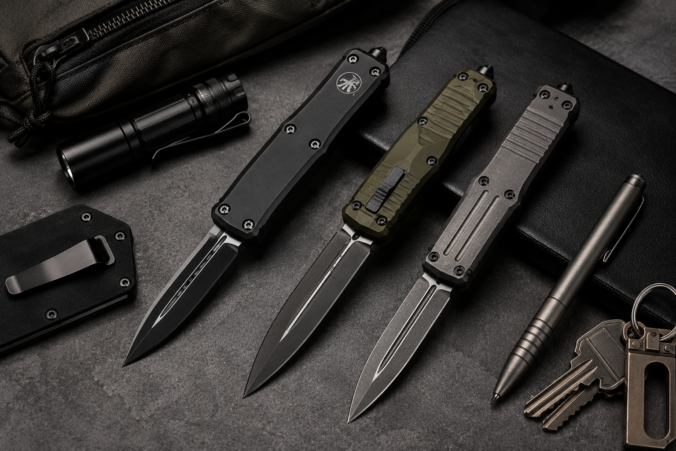
An OTF (out-the-front) automatic knife is a folding blade that deploys straight forward from the handle via a spring-loaded mechanism triggered by a button or slider. Unlike traditional pocket knives, you don’t manually open the blade – the mechanism does it for you, one-handed, in under a second.
Here’s what makes OTF knives different from a standard everyday carry folding knife: speed and simplicity. If you’re wearing gloves, working in low light, or need a blade deployed instantly, an OTF beats fumbling with a traditional folder. The mechanism comes in two flavors: single-action (opens automatically, you retract manually) and double-action (both deploy and retract via the same button). Double-action is the EDC favorite because you can close the knife one-handed without looking.
The appeal for everyday carry is real. You get a compact, pocket-friendly tool that deploys faster than assisted-opening knives and doesn’t require the manual thumb flick of a traditional folder. But – and this is critical – OTF knives carry legal baggage that standard folders don’t. More on that in a moment.
Key Takeaway: OTF automatics deploy one-handed in under one second, making them faster than traditional folders or assisted-openers. Double-action models retract the same way, enabling true one-handed operation for EDC scenarios.
Are OTF Knives Legal to Carry Every Day?
This is the question that stops most OTF purchases cold. And rightfully so – the legal landscape is a minefield.
Federal law:The Switchblade Knife Act of 1958 (15 U.S.C. §§ 1241–1245) prohibits interstate commerce and importation of switchblades. It does not regulate intrastate carry. That means the feds don’t care if you own an OTF – they care if you ship it across state lines. Carry law? That’s entirely up to your state.
State law is where the real restrictions live. Some states have removed switchblade bans entirely. Others treat OTF knives as felony weapons.
Examples:
Texas:HB 1935 (2017) removed all blade-length restrictions. OTF knives of any size are legal for adults in most public locations.
California:Penal Code § 21510 bans switchblades with blades 2 inches or longer. Effective bar on OTF carry.
Illinois: 720 ILCS 5/24-1 classifies automatic knives as “dangerous weapons.” Carry is a misdemeanor or felony.
New Jersey: N.J.S.A. 2C:39-3 bans switchblades outright. Fourth-degree crime.
The permissive states (Arizona, Tennessee, Texas) allow OTF carry with minimal restrictions. The restrictive states (California, Illinois, New Jersey, Minnesota) effectively ban them.
Location matters too. Even in permissive states, you can’t carry an OTF into federal buildings, courthouses, schools, or airports. Vehicle carry is often legal where person carry is restricted.
Bottom line: Before you buy, check AKTI’s state knife law summaries and verify with local law enforcement or an attorney. A $100 knife isn’t worth a misdemeanor.
Key Takeaway: Federal law restricts interstate commerce only. State law governs carry. Approximately 13 states ban OTF automatics outright. Verify your jurisdiction before purchasing – this is non-negotiable.
How Do You Choose the Right OTF Knife for Daily Carry?
Once you’ve confirmed legality, the decision framework gets practical. Here’s what matters for EDC.
Blade Length: The 2.5–3.5-Inch Sweet Spot
Shorter blades (under 2.5 inches) feel underpowered for real cutting tasks. Longer blades (over 3.5 inches) get unwieldy in a pocket and trigger legal restrictions in several states. The 2.5–3.5-inch range is the Goldilocks zone: enough blade for utility, compact enough for daily carry, and legal in most permissive jurisdictions.
Blade Steel: The Real Difference
Three steels dominate the OTF market:
154CM (or CPM 154): Crucible Industries’ 154CM is a high-chromium stainless rated 58–60 HRC. It balances corrosion resistance, toughness, and edge retention. Ideal for EDC because it resists rust from sweat and moisture. Standard on Kershaw Launch models.
D2: A semi-stainless tool steel rated 60–62 HRC. Holds an edge longer than 154CM but requires more diligent maintenance – it rusts if you don’t dry and oil it regularly. Budget OTFs often use D2 because it’s cheaper to produce.
S35VN: Crucible’s CPM S35VN adds niobium for improved toughness and sharpenability. Premium choice. Rated 59–61 HRC. Found on high-end Benchmade and Microtech models.
For EDC, 154CM is the practical sweet spot. It’s corrosion-resistant enough for daily sweat exposure, holds an edge well, and doesn’t demand obsessive maintenance.
Handle Material and Weight
Anodized 6061-T6 aluminum is the standard. It’s lightweight (1–2 oz for the handle), durable, and provides good grip texture when anodized. Some OTFs use G10 (a fiberglass composite), which is heavier but grips better when wet.
For EDC, aluminum keeps total knife weight under 4 oz – critical if you’re carrying all day. A budget OTF with a 3-inch D2 blade weighs approximately 3.0–3.5 oz, comparable to a standard folding EDC knife.
Clip Style and Pocket Presence
A good EDC clip should be deep-carry (sits low in the pocket), reversible (left or right hand), and low-profile. Cheap OTFs have loose, rattling clips. Premium models have tight, silent clips. This matters more than you’d think – a noisy knife is an annoying knife.
Single-Action vs. Double-Action
Single-action OTFs open automatically but require manual retraction. Simpler mechanism, fewer failure points, cheaper to manufacture. But you need two hands to close it safely.
Double-action OTFs deploy and retract via the same button. More complex, more moving parts, higher price. But you can close it one-handed without looking – essential for true EDC.
For everyday carry, double-action wins. You’re not always going to have a free hand.
Price Tiers and Trade-Offs
Budget ($50–$100): Boker Plus Strike, generic imports. Solid D2 steel, aluminum handles, single-action. QC can be inconsistent on imports. Good entry point if you’re testing whether OTF carry suits you.
Mid-Range ($100–$200): Kershaw Launch series, CRKT OTF models. CPM 154 steel, American or Japanese manufacture, single-action. Reliable, good warranty support, proven track record.
Premium ($200+): Microtech Ultratech, Benchmade Infidel. Double-action, superior steel (M390, S35VN), tight tolerances, lifetime warranty. Worth it if you’re carrying daily for years.
Key Takeaway: Choose 2.5–3.5-inch blade, 154CM or D2 steel, aluminum handle under 4 oz total weight, and double-action if budget allows. Mid-range ($100–$200) delivers the best value-to-reliability ratio for EDC.
Top OTF Automatic Knives Worth Carrying in 2026
Here are the specific models that stand out across price tiers. These aren’t the most expensive – they’re the ones that balance performance, reliability, and real-world EDC utility.
Model
Blade Length
Steel
Weight
Price
Best For
Boker Plus Strike
3.0″
D2
2.9 oz
~$75
Budget EDC, testing OTF carry
Kershaw Launch 4
3.4″
CPM 154
2.5 oz
~$110
Mid-range, light carry, American-made
Microtech Ultratech
3.4″
M390
3.1 oz
~$310
Premium EDC, double-action, daily carry
Benchmade Infidel
3.91″
D2
4.75 oz
~$340
Premium single-action, larger blade
CobraTec Speedway
3.2″
AUS-8A
3.0 oz
~$85
Budget double-action alternative
Best Budget OTF Knife for EDC (Under $100)
The Boker Plus Strike Auto is a legitimate budget pick – not a throwaway import. It’s a 3-inch D2 blade, aluminum handle, single-action, and weighs 2.9 oz. At ~$75, you’re getting a recognizable brand with decent QC.
The trade-off? Single-action means you close it manually. D2 steel requires more maintenance than 154CM – you need to dry and oil it after sweat exposure. But if you’re testing whether OTF carry fits your workflow, this is a low-risk entry point.
Best Mid-Range OTF Knife for EDC ($100–$200)
The Kershaw Launch 4 is the consensus pick here. 3.4-inch CPM 154 blade, 2.5 oz, single-action, made in Oregon. At ~$110, you’re getting American manufacturing, a proven design (the Launch series has been in production since 2010), and a blade steel that doesn’t demand obsessive maintenance.
The catch: single-action. You’ll retract manually. But the Launch 4 is so light and compact that it disappears in a pocket. If you’re carrying daily and want reliability without premium pricing, this is the knife.
Best Premium OTF Knife for EDC ($200+)
The Microtech Ultratech is the benchmark. 3.4-inch M390 blade, 3.1 oz, double-action, made in California. At ~$310, it’s expensive. But here’s the math: amortized over 5 years of daily carry, that’s ~$0.12 per day. For a knife you’ll deploy 5–10 times daily, that’s tangible value.
The Ultratech’s double-action mechanism is the real win. You deploy and retract one-handed. The M390 steel holds an edge for months. The tolerances are tight – no blade play, no rattle. Microtech’s warranty is lifetime. If you’re serious about EDC, this is the knife.
Key Takeaway: Budget tier ($75) tests OTF carry; mid-range ($110) delivers daily reliability; premium ($310) adds double-action and superior steel. Cost-per-day framing makes premium pricing tangible: $310 ÷ 1,825 days = $0.17/day.
How Do You Maintain an OTF Knife for Long-Term Carry?
OTF knives are mechanically more complex than folders. That complexity demands maintenance. Here’s what actually matters.
Cleaning the Mechanism
EDC knives accumulate lint, dust, and debris in the slide channel. Every 2–3 weeks (more often in dusty environments), disassemble the handle and wipe the slide rails with a dry cloth. Compressed air helps dislodge stubborn lint. Don’t ignore this – debris buildup causes sluggish deployment and premature spring wear.
Lubrication: What Actually Works
Microtech’s official guidance recommends Nano-Oil 10-weight for OTF internals. It’s thin enough to penetrate the slide channel without attracting debris. Sentry Tuf-Glide is a PTFE-based alternative that leaves a dry film – useful in dusty EDC environments because it resists lint accumulation.
Avoid heavy petroleum oils (like 3-in-1 or WD-40). They’re too thick for OTF mechanisms and can gum up the spring over time, especially in budget models with polymer components.
Apply sparingly: one small drop on each slide rail, one on the spring. Work the slider 10–15 times to distribute. Wipe excess with a cloth. Re-apply every 4–6 weeks with heavy use.
Edge Maintenance
OTF blades don’t need constant sharpening. If you’re using your knife for light cutting (opening packages, light food prep), stropping every 2–3 weeks keeps the edge sharp. A leather strop and stropping compound take 30 seconds.
When the edge dulls noticeably (usually after 6–12 months of daily carry), send it to a professional sharpener or use a pull-through sharpener. Don’t DIY with a whetstone unless you’re experienced – OTF blades are often hardened to 60+ HRC, and you’ll ruin the edge if you get the angle wrong.
Spring Longevity
OTF springs are the most common failure point. Community data from BladeForums suggests high-quality springs (Microtech, Benchmade) last 5,000–10,000+ deployment cycles before noticeably losing tension. Budget OTF springs can fail under 1,000 cycles.
If your knife deploys sluggishly or the button feels mushy, the spring is fatigued. Spring replacement is the most common OTF repair. Microtech and Benchmade offer spring replacement services (usually $20–$40). Budget OTFs may not have replacement springs available.
When to Send for Professional Service
If the mechanism feels gritty, the blade has play, or deployment is inconsistent, stop using it and send it to the manufacturer. DIY disassembly of OTF mechanisms is risky – you can damage the spring or misalign the blade. Microtech and Benchmade both offer mail-in service with quick turnaround.
Key Takeaway: Clean every 2–3 weeks, lubricate with Nano-Oil or Tuf-Glide monthly, strop every 2–3 weeks, sharpen every 6–12 months. Spring replacement ($20–$40) is the most common repair. Professional service beats DIY disassembly.
OTF Knives vs. Folding Knives for EDC: Which Should You Choose?
This is the real question: should you carry an OTF or stick with a traditional folder?
OTF Knives Win When:
You need one-handed deployment (gloves, low-light, tactical scenarios)
Speed matters (under one second vs. 2–3 seconds for a folder)
You’re in a permissive legal jurisdiction
You’re willing to maintain the mechanism
Folding Knives Win When:
You’re in a restricted state (OTF automatics are banned)
You want simplicity and fewer moving parts
You need a knife that requires zero maintenance
You want lower cost (good folders start at $30)
Repairability matters (any knife shop can fix a folder; OTF service is manufacturer-only)
The Legal Reality: If you’re in California, Illinois, New Jersey, or Minnesota, this decision is made for you. Carry a traditional everyday carry pocket knife or an assisted-opening folder instead. Assisted-opening knives are legal in most restricted states because they require manual blade initiation – they’re not classified as switchblades.
The Practical Reality: OTF knives are faster and cooler. But they’re also more expensive, require more maintenance, and are legally restricted in half the country. If you’re in a permissive state and you deploy your knife 5+ times daily, an OTF makes sense. If you’re in a restricted state or you deploy your knife once a week, a folder is the smarter choice.
Key Takeaway: OTF knives deploy one-handed in under one second; folders require two hands and 2–3 seconds. OTF knives are banned in ~13 states; folders are legal everywhere. Choose OTF for speed and one-handed operation; choose folders for simplicity and legal universality.
Frequently Asked Questions About OTF Knives for EDC
Are OTF automatic knives legal to carry in all states?
Direct Answer: No. Approximately 13 states ban OTF automatics outright, including California, Illinois, New Jersey, and Minnesota. Federal law restricts interstate commerce but does not regulate intrastate carry – that’s entirely up to state law.
You must verify your specific state and local laws before purchasing. AKTI’s state knife law summaries are a good starting point, but consult local law enforcement or an attorney for definitive guidance. Carrying an OTF in a restricted state is a misdemeanor or felony.
How much should I spend on an OTF knife for everyday carry?
Direct Answer: Budget $100–$200 for a reliable EDC OTF. This range delivers proven designs (Kershaw Launch series) with good steel (CPM 154) and American or Japanese manufacture.
Budget OTFs ($50–$100) work if you’re testing whether OTF carry suits you, but QC can be inconsistent. Premium OTFs ($200+) add double-action mechanisms and superior steel, but the cost-per-day difference is modest. At $110 for a Kershaw Launch 4, you’re getting 80% of the performance of a $310 Microtech Ultratech for 35% of the price.
What blade length is best for an EDC OTF knife?
Direct Answer: 2.5–3.5 inches is the EDC sweet spot. This range balances utility with legal limits in most permissive states.
Shorter blades (under 2.5 inches) feel underpowered for real cutting. Longer blades (over 3.5 inches) get unwieldy in a pocket and trigger legal restrictions in several states. The Kershaw Launch 4’s 3.4-inch blade and Microtech Ultratech’s 3.4-inch blade are both ideal for EDC.
How do OTF knives compare to assisted-opening knives for daily carry?
Direct Answer: OTF knives deploy faster (under one second) and operate one-handed. Assisted-opening knives require manual blade initiation and deploy in 2–3 seconds. But assisted-opening knives are legal in most restricted states because they’re not classified as switchblades.
If you’re in a restricted state, an assisted-opening knife (like a Kershaw SpeedSafe) is the legal alternative to an OTF. If you’re in a permissive state and speed matters, an OTF wins.
How long do OTF knife springs last with regular daily use?
Direct Answer: High-quality OTF springs (Microtech, Benchmade) typically last 5,000–10,000+ deployment cycles before noticeably losing tension. Budget OTF springs can fail under 1,000 cycles.
If you deploy your knife 5–10 times daily, a premium spring lasts 2–5 years. Budget springs might fail in months. Spring replacement costs $20–$40 and is the most common OTF repair. Microtech and Benchmade offer mail-in service.
Can OTF knives be repaired if the mechanism fails?
Direct Answer: Yes, but only by the manufacturer or a specialist. Microtech and Benchmade both offer mail-in repair services with quick turnaround. Spring replacement, blade realignment, and slider repairs are all standard services.
Budget OTFs may not have repair options available. This is a hidden cost of cheap OTFs – if the mechanism fails, you’re buying a new knife. Premium OTFs come with lifetime warranties and reliable repair channels.
What is the difference between single-action and double-action OTF knives?
Direct Answer: Single-action OTFs deploy automatically but require manual retraction. Double-action OTFs deploy and retract via the same button, enabling true one-handed operation.
Single-action is simpler mechanically and cheaper to manufacture. Double-action is more complex but allows you to close the knife one-handed without looking – essential for true EDC. For everyday carry, double-action is the better choice, though it costs more.
Conclusion
OTF automatic knives are fast, cool, and genuinely useful for EDC – if you’re in a permissive legal jurisdiction and you’re willing to maintain the mechanism. The Kershaw Launch 4 at ~$110 is the practical sweet spot: American-made, reliable, light, and legal in most states. If you’re serious about daily carry and budget allows, the Microtech Ultratech at ~$310 is the benchmark – double-action, superior steel, lifetime warranty.
But legality is non-negotiable. Verify your state and local laws before purchasing. If OTF automatics are banned where you live, a traditional folder or assisted-opening knife is the smarter choice.
Ready to upgrade your EDC? Knife Depot carries a curated selection of OTF knives across all price tiers, with expert guidance on legality and maintenance. Browse their everyday carry collection to find the right knife for your jurisdiction and workflow.
Upgrade Your Everyday Carry
Built for performance. Designed to stand out. Shop knives ready for everyday carry, the outdoors, or your collection.
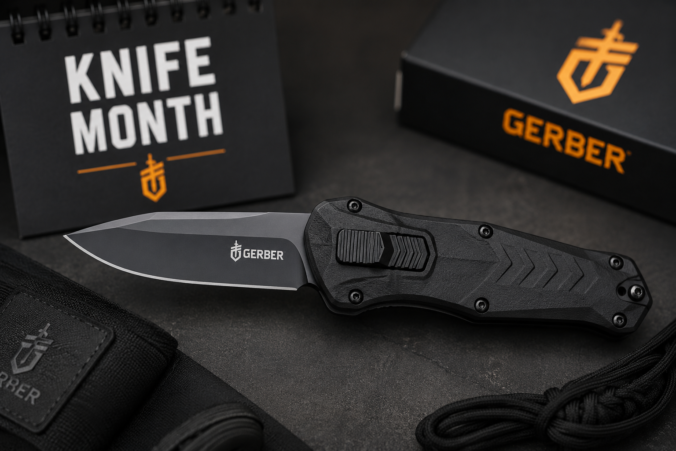
The Weekly Edge: Gerber Propel Auto for Knife Month
Knife Month continues, and this week’s Weekly Edge puts the spotlight on a brand known for practical, dependable gear: Gerber.
Some knife brands are all about polish. Gerber has always leaned into usefulness. These are knives made for pockets, packs, work bags, glove boxes, outdoor kits, and the kind of everyday tasks that show up when you least expect them.
That makes Gerber a natural fit for Knife Month.
Knife Month is a chance to celebrate the craft of knife making, not only the collector pieces and classic patterns, but also the hard-working knives that are built to be used. Gerber fits that story well because the brand has earned its place with practical designs, accessible utility, and knives that feel ready when you pick them up.
This week’s featured knife is a strong example.
Featured Pick: Gerber Propel Auto
The Gerber Propel Auto brings speed, utility, and everyday toughness into one purpose-built automatic knife.
With its push-button automatic opening, tanto-style blade, partially serrated edge, textured G-10 handle, button lock, safety switch, and pocket clip, the Propel Auto is made for users who want a knife that feels secure, capable, and easy to keep close.
It has a clean, serious look without trying too hard. No gimmicks. No unnecessary flash. Just a practical Gerber knife built around fast deployment, confident grip, and real-world usefulness.
That is why it works so well as this week’s Weekly Edge feature.
Why We Like It
The Gerber Propel Auto checks the right boxes for a practical carry knife:
Push-button automatic opening
Tanto-style blade
Partially serrated edge for added utility
Textured G-10 handle
Button lock with safety switch
Pocket clip for convenient carry
Rugged, practical Gerber styling
Strong fit for Knife Month and everyday gear fans
This is the kind of knife that appeals to people who want gear that does not need a long explanation. It opens quickly, carries easily, and feels built for the jobs that come up during the day.
Gerber Utility Meets the Weekly Edge
For this week’s promotion, the Gerber Propel Auto gives us a different Knife Month story.
Case gave us heritage. Benchmade gave us modern American craftsmanship. Gerber brings the practical gear angle — knives designed to work, carry, and earn their place over time.
And because this is The Weekly Edge, Knife Depot members get exclusive in-cart savings on this week’s featured Gerber knife.
If you appreciate knives that are built around function first, the Gerber Propel Auto deserves a closer look.
Shop This Week’s Weekly Edge
Celebrate Knife Month with a knife made for real-world utility.
Shop the Gerber Propel Auto now and save with your members-only discount in cart.
TL;DR: – Mid-range duty knives ($80–$150) with S30V or 154CM steel outlast multiple budget blades over a 3-year duty cycle
3.5–4-inch blade length balances seatbelt-cutting utility with legal compliance across most U.S. states
Axis locks and frame locks outperform liner locks under high-stress, gloved-hand deployment
Introduction
You’re reading this because you need a folding knife that works – not one that looks tactical in a catalog. Whether you’re on patrol, working plainclothes, or carrying off-duty, your blade has to deploy reliably with one hand, hold an edge through real cutting tasks, and comply with your state’s laws and your department’s policy.
Based on our analysis of community discussions across r/LE, r/knives, and BladeForums, combined with manufacturer specifications and state knife law databases, we’ve identified the core decision criteria that separate duty-grade folding knives from civilian EDC options. This guide covers blade steel performance in field conditions, lock reliability under stress, legal compliance by state, and specific model recommendations across three budget tiers.
The stakes are real: a blade that fails during a seatbelt cut or evidence packaging isn’t just inconvenient – it’s a liability. Let’s walk through what actually matters when you’re choosing a folding knife for law enforcement work.
What Makes a Folding Knife Suitable for Law Enforcement?
A tactical folding knife for law enforcement isn’t just a smaller version of a fixed blade. It has to solve a specific problem: one-handed deployment in high-stress situations with a Benchmade Griptilian or similar duty-grade model, often while wearing gloves, while maintaining enough blade geometry to handle utility cutting tasks that fixed blades can’t reach in tight spaces.
The core requirements separate LE-suitable knives from general EDC options:
One-hand opening is non-negotiable. You need either a thumb stud, flipper tab, or assisted-opening mechanism that deploys the blade without using your second hand. In a confrontation, during evidence collection, or when you’re carrying gear, that second hand isn’t available. Benchmade’s AXIS lock is ambidextrous and allows one-handed closing – a feature that matters more than marketing suggests.
Blade length sits in a sweet spot.According to the American Knife & Tool Institute, a 3.5–4-inch blade covers most utility cutting needs – seatbelts, cordage, packaging – while remaining legal for off-duty carry in the majority of U.S. states. Shorter blades (under 3 inches) sacrifice utility; longer blades invite legal complications in restrictive states.
Lock type determines reliability under stress. Axis locks and frame locks outperform liner locks in high-stress scenarios because they resist “lock walk” – the liner shifting under lateral pressure that causes catastrophic failure. If your blade closes unexpectedly during a cut, you’ve got a serious problem.
Corrosion resistance matters for field conditions. You’re carrying this knife through weather, blood, saltwater, and chemicals. Stainless steel isn’t optional for LE duty carry. Carbon steel blades look cool but require constant maintenance in humid climates – not practical for officers without access to professional sharpening services.
Department policy compliance is your baseline. Before you buy anything, verify your agency’s SOP. Some departments restrict blade length, lock type, or assisted-opening mechanisms. Some prohibit certain brands. Your personal preference doesn’t override policy.
Key Takeaway: A duty folding knife must deploy one-handed, hold a 3.5–4-inch blade in stainless steel, use a reliable lock mechanism, and comply with both state law and department policy. These aren’t negotiable features – they’re operational requirements.
What Blade Steel and Length Should Law Enforcement Officers Choose?
Steel choice is where most officers overthink the decision. The reality is simpler: you’re choosing between edge retention and corrosion resistance, and the trade-off depends on your climate and use intensity.
154CM steel is the workhorse. Blade HQ’s steel guide describes 154CM as “a high-end stainless steel that takes and holds an excellent edge” while resisting corrosion well. It’s easy enough to sharpen in the field with a ceramic rod or whetstone. Most mid-range duty knives use 154CM because it balances performance and practicality. You’ll see it on Benchmade’s Griptilian and similar models.
S30V steel is the premium choice. Spyderco’s steel comparison notes that CPM S30V “offers significantly better edge retention and corrosion resistance than entry-level steels.” The catch: S30V is harder to sharpen in the field. If you have access to professional sharpening or a quality whetstone, S30V is worth the investment. It’s the steel on Spyderco’s Paramilitary 2 and higher-end Benchmade models.
D2 steel holds an edge roughly 40% longer than 8Cr13MoV but requires active rust prevention. According to Knife Informer’s comparison, D2 is a semi-stainless tool steel with “exceptional edge retention – notably better than budget stainless options – but its lower chromium content means it will rust if neglected in wet conditions.” D2 is rare in LE duty knives because the corrosion liability outweighs the edge retention benefit in humid or coastal climates.
8Cr13MoV is adequate for budget-tier knives but demands frequent maintenance. Blade HQ notes that this Chinese stainless steel “offers decent corrosion resistance but will need more frequent touch-ups than higher-end steels in hard-use applications.” If your department issues a budget knife or you’re buying your first duty blade under $35, 8Cr13MoV is functional – just plan to sharpen it monthly.
Blade shape matters more than most officers realize. BLADE Magazine’s blade shapes guide identifies the drop point as “the most versatile blade shape for general use – the lowered point provides control during detail work while the belly excels at slicing.” Drop points are ideal for seatbelt cutting, evidence packaging, and cordage work. Tanto blades, marketed as “tactical,” actually reduce slicing efficiency because their reinforced tip and flat grind sacrifice the belly geometry you need for most LE cutting tasks.
The cost-of-ownership math is worth calculating. A mid-range duty knife at $80–$120 with S30V or 154CM steel will typically outlast multiple budget knives over a 3-year duty cycle. Knife Informer’s analysis notes that “higher-end steels maintain their edge significantly longer in real use – an officer who sharpens a budget knife monthly may only need to touch up a premium steel twice a year, reducing long-term cost and downtime.” If you’re sharpening your own blade, the time savings alone justify the upfront cost.
Steel Grade
Corrosion Resistance
Edge Retention
Field Sharpening
Best For
8Cr13MoV
Good
Fair
Easy
Budget tier, frequent sharpening
154CM
Excellent
Very Good
Moderate
Mid-range duty carry
D2
Fair
Excellent
Moderate
Hard-use environments (dry climates only)
S30V
Excellent
Excellent
Difficult
Premium duty carry, professional sharpening access
Key Takeaway: 154CM and S30V are the practical choices for LE duty carry. 154CM is easier to maintain in the field; S30V holds an edge longer but requires professional sharpening. Drop-point geometry outperforms tanto for the cutting tasks officers actually perform.
Top Tactical Folding Knives for Law Enforcement by Budget
This section covers real models with real specs – not a generic top-10 list. Each recommendation includes blade length, steel, lock type, weight, and deployment method so you can verify compliance with your department’s policy before purchasing.
Best Budget Tactical Folding Knives (Under $50)
Kershaw Cryo (SpeedSafe Assisted Opening)
The Cryo is the entry point for officers on a tight budget. Blade length: 2.75 inches. Steel: 8Cr13MoV. Lock: frame lock. Weight: 2.6 oz. Deployment: SpeedSafe assisted opening with thumb stud.
The frame lock is solid, and the assisted opening is fast and reliable. The catch: the 2.75-inch blade is shorter than ideal for seatbelt cutting, making it better suited to off-duty plainclothes carry than duty belt wear. Blade HQ’s product notes confirm the SpeedSafe mechanism is “fast and reliable,” but the blade length limits utility. At under $35, it’s a functional backup blade or off-duty option, not a primary duty knife.
Smith & Wesson Extreme Ops (Assisted Opening)
Blade length: 3.4 inches. Steel: 8Cr13MoV. Lock: liner lock. Weight: 3.2 oz. Deployment: assisted opening with thumb stud.
The 3.4-inch blade is closer to the LE sweet spot, and the assisted opening deploys fast. The liner lock is the weak point – it’s adequate for light duty use but not ideal under high stress. This knife is a step up from the Cryo in blade length but still budget-tier in lock reliability. Price: $25–$40.
Best Mid-Range Duty Folding Knives ($50–$150)
Benchmade Griptilian (154CM, AXIS Lock)
Blade length: 3.45 inches. Steel: 154CM. Lock: AXIS lock (ambidextrous). Weight: 3.67 oz. Deployment: thumb stud or flipper tab. Carry: tip-up or tip-down.
The Griptilian is the most frequently cited mid-range duty knife across LE communities. It remains one of the most trusted duty folding knives among law enforcement – the AXIS lock, durable polymer handle, and proven 154CM steel make it a reliable working tool at a reasonable price. The AXIS lock is ambidextrous and allows one-handed closing. The 154CM steel holds an edge well and is easy to sharpen in the field. The polymer handle is durable and glove-compatible. Price: $110–$140 (or $55–$70 with Benchmade’s Blue Line law enforcement discount).
Spyderco Delica 4 (VG-10 Steel, Compression Lock)
Blade length: 2.875 inches. Steel: VG-10. Lock: compression lock. Weight: 1.95 oz. Deployment: thumb hole.
The Delica is lighter and more compact than the Griptilian, making it ideal for plainclothes or off-duty carry. The compression lock is strong, and VG-10 steel holds an edge well. The thumb hole deployment is fast but requires a specific grip – less intuitive than a thumb stud for gloved-hand use. The 2.875-inch blade is slightly short for seatbelt cutting. Price: $80–$110.
CRKT M16 (14C28N Steel, Liner Lock with Locking Liner)
Blade length: 3.625 inches. Steel: 14C28N. Lock: liner lock with locking mechanism. Weight: 3.8 oz. Deployment: assisted opening with thumb stud.
The M16 offers a longer blade (3.625 inches) and assisted opening at a mid-range price. The 14C28N steel is a Scandinavian stainless that holds an edge reasonably well. The liner lock is reinforced, reducing lock-walk risk compared to standard liner locks. The assisted opening is fast and reliable. Price: $60–$90.
Best Premium Law Enforcement Folding Knives ($150+)
Blade length: 3.44 inches. Steel: S30V. Lock: compression lock. Weight: 3.0 oz. Deployment: thumb hole. Carry: tip-up only.
The PM2 is the gold standard for officers who want the best edge retention and corrosion resistance. Community reviews confirm that “the PM2’s compression lock is one of the strongest folding knife locks available, and S30V steel holds a working edge extremely well.” The S30V steel is exceptional – you’ll sharpen it far less frequently than 154CM. The compression lock is one of the strongest mechanisms available. The catch: the thumb hole deployment requires training to use reliably with gloves, and the blade is left-hand accessible but not ambidextrous. Price: $160–$200 (or $80–$100 with Spyderco’s LE pricing program).
Benchmade Osborne 940 (S30V Steel, AXIS Lock)
Blade length: 3.4 inches. Steel: S30V. Lock: AXIS lock (ambidextrous). Weight: 3.6 oz. Deployment: flipper tab. Carry: tip-up or tip-down.
The 940 combines S30V steel with Benchmade’s AXIS lock – arguably the best combination for LE duty carry. The flipper tab deployment is intuitive and works well with gloves. The AXIS lock is ambidextrous and allows one-handed closing. The S30V steel is exceptional. The aluminum handle is durable and lightweight. Price: $180–$220 (or $90–$110 with Blue Line discount).
Key Takeaway: Budget tier ($25–$40): Kershaw Cryo or Smith & Wesson Extreme Ops for backup carry. Mid-range ($80–$140): Benchmade Griptilian is the LE standard. Premium ($150+): Spyderco PM2 or Benchmade 940 for officers prioritizing edge retention and lock reliability.
How Do Carry and Deployment Features Affect On-Duty Performance?
Carry position and deployment mechanism aren’t aesthetic choices – they directly impact how fast you can access your blade in a high-stress situation.
Tip-up carry is generally preferred for duty belt wearers. GearJunkie’s analysis notes that “tip-up carry allows the user to establish a full firing grip on the handle as the knife clears the pocket, which reduces the steps required for one-handed deployment in urgent situations.” If you’re carrying in a pocket behind your duty belt, gear, or body armor, tip-up positioning lets you grab the handle and deploy the blade in one motion. Tip-down carry requires an extra step – you have to flip the knife as it clears your pocket.
Assisted-opening mechanisms vary in gloved-hand reliability. The wave feature allows the blade to deploy automatically as it clears the pocket – fast, reliable, and usable with gloves, but it demands deliberate carry position discipline to avoid accidental deployment. Wave-style openers are fast but require consistent carry positioning. Thumb studs and flipper tabs are more forgiving with glove thickness variation.
Pocket clip positioning affects gear interference. A clip positioned too far back will catch on your duty belt or body armor. Too far forward, and it won’t hold the knife securely during physical movement. Most LE-suitable knives allow clip repositioning (tip-up or tip-down, left or right carry). Test your knife’s clip position with your actual duty gear before committing to it.
Weight and bulk on a loaded duty belt matter more than you’d think. A 4-ounce knife feels light in your hand but adds up when you’re carrying a pistol, magazines, radio, flashlight, and other gear. Lighter knives (under 3 ounces) reduce fatigue during long shifts. Heavier knives (over 4 ounces) feel more substantial but add cumulative strain.
Gloved-hand deployment testing is undertested in most reviews. Thumb stud diameter, flipper tab size, and wave feature compatibility with glove thickness are decisive operational variables that most knife reviews ignore. Test your knife with the gloves you actually wear – patrol gloves, winter gloves, and nitrile gloves all have different thicknesses and grip characteristics.
Key Takeaway: Tip-up carry with a thumb stud or flipper tab is the LE standard. Test your knife’s deployment with your actual duty gloves before carrying it on shift. Assisted-opening mechanisms are fast but require carry position discipline.
Are There Legal Restrictions on Tactical Folding Knives for Officers?
This is where officers get confused – and rightfully so. The legal landscape is layered: federal law, state statutes, department policy, and on-duty vs. off-duty distinctions all matter.
Federal law imposes no blanket restriction on blade length for law enforcement officers. According to AKTI, “there is no federal statute imposing a general blade length restriction on law enforcement officers carrying folding knives in the performance of their duties.” Federal buildings and some federal land have separate rules, but on-duty LE officers are typically exempt.
State preemption laws and department policies are where the real restrictions live.California Penal Code §21510 restricts switchblades with blades 2 or more inches in certain public situations. The interpretation of whether assisted-opening knives fall under this restriction varies – some prosecutors treat them as switchblades, others don’t. New York Penal Law §265.01 restricts gravity knives and certain folding knives; law enforcement exemptions are tied to official duty capacity in most interpretations.
Off-duty carry is more restricted than on-duty carry. Many states exempt peace officers from blade length restrictions when they’re on duty in their official capacity, but those exemptions don’t always extend to off-duty personal carry. If you’re carrying off-duty in another state or outside your jurisdiction, you’re subject to that state’s knife laws – not your home state’s LE exemptions.
Assisted-opening knives occupy a legal gray zone in several states. AKTI’s state knife law database notes that “some states define assisted-opening knives as switchblades if the assist mechanism provides more than a specified level of mechanical aid.” California and New York are the highest-risk states for assisted-opener classification. Washington, Florida, and Texas are generally permissive.
Corrections officers face stricter restrictions than sworn patrol officers. CorrectionsOne’s overview notes that “correctional facility policies frequently impose blade length maximums significantly shorter than state knife laws would otherwise permit – many institutions cap allowable blades at 3 inches for security staff.” Verify your specific facility’s SOP; policies vary significantly by state and institution type.
Your department’s policy is your baseline. Before you buy anything, verify your agency’s SOP. Some departments restrict blade length, lock type, or assisted-opening mechanisms. Some prohibit certain brands. Your personal preference doesn’t override policy. If your department hasn’t issued written guidance, ask your supervisor or union representative.
Key Takeaway: Federal law doesn’t restrict LE blade length, but state statutes and department policy do. Off-duty carry is more restricted than on-duty carry. Verify both your state’s knife law and your department’s SOP before purchasing. When in doubt, consult an attorney.
How to Maintain a Tactical Folding Knife in Field Conditions
A duty knife that isn’t maintained is a liability. Here’s the practical maintenance schedule for officers without access to professional sharpening services.
Cleaning after exposure to blood, chemicals, or saltwater is non-negotiable.CDC/NIOSH guidance recommends disassembly and disinfection with an EPA-registered hospital disinfectant for knives that may contact blood or body fluids. Synthetic handle materials like G10 are preferred for their non-porous surface – they tolerate disinfectants better than wood or bone. Disassemble the knife, clean the blade and pivot with the disinfectant, and allow it to air dry before reassembling.
Lubricating the pivot and lock mechanism prevents wear and maintains smooth deployment. Benchmade’s knife care guide recommends that “a small amount of oil at the pivot point keeps the blade opening smoothly and prevents metal-on-metal wear that degrades lock engagement over time.” Use a light machine oil, Nano-Oil, or Sentry Solutions TUF-GLIDE. Apply a single drop to the pivot, work the blade open and closed 10 times, and wipe away excess. Do this every 3–6 months or after heavy use.
Sharpening schedule depends on use intensity. For officers with regular cutting tasks (seatbelts, cordage, evidence packaging), plan to sharpen every 3–6 months. Use a ceramic rod or whetstone for field touch-ups. For professional sharpening, send your knife to the manufacturer or a reputable sharpening service annually. A dull blade is more dangerous than a sharp one – it requires more pressure and is more likely to slip.
Inspecting lock engagement for worn liner or frame locks is critical. Open and close your knife 20 times, paying attention to how the lock engages. If the blade closes more easily than it did when new, the lock is wearing. If the blade wobbles side-to-side when open, the lock is failing. A worn lock is a safety issue – send the knife to the manufacturer for repair or replacement.
Storage when off-duty matters. Store your knife in a dry location with the blade open or partially open (not fully closed). Storing a closed knife can trap moisture inside the pivot, accelerating corrosion. If you’re storing it for extended periods, apply a light coat of oil to the blade to prevent rust.
Key Takeaway: Clean after blood or chemical exposure. Lubricate the pivot every 3–6 months. Sharpen every 3–6 months for regular use. Inspect lock engagement regularly. Store with the blade open or partially open.
Frequently Asked Questions
What Makes a Folding Knife Suitable for Law Enforcement?
Direct Answer: A tactical folding knife for law enforcement must deploy one-handed in high-stress situations, often while wearing gloves, while maintaining enough blade geometry to handle utility cutting tasks that fixed blades can’t reach in tight spaces. It requires a reliable lock mechanism, 3.5–4-inch blade length, stainless steel construction, and compliance with both state law and department policy.
What Blade Steel and Length Should Law Enforcement Officers Choose?
Direct Answer: 154CM and S30V are the practical choices for LE duty carry. 154CM is easier to maintain in the field; S30V holds an edge longer but requires professional sharpening. Drop-point geometry outperforms tanto for the cutting tasks officers actually perform.
How Do Carry and Deployment Features Affect On-Duty Performance?
Direct Answer: Tip-up carry with a thumb stud or flipper tab is the LE standard. Test your knife’s deployment with your actual duty gloves before carrying it on shift. Assisted-opening mechanisms are fast but require carry position discipline.
Are There Legal Restrictions on Tactical Folding Knives for Officers?
Direct Answer: Federal law doesn’t restrict LE blade length, but state statutes and department policy do. Off-duty carry is more restricted than on-duty carry. Verify both your state’s knife law and your department’s SOP before purchasing. When in doubt, consult an attorney.
What is the best blade length for a law enforcement folding knife?
Direct Answer: 3.5–4 inches is the practical sweet spot for most LE use cases, balancing utility with legal compliance in most U.S. states.
According to AKTI, a 3.5–4-inch blade covers seatbelt cutting, cordage work, and evidence packaging while remaining legal for off-duty carry in the majority of states. Shorter blades (under 3 inches) sacrifice utility; longer blades invite legal complications in restrictive jurisdictions like California and New York. Verify your specific state’s blade length limits before purchasing.
Are assisted-opening knives legal for off-duty carry by police officers?
Direct Answer: It depends on your state. Assisted-opening knives occupy a legal gray zone in several states, and some classify them as switchblades.
AKTI’s state knife law database notes that “some states define assisted-opening knives as switchblades if the assist mechanism provides more than a specified level of mechanical aid.” California and New York are the highest-risk states for assisted-opener classification. Washington, Florida, and Texas are generally permissive. Consult your state’s statute or an attorney before carrying an assisted-opening knife off-duty.
How does a tactical folding knife compare to a fixed blade for duty use?
Direct Answer: Folding knives are better for duty carry because they’re more compact, easier to conceal, and comply with more state laws. Fixed blades are better for hard-use tasks but are impractical for most LE duty wear.
Folding knives fit in a pocket or on a duty belt without the bulk of a fixed blade sheath. They’re legal for off-duty carry in more states. Fixed blades excel at hard-use tasks like prying or sustained cutting, but they’re difficult to carry on a loaded duty belt and often violate state blade length restrictions for off-duty carry. For most LE applications, a quality folding knife is the practical choice.
What lock type is most reliable for law enforcement applications?
Direct Answer: Axis locks (Benchmade) and frame locks are the most reliable because they resist lock walk under lateral stress and allow ambidextrous operation.
Knife Informer’s lock comparison notes that “liner locks can be prone to ‘lock walk’ – the liner shifting under lateral pressure – which is a failure mode that makes them less ideal for demanding professional applications.” Benchmade’s AXIS lock is ambidextrous and allows one-handed closing. Frame locks (Spyderco compression lock) are also strong. Avoid liner locks for primary duty carry.
How much should an officer expect to spend on a quality tactical folding knife?
Direct Answer: $80–$150 is the practical range for a duty-grade folding knife. Budget options under $50 are functional but require more frequent maintenance. Premium knives over $150 offer better edge retention but aren’t necessary for most LE applications.
Knife Informer’s analysis notes that “a mid-range duty knife at $80–$120 with S30V or 154CM steel will typically outlast multiple budget knives over a 3-year duty cycle.” Factor in LE discount programs: Benchmade’s Blue Line program offers approximately 50–60% off MSRP for verified officers, making premium knives more affordable.
Can officers carry any folding knife or do departments have restrictions?
Direct Answer: Most departments have written or unwritten policies restricting blade length, lock type, or assisted-opening mechanisms. Verify your agency’s SOP before purchasing.
Some departments restrict blade length to 3.5 inches or less. Some prohibit assisted-opening knives. Some specify approved brands. Your personal preference doesn’t override policy. If your department hasn’t issued written guidance, ask your supervisor or union representative. When in doubt, consult your department’s legal advisor.
Conclusion
Choosing a tactical folding knife for law enforcement comes down to three decisions: blade steel that balances edge retention with corrosion resistance, a lock mechanism that won’t fail under stress, and a blade length that complies with both state law and department policy.
The Benchmade Griptilian ($110–$140, or $55–$70 with Blue Line discount) is the LE standard for mid-range duty carry. The Spyderco Paramilitary 2 ($160–$200, or $80–$100 with LE pricing) is the choice for officers prioritizing edge retention. The Kershaw Cryo ($25–$40) is a functional backup blade, while the Smith & Wesson Extreme Ops offers more versatility for officers on a tight budget.
Before you buy, verify your state’s blade length limits and your department’s SOP. Test your knife’s deployment with your actual duty gloves. Plan a maintenance schedule – a dull blade is more dangerous than a sharp one. And remember: your knife is a tool, not a status symbol. The best knife is the one you’ll actually maintain and carry consistently.
For specific model recommendations and verified LE pricing programs, visit Knife Depot to browse duty-grade folding knives, including the Benchmade Griptilian and Spyderco Paramilitary 2 across all budget tiers. They maintain current inventory of the models discussed here and can help you verify compliance with your department’s policy.
Upgrade Your Everyday Carry
Built for performance. Designed to stand out. Shop knives ready for everyday carry, the outdoors, or your collection.
TL;DR: – Best budget pick: Mora Companion Heavy Duty (12C27 Sandvik, 4.1-inch blade, ~$25) delivers unmatched cost-per-ounce value
Steel matters: 1095 carbon sharpens in 2 minutes on any stone; D2 holds edges 2-3x longer but needs diamond abrasives in the field
Sweet spot blade length is 3.5–5 inches for hiking; beyond that adds weight with diminishing utility
Full-tang construction significantly outperforms partial tang for heavy-duty tasks like batoning
Check local knife carry laws before hitting the trail – fixed-blade restrictions vary dramatically by state
What Makes a Knife a Bushcraft Knife for Hiking?
Here's the thing: not every outdoor knife is a bushcraft knife, and that distinction matters on the trail.
[Bushcraft is a term for wilderness skills and the practice of surviving and thriving in the natural world.] But a bushcraft knife specifically? [It's meant for carving, kindling a fire, and performing everyday chores in the woods] – not life-or-death survival situations. That's the key difference.
On a multi-day hike, your bushcraft knife handles three core tasks: processing wood (splitting kindling, batoning branches), food prep (slicing cheese, opening packages), and camp tasks (cutting cordage, carving stakes). (Ca.gov) (Nps.gov) That's it. You're not chopping down trees or building a shelter from scratch.
The practical specs matter here. Blade lengths between 3.5 to 4.5 inches hit the sweet spot, offering enough length for various tasks without sacrificing control or portability. Most quality bushcraft knives weigh between 4–8 ounces (system weight with sheath), and [a blade thickness of 0.125 inches to 0.25 inches is generally considered suitable for most outdoor activities, offering a balance between strength and weight.]
Fixed-blade knives dominate this category because a full tang knife provides added strength and stability, making it more reliable for heavy-duty tasks. Folding knives are lighter and pack smaller, but they lack the rigidity for batoning or sustained carving work. On the trail, you want one tool that won't fail when you're miles from resupply.
Key Takeaway: A bushcraft knife is a fixed-blade tool (3.5–5 inches, 4–8 oz) designed for camp tasks – not survival emergencies. Full tang construction is non-negotiable for hiking durability.
How Do You Choose the Right Blade Steel for Wilderness Use?
Steel choice determines whether you're sharpening your knife every evening or once per trip.
This is where most hiking guides go vague. They'll say "carbon steel is sharp" or "stainless doesn't rust," but that doesn't help you decide in the field. Let's get specific.
[Carbon steel is known for its excellent edge retention and ease of sharpening, but is more prone to rust than stainless steel.] The classic example is 1095 carbon steel, used in budget knives like the Mora Companion. It's hardened to approximately 57–58 HRC (Rockwell hardness), which means you can re-sharpen it on any stone – even a rough river rock – in under two minutes. That's genuinely useful on a three-day trip.
The trade-off? High-carbon steels offer toughness and excellent edge retention but require regular maintenance to prevent rust. If you're hiking in humid conditions (Pacific Northwest, Southeast), you'll need to wipe the blade dry and apply mineral oil within a couple hours of water exposure.
Stainless steel flips the equation. [Stainless steel may have lower edge retention compared to other blade materials,] but in humid or wet environments, stainless steel is often preferable due to better corrosion resistance. Mora's 12C27 Sandvik stainless (57–59 HRC) is the sweet spot here – it sharpens reasonably fast and won't rust if you forget to oil it.
Then there's the premium tier. D2 semi-stainless runs 60–62 HRC and holds edges 2–3 times longer than 1095, but it demands a diamond abrasive to re-sharpen in the field. If you're ultralight backpacking and can't carry a diamond stone, D2 becomes a liability.
Steel comparison for hiking:
Steel
HRC
Edge Retention
Field Sharpening
Corrosion Risk
Best For
1095 Carbon
57–58
Good
Any stone, 2 min
High
Budget, frequent sharpening
12C27 Sandvik
57–59
Good
Any stone, 3 min
Low
Balanced, wet climates
O1 Tool Steel
59–61
Excellent
Ceramic rod
High
Premium, dry conditions
D2 Semi-Stainless
60–62
Excellent
Diamond only
Medium
Premium, minimal maintenance
The climate question is real. Desert hiking? Carbon steel is fine – low humidity means less rust risk. Pacific Northwest? Go stainless. You'll thank yourself at camp.
Key Takeaway: 1095 carbon steel sharpens anywhere in 2 minutes but rusts without oiling; 12C27 stainless balances both concerns; D2 holds edges 2–3x longer but requires a diamond stone to repair chips in the field.
Blade Shape, Grind, and Size: What Actually Matters on the Trail?
Blade geometry is where bushcraft knives separate from kitchen knives and tactical folders.
The grind – that's the angle and shape of the primary bevel – determines how your knife performs on three specific tasks: carving (feathering kindling), slicing (food prep), and batoning (splitting wood). The Scandi grind stands out among bushcraft enthusiasts. Its simple flat bevel is easy to sharpen in the field and excels at woodworking tasks like feathering sticks or kindling.
Why? The Scandi grind's flat primary bevel self-indexes on a flat stone. You don't need a guided sharpening system or special technique – just lay the blade flat and push. That's critical on a multi-day trip when you're sharpening by firelight with a river stone.
Convex grinds (curved bevels) are tougher and slice beautifully, but they can't be efficiently sharpened on a flat stone. You need a strop or freehand technique. If you're carrying a leather strop and stropping compound, that's extra weight. Most hikers skip it.
Hollow grinds (concave bevels) are thin and sharp but vulnerable to chipping under lateral stress – exactly what happens when you batons a branch.
Now, blade shape. Drop points have a convex curve from the spine to the tip, creating a sturdy, lowered point that's perfect for carving, drilling, and skinning. That's your bushcraft workhorse. Clip points (like a hunting knife) are good for piercing but less stable for carving. Spear points are symmetrical and elegant but rarely necessary on the trail.
Length and weight are where ultralight hikers make real trade-offs. [Shorter blades, typically between 3 to 5 inches, offer more control and precision for tasks like carving and food preparation.] Most camp tasks can be accomplished with a 3.5-inch blade. A 5-inch blade adds maybe 1–2 ounces but doesn't meaningfully improve performance for hiking. Beyond 5 inches, you're carrying a camp knife, not a bushcraft knife.
Key Takeaway: Scandi grind + drop point + 3.5–4.5 inches = the hiking bushcraft standard. Convex grinds require stropping; hollow grinds chip under batoning; anything over 5 inches adds weight without utility gain.
Top Wilderness Bushcraft Knives for Hiking in 2026
Let's get practical. Here are six knives that actually perform on the trail, matched to different hiker profiles and budgets.
Budget Pick: Mora Companion Heavy Duty
The Morakniv Kansbol costs about just $35, but the Companion Heavy Duty is the real value play at roughly $25. It has a 4.1-inch 12C27 Sandvik stainless blade, weighs about 4.1 ounces (with sheath), and uses a Scandi grind. You get a full-tang equivalent (Mora's rat-tail tang is reinforced) that passes demanding field tests despite not being traditional full tang.
The catch? Stainless steel doesn't hold an edge quite as long as carbon, and the blade is thinner than premium options. But for a weekend trip or testing whether bushcraft is your thing, this knife is unbeatable. Cost-per-ounce ratio is unmatched at entry level.
Best for: Budget hikers, weekend trips, testing the category.
Mid-Range Pick: ESEE-4
The ESEE-4 is a full-tang fixed blade with a 4.5-inch 1095 carbon steel blade, weighing approximately 6.6 ounces (knife only), retailing for approximately $110–$130. It's made in the USA, uses a Scandi grind, and has a reputation for durability that's earned through actual field use.
The 1095 steel sharpens quickly, but you'll need to oil it regularly in humid conditions. The weight is noticeable compared to the Mora, but the full-tang construction and thicker blade (0.1875 inches) make it significantly more robust for batoning and heavy carving.
Best for: Serious hikers who want durability and don't mind maintenance.
Premium Pick: Bark River Bravo 1
If you want the gold standard, the Bark River Bravo 1 is available in A2 tool steel or CPM 3V, with a 4.875-inch blade, weighing approximately 8 ounces (knife only), retailing for $300–$400+ depending on handle material.
A2 is a traditional tool steel that's tough and easy to sharpen; CPM 3V is a premium powder steel that's nearly indestructible. Either way, you're getting a knife that will outlast your hiking career. The Bravo 1 LT (lighter version) weighs about 5.5 ounces if weight is a concern.
Best for: Through-hikers, multi-week trips, collectors who want a lifetime tool.
Lightweight Option: Mora Garberg
Mora Garberg is a full-tang bushcraft knife with a 4.3-inch 12C27 Sandvik stainless blade, weighing approximately 6.9 ounces (with sheath), retailing for approximately $90–$110. It's the bridge between the Companion and premium options – full tang construction with stainless steel and a Scandi grind.
The weight is higher than the Companion but lower than the ESEE-4, and the full tang gives you confidence for heavy tasks. If you want to upgrade from the Companion without spending $300, this is the move.
Best for: Hikers who want full-tang durability without premium pricing.
Convex Grind Option: Fällkniven F1
The Fällkniven F1 uses laminated VG-10 stainless steel (core ~60 HRC) with a 3.8-inch convex-ground blade, weighing approximately 6 ounces (with sheath), retailing for approximately $160–$200. It's a Swedish classic with exceptional edge retention and corrosion resistance.
The trade-off: convex grinds require a strop for field sharpening. If you're willing to carry a leather strop and stropping compound (about 2 ounces), the F1's edge retention is genuinely impressive. For hikers who sharpen less frequently, this pays off.
Best for: Hikers who prefer stropping to stone sharpening, value edge retention over convenience.
Compact Option: Benchmade Mini Bushcrafter
[The Benchmale 165 Mini Bushcrafter has a blade length of 3.38 inches and CPM-S30V blade steel with 58-60 HRC hardness.] In the spring of 2024, Benchmade released both its new Bushcrafter ($400) and the Mini Bushcrafter ($380).
The Mini is lighter and more packable than the full Bushcrafter, with excellent stainless steel that balances edge retention and corrosion resistance. CPM-S30V is premium stuff – it holds edges well and resists rust. The 3.38-inch blade is on the shorter end but handles food prep and light carving without issue.
Best for: Ultralight backpackers, hikers prioritizing packability.
Comparison table:
Knife
Blade Steel
Blade Length
Weight
Price
Best For
Mora Companion Heavy Duty
12C27 Sandvik
4.1"
4.1 oz
~$25
Budget, weekend trips
ESEE-4
1095 Carbon
4.5"
6.6 oz
~$120
Serious hikers, durability
Bark River Bravo 1
A2/CPM 3V
4.875"
8 oz
$300–$400
Through-hikers, lifetime use
Mora Garberg
12C27 Sandvik
4.3"
6.9 oz
~$100
Full-tang stainless balance
Fällkniven F1
VG-10 Laminated
3.8"
6 oz
~$180
Stropping-friendly, edge retention
Benchmade Mini Bushcrafter
CPM-S30V
3.38"
~5.5 oz
~$380
Ultralight, premium stainless
Key Takeaway: Mora Companion Heavy Duty ($25, 4.1 oz) dominates budget hiking. ESEE-4 ($120, 6.6 oz) is the serious hiker's choice. Bark River Bravo 1 ($300+, 8 oz) is the lifetime investment. Pick based on trip length and maintenance tolerance.
How Should You Carry and Maintain a Bushcraft Knife on a Hike?
A great knife is useless if it's inaccessible or corroded by day three.
Sheath choice matters more than most hikers realize. Leather is traditional and comfortable but leather sheaths can hold moisture against the blade for extended periods, which is particularly problematic for high-carbon steels that are susceptible to rust. Kydex (molded plastic) is lighter, dries faster, and won't trap moisture. For carbon steel blades on wet trips, Kydex is the practical choice.
Carry position depends on your pack setup. Belt carry (sheath on your hip) is fastest for frequent access – good if you're processing wood throughout the day. Pack strap carry (sheath clipped to your shoulder strap) keeps the knife accessible without a belt. Chest rig carry is overkill for hiking but works if you want the knife on your chest for quick access.
Field sharpening is where most hikers fail. You have three options:
Ceramic rod (~1 oz): Realigns a dull edge but can't repair chips. Good for touch-ups.
Diamond plate (~3 oz): Removes metal quickly, repairs chips, works on hard steels. Essential if you're carrying D2 or premium stainless.
Leather strop (~2 oz): Stropping compound, realigns edges, doesn't repair chips. Works best with convex grinds.
For a Scandi grind 1095 blade, a ceramic rod is enough. For D2 or premium steels, a diamond plate is non-negotiable. The weight trade-off is real – a diamond plate adds 3 ounces to your pack, but it's the only tool that reliably repairs chips in the field.
Carbon steel maintenance is straightforward. Wipe the blade dry and apply a thin coat of food-safe mineral oil or camellia oil as soon as possible after exposure to water or salt – ideally within a couple of hours. On a multi-day trip, do this at camp each evening. Camellia oil is food-safe and traditional – it's what Japanese knife makers use.
Legal carry is the final check. [If you carry a standard folding knife with a blade under 3 inches, you're legal in the vast majority of states.] Fixed blades are trickier. [Most folders have blades between 2.75 and 3.25 inches,] but fixed-blade hiking knives often exceed that. [The national trend is clear: states are loosening knife restrictions, not tightening them,] but you still need to check your specific state and any national park regulations before you hit the trail.
Key Takeaway: Kydex sheaths for carbon steel, ceramic rod for Scandi grinds, diamond plate for premium steels. Oil carbon blades daily on multi-day trips. Check state knife laws before hiking.
Frequently Asked Questions About Bushcraft Knives for Hiking
How much should you spend on a bushcraft knife for hiking?
Direct Answer: Budget $25–$130 for reliable hiking performance; premium options ($300+) are lifetime investments, not necessities.
The Mora Companion Heavy Duty at $25 handles most hiking tasks. If you want full-tang construction and better edge retention, jump to the ESEE-4 at $120. Beyond that, you're paying for premium steel, custom handles, or brand prestige – all valuable, but not required for weekend trips. Spend what matches your trip frequency and maintenance tolerance.
What is the best blade length for a hiking bushcraft knife?
Direct Answer: 3.5–4.5 inches is the sweet spot; anything shorter sacrifices carving control, anything longer adds weight without utility gain.
[Shorter blades, typically between 3 to 5 inches, offer more control and precision for tasks like carving and food preparation.] A 3.5-inch blade handles food prep and light carving. A 4.5-inch blade adds capability for batoning without significant weight penalty. Beyond 5 inches, you're carrying a camp knife, not a hiking tool.
Is carbon steel or stainless steel better for a wilderness knife?
Direct Answer: Carbon steel (1095) sharpens faster and holds edges longer; stainless steel (12C27) requires less maintenance and resists rust in wet conditions.
Choose based on climate and maintenance tolerance. [Carbon steel is known for its excellent edge retention and ease of sharpening, but is more prone to rust than stainless steel.] Hiking in the Pacific Northwest? Stainless. Desert hiking? Carbon steel is fine. Unwilling to oil your blade daily? Stainless. Want the fastest field sharpening? Carbon steel.
Can you bring a bushcraft knife on a national park trail?
Direct Answer: The National Park Service defers to state knife laws; check your specific state's regulations before hiking.
[If you carry a standard folding knife with a blade under 3 inches, you're legal in the vast majority of states.] Fixed-blade carry varies dramatically. Some states allow any length; others restrict blades over 2.5 inches in public places. Before any trip, verify your state's knife laws and any posted park regulations. This is non-negotiable.
How do you sharpen a bushcraft knife in the field without a sharpener?
Direct Answer: A Scandi grind blade can be sharpened on any flat stone (river rock works) in 2–3 minutes; convex or hollow grinds require a strop or diamond plate.
The Scandi grind stands out among bushcraft enthusiasts. Its simple flat bevel is easy to sharpen in the field and excels at woodworking tasks like feathering sticks or kindling. If you're carrying a Scandi grind 1095 blade, you can sharpen it on a smooth river rock. Convex grinds need a strop. Hard steels (D2, CPM 3V) need a diamond plate. Choose your blade geometry based on what sharpening tools you're willing to carry.
What is the difference between a bushcraft knife and a survival knife?
Direct Answer: Bushcraft knives are optimized for camp tasks (carving, food prep, wood processing); survival knives are heavier, designed for life-or-death scenarios, and less practical for hiking.
[Whereas survival knives are heftier and generally designed for life-and-death situations, bushcraft knives are meant for carving, kindling a fire, and performing everyday chores in the woods.] A survival knife might weigh 12+ ounces and have a 6+ inch blade. A bushcraft knife is 4–8 ounces with a 3.5–5 inch blade. For hiking, bushcraft is the right category.
Are folding knives good enough for bushcraft tasks on the trail?
Direct Answer: Folding knives are lighter and more packable but lack the rigidity for batoning and sustained carving; fixed blades are the bushcraft standard.
A full tang knife provides added strength and stability, making it more reliable for heavy-duty tasks. Folding knives work for food prep and light carving, but they flex under lateral stress. If you're batoning branches or doing sustained carving, a fixed blade is non-negotiable. Folding knives are a compromise; fixed blades are the right tool.
For personalized guidance on this topic, Knife Depot (https://knife-depot.com) can help you find the right approach for your situation.
Conclusion
Choosing a bushcraft knife for hiking comes down to three decisions: steel type (carbon vs. stainless), blade geometry (Scandi grind for field sharpening), and budget (Mora Companion for $25 or premium options for $300+).
The Mora Companion Heavy Duty is genuinely hard to beat for weekend trips – it's light, affordable, and sharpens anywhere. If you're hiking multi-week trips or want a lifetime tool, the ESEE-4 or Bark River Bravo 1 justify their cost through durability and edge retention.
Before you buy, check your state's knife carry laws. Before you hit the trail, decide whether you'll maintain carbon steel or prefer stainless. And before you pack, verify that your sheath and carry method work with your pack setup.
A good bushcraft knife becomes invisible on the trail – you reach for it without thinking, it does the job, and you move on. That's the goal. Start with the Mora if you're testing the category. Upgrade to full tang if you're serious. Either way, you'll have a tool that works.
Find Your Ideal Bushcraft Knife
Explore fixed-blade and folding knives designed for wilderness performance. From budget-friendly Mora models to premium Benchmade and Bark River options, Knife Depot carries the knives featured in this guide.
Best Knives for Cutting Rope & Cordage Outdoors (2026)
TL;DR:
Serrated blades cut paracord in 1 stroke vs. 3–4 strokes with a dull straight edge, but require specialty sharpening tools in the field
Hawkbill/hook blades with 15–20° inward curves concentrate cutting force at a single point – the professional standard for loaded rope work
Solid rope-cutting knives range from $25 budget folders to $120+ purpose-built fixed blades; most reliable options cluster $40–$100
Fixed blades outperform folders on heavy cordage due to full-tang strength; folding knives handle most trail and EDC rope tasks when deployed one-handed
What Makes a Knife Good at Cutting Rope?
Based on our analysis of field testing data from outdoor gear reviewers and rope-cutting specialists, three factors determine whether a folding EDC knife excels at cordage work: blade geometry, edge type, and steel composition.
Rope type changes everything. Natural fiber cordage (manila, sisal) cuts cleanly with a sharp straight edge and minimal draw force. Synthetic rope – paracord 550, braided nylon, Dyneema – resists cutting because polymer fibers compress and stretch rather than separate cleanly. Kernmantle climbing rope presents a dual-layer problem: the braided sheath and twisted core require different cutting approaches.
Steel choice affects how long your edge lasts between sharpenings. Sandvik 12C27 stainless steel has far better edge retention than 8Cr13MoV, and CPM-S30V steels excel in wet environments where synthetic rope fibers cause corrosion.
Rope Type
Best Edge Type
Why
Paracord 550 (synthetic)
Serrated or hook blade
Grabs fibers; prevents slipping
Manila/sisal (natural)
Sharp straight edge
Clean separation; minimal force
Kernmantle (climbing)
Serrated or hook blade
Cuts sheath and core in one pass
Utility cord (thin)
Straight edge
Precision; less material to cut
Key Takeaway: Rope-cutting performance depends on blade geometry (sheepsfoot/recurve > drop-point), edge angle (15–20° for synthetics), and steel grade (CPM-S30V > 8Cr13MoV for wet conditions). Match the edge type to your rope type – serrated for synthetics, straight for natural fiber.
Which Blade Edge Works Best for Cutting Rope Outdoors?
The serrated vs. straight edge debate dominates rope-cutting conversations. Here's what the data shows.
Straight edges offer precision and easy field maintenance. Plain edges at 20–25° per side balance sharpness and toughness. You can touch up a straight edge on a pocket stone or leather strop in minutes. The trade-off: synthetic rope requires more strokes, and a dull straight edge becomes frustrating fast.
Hawkbill/hook blades are purpose-built for rope. These blades with 15–20° per side angles are designed for aggressive slicing, and the inward curve concentrates cutting force at a single point. Professional riggers, arborists, and marine workers prefer hook blades because they excel on loaded braided rope under tension. The hook prevents the rope from rolling away mid-cut.
Combo edges (half serrated, half straight) split the difference but master neither task. You get partial serration benefits without full sharpening ease.
Verdict by use case:
Heavy synthetic cordage: Serrated or hook blade
Natural fiber rope: Sharp straight edge
Climbing rope: Hook blade (concentrates force through dual layers)
Light EDC cordage: Straight edge (easier field maintenance)
Key Takeaway: Serrated edges cut synthetic rope 3–4x faster but require specialty sharpening tools. Straight edges demand more strokes but sharpen on pocket stones. Hook blades are the professional standard for loaded rope work. Choose based on your maintenance tolerance and rope type.
Top 5 Knife Picks for Cutting Rope and Cordage (2026)
The full-tang construction means no pivot failure when cutting loaded paracord. The blade geometry keeps cordage pinned during draw cuts. This is the knife you reach for when rope cutting is the primary task, not a secondary camp chore.
Best for: Backcountry trips, climbing, and professional rope work where durability trumps portability.
Best for: Hikers, campers, and EDC enthusiasts who cut rope occasionally but need a general-purpose blade.
Best Hook Blade for Synthetic Rope
Purpose-built hook blades are rare in the consumer market, but they're the gold standard for synthetic rope. A true hawkbill design with a 15–20° inward curve concentrates cutting force at a single point, making it ideal for braided nylon and paracord under tension.
If you find a dedicated hook blade knife, expect to pay $80–$150. The investment pays off if rope cutting is frequent. The hook prevents the rope from rolling away mid-cut – a mechanical advantage straight edges can't match.
Best for: Professional riggers, arborists, marine workers, and serious outdoor enthusiasts who cut loaded rope regularly.
Best Budget Pick Under $40
The Morakniv Companion at about $35 offers off-the-charts value. Sandvik 12C27 stainless steel has far better edge retention than any 8Cr13MoV knife. You get a fixed blade with a straight edge that handles paracord and natural fiber rope without breaking the bank.
The Stainless version resists corrosion in wet conditions. The High Carbon version takes a sharper edge but requires drying after use. Either way, you're getting a reliable rope-cutting tool for less than a premium folding knife.
Best for: Budget-conscious hikers, beginners, and anyone who wants a solid fixed blade without premium pricing.
EDC legality: blade length restrictions apply to folders in many jurisdictions
Versatility: one-handed deployment with thumb studs or flippers
Lower cost for quality options
Covers most trail and camp rope tasks
When to choose fixed blade:
You're on a multi-day backcountry trip where rope cutting is frequent. You're cutting loaded climbing rope or heavy paracord under tension. You're a professional rigger or arborist. You prioritize durability over portability.
When to choose folding knife:
You're hiking or camping where rope cutting is occasional. You need EDC legality in your jurisdiction. You want to minimize pack weight. You prefer one-handed deployment. You're cutting light utility cord or paracord 550 without tension.
Criteria
Fixed Blade
Folding Knife
Cutting force transmission
Direct (full tang)
Through pivot (mechanical disadvantage)
Rope tension handling
Excellent
Good (quality locks only)
Pack weight
Heavier
Lighter
Field maintenance
Easier (no pivot)
Requires lock inspection
Wet-weather grip
Depends on handle
G10/Micarta > aluminum
Deployment speed
Instant
1–2 seconds (one-handed)
Portability
Requires sheath
Pocket carry
Key Takeaway: Fixed blades win for heavy cordage and loaded rope work; folding knives excel for EDC and trail use where rope cutting is occasional. Quality matters more than blade type – a premium folder outperforms a cheap fixed blade.
How to Maintain a Rope-Cutting Knife in the Field
Rope fibers degrade your edge faster than any other cutting task. Here's how to keep your knife sharp on multi-day trips.
For straight edges:
Stropping is your fastest field maintenance step. A leather strop loaded with compound realigns a rolled edge in 10–15 passes, bringing a knife from "tugging" to "slicing" without removing steel. Stropping doesn't restore a chipped or badly dulled edge, but it extends the time between full sharpenings.
If you need a full sharpening in the field, a pocket whetstone or ceramic rod works. Maintain your factory bevel angle (typically 15–20° per side). Three to five passes per side restores cutting aggression.
For serrated edges:
Serrated blades require a tapered ceramic rod that matches your serration gullet size – typically 3/16" to 1/4". Work each serration individually at the factory bevel angle. This is tedious and slow, which is why many backcountry users avoid serrated blades for extended trips.
Quick 3-step field maintenance routine:
After each cutting session: Wipe the blade clean of rope fibers and moisture. Dry the spine and handle.
Daily (if cutting heavily): Strop the blade 10–15 passes on a leather strop. Takes 2 minutes.
Every 2–3 days: Full sharpening if the blade is tugging rather than slicing. Use a pocket stone or ceramic rod. Takes 5–10 minutes.
Preventing rope fiber buildup:
Rope fibers accumulate in the blade spine and handle crevices. After cutting, use a soft brush or cloth to remove fibers. Inspect the pivot (on folders) for debris. Moisture trapped under fibers causes corrosion on stainless steel.
Key Takeaway: Stropping a straight edge takes 2 minutes and extends sharpness between full sharpenings. Serrated blades require specialty rods and 10+ minutes per maintenance session. Plan accordingly for multi-day trips.
Frequently Asked Questions About Rope-Cutting Knives
Is a serrated or straight edge better for cutting rope outdoors?
Direct Answer: Serrated edges cut synthetic rope 3–4x faster but require specialty sharpening tools. Straight edges demand more strokes but sharpen on pocket stones. Choose serrated for heavy synthetic cordage work; choose straight for natural fiber rope and field maintenance simplicity.
Serrated blades excel when rope cutting is your primary task and you have access to ceramic rods. Straight edges win for versatility and field maintenance. Most outdoor enthusiasts prefer straight edges because a pocket stone is lighter and more practical than ceramic rods on backcountry trips.
What is a hook blade knife and why is it used for rope cutting?
Direct Answer: A hook blade (hawkbill) features a 15–20° inward curve that concentrates cutting force at a single point. The hook prevents rope from rolling away mid-cut – a mechanical advantage that straight edges lack. Professional riggers and arborists prefer hook blades for loaded rope work.
The curved geometry draws material into the cutting edge, ideal for braided rope, webbing, and seatbelts. Hook blades are purpose-built for rope cutting but less versatile for general camp tasks. Expect to pay $80–$150 for a quality hook blade.
How much should I spend on a good rope-cutting knife?
Direct Answer: Solid rope-cutting knives range from $25 budget folders to $120+ purpose-built fixed blades. Most reliable options cluster between $40 and $100. Budget picks like the Morakniv Companion ($35) handle rope well; premium options like the Esee-3HM ($130) excel for heavy-duty work.
Your budget depends on frequency and use case. Occasional trail cutting? A $60 folding knife suffices. Professional rope work? Invest $100–$150 in a dedicated fixed blade. The Benchmade Mini Barrage ($100–$120) offers premium features at mid-range pricing.
Can a folding knife handle heavy-duty cordage and climbing rope?
Direct Answer: Quality folding knives with liner locks and frame locks handle climbing rope and heavy paracord, but fixed blades are superior for loaded rope under tension. A folding knife's pivot point creates mechanical disadvantage. If you need a reliable tactical pocket knife for heavy tasks, fixed blades remain superior when cutting rope under load.
For light to moderate cordage work, a premium folder like the Civivi Yonder or Benchmade Mini Barrage performs excellently. For loaded climbing rope or professional rigging, a fixed blade eliminates pivot failure risk. The difference matters most when rope is under tension.
What knife steel holds an edge best for repeated rope cuts in wet conditions?
Direct Answer: CPM-S30V and Nitro-V stainless steels offer superior edge retention and corrosion resistance for wet-environment rope cutting. Sandvik 12C27 stainless provides excellent value at budget price points. Avoid high-carbon steels (1095, D2) for wet rope work – they corrode quickly.
Nitro-V competes with top steels like CPM-S30V for edge retention. Stainless grades resist the corrosion caused by repeated contact with wet synthetic rope fibers. High-carbon steels require more maintenance in wet conditions.
How do I sharpen a serrated knife blade in the field?
Direct Answer: Use a tapered ceramic rod sized to match your serration gullet (typically 3/16" to 1/4"). Work each serration individually at the factory bevel angle. This takes 10+ minutes and requires carrying a specialty tool – a major limitation for backcountry trips.
Many field users avoid serrated blades specifically because field sharpening is impractical. If you carry a serrated rope knife, pack a ceramic rod and expect to spend significant time on maintenance. Straight edges sharpen faster with a pocket stone.
What is the difference between a rope knife and a regular outdoor knife?
Direct Answer: Rope knives prioritize blade geometry (sheepsfoot, recurve, or hawkbill profiles) and edge type (serrated or hook) optimized for cordage. Regular outdoor knives balance versatility across camp tasks. Rope knives excel at one job; general knives do many jobs adequately.
A dedicated rope knife has a straight spine and controlled curve to keep material pinned during cuts. A general outdoor knife (like a drop-point) has a curved belly that lets rope roll away. If rope cutting is your primary task, a dedicated rope knife outperforms a general-purpose blade.
Conclusion
Cutting rope outdoors demands a different approach than general camp cutting. Blade geometry matters more than steel grade. Edge type depends on your rope type and maintenance tolerance. Serrated edges cut synthetic rope faster but require specialty sharpening. Straight edges demand more strokes but sharpen on pocket stones. Hook blades are the professional standard for loaded rope work.
Your choice depends on frequency, use case, and carry preference. Budget rope knives start at $35 (Morakniv Companion). Mid-range folding options ($60–$100) handle most trail rope tasks. Premium fixed blades ($120+) excel when rope cutting is your primary activity.
If you're building an outdoor kit and rope cutting is frequent, invest in a dedicated rope knife rather than a general-purpose blade. The mechanical advantage of proper blade geometry and edge type pays dividends on every cut. For occasional trail use, a quality folding knife with a straight edge covers your needs without excess weight or cost.
Ready to upgrade your rope-cutting game? Knife Depot carries a curated selection of fixed blades, folding knives, and specialty rope-cutting tools across all price points. Whether you're outfitting a backcountry trip or building an EDC kit, you'll find reliable options tested by outdoor professionals.
Upgrade Your Everyday Carry
Built for performance. Designed to stand out. Shop knives ready for everyday carry, the outdoors, or your collection.
Celebrate Knife Month with modern American craftsmanship.
This week’s Weekly Edge belongs to Benchmade — one of the most respected names in premium everyday carry knives.
We put together a special Benchmade Knives of the Week collection featuring best-selling Benchmade picks built for carry, collecting, gifting, and real-world use.
Leading the lineup is the Benchmade Mini Claymore Auto — a compact, capable Benchmade with a black D2 blade, Grivory handle, push-button opening, and everyday carry appeal.
And because this is The Weekly Edge, Knife Depot members save in cart on this week’s featured Benchmade collection.
Best for beginners: Olfa Art Knife Pro (11mm ergonomic handle) reduces hand fatigue during extended sessions
Replace blades when drag appears (typically 20–30 cuts on cardstock), not on a fixed schedule
Introduction
What separates a clean, precise cut from a jagged, frustrating mess? The right blade in your hand.
Based on our analysis of craft knife market research and community discussions from r/papercraft, r/modelmakers, and r/leathercraft collected through August 2026, precision hobby knives remain the gold standard for crafters who demand control over their cuts. Whether you’re scoring cardstock for scrapbooking, carving foam for cosplay, or detailing model builds, the blade geometry and handle design matter far more than most crafters realize.
This guide breaks down blade types by craft application, compares real retail prices, and walks you through safe technique – so you can stop guessing and start cutting with confidence.
What Is a Precision Hobby Knife and Why Does It Matter?
A precision hobby knife is a specialized cutting tool featuring a lightweight handle (typically aluminum or plastic) with a replaceable blade roughly one inch long that tapers to a point at a 45-degree angle. Unlike utility knives or kitchen blades, hobby knives are engineered for control over raw cutting power.
Key Takeaway: A precision hobby knife costs $6–$20 upfront but delivers control that scissors and box cutters cannot match. The blade – not the handle – determines your cutting quality.
Which Blade Type Is Right for Your Craft?
Blade geometry is the core purchase decision. Different blade shapes solve different problems, and choosing the wrong one means wasted material and frustration.
The #16 stencil blade offers a curved, chisel-style tip for rounded stencil cuts and scoring applications – less common but valuable if you’re doing repetitive curved cuts.
Cost reality: A 100-pack of #11 blades runs approximately $8–$9 at retail, or roughly $0.08–$0.09 per blade. That’s the budget baseline.
Heavy-Duty Blades for Leather, Foam, and Balsa Wood
The #22 curved blade is the leather specialist. It’s suitable for cutting and trimming leather, rubber, and similar materials where a curved cutting edge is advantageous. The belly of the curve lets you score leather without puncturing, and the geometry handles thicker materials that would drag a #11 blade.
Important: Most #11 blades fit X-Acto-style handles across brands due to standardized tang width, but proprietary systems (Fiskars Detail Knife, some Modelcraft handles) use non-standard collets. Verify compatibility before buying bulk blades.
Blade Type
Best For
Material
Cuts Per Session
Cost/Blade
#11 (fine-point)
Paper, vinyl, cardstock
Light-duty
20–30
$0.08–0.09
#22 (curved)
Leather, rubber, soft materials
Medium-duty
15–20
$0.26 (premium)
#24 (hooked)
Foam, balsa wood, EVA
Medium-duty
12–18
$0.30+
#16 (stencil)
Curved stencils, scoring
Light-duty
25–35
$0.12
Key Takeaway: Match blade geometry to material hardness. #11 for paper, #22 for leather, #24 for foam. Mixing them wastes blades and damages material.
Top 6 Precision Hobby Knives for Crafters in 2026
Best Budget Pick: X-Acto #1 Precision Knife
The X-Acto #1 is the baseline reference. Lightweight aluminum handle, 6mm barrel diameter, accepts standard #11 blades. Retails for approximately $6–$8 with one blade included.
Why it works: Universal blade compatibility, widely available, proven design. If you’re buying bulk blades separately, this handle pays for itself in one project.
Limitation: The 6mm barrel becomes fatiguing after 90+ minutes of continuous cutting. Not ideal for long scrapbooking sessions.
Cost math: $7 (knife) + $9 (100-pack blades) = $16 total investment for unlimited cutting. Cost per blade: $0.09.
Best for Paper Crafting and Scrapbooking: Olfa Art Knife Pro (AK-4)
Why it works: The wider grip reduces pinch force required during extended sessions. Research from the NCBI on Biomechanics and Musculoskeletal Disorders and the Workplace confirms that tool handle diameter directly affects grip force and fatigue in repetitive hand tasks – wider handles distribute load more evenly across the fingers. A textured handle allows for a more comfortable grip, fitting in your hand like a pen for optimal control. Retails around $16–$18.
Best for: Crafters doing 2+ hour sessions. The ergonomic design measurably reduces hand fatigue compared to narrow handles.
Limitation: Slightly heavier than X-Acto #1; some users prefer the lighter feel for detail work.
Best for Model Building: Slice Ceramic Hobby Knife
Cost: Approximately $18–$22 per knife, but ceramic blades cost $1.50–$2.00 each. The math favors ceramic if you’re cutting styrene regularly.
Limitation: Ceramic blades are brittle – they shatter if dropped or twisted. Not forgiving for beginners.
Best for Leather and Thick Materials: Swann-Morton Carbon Steel Blade Set
Carbon steel blades achieve a finer, more acute edge than stainless steel but require drying after use to prevent corrosion. Swann-Morton carbon steel blades cost approximately $0.26 per blade in 25-packs, roughly 3x the cost of generic #11 blades.
Why it works: Edge retention on leather is dramatically superior. A single carbon steel #22 blade outlasts multiple generic blades on leather scoring. For leather crafters, the premium pays for itself.
Best for: Leatherworkers, bookbinders, anyone cutting materials thicker than cardstock regularly.
Limitation: Requires maintenance (drying, light stropping). Not ideal for casual users.
Best Ergonomic Handle for Long Sessions: Fiskars Softgrip Detail Knife
Fiskars offers a cushioned, contoured grip designed for extended hand comfort. The handle diameter sits between standard X-Acto and Olfa Pro – approximately 8–9mm.
Why it works: Soft rubber absorbs vibration better than metal. For crafters with hand fatigue or arthritis, the grip makes a measurable difference.
Limitation: Uses proprietary blade attachment – you cannot use standard #11 blades. Blade selection is limited to Fiskars-compatible options.
Best Premium Set: Modelcraft PKN5010 Multi-Blade Precision Knife Set
A full set typically includes 5–8 different blade types (#11, #22, #24, #16, and specialty blades) in a carrying case. Retails in the $25–$35 range.
Why it works: You get blade variety without buying individual handles. Ideal for crafters who work across multiple disciplines (paper, leather, foam, model building).
Cost per blade: Higher upfront, but you’re buying versatility, not just cutting edges.
Limitation: Overkill for single-discipline crafters. If you only do paper crafting, a basic #1 handle + bulk #11 blades is more economical.
Key Takeaway: Budget crafters: X-Acto #1 + bulk blades ($16 total). Serious hobbyists: Olfa Art Knife Pro ($17) for ergonomics or Slice ceramic ($20) for edge retention. Leather workers: Swann-Morton carbon steel ($0.26/blade) justifies premium cost.
How Do You Use a Precision Hobby Knife Safely?
Safety isn’t optional – it’s the foundation of enjoying your craft.
Correct grip technique: Hold the knife like a pen, not a dagger. Your thumb and index finger pinch the barrel lightly; your remaining fingers rest underneath for stability. This grip gives you control without white-knuckle tension. Never grip the blade itself or rest your fingers in the cutting path.
Cutting surface: Use a self-healing PVC cutting mat, not glass or tile. Self-healing cutting mats are designed to close after cuts, providing a consistently smooth surface that minimizes blade deflection and extends blade life. A 12″×18″ mat costs $8–$12 and lasts years.
Blade disposal: Used blades should be placed in a puncture-resistant container – never in standard household trash or recycling bins without containment. A small sharps container or wrapping blades in tape and labeling them “SHARP” prevents injury to trash handlers.
Key Takeaway: Self-healing mat + pen grip + blade remover tool + sharps container = safe, efficient workflow. Replace blades when drag appears, not on a fixed schedule.
What Should You Look for When Buying a Craft Knife?
Five criteria separate good knives from frustrating ones.
1. Handle diameter: Standard X-Acto #1 is 6mm; ergonomic options run 10–12mm. If you craft for more than 90 minutes at a time, wider is better. Test the grip in your hand before buying if possible.
2. Blade lock collar tightness: The chuck (collet) that holds the blade should tighten smoothly without wobbling. A loose blade rotates during cutting and ruins precision. Spin the blade gently – it should not move.
3. Blade range compatibility: Can you use standard #11 blades, or are you locked into proprietary options? Standard compatibility gives you access to bulk pricing and variety. Proprietary systems limit your options.
5. Kit completeness: A single knife + 100-pack blades ($16) beats a full set ($35) if you only do one type of cutting. A full set makes sense if you work across multiple materials.
Handle material comparison:
Material
Slip Resistance
Vibration Damping
Cost
Best For
Aluminum (knurled)
High
Low
$6–$8
Budget, light use
Plastic
High
Medium
$8–$12
Beginners, durability
Rubber/cushioned
Very high
High
$15–$20
Extended sessions, comfort
Key Takeaway: Prioritize handle diameter (wider = less fatigue) and blade compatibility (standard #11 = cheaper blades). Material matters less than fit.
How Do You Keep a Craft Knife Sharp and Ready?
Blade maintenance extends life and preserves precision.
Stropping vs. replacing: For light-duty blades (#11 on paper), stropping on a leather strop with green compound can restore the edge for lighter work. For leather cutting or heavy-duty use, stropping buys you a few extra cuts but doesn’t match a fresh blade. Replace when drag appears.
Storage: Keep blades in a blade roll, magnetic strip, or cap covers. Avoid loose storage where blades can dull against other tools. A simple plastic cap (included with most knives) costs nothing and prevents accidents.
Humidity and rust: If you live in a humid climate and use carbon steel blades, dry them immediately after use to prevent corrosion that dulls the edge.
When to strop vs. replace: Stropping works for paper and light materials. For leather, foam, or thick cardboard, replace the blade. A dull blade on tough material is dangerous and frustrating.
Key Takeaway: Replace blades when drag appears (typically 20–30 cuts on cardstock). Stropping extends life on paper but doesn’t match a fresh blade on thick materials.
Frequently Asked Questions
How much does a good precision hobby knife set cost?
Direct Answer: A quality single knife costs $6–$20; a full multi-blade set runs $25–$40. Budget for blades separately.
A basic X-Acto #1 knife retails for $6–$8 and includes one blade. If you buy a 100-pack of #11 blades for $8–$9, your total investment is roughly $16 for unlimited cutting on paper and light materials. Mid-range ergonomic knives (Olfa Art Knife Pro) cost $16–$18. Premium sets with 5–8 blade types run $25–$35. For most crafters, a single good knife + bulk blades is more economical than a full set.
What is the difference between X-Acto and other craft knife brands?
Direct Answer: X-Acto is the market standard; other brands offer ergonomic handles, ceramic blades, or specialty blade ranges, but compatibility and availability favor X-Acto.
Are craft knife blades interchangeable between brands?
Direct Answer: Most #11 blades fit X-Acto-style handles due to standardized tang width, but proprietary systems (Fiskars, some Modelcraft handles) use non-standard collets.
Before buying bulk blades, verify your handle’s compatibility. Standard #11 blades from Excel, Swann-Morton, and generic suppliers fit X-Acto #1 handles. Fiskars Detail Knife uses proprietary blade attachment and is not compatible with standard X-Acto-style blades. Check the product page or contact the manufacturer if unsure.
What are the safety risks of precision hobby knives and how do you avoid them?
Direct Answer: The primary risks are cuts during use and disposal. Prevent them with proper grip technique, a cutting mat, and a blade remover tool.
For curved stencil cuts, the #16 stencil blade offers a rounded, chisel-style tip. For straight cuts on thick cardstock, the #11 excels. Replace after 20–30 cuts to maintain precision.
For personalized guidance on this topic, Knife Depot (https://knife-depot.com) can help you find the right approach for your situation.
Conclusion
Precision hobby knives are simple tools that deliver outsized control when you choose the right blade for your material and maintain it properly. The global craft knife market’s growth to $921.5 million by 2035 reflects a basic truth: crafters value tools that respect their time and materials.
Start with a budget X-Acto #1 knife and 100-pack of #11 blades if you’re new to precision cutting. Upgrade to an ergonomic handle (Olfa Art Knife Pro) if you craft for extended sessions. Match blade geometry to material – #11 for paper, #22 for leather, #24 for foam. Replace blades when drag appears, not on a fixed schedule. Use a self-healing mat, a pen grip, and a blade remover tool.
The difference between frustration and flow is often just the right blade. Invest accordingly.
Master Precision Cutting Techniques
Explore advanced blade techniques, specialty knife applications, and professional-grade tools for serious crafters and hobbyists.
TL;DR: – Blade length determines task fit and legal carry: 3–3.5 inches for EDC, 4–6 inches for hunting, 6–8 inches for kitchen use
Handle material governs grip, durability, and maintenance: G10 and Micarta excel outdoors; wood and bone score highest for gift aesthetics but require care
Match recipient type to blade + handle pairing: hunters need fixed blades with Micarta; home cooks prefer pakkawood handles; EDC users want lightweight G10 folders
Why Blade Length and Handle Material Matter Most When Gifting a Knife
You’re standing in front of a knife display, and the options feel endless. Should you buy that beautiful Damascus blade with bone scales? The tactical folder with the aggressive G10 handle? Here’s the reality: a gorgeous knife that doesn’t fit your recipient’s hand or isn’t legal to carry becomes a shelf ornament, not a gift they’ll actually use.
Blade length and handle material are the two decisions that determine whether your gift gets carried daily or tucked away in a drawer. Blade length dictates what tasks the knife can handle and whether it’s legal to carry in your recipient’s state or city. According to knife experts, a 2.75 to 3.25 inch blade covers roughly 90 percent of daily tasks, from opening packages to slicing food, without becoming bulky in a pocket.
Handle material affects comfort during use, how long the knife lasts, and how much maintenance it requires. A wood handle looks premium but needs periodic oiling. G10 feels tactical and grips well when wet but can feel abrasive. Micarta improves with age and handles moisture beautifully. The wrong pairing – say, a high-maintenance wood handle for someone who won’t oil it, or a 5-inch fixed blade for someone who needs a pocket knife – means your gift disappoints.
Key Takeaway: Blade length and handle material are the two non-negotiable factors that determine gift success. A $40 folding knife with the right specs beats a $120 decorative knife the recipient never carries.
What Blade Length Should You Choose for a Knife Gift?
Blade length isn’t arbitrary – it’s the primary factor that determines what a knife can actually do and whether it’s legal to own and carry. Think of it like shoe sizing: a beautiful pair that doesn’t fit is useless.
Under 3 inches: Pocket clips, key-chain knives, and ultra-compact folders. These are perfect for someone who prioritizes portability over cutting power – think office workers or minimalists. Legal in virtually all US jurisdictions.
4–6 inches: Hunting, camping, and field work. A fixed blade between 4 and 6 inches handles the majority of hunting tasks – from skinning to camp cooking – without the weight and bulk of a larger blade. This is where fixed blades dominate. Legal in most states but check local ordinances.
Are There Legal Limits on Blade Length to Know Before You Buy?
This is critical: blade length laws vary dramatically by state and city. A knife legal in Texas might be illegal in New York City. Before you buy, verify your recipient’s location.
Most US states don’t set a specific maximum blade length for ordinary folding knives. However, many cities and counties restrict blades over 3 inches in public carry. Some municipalities go stricter – certain areas limit concealed carry to 2.5 inches or less.
Fixed blades face tighter restrictions than folding knives in many jurisdictions. Automatic and switchblade knives are illegal in some states entirely, so avoid those unless you’ve verified your recipient’s local law.
The safest approach: if you’re gifting a fixed blade over 4 inches or an automatic knife, ask your recipient about their state and city laws first. It takes 30 seconds and prevents a gift that creates legal liability.
Key Takeaway: Most US states allow folding knives under 3.5 inches without restriction. Fixed blades and automatics face stricter rules. Verify your recipient’s local law before purchasing anything over 4 inches.
Which Handle Material Is Right for Your Recipient?
Handle material is where your gift either feels premium or feels cheap – and where maintenance requirements can make or break the relationship between recipient and knife.
Wood is an excellent gift choice if your recipient is a traditionalist or collector who will care for the knife. It’s a poor choice if they’re low-maintenance or will use the knife hard in wet conditions.
Bone and stag handles add $30–$80 to the retail price versus G10 at equivalent steel grades. They’re decorative, traditional, and highly prized by collectors. But they’re fragile – bone can crack if dropped, and stag is porous. These are display knives, not working knives.
Synthetic Handle Materials: G10, Micarta, and Rubber
G10 is the tactical standard. G10 is a fiberglass-based laminate, stiffer and lighter than Micarta, with the same non-porous construction. It’s virtually maintenance-free, grips well in most conditions, and costs less than natural materials. The downside: it can feel abrasive on bare skin during extended use, and it’s purely utilitarian – not pretty.
G10 is ideal for EDC users, hunters, and anyone who prioritizes function over aesthetics. It’s a poor choice for collectors or traditionalists.
Micarta is the outdoor enthusiast’s favorite. Micarta is produced from layers of linen, canvas, or paper saturated in phenolic resin and compressed under heat. It becomes grippier when wet, develops a patina with use, and feels more refined than G10. It’s also maintenance-free.
Micarta is perfect for hunting, camping, and field work. It’s also excellent for gift appeal – it looks better than G10 but performs like a working tool.
Rubber and Kraton provide the best slip-resistance in wet or cold conditions but rank lowest for aesthetics. The best handles are typically made from ergonomically shaped plastics or rubberized materials, which reduce hand fatigue and help prevent slipping. These are appropriate for fishing, hunting in rain or cold, or professional use. They’re a poor choice for collector or display gifts.
Stainless steel handles look sleek and modern but have a critical flaw: metal handles can become extremely hot or cold when exposed to extreme temperatures, making them uncomfortable to hold. They’re also slippery when wet unless textured. Best for minimalist aesthetics; avoid for outdoor use.
Key Takeaway: G10 and Micarta are maintenance-free and ideal for working knives. Wood and bone look premium but require care. Pakkawood splits the difference for kitchen knives under $100. Match handle material to your recipient’s willingness to maintain the knife.
How to Match Blade Length and Handle Material to the Right Recipient
This is where most gift guides fail. They recommend “an 8-inch chef knife” without considering hand size, experience, or whether the recipient already owns knives. Here’s a framework that actually works.
Profile 1: The Hunter/Outdoorsman
What they need: A fixed blade that handles skinning, batoning, and camp cooking without excessive weight.
Blade + Handle: 4–5 inch fixed blade with Micarta or G10 handle.
Why: A fixed blade between 4 and 6 inches handles the majority of hunting tasks – from skinning to camp cooking – without the weight and bulk of a larger blade. Micarta improves with use and grips when wet. G10 is lighter and maintenance-free.
Budget: $60–$150. A quality fixed blade with full-tang construction and proven steel (D2, 154CM, or better) in this range is a working tool, not a display piece.
Profile 2: The Home Cook
What they need: A chef knife that handles 90% of kitchen tasks and looks good on the counter.
Blade + Handle: 6–8 inch chef blade with pakkawood or stabilized wood handle.
Why: A well-balanced chef’s knife can handle 90% of kitchen work efficiently. Pakkawood looks like natural wood but resists moisture and warping. It’s the dominant handle material in the $50–$150 kitchen knife segment because it balances aesthetics and durability.
Budget: $50–$150. This is the sweet spot for kitchen knives. Avoid high-carbon steel unless your recipient is experienced – it requires hand-drying and oiling. Stainless or stainless-clad blades are more forgiving.
Profile 3: The EDC Everyday Carry User
What they need: A lightweight folding knife that fits in a pocket and is legal to carry everywhere.
Why: A 2.75 to 3.25 inch blade covers roughly 90 percent of daily tasks, from opening packages to slicing food, without becoming bulky in a pocket. G10 is lightweight, grips well, and is virtually maintenance-free. Aluminum is even lighter but less grippy.
Budget: $30–$120. A quality EDC folder with a proven lock (liner lock, frame lock, or axis lock) and mid-range steel (154CM, D2, or better) is a daily-use tool.
Profile 4: The Collector/Traditionalist
What they need: A knife with heirloom appeal – premium materials, traditional aesthetics, and display value.
Blade + Handle: 4–6 inch blade with bone, stag, or premium stabilized wood handle.
Why: Collectors value aesthetics and craftsmanship over pure function. Natural handles add $30–$80 to the price but signal quality and care. These knives are meant to be admired and preserved.
Budget: $100–$300+. Premium materials, hand-finishing, and limited production justify the higher price. Damascus blades add another $40–$120 for aesthetic value.
Key Takeaway: Match recipient type to blade length and handle material together. A hunter needs a 4–5 inch Micarta fixed blade; a home cook needs a 6–8 inch pakkawood chef knife; an EDC user needs a 3–3.5 inch G10 folder. The pairing matters more than the brand.
What Are the Most Common Knife Gifting Mistakes to Avoid?
Mistake 1: Buying decorative only. A knife with a stag handle and poor steel won’t get used. It will sit in a drawer because it’s too pretty to risk or too dull to cut effectively. Prioritize steel quality and functionality over aesthetics.
Mistake 2: Ignoring blade length laws. Some states restrict blades over 3.5 inches in public carry. Gifting a 5-inch fixed blade to someone in a restrictive jurisdiction creates legal liability. Verify your recipient’s local law first.
Mistake 3: Choosing handle material for looks only. Rubber grips are ugly but safest for outdoor use. Wood handles are beautiful but require oiling. If your recipient won’t maintain the knife, choose G10 or Micarta instead.
Mistake 4: Not considering maintenance requirements. High-carbon steel requires hand-drying after each use and periodic oiling to prevent rust; stainless steel requires significantly less maintenance. High-carbon knives are poor gifts for low-maintenance recipients.
Mistake 5: Gifting a fixed blade when recipient needs a folding knife (and vice versa). A fixed blade is useless if it doesn’t fit in a pocket. A folding knife is frustrating for camp cooking. Match the knife type to the use case.
Mistake 6: Assuming bigger is better. Lightweight folders in the 2 to 3 ounce range disappear in a pocket and suit anyone carrying a knife alongside a phone and wallet all day. A 6-ounce fixed blade is a burden for EDC.
Key Takeaway: A $40 folding knife with G10 handle and 3-inch blade beats a $120 decorative knife the recipient never carries. Prioritize function and maintenance fit over aesthetics.
Knife Gift FAQ
How much should you spend on a knife as a gift?
Direct Answer: Budget $40–$80 for a quality EDC folder, $60–$150 for a hunting fixed blade, and $50–$150 for a kitchen chef knife. Collector knives run $100–$300+.
The price reflects steel quality, handle materials, and construction. A $40 knife with proven steel and full-tang construction is a better gift than a $120 knife with poor steel and decorative handles. Don’t confuse price with quality.
What blade length is best for an everyday carry knife gift?
Direct Answer: 3–3.5 inches is the EDC sweet spot. A 2.75 to 3.25 inch blade covers roughly 90 percent of daily tasks, from opening packages to slicing food, without becoming bulky in a pocket.
Anything under 3 inches is too small for most tasks. Anything over 3.5 inches becomes noticeable in a pocket and may violate local carry laws. Stick with 3–3.5 inches for EDC.
Is a wood handle or G10 handle better for outdoor use?
Direct Answer: G10 is better for outdoor use. It’s moisture-resistant, maintenance-free, and grips well when wet. Wood requires periodic oiling and can warp in wet conditions.
If your recipient will use the knife in rain, snow, or wet environments, choose G10 or Micarta. If they’re willing to maintain a wood handle and want traditional aesthetics, wood is acceptable for dry conditions.
Are fixed blade knives or folding knives better gifts?
Direct Answer: It depends on the use case. Fixed blades are better for hunting and camping. Folding knives are better for EDC and pocket carry.
A fixed blade is useless if it doesn’t fit in a pocket. A folding knife is frustrating for camp cooking. Match the knife type to the recipient’s primary use case.
What handle material requires the least maintenance?
Direct Answer: G10 and Micarta require zero maintenance. Wood requires periodic oiling. Bone and stag require careful handling.
If your recipient is low-maintenance or won’t oil a knife regularly, choose G10 or Micarta. If they’re willing to care for the knife, wood and bone are acceptable.
Can you legally gift a knife with a blade over 4 inches?
Direct Answer: It depends on your recipient’s state and city. Most US states allow folding knives of any length, but many cities restrict blades over 3 inches in public carry. Fixed blades face stricter restrictions.
Before gifting a blade over 4 inches, ask your recipient about their local laws. It takes 30 seconds and prevents a gift that creates legal liability.
Which knife handle material looks most impressive as a gift?
Direct Answer: Bone and stag handles look most impressive, followed by premium stabilized wood. They signal quality and craftsmanship.
However, they also add $30–$80 to the price and require careful handling. If your recipient is a collector or traditionalist, bone or stag is worth the premium. If they’re a working user, G10 or Micarta is more practical.
Conclusion
Choosing a knife gift comes down to two decisions: blade length and handle material. Get those right, and you’ve given a tool your recipient will actually use. Get them wrong, and you’ve given a shelf ornament.
Start by asking yourself: What will my recipient actually use this knife for? Is it EDC, hunting, cooking, or collecting? Then match the blade length to the task and the handle material to their willingness to maintain it. A 3.5-inch G10 folder for an office worker. A 5-inch Micarta fixed blade for a hunter. A 7-inch pakkawood chef knife for a home cook.
When you’re ready to shop, Knife Depot carries over 10,000 knives across all these categories and price points. Whether you’re looking for a budget EDC folding knife, a premium hunting blade, or a collector’s piece, you’ll find options that match your recipient’s needs and your budget.
The best knife gift is the one that gets carried, used, and appreciated. Make it count.