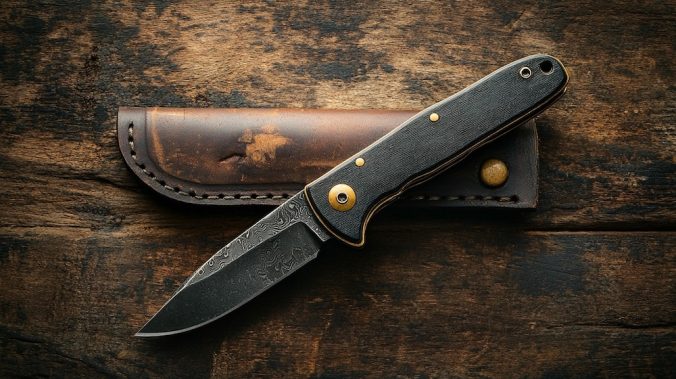
Should you invest in a premium quality knife? It can be worthwhile if the knife fits your hand, suits the food you prepare, and offers features you will use. Price alone does not establish cutting performance, safety, or service life. A comfortable, well-maintained affordable knife can also be a sensible long-term choice.
This guide compares documented product features and practical ownership considerations. It does not claim hands-on comparison testing or a fixed lifespan for any price category.
What Makes a Knife Premium Quality?
Look at the complete knife: blade geometry, steel and heat treatment, handle fit, construction, and support. A steel name or a decorative finish cannot tell you how a particular knife will feel on your cutting board.
Specifications also vary within a brand. The WÜSTHOF Classic 8-inch chef’s knife is a forged model listed at 58 HRC. The Shun Classic 8-inch DM0706 uses a VG-MAX cutting core, stainless Damascus cladding, and a 16-degree edge on each side. These are specifications for those models, not universal definitions of German and Japanese knives.
Damascus describes a layered construction or appearance, not a single steel grade. For the Shun model above, distinguish the cutting core from the surrounding cladding. Judge an individual knife by its documented construction and intended use rather than its pattern.
Does a Premium Knife Make Cooking Safer?
A higher price does not make a knife injury-proof. Choose a handle you can control, keep your cutting surface stable, and use an appropriate knife for the task. Keep fingers clear of the edge and address a damaged blade or loose handle before further use.
We do not have verified evidence supporting a specific injury-reduction percentage or cutting-force multiplier for premium knives as a group. Such numbers should not determine a purchase.
What Performance Benefits Can You Expect?
You may prefer a particular blade profile, weight, handle shape, or edge-maintenance routine. These are reasons to compare individual models rather than assume every expensive knife outperforms every inexpensive one.
Metallurgist Larrin Thomas’s analysis of slicing edge retention explains the importance of wear resistance, hardness, and edge geometry. A controlled cutting test is not a calendar: it does not establish how many months a knife will stay sharp in your kitchen. Food, cutting technique, sharpening, and use all vary.
For that reason, this guide does not promise a universal edge-retention multiplier, annual sharpening count, or guaranteed savings from upgrading.
Which Knife Should You Buy First?
Start by identifying the knife you use most. If your chef’s knife handles most of your preparation, compare replacements for that role before buying a large matching set. If your existing knife is comfortable and sound but dull, sharpening it may address the problem.
| Example | Manufacturer-listed price | What to compare |
|---|---|---|
| WÜSTHOF Classic 8-inch, 1040100120 | $170 | Forged construction; 58 HRC |
| Shun Classic 8-inch, DM0706 | $189.95 sale price; $237 regular | VG-MAX core; Pakkawood handle |
These are U.S. manufacturer-page prices checked September 16, 2026, not Knife Depot offers. Prices, availability, tax, and shipping can change. Follow the product links above for current details. For a smaller budget, see our chef-knife guide under $100.
How to Maintain Your Knife
Follow the instructions for your model. WÜSTHOF’s care guide recommends hand washing with mild soap, drying promptly, and protective storage. It advises against soaking and dishwashers. A blade guard, suitable block, or knife tray can keep the edge separated from other utensils.
Use sharpening equipment compatible with the knife. WÜSTHOF’s sharpening instructions specify a 14-degree angle for its standard blades; Shun’s cited Classic model specifies 16 degrees per side. Do not apply a blanket 20-degree “German” or 15-degree “Japanese” rule.
Honing is edge maintenance; sharpening removes material to form an edge. The tool and technique matter, so avoid assuming every product called a honing rod works identically. Seek a suitable sharpening service if you are unsure how to maintain your knife.
Premium Knife Questions
How much should I spend?
Set a budget for the knife and its care together. The examples above are reference points, not a minimum necessary for good cooking. Leave room for appropriate storage and sharpening.
Are premium knives worth it compared with budget brands?
They can be if their handling and features improve your routine. Compare actual purchase and maintenance costs. Do not assume an affordable knife must be replaced every few years or that an expensive one will automatically save money.
How long do premium knives last?
There is no single supported lifespan for the category. Use, damage, corrosion, care, and material removed during sharpening affect the useful life of an individual knife. Warranty duration is not a lifespan prediction.
What differs between German and Japanese knives?
Compare the exact models’ profiles, dimensions, materials, and sharpening instructions. Country of origin alone is not a specification for steel, hardness, or edge angle.
Is professional sharpening required?
No. Suitable equipment and learned technique can support home sharpening. Professional service is another option. Ask about compatibility with your blade and get a current quote, including shipping if needed.
Can premium knives prevent accidents?
No knife can guarantee that. Safe handling and the condition of the tool matter at every price.
Which brand offers the best value?
Choose by fit, intended use, purchase price, and support. Read the exact warranty and sharpening-service terms rather than assuming “lifetime” covers wear, misuse, shipping, or every repair.
Choosing an Upgrade
Buy a premium knife because its specific features suit your cooking. Compare it with a well-maintained affordable option, and plan how you will care for it. Better information is more useful than unsupported promises about longevity or performance.


Leave a Reply