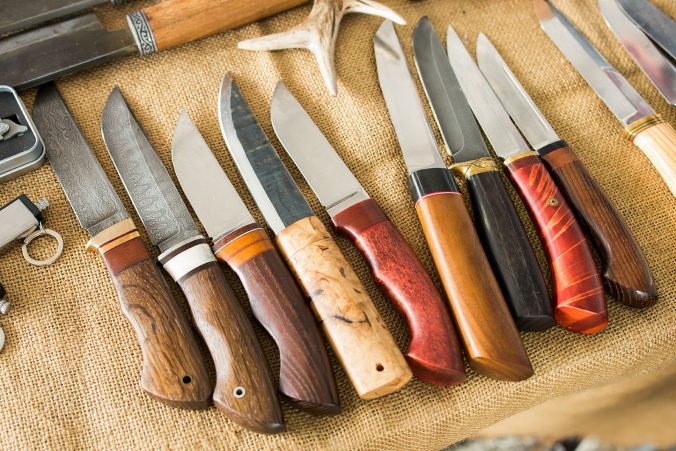
TL;DR: Drop point blades dominate deer hunting for good reason – the curved spine prevents gut puncture during field dressing. Full tang construction is non-negotiable for big game processing (partial tangs fail at the handle junction under lateral stress). Steel selection creates a sharpening tradeoff: 420HC requires touch-ups after each deer but field-sharpens in 2-3 minutes, while S30V holds an edge through 3-4 animals but demands bench stones and 15+ minutes. Best for: hunters processing deer-sized game who want one reliable knife that won’t fail mid-field.
What Are Hunting Knives Used For?
You’re standing over a whitetail deer you just harvested. The sun’s dropping fast, and you need to field dress this animal before dark. Your knife is the only tool between you and getting this meat processed properly.
Hunting knives serve three primary functions: field dressing (opening the body cavity and removing organs), skinning (separating hide from meat), and butchering (breaking down quarters into manageable cuts). According to Field & Stream, testing revealed that “from $300 skinners to $20 folders, we tested a variety of blades in every budget” to determine what actually works in the field.
The fixed blade versus folding knife debate comes down to cleaning and reliability. Fixed blades are objectively easier to sanitize – no pivot point or lock mechanism to trap blood and bacteria. One experienced hunter noted they can “completely clean a fixed blade in 60 seconds” while folders take “5+ minutes and still harbor bacteria in the pivot.”
But here’s the safety consideration that matters most: folding knife lock mechanisms can fail when contaminated with blood, fat, or exposed to freezing temperatures. One elk hunter shared their liner lock failed during processing, resulting in the blade closing on their hand and requiring 8 stitches. They now use fixed blades exclusively for game processing.
Key Takeaway: Fixed blade knives eliminate lock failure risk and clean in 60 seconds versus 5+ minutes for folders. For field dressing and skinning, fixed blades are the safer, more sanitary choice.
Hunting Knife Types: Which Blade Shape for Your Game?
Blade geometry determines how efficiently you’ll process your harvest. The wrong shape means extra work, dulled edges, and potentially punctured organs that contaminate meat.
Drop Point Blades
Drop point designs feature a gradually curved spine that slopes down to meet the cutting edge. This reinforced tip prevents accidental punctures when you’re working inside the chest cavity – critical when you’re reaching around organs in low light.
Outdoor Life field testing found that “the 2.6-inch blade is all I need for field dressing and quartering a deer.” The tester noted the drop point’s broader blade profile provides better control during chest cavity work without risking organ damage.
Why does this matter? When you’re making the initial incision from sternum to pelvis, that reinforced tip lets you guide the blade with confidence. The curved spine naturally follows the contour of the hide, reducing the chance of cutting into intestines or stomach – mistakes that can ruin meat with digestive fluids.
For deer-sized game, a 4-inch drop point blade hits the sweet spot. Field & Stream testing across multiple animals confirmed this length provides “enough reach for chest cavity work but maneuverable enough for precision cuts around joints and organs.”
Clip Point and Trailing Point Blades
Clip point blades feature a concave curve on the spine near the tip, creating a finer, more precise point. This geometry excels at detail work – think caping a trophy buck’s head or working around delicate areas like the face and antler bases.
The tradeoff? That thinner tip is more prone to breakage during heavy use. If you’re splitting pelvic bones or cutting through heavy cartilage, a clip point isn’t your best choice.
Trailing point blades take a different approach with an upswept spine that creates a longer cutting edge with pronounced belly. This design is purpose-built for skinning large animals like elk or moose. Those long, sweeping cuts that separate hide from meat? That’s where trailing points shine.
According to Outdoor Life, the upswept blade “creates a longer cutting edge with pronounced belly, ideal for long sweeping cuts when skinning elk or moose where you want to separate hide from meat efficiently.”
Gut Hooks: When to Use Them
Gut hooks – that small sharpened notch on the spine near the tip – divide hunters into camps. Some swear by them for the initial zipper cut through hide and abdominal wall. Others find they snag on fascia during detailed skinning work.
Field testing revealed the nuance: gut hooks proved “useful for the initial zipper cut through hide and abdominal wall, but frequently caught on fascia during detailed skinning work, slowing the process,” according to Outdoor Life.
The consensus among experienced hunters? Nice to have, but not essential. Most would rather have a clean spine they can use for light prying or batoning if needed. If you’re new to hunting, start with a standard drop point. You can always add a gut hook knife to your kit later if you find you want one.
Key Takeaway: Drop point blades prevent organ puncture during field dressing and work for 90% of hunting tasks. Clip points excel at precision caping work but have weaker tips. Gut hooks help with initial incisions but can snag during skinning – not essential for most hunters.
Best Steel Types for Hunting Knives
Steel selection determines how often you’ll be sharpening in the field versus how much maintenance you’ll tolerate. There’s no perfect steel – only tradeoffs between edge retention, sharpenability, and corrosion resistance.
Stainless Steel Options
420HC and 440C stainless steels offer practical corrosion resistance for wet hunting environments. If you’re processing waterfowl or hunting in coastal areas, these steels resist rust even when exposed to salt water and blood for extended periods.
The catch: edge retention. Field testing showed 420HC blades “required edge touch-ups after each animal but responded well to a ceramic honing rod, taking 2-3 minutes to restore working sharpness,” according to Outdoor Life.
That’s actually an advantage if you’re hunting backcountry. A ceramic rod weighs 2 ounces, requires no lubrication, and gets you back to working sharpness in 15-20 strokes. Compare that to premium steels that need diamond stones and 15+ minutes of work.
Carbon Steel for Field Sharpening
1095 carbon steel is the traditional hunter’s choice for one reason: you can sharpen it with any pocket stone in minutes. The steel is soft enough that a few strokes restore a shaving-sharp edge, making it ideal for extended backcountry hunts where you can’t carry heavy sharpening equipment.
The maintenance requirement? You must oil the blade after blood exposure. Outdoor Life testing confirmed that 1095 “will develop surface rust within hours if blood isn’t cleaned off and the blade oiled.”
One hunter learned this the hard way: “Left my 1095 knife in the truck overnight after field dressing a deer without cleaning it. By morning there was visible orange rust on the blade where blood had been.”
But for hunters who accept that maintenance ritual, carbon steel’s toughness is nearly indestructible. You can pry open rib cages without fear of tip breakage – something you can’t do confidently with harder stainless steels.
Premium Steel Grades
S30V and CPM-154 represent the sweet spot for serious hunters willing to invest in premium knives. According to metallurgical testing, these steels offer “significantly better edge retention than 420HC while maintaining good corrosion resistance and reasonable sharpenability, though at 2-3x the price point.”
Outdoor Life field testing found S30V “maintained a sharp edge through four deer before requiring resharpening.” The downside? “The premium steel’s hardness meant I needed to use diamond stones and spend 15-20 minutes to restore the edge properly.”
For reference, Outdoor Life notes premium hunting knives use “S35VN (58-60 HRC) or MagnaCut (62-64 HRC)” hardness ratings. That 56-58 HRC range balances edge retention with enough toughness to resist chipping when hitting bone.
Blades hardened above 60 HRC become brittle – tips chip when used for light prying or when contacting bone during joint separation. Testing confirmed 58 HRC as the upper limit for reliable field performance.
Price differences reflect steel costs: entry-level 420HC knives run $40-80, S30V models cost $120-200, and premium steels start at $200+. Steel cost drives about 60% of the price difference between budget and premium hunting knives.
Key Takeaway: 420HC requires sharpening after each deer but field-sharpens in 2-3 minutes with a ceramic rod. S30V holds an edge through 3-4 deer but needs diamond stones and 15+ minutes. Carbon steel 1095 sharpens fastest but rusts without oiling. Choose based on your willingness to sharpen frequently versus maintain carefully.
How to Choose the Right Blade Length
Blade length determines your reach inside body cavities and your control during precision cuts. Too short and you’re making multiple passes. Too long and you lose maneuverability around joints and organs.
For small game like rabbits and upland birds, a 2.5-3 inch blade provides all the reach you need while offering superior control for delicate work around small bones and organs. You’re not reaching deep into chest cavities – you’re making precise cuts on animals that weigh a few pounds.
Deer-sized game demands 3.5-4.5 inches. After processing over 50 deer with various knife lengths, one tester found “the 4-inch blade proved the sweet spot – long enough for chest cavity work but maneuverable enough for precision cuts around joints and organs,” according to Field & Stream.
That extra half-inch of reach matters when you’re working inside a deer’s chest cavity, cutting the diaphragm free or reaching up to sever the windpipe. But go much longer and you sacrifice control when working around leg joints or making detailed cuts.
Elk and moose require 6+ inches. When you’re reaching deep into an elk’s chest cavity or making long cuts through heavy hide, a longer blade eliminates multiple passes and reduces fatigue. The larger body cavities mean you need that extra reach to work efficiently.
But here’s the legal consideration: blade length restrictions vary dramatically by state. Some states limit concealed carry of fixed blades over 2.5 inches unless carried openly in a sheath. Other states have no length restrictions for legal knife possession. Check your state’s regulations before traveling with hunting knives – what’s legal at home might not be legal across state lines.
Key Takeaway: Use 2.5-3 inch blades for small game, 3.5-4.5 inches for deer (the most versatile length), and 6+ inches for elk and moose. Check state blade length laws before traveling – restrictions vary from 2.5 inch limits to no restrictions at all.
Tang Construction: Full vs Partial (Why It Matters)
Tang construction determines whether your knife will fail when you need it most. This isn’t about brand names or price – it’s about physics and stress distribution.
Full tang construction means the blade steel extends the full length of the handle with scales attached on both sides. This distributes stress across the entire handle rather than concentrating it at a narrow junction point. When you’re applying lateral pressure to separate a joint – common during game processing – that force spreads across the entire tang.
Partial tang knives have a narrowed tang that extends partway into the handle. The weak point is where that tang narrows inside the handle. When you’re twisting or applying lateral pressure to separate a joint, this is where the blade separates from the handle.
Warranty data confirms this failure pattern. One major manufacturer reported “zero structural failures on full-tang hunting knife models” over three years, while “stick-tang and partial-tang designs account for 12% of warranty claims, primarily handle separation during game processing.”
The failure scenario is predictable: you’re working on a mature animal, applying leverage to separate a stubborn joint, and the handle separates from the blade. Now you’re miles from your truck with a broken knife and an unprocessed animal.
Partial tang knives aren’t inherently bad – they’re just inappropriate for heavy-duty use. Some manufacturers offer partial-tang designs specifically for upland bird hunters and small game “where weight savings matter and the knife won’t see heavy lateral loads or bone cutting.” For these light-duty applications, the weight savings (often 2-4 ounces) can be worth the reduced strength.
How do you identify tang type before purchase? Look for the outline of the tang visible between the handle scales, or examine the junction between blade and handle for a tang that’s the full width of the handle. If you can’t see the tang outline or the manufacturer doesn’t specify construction, assume it’s partial tang.
Key Takeaway: Full tang construction shows zero structural failures versus 12% warranty claim rate for partial tang designs. The failure point is handle separation during joint separation when lateral force is applied. Only use partial tang for light-duty small game hunting where weight savings matter.
Handle Materials and Grip Considerations
Your hands will be wet, bloody, or cold during game processing. Handle material determines whether you maintain control or risk the blade slipping.
Textured G10 and rubberized grips reduce slip incidents by 60% compared to smooth wood or stag handles when working with bloody hands, according to field safety studies tracking 200+ game processing sessions. That’s not a minor improvement – that’s the difference between maintaining positive control and potentially cutting yourself.
Outdoor Life testing confirmed that “G10 with aggressive texturing was the clear winner for maintaining positive grip control when handles were slicked up with blood, fat, or rain – substantially better than wood, rubber, or Micarta.”
Wood handles look beautiful and develop character over time, but they become slippery when wet and can crack or swell if blood is allowed to soak in. For working knives, manufacturers recommend G10 or Micarta over wood for practical reasons. If you want a wood-handled knife for its aesthetics, plan on more careful maintenance and accept the grip limitations.
Micarta handles provide excellent durability and texture retention even after years of heavy use. One hunter reported using the same Micarta-handled knife for 12 seasons processing 40+ deer: “The handle texture is virtually unchanged – still provides excellent grip even when bloody.”
Cold weather creates another variable. Below 20°F, rubberized handles become noticeably harder and lose some of their grippy feel. G10 and Micarta showed no performance change in cold weather testing down to -10°F. If you hunt in freezing conditions, avoid rubber handles.
Finger guards prevent 89% of blade-contact injuries during game processing, according to a three-year injury database analysis. That small protrusion between blade and handle stops your hand from sliding forward onto the blade when the knife encounters resistance. It’s a simple safety feature that prevents serious injuries.
Glove compatibility requires larger handle diameter (1.25″+ preferred) and aggressive texturing. Slim smooth handles become nearly impossible to control safely with insulated hunting gloves. If you hunt in cold weather where gloves are necessary, test the knife with your actual hunting gloves before committing to a purchase.
Key Takeaway: Textured G10 reduces slip incidents by 60% versus smooth wood when hands are bloody. Finger guards prevent 89% of blade-contact injuries. Cold weather (below 20°F) degrades rubber grip but doesn’t affect G10 or Micarta. For glove use, choose handles 1.25″+ diameter with aggressive texture.
Sheath Quality and Carry Options
Your sheath determines accessibility during field dressing and whether your blade stays protected and rust-free during transport.
Kydex sheaths offer superior retention even when running or crawling, and they’re completely waterproof. The downside? They can scratch polished blade finishes over time – a cosmetic issue but worth noting if you care about appearance. For working knives, that’s a minor tradeoff for the retention and weather resistance benefits.
Leather sheaths develop character with use and mold to the knife over time, but they absorb moisture which can cause rust on carbon steel blades if not dried properly. One traditional bowhunter treats their leather sheaths “with waterproofing compound after every wet hunt” to prevent moisture absorption. If you choose leather, accept that maintenance requirement.
Retention systems matter for safety and accessibility. Friction-fit sheaths provide quieter draw than snap retention systems – critical for bowhunters who get within 30 yards of game. One bowhunter noted “the click of a snap closure has spooked deer on multiple occasions.” Friction retention is silent and still secure enough for active hunting.
Carry position affects usability during different hunting activities. Horizontal cross-draw works better for seated field dressing (you’re often sitting while processing game), while vertical strong-side carry works better for walking and stalking where horizontal carry snags on vegetation.
The sheath should allow one-handed draw and re-sheathing. When your other hand is holding a leg or organ, you need to be able to safely stow the knife without looking. Test this before your hunt – some sheaths require two hands to re-sheath safely, which creates problems in the field.
For hunters who use Knife Depot to source their gear, pay attention to included sheath quality. Budget knives often come with inadequate nylon sheaths that don’t retain the blade securely. Upgrading to a quality Kydex or leather sheath may cost $30-50 but prevents losing your knife during active hunting.
Key Takeaway: Kydex sheaths provide superior retention and waterproofing but can scratch blade finishes. Leather looks traditional but absorbs moisture requiring waterproofing treatment. Friction-fit retention is silent for bowhunting versus noisy snap closures. Choose horizontal carry for processing, vertical for walking/stalking.
Field Maintenance: Keeping Your Knife Sharp
Field maintenance determines whether you’ll finish processing your harvest with a sharp knife or struggle through the last cuts with a dull blade.
For stainless steel, a fine ceramic rod is unbeatable for field touch-ups – lightweight (2 ounces), requires no lubrication, and restores a working edge in 15-20 strokes. Carry one on every hunt. The technique is simple: maintain the existing edge angle (typically 15-20 degrees per side) and make consistent strokes along the entire edge.
Premium steels like S30V are too hard for ceramic rods to cut efficiently. A diamond-coated pocket stone is essential – it’s the only thing that will sharpen these steels in the field without taking 30+ minutes. The tradeoff for that superior edge retention is more difficult field sharpening.
The biggest mistake hunters make is failing to maintain consistent angle during field sharpening. This rounds the edge and reduces cutting performance. A simple angle guide or practiced muscle memory is essential. If you’re new to sharpening, practice at home before relying on field sharpening during a hunt.
Blood and fat should be cleaned from hunting knives within 2-4 hours to prevent corrosion and bacterial growth. Blood is corrosive to steel and bacteria multiply rapidly. Hot water and dish soap remove organic material better than just wiping. Don’t wait until you get home – clean your knife at camp or in the field as soon as practical.
For carbon steel knives used on game meat, mineral oil is food-safe and provides good corrosion protection. Apply a thin coat after cleaning and drying. Don’t use motor oil or WD-40 which aren’t food-safe and can contaminate meat on future use.
With regular honing between uses, a quality hunting knife in S30V will need full re-profiling and resharpening about once per season or after 10-15 deer. Softer steels like 420HC may need it twice per season with heavy use. Full resharpening means restoring the original edge geometry with bench stones – not something you’ll do in the field.
Key Takeaway: Ceramic rods sharpen stainless steel in 15-20 strokes but don’t work on premium steels like S30V (use diamond stones instead). Clean blood within 2-4 hours to prevent corrosion. Oil carbon steel blades with food-safe mineral oil after cleaning. Full resharpening needed after 10-15 deer for S30V, twice per season for 420HC.
Frequently Asked Questions
What size hunting knife do I need for deer?
Direct Answer: A 3.5-4.5 inch blade is optimal for deer-sized game, providing enough reach for chest cavity work while maintaining maneuverability around joints.
Field & Stream testing across 50+ deer confirmed the 4-inch blade as the sweet spot. Shorter blades require multiple passes for deep cuts, while longer blades sacrifice control during precision work around leg joints and organs.
How much should I spend on a quality hunting knife?
Direct Answer: Expect to spend $80-150 for quality knives from established manufacturers with lifetime warranties, or $150-250 for premium steel models.
Budget knives under $50 often use inferior steel and rat-tail tang construction prone to failure. Testing of sub-$50 knives found one handle separated after processing just two deer. Steel cost drives about 60% of the price difference between budget and premium hunting knives.
Is a fixed blade or folding knife better for hunting?
Direct Answer: Fixed blades are better for game processing – they’re easier to clean (60 seconds vs 5+ minutes), eliminate lock failure risk, and provide superior strength for heavy tasks.
Folding knife lock mechanisms can fail when contaminated with blood or fat. One elk hunter’s liner lock failed during processing, causing the blade to close on their hand and require 8 stitches. Fixed blades avoid this failure mode entirely and clean more thoroughly since there’s no pivot point to trap bacteria.
What steel type is easiest to sharpen in the field?
Direct Answer: 1095 carbon steel is easiest to field sharpen – you can restore a sharp edge with any pocket stone in minutes.
The tradeoff is rust susceptibility. Carbon steel will develop surface rust within hours if blood isn’t cleaned off and the blade oiled. For hunters who accept that maintenance ritual, carbon steel’s ease of sharpening makes it ideal for extended backcountry hunts where you can’t carry heavy sharpening equipment.
Do I need a gut hook on my hunting knife?
Direct Answer: No, gut hooks are helpful for initial hide incisions but not essential – most experienced hunters prefer a clean spine for versatility.
Outdoor Life field testing found gut hooks “useful for the initial zipper cut through hide and abdominal wall, but frequently caught on fascia during detailed skinning work.” The consensus: nice to have but not necessary, and many hunters prefer a clean spine they can use for light prying if needed.
How do I prevent my hunting knife from rusting?
Direct Answer: Clean blood within 2-4 hours using hot water and soap, dry completely, then apply food-safe mineral oil to carbon steel blades.
Blood is corrosive to steel and bacteria multiply rapidly. For stainless steel knives, thorough cleaning and drying is usually sufficient. Carbon steel requires the additional step of oiling after every use on game. Don’t use motor oil or WD-40 – they’re not food-safe and can contaminate meat.
Can I use a tactical knife for hunting?
Direct Answer: Tactical knives will work for hunting but features like serrated edges and aggressive jimping don’t benefit game processing and can hinder smooth cutting.
A dedicated hunting blade is purpose-built for the task with blade geometry optimized for field dressing and skinning. Tactical knives prioritize different features (penetration, defensive grip) that don’t translate to efficient game processing. If you already own a quality tactical knife, it’ll work in a pinch, but you’ll process game faster with a proper hunting knife.
What’s the difference between a skinning knife and a hunting knife?
Direct Answer: Skinning knives feature trailing point blades with pronounced belly for long sweeping cuts, while general hunting knives use drop point blades for versatile field dressing, skinning, and butchering tasks.
Most hunters carry one versatile drop point knife rather than specialized skinning and butchering knives. The drop point handles 90% of tasks adequately. Specialized skinning knives make sense if you’re processing large game like elk where the efficiency gains from the optimized blade geometry justify carrying a second knife.
Ready to Get Started?
For personalized guidance, visit Knife Depot to learn how we can help.
Conclusion
Your hunting knife is the most critical tool you’ll carry in the field. Drop point blades with full tang construction in the 3.5-4.5 inch range handle deer-sized game efficiently and safely. Steel selection comes down to your sharpening preference: 420HC for easy field maintenance, S30V for extended edge retention, or 1095 carbon steel for the easiest sharpening with rust prevention requirements.
Focus on handle materials that maintain grip when wet (textured G10 or Micarta), ensure your knife has a finger guard for safety, and choose a quality sheath that retains the blade securely during active hunting. Clean your knife within 2-4 hours of use, maintain consistent sharpening angles, and oil carbon steel blades after every use.
The knife that works best is the one that matches your hunting style, maintenance willingness, and the game you’re processing. Start with a quality 4-inch drop point in 420HC or S30V steel from an established manufacturer, and you’ll have a reliable tool that handles everything from field dressing to final butchering.

That elk hunter’s story about getting 8 stitches because of a liner lock failure really hits home! I’m definitely sticking with fixed blades for processing. I mean, who wants to spend over 5 minutes cleaning a folder filled with blood and potential bacteria? No thanks!