The Cutting Edge

The official blog of Knife Depot

Page 24 of 135

Best Push Daggers at Knife Depot

best push daggers

The push dagger — also known as the fist knife, punch knife, or push knife — has a murky origin abroad. However, it is thought to have been related to the katara punching sword of India.

Regardless of who invented it, the push dagger gained popularity in the 1800s and was utilized during various wars due to its effective use in hand-to-hand combat.

While other knives, like folders and even most fixed blades, are considered useful tools, push daggers are widely deemed self-defense weapons. They were carried as defensive weapons because they are lightweight and easy to conceal. For that same reason, they are banned in certain localities.

Still, if you’re an avid knife collector and want a solid push dagger, here are the best push daggers for sale at Knife Depot.

Note: This post was first written way back in 2012, but we updated it with newer and better knives in March 2024.

Cold Steel Urban Edge

These days, Cold Steel is by far the best manufacturer of push knives. Not only do they make a few different models, but they all excel in their own way.

One of the most popular at Knife Depot is the Cold Steel Urban Edge.

This one is on the smaller side with a 2.5-inch blade and small Kray-Ex handle. We’ve had people use this push knife for EDC applications, especially because it has double the functionality with one serrated edge and one plain edge.

It is also extremely lightweight at under 2 ounces. It’s available with plain edges too.

Schrade MOE Push Dagger

This push dagger is larger than the Urban Edge with a 3.25-inch blade. There is a slight blood groove down the center to reduce the weight of the knife.

Continue reading

Benchmade Freek – Knife of the Week

Benchmade Freek

The original Benchmade Freek was a natural evolution of the beloved Griptilian. It had better scales, a better blade design, and better steel.

So, when Benchmade decided to give the Freek an upgrade, that awesome folder became one of the best EDC knives on the market and praised by everyone who used it.

The Super Freek is the culmination of EDC design from Benchmade. The knife features a 3.6-inch drop point blade made from M4 steel, an alloy celebrated for its toughness and edge retention.

Continue reading

15 Best Wharncliffe Blade Knives

For nearly two centuries, the Wharncliffe blade design has remained a staple of the knife community.

While the function has evolved from a whittling knife to more of a self-defense or EDC purpose, the Wharncliffe continues to be a useful tool.

A few weeks back, I wrote about the History of the Wharncliffe, and now I’m taking it to the next step with a look at the best production knives with Wharncliffe blades.

I’m capping the list at 20, although I will undoubtedly be missing a few essential additions, so let me know in the comments.

1. SOG Snarl

Let’s start small with this popular and versatile Wharncliffe fixed blade from SOG. Designed by Jason Brous of Brous Blades, the Snarl is one thick knife.

It has a 2.3-inch Wharncliffe blade and a skeletonized handle. The whole thing is made of steel and fits into an included sheath that you can clip to your boot or belt or wear around your neck.

2. Gerber Pledge

The Gerber Pledge is a compact folder with a price you won’t believe. For a little over $20, you can get this knife with a longer 3.7-inch Wharncliffe blade and urban blue handle made from GFN.

This EDC really extols the virtues of a Wharncliffe blade for everyday activities like opening boxes and envelopes.

Browse current Gerber knives

3. KA-BAR TDI LDK

KA-BAR TDI LDK Small Wharncliffe Knife

The KA-BAR TDI Last Ditch Knife takes cues from Janich’s Ronin. This small fixed blade is made to be used in last ditch self-defense situation. The overall length is only 3.6 inches and it is meant to be put in its sheath in a boot or wallet. The backup knife is great at slashing and piercing.

4. Spyderco McBee

Spyderco went crazy the past few years making Wharncliffe versions out of almost every one of its folders. While they cut back on most of those designs, the McBee with its Wharncliffe-style blade is still among the best.

Continue reading

15 Bright Green Knives

best green knives

It’s an old tradition to wear something green on St. Patrick’s Day. Some people wear green shoelaces or a green hat, but if you’re the kind of knife nut who’s reading this blog, you’re probably going to carry green knives.

In honor of St. Patrick’s Day, we’re looking at 15 great knives with green handles.

This article has been updated a few times since its first publication in 2014 to get rid of discontinued models and put some new ones.

Spyderco Pacific Salt 2, Green

We used to have the Dragonfly 2 in ZDP-189 in this spot, but that knife is no longer available. The Spyderco Pacific Salt 2 with modified drop point blade made from LC200N and bright green handle scales is the next best thing.

Kershaw Link, Olive

Olive is kind of a tamped down green color, so we decided to add it to this list. The Kershaw Link (currently unavailable at Knife Depot) is one of the best US-made EDC folders, and Kershaw made it even better by making this version have premium 20CV steel with olive scales.

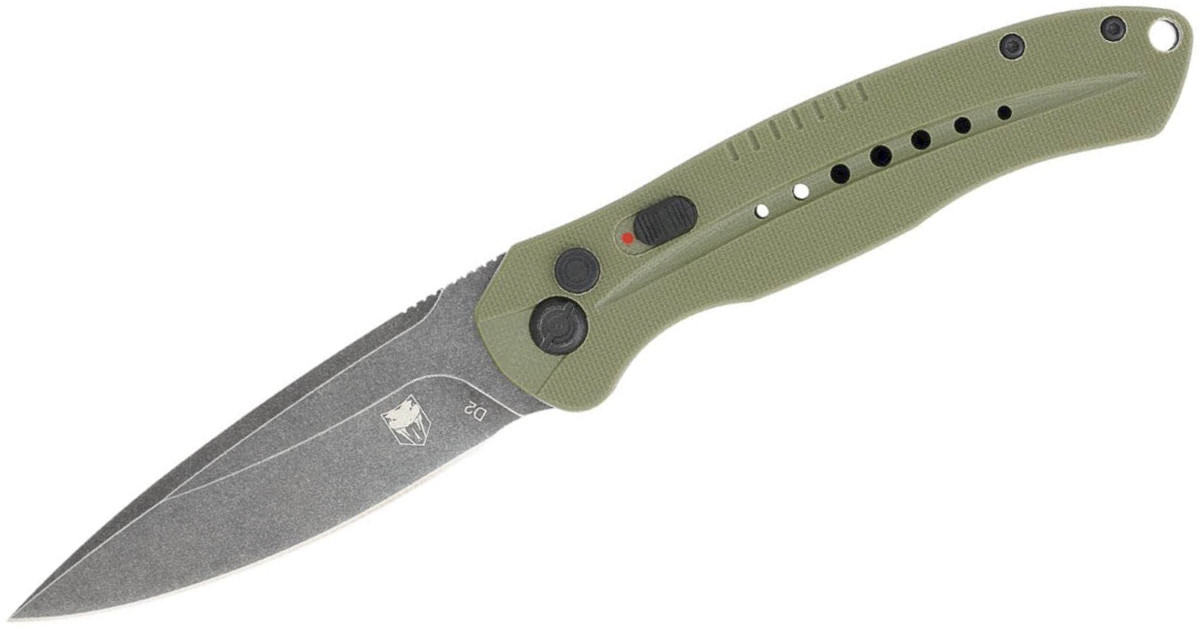
CobraTec Green Diablo

See our CobraTec Ryker vs. Diablo buying guide to compare the two OD green options with their black counterparts.

Choose by size: the ODGDIABLOAUTO Diablo has a 3.5-inch D2 blade, while the ODGAFRYK Ryker has a larger 3.75-inch D2 blade. Both linked versions have OD green handles. Check their current prices and availability to compare these exact models.

For a smaller OTF blade: the CobraTec Small FS-3 OD Green SODFS-3DNS has a 2.75-inch non-serrated D2 drop-point blade and an aluminum handle. Its dual-action blade slides out of the front. This is a separate option from the side-opening Diablo pictured below; check the product page for its photo, price and availability.

CobraTec has a number of excellent green knives, including the CobraTec Green Ryker. But the Green Diablo features a brighter green handle that complements the black-finished D2 blade.

Continue reading

10 Best EDC Fixed Blade Knives

Best EDC Fixed Blade Knives

This post was originally published in 2017 and updated in 2024 to include newer models and more knives.

We all know that folding knives make the best knives for EDC — they’re often lightweight, easily concealable, versatile and can be folded up into the pocket.

However, a small but growing number of people are ditching folders for fixed blades as their EDC knives. Why? A fixed blade can be more reliable, stronger, and a bevy of new designs means it can be just as compact and lightweight as a pocket knife.

If you’re thinking about starting to carry a fixed blade as an EDC in lieu of a folder, here are 10 of the best EDC fixed blade knives to start with.

CRKT Razel

Let’s kick things off with a knife that looks like a very functional fixed blade and that’s exactly what it is. The razel blade profile from the late Jon Graham has always been one focused on versatility. For example, the straight edge is great at slicing and opening up packages while the front of the blade excels at scraping.

The CRKT Razel is a great all-around EDC knife because it is unassuming, comfortable to use, and easy to carry with a pocket carry sheath.

When you add in the D2 steel, Micarta handle, and overall length of 6.75 inches, you get a

Cold Steel Urban Edge

It might seem crazy to put a push dagger on this list of best EDC fixed blades because it’s really only designed for one thing, but you’d be surprised at just how versatile the knife actually is.

This version of the Cold Steel Urban Edge has a 2.5-inch blade with one edge plain and the other serrated. This gives it an extra level of functionality when wielding around the house. Need to open a box? Use the plain edge. Need to cut some rope? Use the serrated edge.

Continue reading

KA-BAR TDI Flipper – Knife of the Week

KA-BAR TDI Flipper

KA-BAR and John Benner of TDI have teamed up to create an array of compelling fixed blade self-defense knives, but when they tried a flipper folder, it just didn’t click.

After a complete revamp of the original design, the new and improved TDI Flipper nails the functionality and aesthetics.

The new KA-BAR TDI Flipper forgoes the straight blade and handle of the original and opts for something curved to better match the defensive advantages of the fixed blades.

Its blade is 3 inches long with a spear point blade profile that reinforces the tip. The knife opens with an easily accessible flipper tab or an oversized thumb hole. Either option gives the user access to the blade in a pinch, even when wearing heavy duty gloves.

Continue reading

How to Identify an Old Knife

Identification and valuation guidance reviewed November 9, 2026. Historical screenshots illustrate research methods; they are not current offers or appraisals.
So, you picked up an awesome knife for $3 at a yard sale, or maybe your grandfather handed down his favorite blade, and now you’re curious about what it is — and what it’s worth.

Unfortunately, identifying a knife and determining its value can be trickier than it sounds. But if you’re looking for a good place to start, keep reading.

1. Find identifying marks or symbols

The first — and most obvious — step is to look closely at the knife itself.

Search for any symbols, initials, or maker’s marks on the blade or handle. These marks are often the calling cards of brands or individual knifemakers and can range from simple logos to scribbled signatures.
An absent or worn marking does not by itself establish that a knife is a clone. Likewise, a familiar stamp alone does not prove authenticity; compare it with construction, provenance and reliable records.

A search can suggest a maker, but confirm the result against reliable references. For example, Case’s manufacturer tang-stamp guide provides dated markings for its own knives; that system should not be applied to other brands.

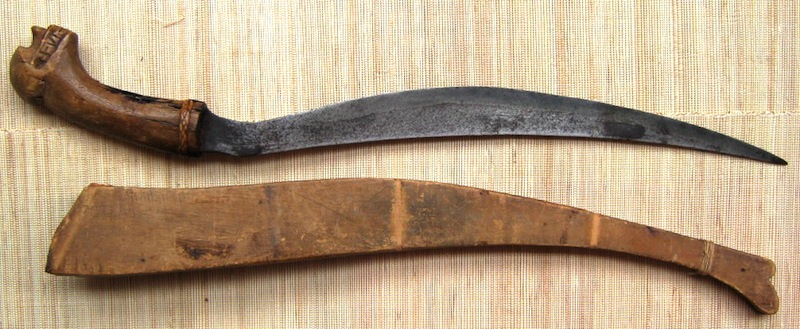
For example, let’s say you stumble upon an old slipjoint that looks like an antique with this marking:

The image above is a historical research example, not a complete identification or current valuation. Match the full stamp, pattern and construction before assigning a maker or date. The earlier $20–$350 marketplace range lacked dated, condition-matched sold examples and has been removed.

2. Get a reference book

You might think the Internet has all the answers, but many antique knives aren’t well-documented online.
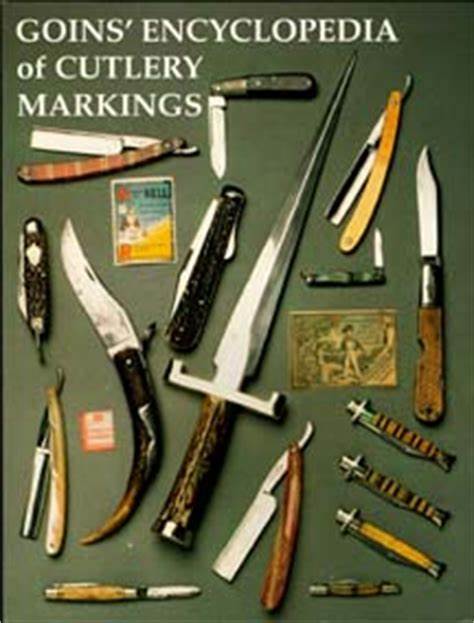
That’s why seasoned collectors still swear by reference books. A standout is Goins’ Encyclopedia of Cutlery Markings — a massive compilation of historic maker’s marks.
Knife Magazine remains a useful reference publisher. Its subscription page, checked November 9, 2026, describes searchable Goins access as “coming soon.” Confirm availability directly before subscribing for that feature.

Other helpful books include Randall Knives: A Reference Book and many regional guides.
3. Analyze construction and materials

If there’s no clear identifier, you can still narrow things down by studying how the knife was made.

Specific types of locks, blade shapes, handle materials, and overall craftsmanship can hint at the knife’s origin and era.

Lock design, dimensions, pattern and construction may help narrow a date range when matched to dated catalogs or other reliable records. Style alone cannot establish a country of manufacture or an exact year.
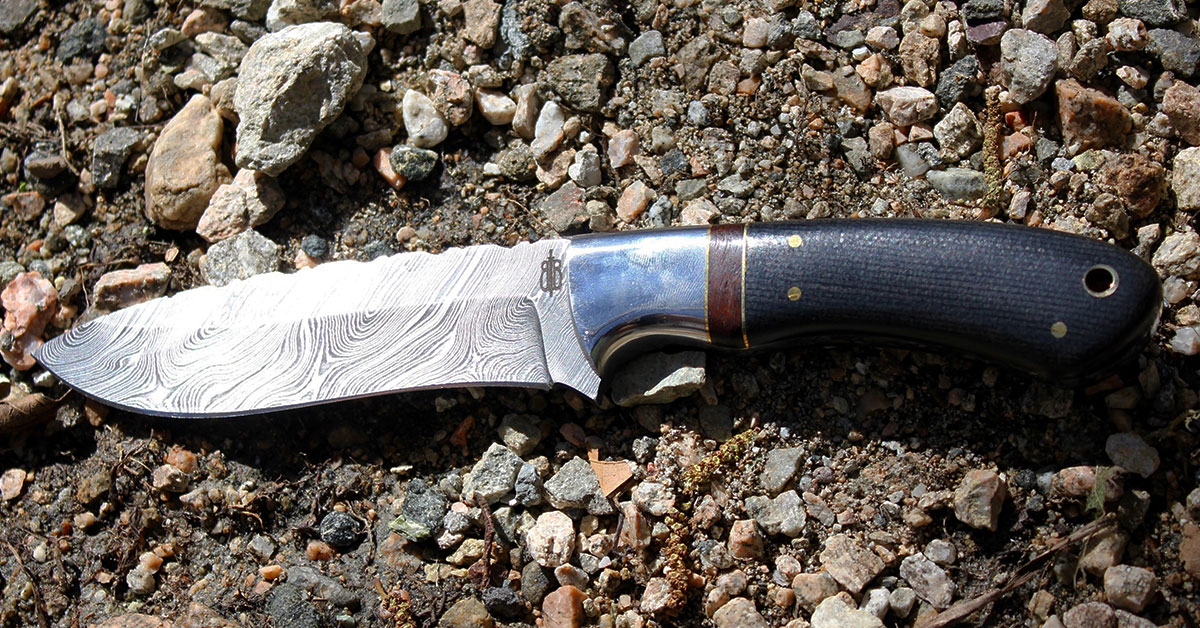
Describe observable features: materials, fit, blade wear, corrosion, repairs and signs of modification. Poor fit or resemblance to another design cannot establish where a knife was made. Country of origin alone does not establish authenticity, craftsmanship or market value.

Consider condition in context. Age-related wear or an old repair can affect value without proving that the knife is counterfeit. Avoid polishing, sharpening or restoring a potentially valuable knife before getting advice; changes can remove evidence or alter collector interest.

4. Browse through eBay

Even if you haven’t identified the knife yet, browsing eBay can help.
For instance, if you think you have a stockman knife — a traditional three-blade folding knife — try searching “vintage stockman knife bone handle.”
You may stumble upon an exact or similar match, giving you clues about its identity and value.

Use recent completed sales for the same maker, pattern and comparable condition as valuation evidence. An asking price is not a realized sale. Record the date, condition, included accessories and any buyer fees; marketplace photos and seller descriptions are clues to verify, not authentication certificates. The screenshot above is a historical illustration, not a current offer.

5. Post your picture on websites

If you’re still stuck, try tapping into the collective knowledge of knife enthusiasts online.
Forums like Blade Forums and subreddits like r/knifeclub, r/knives, r/bladesmith, and r/KnifeID can be great resources.

Tip: Always include clear, detailed photos and as much information as you can — size, weight, materials, and any visible markings.

Just keep in mind that frequent “what is this?” posts can wear thin, so be respectful of each community’s rules.

Help identify mysterious knife
byu/superbeefwithcheese inknifeclub

6. Go to a knife expert

If all else fails — and especially if you suspect the knife could be rare or valuable — it’s worth talking to a knife expert, antique dealer, or museum curator.

Sometimes truly special knives require an experienced eye to identify and appraise properly.

Kershaw Launch 16 – Knife of the Week

Kershaw Launch 16

When it comes to hard-use work autos, there are only a few worthy of consideration like the Gerber 06 Auto and Benchmade Auto Adamas.

Those older models finally get a modern competitor at a much lower price in the Kershaw Launch 16.

The Launch16 is a hard-use automatic knife with a 3.45-inch tanto blade with partial serrations. The blade uses M4 steel, which is one of the toughest alloys around. In fact, this knife is so good we named it one of the best automatic knives.

Continue reading

15 Strange and Unique Blade Shapes

Product information reviewed November 9, 2026. This gallery includes historical designs; images and current linked products may represent different versions.

From the infamous Shark Knife to the slew of amazing art knives by Paul Ehlers, we’ve covered an array of interesting knife designs on this blog.

One thing we haven’t really touched on are bizarre blade shapes. Sure, various novelty knives like the Scorpion Knife qualify for this post, but we decided to bring you only real knives that are functional—or at least were meant to be functional.

This post was originally published way back in September 2013, so we decided to give it an update by replacing older less unique blades and adding in some newer models.

1. Microtech Jagdkommando

In the world of bizarre blade designs, the Microtech Jagdkommando is one of the kings.

The Jagdkommando is included as a design example, not a promise of current production or availability. It is essentially three razor-sharp edges that spiral into a piercing point.

This knife was criticized by many for the fact that it has almost no functional use, except for hurting someone… and hurting them very badly. Still the blade design is novel and interesting to look at.

2. CRKT Razel

The Razel blade design by the late Jon Graham was originally on the list and remains a worthy addition.

This blade design is one of the newest blade profiles to come out since others like the drop point, tanto point, clip point, and spear point have been around for decades.

Unlike the Jagdkommando, the Razel is highly functional and downright useful. Its squared-off chisel-style profile gives it a different working edge from a conventional pointed knife. The linked Razel 4037 is a 2.97-inch D2 fixed blade; it is distinct from the older folding version pictured above.

Continue reading

Spyderco Military 2 | Knife of the Week

Spyderco Military 2

The original Spyderco Military was introduced in 1996 and quickly became one of the most iconic knives of all time. The knife came about after someone asked founder Sal Glesser what folding knife their son should take into the military.

For nearly three decades, the Military excelled as a lightweight yet hard-use folder you could bet your life on.

However, Spyderco is never a brand to rest on its laurels and finally updated the classic knife into something even better.

Take a look at the Spyderco Military 2.

The second iteration has the same general design with a few much-appreciated quality of life improvements.

Continue reading

« Older posts Newer posts »

© 2026 The Cutting Edge

Theme by Anders Noren — Up ↑