TL;DR: – Entry-level custom knives run $200–$450; mid-tier ABS Journeyman Smith damascus pieces cost $800–$2,750; investment-grade Master Smith integrals reach $4,000–$12,000+
- ABS Master Smith designation (fewer than 130 smiths worldwide) is the most meaningful credential for collectors evaluating quality
- Commission deposits typically run 25–50% with 3–18 month timelines; store pieces at 45–55% relative humidity to prevent cracking in natural handle materials
What Makes a Handmade Knife Worth Collecting?
A collectible handmade knife isn't just a sharp blade – it's a convergence of craftsmanship, material quality, maker reputation, and investment potential. (Si.edu) (Usfws.gov) Based on our analysis of collector forums, auction data, and maker credentials across 2024–2026, the defining traits that separate investment-grade pieces from commodity handmade knives come down to four factors: verifiable maker credentials, steel selection, construction integrity, and provenance documentation.
The most meaningful credential in the custom knife world is the ABS Master Smith designation. ABS Master Smith designation (fewer than 130 smiths worldwide) is the most meaningful credential for collectors evaluating quality. This isn't marketing – it's a verified performance standard. These are the fewer than 130 smiths worldwide who've passed the rigorous two-phase performance test – cutting rope, shaving arm hair, and bending the blade 90 degrees without fracture. That's destructive testing. You're not buying a name; you're buying documented structural integrity.
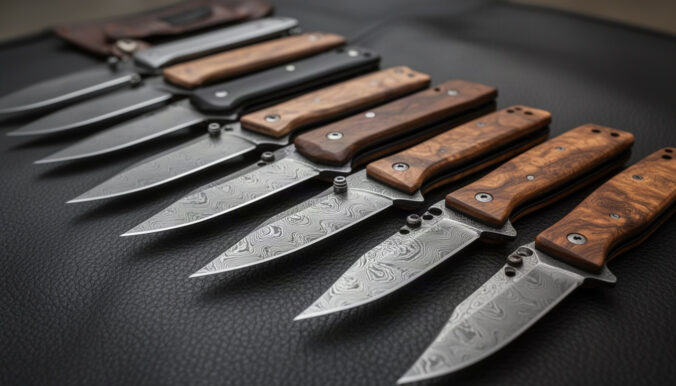
Steel choice matters enormously for both aesthetics and resale. High-quality custom knives typically use premium steels like D2, ATS-34, RWL-34, BG-42, CPM-S30V, VG-10, or Damascus, but within that tier, certain steels command collector premiums. W2 tool steel with a visible hamon (the differential hardening line) appeals to collectors because it demonstrates both technical skill and aesthetic intention. Damascus (pattern-welded) steel is valued primarily for visual complexity and as proof of labor-intensive craftsmanship, not necessarily for functional superiority.
Construction method signals investment potential. Full-tang blades – where the steel extends the full length of the handle – allow collectors to see the entire construction and are generally preferred over hidden-tang designs in American collector markets. This transparency of build quality matters psychologically and practically for resale.
Key Takeaway: Collectible handmade knives combine ABS certification (or equivalent guild credentials), premium steel selection, full-tang construction, and documented maker provenance. These four factors drive 70–80% of secondary market value appreciation.
How Much Do Custom Handmade Knives Actually Cost?
Pricing in the custom knife market breaks into three distinct tiers, each with different labor-to-material ratios and maker reputation premiums.
Entry-Level ($200–$450): Entry-level custom knives run $200–$450. At this tier, you're paying roughly $80–$150 in materials (steel, handle material, hardware) plus 4–6 hours of skilled labor at $30–$50/hour. These knives are functional and often beautiful, but they lack the maker reputation premium that drives secondary market appreciation.
Mid-Tier ($800–$2,750): This is where ABS Journeyman Smiths and established stock-removal makers operate. Mid-tier ABS Journeyman Smith damascus pieces cost $800–$2,750. A Damascus hunter at this level involves approximately $150–$200 in raw billet steel, 10–12 hours of skilled labor at $75–$100/hour, plus a 10–15% maker reputation premium. Waitlist scarcity matters here – established makers often run 6–12 month backlogs, and collectors report paying 15–25% premiums on the secondary market for pieces from waitlisted makers.
Investment-Grade ($4,000–$12,000+): These are ABS Master Smith pieces, deceased maker inventory, or knives from makers with Art Knife Invitational credentials. Investment-grade Master Smith integrals reach $4,000–$12,000+. At this tier, you're paying for documented structural excellence (the ABS bend test), maker scarcity, and historical significance. An integral (where blade and handle are forged from a single piece of steel) at the Master Smith level involves 20–40 hours of labor, premium materials, and the maker's reputation premium of 25–40% above cost basis.
Commission deposits typically run 25–50% of the estimated final price, paid at order placement. The balance is due on completion. Deposits above 50% without a formal contract are a red flag – that's a known fraud vector in the custom knife space.
Key Takeaway: Entry-level custom knives run $200–$450 (emerging makers); mid-tier ABS Journeyman pieces run $800–$2,750 with 6–12 month waits; investment-grade Master Smith knives reach $4,000–$12,000+ with documented appreciation potential of 15–25% over 3–5 years.
Steel, Handle Materials, and Construction: What Collectors Prioritize
Steel selection is the most consequential technical variable for collectibility. The choice between high-carbon, stainless, and Damascus isn't just functional – it signals the maker's design intent and the knife's intended audience.
High-Carbon Steels (W2, 1084, 1095, 52100): These are the traditional choice for forged blades and are prized by collectors for their ability to develop a visible hamon (differential hardening line) and patina over time. W2 is particularly valued because it produces dramatic hamon when differentially hardened. The trade-off: high-carbon steel requires active maintenance (oiling, humidity control) and will develop surface rust if stored above 60% relative humidity.
Stainless Steels (S35VN, M390, CPM-3V): Premium steel choices like S35VN, M390, and MagnaCut offer top performance. S35VN is the workhorse stainless for custom makers – it balances edge retention, toughness, and finishability. M390 offers the finest mirror polish capacity among stainless options and is preferred for display-quality pieces. CPM-3V is excellent for hard-use knives but resists mirror polish, limiting its appeal for display-oriented collectors.
Damascus (Pattern-Welded Steel): Custom knives often feature unique, high-end materials such as Fossil Mammoth, Gem Quality Stones, Various Color Pear, stabilized wood, carbon fiber, or exotic animal bone. Damascus is valued aesthetically and as a demonstration of skill; its functional properties vary widely by steel combination, but the visual complexity is the primary collector driver at the $1,500+ tier.
Handle Materials: Stabilized wood (resin-impregnated burl or figured wood) is the practical collector choice – it resists humidity fluctuations while offering aesthetic variety at mid-tier prices. Mammoth ivory and fossil materials command top premiums but require documentation for legal compliance. G10 and Micarta are durable synthetics favored for functional pieces; natural materials (bone, wood, horn) appeal to traditionalists but require more careful storage.
Construction Method: Full-tang construction is generally preferred by collectors for structural integrity and long-term value. Hidden tang (stick tang) can be acceptable in traditional designs but signals lower build investment to many buyers. The exception is Japanese honyaki construction, which uses hidden/integral tang and commands high premiums in Japanese collector markets.
Key Takeaway: Collectors prioritize high-carbon steels with visible hamon, stabilized wood handles for humidity stability, and full-tang construction for transparency. Damascus appeals primarily to display collectors; stainless steels favor utility over prestige.
How Do You Find and Commission a Reputable Custom Knifemaker?
Finding a legitimate custom knifemaker requires vetting credentials, understanding the commission process, and knowing where to source verified makers.
Where to Find Makers:
The ABS member directory is the gold standard for verification. You can search by name and certification level (Journeyman Smith, Master Smith) to confirm credentials. The Knifemakers Guild provides a broader credentialing net, accepting both forging and stock-removal makers. Blade Show Atlanta attracts over 1,400 exhibitors and 10,000+ attendees annually, making it the primary venue for in-person maker evaluation. The Art Knife Invitational is invitation-only for both makers and buyers, serving as a reliable market signal for top-tier valuations.
Red Flags vs. Green Flags:
Green flags: The maker has an ABS or Guild credential, maintains a public portfolio with dated photos, provides a written commission contract, and has verifiable customer references. A genuine mark will be consistent across all knives made by that particular artisan. Consistency of maker marks across pieces signals professionalism.
Red flags: No verifiable credentials, vague timelines ("sometime next year"), deposits above 50% without a contract, maker mark that varies significantly across pieces, or reluctance to provide references. The market has unfortunately seen a growth in counterfeit or misrepresented knives, so skepticism is warranted.
The Commission Process:
- Design Brief: You provide specifications (blade length, steel type, handle material, intended use). The maker provides an estimate and timeline.
- Deposit: Commission deposits typically run 25–50% with 3–18 month timelines. A solid contract should specify deposit amount, timeline, final price, and cancellation terms.
- Production: The maker begins work. Expect 3–18 months depending on maker tier and backlog.
- Delivery & Payment: The knife ships upon final payment. Reputable makers provide photos during production and allow final inspection before release.
Expected Lead Times by Tier:
- Hobbyist/emerging makers: 2–4 months
- ABS Journeyman Smiths: 4–8 months
- ABS Master Smiths: 12–24 months (often with waitlists)
Key Takeaway: Verify makers through the ABS directory or Knifemakers Guild, commission through written contract with 25–50% deposit, expect 4–18 month timelines depending on maker tier, and always request dated production photos and references before committing.
Caring For and Displaying Your Handmade Knife Collection
Post-purchase value depends entirely on storage, maintenance, and documentation. A $3,000 knife stored carelessly can lose significant value within 5 years.
Storage Environment:
Relative humidity is the critical variable. Store pieces at 45–55% relative humidity to prevent cracking in natural handle materials. Carbon steel stored above 60% RH develops surface oxidation within weeks; pitting can develop within months. Rapid humidity fluctuations are more damaging than sustained slightly-off levels – stability matters more than perfection.
Storage options range from climate-controlled display cases (ideal for high-value pieces) to knife rolls (practical for functional collections) to wall mounts with UV-filtering glass (for aesthetic display). Acid-free lining and UV-filtering glazing are essential for long-term preservation.
Maintenance by Steel Type:
High-carbon steel requires active protection. Renaissance Wax (a microcrystalline wax developed at the British Museum) is the preservation standard – it provides a stable, reversible barrier against moisture without altering the steel's surface character. Food-grade mineral oil is acceptable for functional pieces that will be used. Never use ultrasonic cleaners on stabilized wood handles; they can degrade the resin bond.
Stainless steel requires less intervention but benefits from occasional waxing to prevent fingerprints and dust accumulation on display pieces.
Documentation & Provenance:
Keep purchase receipts, maker certificates, and dated photos of your collection. Provenance documentation directly impacts resale value – a knife with clear ownership history and maker authentication sells for 20–40% more than an identical piece without documentation. Insurance appraisals by a qualified appraiser are essential for collections exceeding $5,000 in total value.
Insurance Considerations:
Standard homeowner's policies undervalue or exclude collectibles above $1,000–$2,000. Specialty knife collections require a floater or rider on your policy, or a standalone collectibles insurance policy. Replacement value appraisal is required to schedule items; Collectibles Insurance Services and American Collectors Insurance are known providers in the knife space.
Key Takeaway: Store at 45–55% RH in climate-controlled cases, maintain high-carbon steel with Renaissance Wax, document provenance with photos and receipts, and insure collections over $5,000 with a specialty rider or collectibles policy.
Custom vs. Production Knives: Is Handmade Worth the Premium?
The comparison between custom handmade and high-end production knives hinges on what you're actually paying for.
Production Knives (Benchmade, Spyderco, CRKT): These typically cost $150–$400 and offer consistency, warranty coverage, and immediate availability. You're paying for repeatability, predictable quality control, and the brand's reputation. The trade-off: you have no input on design, materials are predetermined, and resale value plateaus quickly – a $170 knife rarely sells for more than $120 used.
Custom Handmade Knives: A custom equivalent – say, a mid-tier folding hunter from an ABS Journeyman Smith – costs $600–$1,200 and involves a 6–12 month wait. You're paying for material choice, design customization, maker relationship, and scarcity. Collector-grade custom knives from top makers often hold or increase in value over time, especially when kept in excellent condition.
Where Production Wins:
- Consistency and warranty
- Immediate availability
- Lower entry cost
- Predictable performance
Where Handmade Wins:
- Uniqueness and customization
- Material choice and aesthetic control
- Maker relationship and lifetime support
- Secondary market appreciation potential
- Collector prestige
Most serious collectors hold both categories. Production knives serve as functional daily-carry pieces; custom handmade knives are the investment and display pieces.
Key Takeaway: Production knives ($150–$400) offer consistency and warranty; custom handmade ($600–$2,000+) offer customization and appreciation potential. Serious collectors typically own both, using production knives functionally and custom pieces as investments.
FAQ: Custom Handmade Knives for Collectors
How much should a serious collector budget for a first custom handmade knife?
Direct Answer: Budget $600–$1,200 for your first custom piece from an ABS Journeyman Smith. This tier offers verifiable credentials, reasonable timelines (6–12 months), and strong secondary market value.
Entry-level custom knives run $200–$450; mid-tier ABS Journeyman Smith damascus pieces cost $800–$2,750. Entry-level custom knives are functional but lack maker reputation for resale appreciation. Investment-grade Master Smith pieces ($4,000+) require deeper collector knowledge to evaluate. The mid-tier sweet spot balances quality, wait time, and investment potential.
What is the difference between an ABS Journeyman Smith and a Master Smith?
Direct Answer: A Journeyman Smith has passed a cutting performance test on five submitted knives; a Master Smith has passed that test plus a destructive bend test on a forged blade.
These are the fewer than 130 smiths worldwide who've passed the rigorous two-phase performance test – cutting rope, shaving arm hair, and bending the blade 90 degrees without fracture. This is verified structural integrity. Journeyman Smiths demonstrate competence; Master Smiths demonstrate elite skill verified by destructive testing. Master Smith pieces command 30–50% premiums on the secondary market compared to Journeyman work.
Do custom handmade knives hold or increase in value over time?
Direct Answer: Yes, custom handmade knives from established makers typically appreciate 15–25% over 3–5 year holds, especially if kept in excellent condition.
Collector-grade custom knives from top makers often hold or increase in value over time, especially when kept in excellent condition. Appreciation depends on maker reputation, condition, and documentation. ABS Master Smith pieces appreciate most reliably. Non-certified makers rarely appreciate. Deceased maker inventory commands multiples of original price at auction.
How long does it take to commission a custom knife from a reputable maker?
Direct Answer: Expect 3–18 months depending on maker tier. Emerging makers: 2–4 months. ABS Journeyman Smiths: 4–8 months. ABS Master Smiths: 12–24 months.
Commission deposits typically run 25–50% with 3–18 month timelines. Top-tier makers often run waitlists; scarcity correlates with secondary market premiums of 15–25% above original commission price.
What steel is best for a collectible handmade knife – Damascus or high carbon?
Direct Answer: High-carbon steel with visible hamon (W2, 1084, 52100) is preferred by serious collectors for investment potential. Damascus appeals to display collectors but is valued primarily for aesthetics, not function.
W2 with a well-defined hamon commands premiums over plain high-carbon steels in the collector market. Damascus is labor-intensive and visually striking, but functional properties vary by steel combination. For investment-grade collecting, high-carbon with hamon offers better appreciation potential because it demonstrates both technical skill and aesthetic intention.
Are custom handmade knives better than high-end production knives for collecting?
Direct Answer: For collecting and investment, custom handmade knives from verified makers appreciate 15–25% over 3–5 years; high-end production knives plateau in resale value.
There is no universal rule defining exactly how much handwork a knife needs before it can be called handmade, nor is there a regulated boundary separating custom, mid-tech, semi-custom, and production knives. Production knives excel at consistency and warranty; custom knives excel at uniqueness and appreciation. Most serious collectors own both.
What should a collector look for when buying a handmade knife at a blade show?
Direct Answer: Verify the maker's credentials (check the ABS directory on-site), examine the maker mark for consistency, inspect the blade for symmetry and finish quality, and request a written receipt with maker name and steel type.
A genuine mark will be consistent across all knives made by that particular artisan. Ask the maker about their process, timeline, and warranty. Blade shows like Blade Show Atlanta and the Art Knife Invitational are ideal venues because makers are present to answer questions and provide documentation on the spot.
Conclusion
Custom handmade knives represent a convergence of craft, material science, and investment potential that production knives cannot match. The market is stratified by maker credentials – ABS Master Smith designation being the most meaningful – and serious collectors recognize that the premium paid for a verified maker's work translates directly to secondary market appreciation.
The entry point is accessible ($600–$1,200 for a solid Journeyman Smith piece), the timeline is reasonable (6–12 months), and the investment thesis is sound: documented appreciation of 15–25% over 3–5 years for pieces from established makers. Store pieces at 45–55% relative humidity to prevent cracking in natural handle materials, Renaissance Wax maintenance, and provenance documentation are non-negotiable for preserving that value.
Whether you're building a collection for investment, aesthetic appreciation, or functional use, the framework is the same: verify credentials through the ABS directory, commission through written contract, and maintain meticulously. The custom knife market rewards informed collectors who understand the difference between commodity handmade work and investment-grade pieces.
Ready to start your collection? Knife Depot maintains resources on custom and handmade knives from verified makers, along with detailed guides on steel types, maker credentials, and collector best practices. Whether you're sourcing your first commission or evaluating a secondary market acquisition, having access to expert resources and verified information makes the difference between a good purchase and a great investment.
Leave a Reply