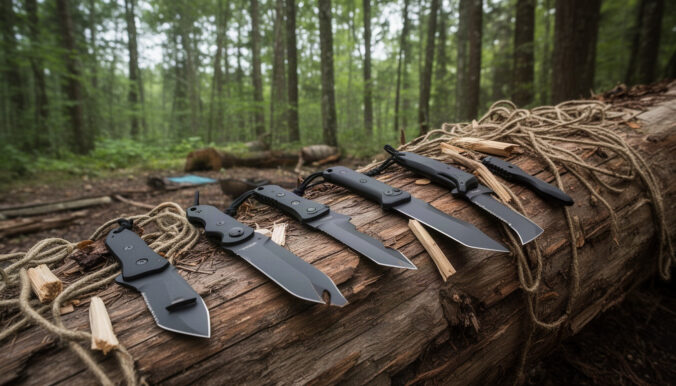
TL;DR: – The ESEE-5 ($165) and Becker BK2 ($70) represent the clearest mid-range vs. budget comparison for serious survival use.
- Full-tang construction in 1095 carbon or stainless steel dominates the $50–$120 sweet spot for most outdoor enthusiasts.
- Blade length of 4–6 inches covers ~90% of survival tasks while remaining legal in most U.S. jurisdictions.
What Makes a Fixed Blade Knife a True Survival Knife?
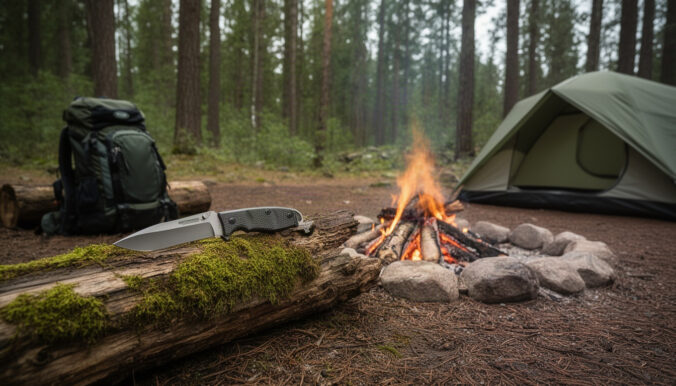
A survival knife is a fixed-blade tool used for practical cutting tasks in outdoor environments, including preparing kindling, cutting cord, processing small materials, and handling campsite work. But not every fixed blade qualifies as a true survival knife – the distinction matters when you’re relying on one tool to replace multiple functions in the field.
According to survival experts, a high-quality survival knife can replace multiple tools in the field. It allows you to build shelters, process wood for fire, prepare food, cut rope, craft tools, and even signal for help. Here’s what separates a genuine survival knife from a general-purpose blade:
Full-tang construction is non-negotiable. A fixed blade survival knife is considered the most reliable knife design for demanding outdoor use because it has no moving parts, making it stronger, safer, and capable of handling heavy tasks such as splitting wood using the batoning technique, carving tools and tent stakes, preparing firewood and kindling, and field dressing game. Partial tangs and hollow handles are red flags – they fail under stress.
Blade steel choice determines whether your knife sharpens easily in the field or demands professional equipment. High carbon steel knives are generally tougher and easier to sharpen, while stainless steel knives are generally more brittle but hold their edge longer. This trade-off is critical for survival contexts where you might need to touch up your edge with improvised abrasives.
Blade length of 4–6 inches is the practical sweet spot. A good rule of thumb for most people is to select a knife with a blade between 4 and 6 inches. Anything shorter limits chopping power; anything longer becomes unwieldy for fine tasks like food prep or carving.
Handle grip and material matter more than aesthetics. The handle of a survival knife is arguably more important than the blade. Look for textured surfaces (G10, Micarta, or aggressive jimping) that won’t slip when wet or bloody.
Sheath quality determines whether your knife stays accessible and protected. Plastic or kydex sheaths are usually very durable, securely carry the knife, allow the user a wide variety of mounting options and ways to use the sheath, and work well in all kinds of weather conditions.
Key Takeaway: A true survival knife combines full-tang construction, 4–6 inch blade length, high-carbon or stainless steel, and a secure Kydex sheath. Budget $70–$170 for a reliable option that handles batoning, food prep, and shelter work.
How Do the Top Fixed Blade Survival Knives Compare?
The market offers dozens of survival knives, but a handful consistently earn expert recommendations across independent reviews. Here’s how the top performers stack up:
| Knife | Blade Steel | Blade Length | Weight | Tang Type | Price Range | Best Use Case |
|---|---|---|---|---|---|---|
| Becker BK2 | 1095 Carbon | 4.75″ | 6.2 oz | Full | ~$70 | Budget-conscious campers |
| Mora Garberg | 1095 Carbon / 12C27 | 4.3″ | 4.2 oz | Full | ~$100 | Lightweight backpacking |
| ESEE-5 | 1095 Carbon | 5.25″ | 7.8 oz | Full | ~$165 | Serious survival work |
| Fallkniven F1 | VG-10 Laminate | 5.1″ | 5.8 oz | Full | ~$170 | Wet environments |
| Benchmade Puukko | CPM-3V | 3.6″ | 4.1 oz | Full | ~$200 | Premium bushcraft |
| Ka-Bar BK9 | 1095 Carbon | 9″ | 16.8 oz | Full | ~$80 | Camp chopping |
The top overall pick for serious survival use is the ESEE-5. The ESEE 5 has a 5.25-inch full tang, high-carbon steel blade and ships with a Kydex sheath offering multiple carry positions. Its 1095 carbon steel sharpens easily in the field, and the manufacturer backs it with a lifetime no-questions-asked warranty.
Budget Pick Under $100
The Becker BK2 ($70) is the entry point for serious fixed-blade survival work. For about $50, is a great option for a highly capable survival knife, though street prices typically run $65–$75. The 4.75-inch 1095 carbon blade handles batoning, food prep, and shelter work without hesitation. At 6.2 oz, it’s light enough for pack carry. The trade-off: no warranty, basic leather sheath, and less refined ergonomics than mid-range options.
The Mora Garberg ($100) is the lightweight alternative. The Morakniv Garberg Survival knife is a Swedish-made knife featuring a 4.3-inch carbon steel blade. At 4.2 oz, it’s one of the lightest full-tang survival knives available. Full-tang fixed blades in 1095 carbon or 420HC steel dominate the $50–$120 sweet spot for most campers. The Garberg fits this profile perfectly – ideal for ultralight backpacking where every ounce matters.
Mid-Range $100–$200 Sweet Spot
The ESEE-5 ($165) adds meaningful upgrades over budget options. The blade stock is thicker (5/16 inch vs. the BK2’s 4.9mm), the handle ergonomics are superior, and the Kydex sheath system offers one-handed retention. Most critically: the lifetime warranty covers any damage, including abuse. 1095 carbon resharpens in under 3 minutes on a basic whetstone; S30V requires 8–12 minutes with diamond equipment. The ESEE-5 prioritizes field-sharpenability – a practical advantage in remote settings.
The Fallkniven F1 ($170) takes a different approach: laminated VG-10 steel (VG-10 core sandwiched between 420J2 stainless layers) resists corrosion in wet environments. The Fallkniven S1 has a blade of 5.10 in, overall length of 9.70 in, and weight of 6.70 oz. The F1 is slightly heavier but excels in humid or saltwater conditions where carbon steel would rust without constant oiling.
Premium Fixed Blades $200 and Up
The Benchmade Puukko ($200) uses CPM-3V tool steel – a premium material with exceptional toughness and edge retention. CPM-3V demands diamond or ceramic sharpening systems, making it less practical for field touch-ups but ideal if you’re willing to maintain it properly at base camp. This knife targets collectors and professionals who prioritize performance over field-sharpenability.
Key Takeaway: The $70 Becker BK2 handles 90% of survival tasks. The $165 ESEE-5 adds warranty coverage and refined ergonomics. The $170 Fallkniven F1 prioritizes corrosion resistance. Choose based on your environment and maintenance tolerance, not brand prestige.
Which Fixed Blade Survival Knife Is Best for Your Use Case?
Survival knives aren’t one-size-fits-all. Your primary use case should drive your choice more than price or popularity.
Bushcraft & Woodworking: You’re carving, notching, and processing firewood with precision. The Mora Garberg ($100) excels here – its 4.3-inch blade is optimized for fine work, and the lightweight design reduces fatigue during extended carving sessions. A blade length of 4 to 6 inches is generally considered ideal for survival knives, offering a balance between control and cutting power.
Hunting & Field Dressing: You need a blade that handles heavy cutting and won’t slip when wet. The ESEE-5 ($165) is the standard here. The ESEE 5 has a 5.25-inch full tang, high-carbon steel blade with aggressive jimping on the spine – critical for maintaining grip during game processing.
Emergency & EDC (Everyday Carry): You want something compact that doesn’t scream “tactical.” The Becker BK2 ($70) disappears into a pack or belt sheath. It’s affordable enough that losing it isn’t catastrophic, yet capable enough for genuine emergencies.
Wilderness Camping (Multi-Day): Weight matters. The Fallkniven F1 ($170) at 5.8 oz balances capability with packability. Over a 3-day trip, the 11 oz difference between the F1 and the Ka-Bar BK9 (16.8 oz) translates to real fatigue reduction.
Military/Tactical Use: The Ka-Bar BK9 ($80) is purpose-built for hard use and heavy chopping. Its 9-inch blade and 16.8 oz weight make it a camp knife rather than a pack knife, but it’s nearly indestructible and costs less than mid-range alternatives.
Key Takeaway: Match your knife to your primary task: bushcraft → Mora Garberg; hunting → ESEE-5; emergency → Becker BK2; backpacking → Fallkniven F1; camp work → Ka-Bar BK9. Don’t buy a premium blade for tasks a budget knife handles equally well.
Fixed Blade Steel Types: What Do the Ratings Actually Mean?
Steel choice is where most buyers get confused. You see “1095 carbon” or “CPM-3V” and have no idea what trade-offs you’re making. Here’s the practical breakdown:
| Steel Type | Edge Retention | Corrosion Resistance | Field Sharpening | Typical HRC | Price Impact |
|---|---|---|---|---|---|
| 1095 Carbon | Moderate | Poor (requires oiling) | Easy (ceramic rod) | 56–58 | Baseline |
| D2 Tool | High | Moderate | Difficult | 59–61 | +$20–$40 |
| VG-10 Stainless | High | Excellent | Moderate | 60–62 | +$30–$60 |
| CPM-3V | Very High | Good | Very Difficult | 62–64 | +$80–$120 |
1095 High-Carbon Steel is the survival knife standard for good reason. 1095 carbon resharpens in under 3 minutes on a basic whetstone; S30V requires 8–12 minutes with diamond equipment. You can restore a workable edge with a ceramic mug bottom or smooth river stone in a pinch. The downside: it rusts without regular oiling in humid environments. High carbon steel knives are also generally tougher and easier to sharpen. Stainless steel knives are generally more brittle, but they hold their edge longer.
D2 Tool Steel offers superior edge retention – it stays sharp longer under heavy use. But it’s semi-stainless (moderate corrosion resistance) and demands proper sharpening equipment. Field touch-ups are impractical without a diamond stone.
VG-10 Stainless balances edge retention with corrosion resistance. Stainless steels contain enough chromium in their composition to improve corrosion resistance, although no stainless steel is completely immune to corrosion. It won’t rust in wet conditions, but it’s harder to sharpen than 1095 and requires more skill to maintain an edge in the field.
CPM-3V is premium tool steel with exceptional toughness and wear resistance. The best steel for hunting knives is typically 60–62 HRC, which balances edge holding with toughness. CPM-3V runs 62–64 HRC, making it nearly unbreakable – but it requires diamond abrasives for sharpening and isn’t field-practical.
The practical rule: Choose 1095 carbon if you’ll maintain your knife regularly and need field-sharpenability. Choose VG-10 if you’re in wet environments and can accept slower field sharpening. Choose CPM-3V only if you’re willing to carry dedicated sharpening equipment or maintain it at base camp.
Key Takeaway: 1095 carbon sharpens in 3 minutes with basic tools; VG-10 takes 8–12 minutes; CPM-3V requires diamond equipment. For true survival contexts, 1095’s field-sharpenability outweighs stainless steel’s corrosion resistance.
How to Choose the Right Fixed Blade Survival Knife for Your Budget
Buying a survival knife isn’t complicated if you follow a simple framework. Here’s your decision checklist:
Step 1: Define Your Primary Use Will you be bushcrafting, hunting, camping, or carrying for emergency backup? This determines blade length (3.6″ for carving vs. 5.25″ for chopping) and steel type (1095 for field sharpening vs. VG-10 for wet environments).
Step 2: Set Your Budget Ceiling Budget knives ($50–$100) handle 90% of survival tasks. Mid-range ($100–$200) adds warranty coverage and refined ergonomics. Premium ($200+) prioritizes edge retention over field-sharpenability. Don’t overpay for features you won’t use.
Step 3: Verify Full-Tang Construction According to REI’s expert advice, a full tang knife is stronger and more durable than a partial tang. Reject any knife with a partial tang, rat-tail tang, or hollow handle – these are failure points under batoning stress.
Step 4: Check Blade Length Against Local Law A blade length of 4 to 6 inches is generally considered ideal for survival knives, offering a balance between control and cutting power. Most U.S. jurisdictions allow 4–6 inch fixed blades for outdoor use, but verify your local regulations before purchasing.
Step 5: Evaluate Sheath Quality Plastic or kydex sheaths are usually very durable, securely carry the knife, allow the user a wide variety of mounting options and ways to use the sheath, and work well in all kinds of weather conditions. Leather sheaths look traditional but absorb water and degrade without maintenance.
Red Flags to Avoid:
- Vague steel labeling (“stainless steel” without a grade)
- Hollow handles or partial tangs
- Serrated edges longer than 1.5 inches (difficult to sharpen in the field)
- Prices under $40 (quality control issues are common)
- No warranty or return policy
Price-to-Value Reality Check: The $70 Becker BK2 and $165 ESEE-5 represent the clearest comparison. The extra $95 buys you: thicker blade stock (5/16″ vs. 4.9mm), superior handle ergonomics, a Kydex sheath system with multiple carry options, and a lifetime warranty. For casual camping, the BK2 suffices. For serious survival work or multi-day expeditions, the ESEE-5’s warranty and ergonomics justify the premium.
Key Takeaway: Full tang + 4–6 inch blade + 1095 or VG-10 steel + Kydex sheath = survival-ready knife. Budget $70–$100 for reliable entry-level options; $150–$170 for mid-range with warranty coverage.
Frequently Asked Questions About Fixed Blade Survival Knives
How much should I spend on a quality fixed blade survival knife?
Direct Answer: $70–$100 covers reliable full-tang survival knives for most outdoor use; $150–$170 adds warranty coverage and refined ergonomics; $200+ prioritizes premium steel and edge retention over field-sharpenability.
Full-tang fixed blades in 1095 carbon or 420HC steel dominate the $50–$120 sweet spot for most campers. The Becker BK2 at $70 handles 90% of survival tasks. If you’re willing to spend more, the ESEE-5 at $165 adds meaningful upgrades – thicker blade stock, superior ergonomics, and a lifetime warranty – but doesn’t fundamentally change capability.
What is the difference between a survival knife and a bushcraft knife?
Direct Answer: Survival knives prioritize durability and multi-tasking (batoning, prying, heavy chopping); bushcraft knives prioritize fine woodworking and carving precision with thinner, more delicate blades.
Survival knives typically have longer, thicker blades (5–6 inches) optimized for camp tasks and heavy use. Bushcraft knives are shorter (3.5–4.5 inches) and designed for carving, notching, and fire prep. The most popular bushcraft knives have a blade length of between 9 and 13 centimetres. Most are between 10 and 11 centimetres long. The distinction matters: a survival knife can handle bushcraft tasks, but a bushcraft knife will fail under batoning stress.
Is a fixed blade knife better than a folding knife for survival situations?
Direct Answer: Yes. A fixed blade survival knife is considered the most reliable knife design for demanding outdoor use because it has no moving parts, making it stronger, safer, and capable of handling heavy tasks such as splitting wood using the batoning technique, carving tools and tent stakes, preparing firewood and kindling, and field dressing game.
Folding knives have a failure point at the blade-handle junction under stress. Fixed blades eliminate this weakness entirely. For survival contexts where you’re batoning through hardwood or prying open logs, a fixed blade is non-negotiable.
What blade length is best for a survival knife?
Direct Answer: 4–6 inches is the practical sweet spot, balancing utility (batoning, food prep, shelter tasks) with packability and legal carry compliance.
A good rule of thumb for most people is to select a knife with a blade between 4 and 6 inches. Anything shorter limits chopping power; anything longer becomes unwieldy for fine tasks. The 4–5 inch blade length covers ~90% of camping tasks while remaining legal in most U.S. jurisdictions.
Can I legally carry a fixed blade survival knife while hiking?
Direct Answer: It depends on your jurisdiction. Most U.S. states allow 4–6 inch fixed blades for outdoor use, but California, New York, and Massachusetts have restrictions that can make carrying even a belt knife a criminal offense without specific exemptions.
Federal public lands (National Parks, National Forests) have separate blade-length rules – typically 4 inches maximum. Always verify your local and federal regulations before carry. Knife Depot’s blog includes state-by-state legal guidance if you need detailed information for your region.
How do I maintain and sharpen a fixed blade knife in the field?
Direct Answer: 1095 carbon steel resharpens in under 3 minutes on a basic whetstone or ceramic rod; stainless steels like VG-10 require 8–12 minutes with diamond equipment.
For 1095 carbon, carry a ceramic rod or leather strop. In emergencies, the unglazed ceramic foot of a mug or a smooth sandstone river rock can restore a workable edge. For stainless steels, you’ll need dedicated sharpening tools – field touch-ups are impractical without proper equipment. This is why 1095 carbon dominates survival knife recommendations: it’s maintainable with improvised abrasives.
What are the limitations of budget fixed blade survival knives under $50?
Direct Answer: Budget knives under $50 often have quality control issues, vague steel labeling, and no warranty. They may fail under heavy batoning or develop rust quickly if neglected.
One knife maker claims to have tested the hardness of some factory knives to be less than 40, though the knives should have been in the 58-60 hardness range. Spend the extra $20–$30 for a Becker BK2 ($70) or Mora Garberg ($100) with verified specs and warranty coverage. The difference in reliability is substantial.
Conclusion
Choosing a top-rated fixed blade survival knife doesn’t require spending $300 or analyzing obscure metallurgy. The market has converged on a clear hierarchy: the Becker BK2 ($70) and Mora Garberg ($100) handle entry-level survival work reliably. The ESEE-5 ($165) and Fallkniven F1 ($170) add meaningful upgrades – warranty coverage, refined ergonomics, and corrosion resistance – for serious outdoor professionals.
The key is matching your knife to your use case and environment. A high-quality survival knife can replace multiple tools in the field. It allows you to build shelters, process wood for fire, prepare food, cut rope, craft tools, and even signal for help. Full-tang construction, 4–6 inch blade length, and 1095 carbon or VG-10 steel are non-negotiable. Everything else – brand prestige, fancy handle materials, premium steel – is secondary.
If you’re ready to invest in a reliable fixed blade, Knife Depot carries the top-rated options discussed here, with detailed specs and customer reviews to guide your final decision.