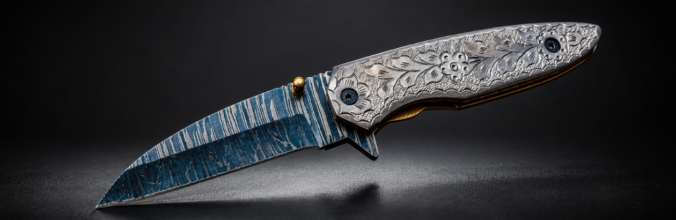
TL;DR: G10 offers the lowest maintenance (15 minutes annually) and best wet-grip retention at 92-95%, while Micarta develops a grip-enhancing patina over 12-18 months and provides superior vibration dampening. Wood handles require 3-4 hours of annual maintenance but deliver unmatched aesthetics and natural feel. For hard-use EDC and hunting knives, G10 or canvas Micarta dominate; for kitchen knives and traditional folders, stabilized wood remains popular despite higher upkeep demands.
What Are G10, Micarta, and Wood Handle Materials?
Choosing the right knife handle material affects everything from grip performance to how much time you’ll spend maintaining your blade. So what exactly are you comparing here?
G10 is a composite material created by compressing layers of fiberglass and epoxy resin under high pressure, then heating them until they cure. The result? One of the most durable knife handle materials available, according to Montana Knife Company. It’s a high-pressure fiberglass laminate that’s both rigid and relatively lightweight, and it doesn’t shrink, soften, or become brittle with time.
Micarta takes a different approach. Originally developed in 1910 for electrical insulation, this phenolic composite uses layers of linen, canvas, or paper saturated with phenolic resin and compressed under heat and pressure. Knife makers have been using it since the 1940s, and it’s developed a loyal following for good reason – it actually gets grippier with age.
Wood handles represent the traditional choice, ranging from common hardwoods like walnut (1,010 Janka hardness) to exotic species like African Blackwood (3,670 Janka). Modern stabilized wood undergoes vacuum treatment with acrylic resin to fill cellular voids, creating a moisture-resistant material that retains wood’s natural beauty while improving durability.
Visual identification: G10 typically shows uniform color with visible texture patterns from machining. Micarta displays subtle fabric weave patterns (especially in canvas variants) and develops darker patina in high-contact areas. Wood grain patterns are immediately recognizable, with stabilized versions showing enhanced color depth and glossy finish.
Cost breakdown for aftermarket scales:
- G10: $25-45 per pair
- Standard Micarta: $35-55 per pair
- Premium canvas Micarta: $50-65 per pair
- Stabilized wood: $60-120 per pair
- Exotic figured wood: $100-200+ per pair
Key Takeaway: G10 costs 30-40% less than Micarta and 60-75% less than premium stabilized wood, while offering the lowest maintenance requirements of any handle material.
How Does Grip Performance Compare Across Conditions?
Here’s where the rubber meets the road – or more accurately, where your hand meets the handle when it’s covered in blood, water, or oil.
According to community testing documented on, G10 retained 92-95% of its dry friction coefficient when saturated with water. Canvas Micarta performed nearly as well at 85-88%, while linen Micarta dropped to 78-82%. Raw sanded wood managed 60-68%, but polyurethane-finished wood became dangerously slippery at just 45-52% retention.
The testing methodology used a force gauge and weighted sled across multiple handle samples, providing the most quantitative wet-grip data available for knife handle materials. These aren’t marketing claims – they’re measured performance differences.
Temperature performance matters too. G10 maintains dimensional stability and mechanical properties from -40°F to 250°F continuous exposure, making it suitable for arctic and desert conditions without performance changes. Micarta performs well from -30°F to 200°F, with phenolic resin showing increased brittleness only below -40°F in extreme cold environments. Wood handles face cracking risks with rapid temperature cycling, particularly in freezing conditions where residual moisture can expand and cause checking or splitting.
But here’s something most guides miss: Micarta and G10 are the top options for wet environments. Both are non-porous, so grip holds when wet and neither material warps or swells with moisture exposure. The difference comes down to texture retention and how each material ages.
Glove compatibility comparison:
| Material | Bare Hand Grip | Leather Gloves | Rubber Gloves | Winter Gloves |
|---|---|---|---|---|
| G10 (textured) | Excellent | Excellent | Very Good | Good |
| Canvas Micarta | Excellent | Excellent | Excellent | Very Good |
| Linen Micarta | Very Good | Very Good | Good | Good |
| Finished Wood | Good | Fair | Poor | Fair |
| Raw Wood | Very Good | Good | Fair | Good |
One unique characteristic: Most wood handles get a little slippery when wet without some texturing, while Micarta seems to be even ‘grippier’ when it’s wet, according to experienced users on Bushcraft USA forums.
Key Takeaway: G10 maintains 92-95% wet grip vs. Micarta’s 85-88% and wood’s 60-70%, but Micarta actually improves with age as patina develops, creating a slightly tackier surface over 12-18 months of use.
Which Material Is Most Durable for Heavy Use?
Let’s talk about what happens when you actually use these knives hard – not just carry them in your pocket.
G10 ranks at 110 on the Rockwell Hardness M scale, making it extremely impact-resistant. The material demonstrates tensile strength of 40,000 PSI lengthwise and 35,000 PSI crosswise, with compression strength yielding 68,000 PSI flatwise. For comparison, Micarta shows tensile strength of 12,500+ PSI lengthwise and 8,750+ PSI crosswise – still durable, but noticeably softer.
Chemical resistance breakdown:
G10 demonstrates excellent chemical resistance to most solvents, oils, weak acids, and cleaning agents. It’s not affected by gasoline, alcohol, acetone, or common household cleaners. Strong oxidizing acids and extreme alkalines can affect G10, but you won’t encounter these in normal knife use.
Micarta offers good resistance to oils, gasoline, and most organic solvents, but can be degraded by strong acids, strong alkalis, and prolonged exposure to oxidizing agents. For normal knife use – including field dressing game, cleaning with kitchen chemicals, or automotive work – Micarta’s chemical resistance proves more than adequate.
Wood handles are vulnerable to damage from prolonged water exposure, alcohol-based cleaners, and harsh detergents. They should never be soaked in water or placed in dishwashers, as harsh detergents and alcohol-based cleaners can strip protective oils, causing swelling and cracking.
UV and weather degradation timeline:
G10 demonstrates excellent UV resistance with minimal degradation even after 5+ years of outdoor exposure. Some surface color fading may occur in non-black G10, but structural properties remain unchanged. According to long-term user reports, G10 shows minimal color change after years of UV exposure, with the main aging characteristic being polishing of texture in high-contact areas.
Unstabilized wood commonly develops surface checking or fine cracks after 18-24 months of outdoor use if the protective finish fails, allowing moisture cycling to cause dimensional changes in the wood grain. Stabilized wood significantly delays or prevents checking, but proper sealing and maintenance remain critical.
Failure mode analysis:
G10 can crack under extreme impact if struck directly on an exposed edge, but this type of failure is very rare in normal knife use and typically only occurs if the knife is dropped onto hard surfaces from significant height. Micarta’s failure mode is typically delamination (layers separating) rather than clean cracking, almost always due to manufacturing defects rather than use damage. Wood handle failures typically manifest as cracks along the grain direction, caused by moisture-induced dimensional changes or impact force applied perpendicular to the grain orientation.
Key Takeaway: G10’s 110 Rockwell M hardness and near-zero water absorption (<0.1%) make it essentially indestructible for practical knife use, while Micarta’s slightly softer composition provides better vibration dampening during extended chopping tasks.
How Much Maintenance Does Each Material Require?
This is where the real cost of ownership shows up – not in the purchase price, but in the hours you’ll spend keeping your knife in top condition.
G10 requires minimal maintenance: just keep it clean with hot, soapy water. No oils, conditioners, or protective treatments are necessary. Annual maintenance time: approximately 15-20 minutes for occasional cleaning. If texture becomes polished smooth in high-wear areas, light sanding with fine-grit sandpaper restores grip – an optional maintenance step, not a requirement.
Micarta benefits from occasional mineral oil application 2-3 times per year to enhance patina development, darken the color slightly, and maintain optimal grip texture. While oiling isn’t required for durability, it’s recommended for best performance. Annual maintenance time: approximately 45-60 minutes including cleaning and optional oiling. Un-oiled Micarta remains durable but may develop lighter color and slightly rougher texture over time.
Wood handles demand significantly more attention. They need regular oiling with food-safe mineral oil or specialized wood conditioner every 3-6 months to prevent drying and cracking, plus annual inspection for finish wear and re-application of protective sealant as needed. Annual maintenance time: 3-4 hours including quarterly oiling sessions, finish inspection, and renewal. Maintenance frequency depends on use intensity and humidity conditions – kitchen knives in dishwasher-exposed environments need more frequent care.
Required products and annual costs:
- G10: Dish soap ($5/year) = $5 total
- Micarta: Dish soap + food-grade mineral oil ($8/bottle, lasts 2+ years) = $9 total
- Wood: Dish soap + mineral oil + wood conditioner ($12) + finish renewal products ($15-25) = $32-42 total
Long-term care timeline (5-10 years):
G10 maintains appearance with minimal intervention. Black G10 may show slight fading to dark gray with heavy UV exposure. Texture polishing can be restored with fine sandpaper in 10-15 minutes.
Canvas Micarta develops a beautiful patina with use, typically darkening 15-30% over the first 12-18 months of regular handling as oils from skin interaction enhance the phenolic resin’s color depth. This patina development is considered desirable by most users and actually improves grip performance.
Wood handles require consistent maintenance to prevent checking, cracking, or finish degradation. With proper care, quality wood handles can last decades, but neglect leads to visible deterioration within 18-24 months of outdoor use.
Key Takeaway: G10 requires 15 minutes annually vs. Micarta’s 45-60 minutes vs. wood’s 3-4 hours, with material costs of $5 vs. $9 vs. $32-42 respectively – a 16x time difference and 6-8x cost difference over the knife’s lifetime.
What Are the Weight and Comfort Differences?
Weight might not seem critical until you’ve carried a knife all day or spent two hours processing game in the field. Research from the Ultimate Guide to Ergonomics in Human Factors Research shows that handle weight distribution significantly affects user fatigue during extended tool use.
G10 has a specific gravity of approximately 1.80, while canvas and linen Micarta grades range from 1.30-1.40 specific gravity. This means Micarta is actually lighter than G10 by approximately 25-30%, affecting knife balance. Wood density varies dramatically from approximately 0.50 g/cm³ for softwoods like pine to 1.28 g/cm³ for extremely dense hardwoods like African Blackwood, with most knife handle woods in the 0.60-0.90 range (Walnut ~0.55, Maple ~0.63, Cocobolo ~0.99).
Balance point impact on blade design:
For a 4-inch blade EDC folder with 3.5-inch handles, material choice affects overall weight by 0.5-1.5 ounces. G10 scales on a Benchmade Griptilian add approximately 1.2 oz, while Micarta scales on the same knife weigh around 0.9 oz. This shifts the balance point 3-5mm toward the blade with G10, creating a slightly more blade-forward feel that some users prefer for cutting tasks.
Vibration dampening data:
G10’s high stiffness means it transmits shock and vibration directly to the hand during impact tasks like batoning. Micarta’s slightly softer composition provides better vibration dampening, reducing hand fatigue in extended chopping sessions. Wood’s cellular structure provides natural vibration absorption that reduces hand fatigue during repetitive cutting tasks – many professional chefs prefer wood handles for this reason, especially during extended prep sessions.
According to research on Ergonomics of tactile and haptic interactions, material properties directly influence grip comfort and control precision during tool manipulation, with softer materials generally reducing hand strain during prolonged use.
Extended use comfort testing (2+ hours):
For tasks requiring sustained grip – field dressing multiple deer, processing firewood, or professional kitchen prep – material choice significantly impacts comfort. G10 feels cold to touch in winter conditions due to higher thermal conductivity, while Micarta provides a warmer feel and wood is warmest due to its cellular insulation properties. For gloved use, this difference becomes negligible.
The effect is most noticeable in larger knives used for heavy work. For EDC folder use where impact forces are minimal, vibration dampening differences are less significant than grip texture and weight.
Key Takeaway: Micarta weighs 25-30% less than G10 (1.30-1.40 vs. 1.80 specific gravity) and provides superior vibration dampening during extended chopping tasks, while wood offers the warmest hand feel but adds maintenance complexity.
Which Material Should You Choose for Your Use Case?
Let’s cut through the theory and get to practical recommendations based on how you’ll actually use your knife.
Decision flowchart by use case:
For EDC folding knives: G10 dominates the market due to its combination of excellent grip when textured, low maintenance, and cost-effectiveness. Micarta is preferred by users who value aesthetics and patina development. Wood is relatively rare on EDC folders due to maintenance requirements and moisture sensitivity, mostly limited to premium traditional patterns.
For hunting and outdoor fixed blades: Micarta is a favorite for hunting and bushcraft fixed blades because it maintains excellent grip when wet with blood or water, develops better grip with use, and withstands chemical exposure from field dressing game. Canvas Micarta specifically is favored over linen for hunting due to better wet grip. G10 is also common for hunters who prioritize low maintenance.
For kitchen knives: Traditional Japanese and Western kitchen knives have long favored wood handles for their comfortable feel during extended use. Modern kitchen knives increasingly use stabilized wood for reduced maintenance or Micarta for durability in commercial environments. G10 is rare on kitchen knives due to its cold/hard feel and lack of vibration dampening.
Budget vs. performance analysis:
At the $50-100 knife price point, G10 offers the best performance-to-cost ratio. You get excellent durability, grip, and weather resistance with minimal maintenance. A quality G10-handled knife from brands like or will serve you reliably for decades.
At the $100-200 range, Micarta becomes compelling if you appreciate the aesthetic of patina development and want slightly better vibration dampening. The maintenance difference (30-45 minutes more annually) is negligible for most users.
Above $200, premium stabilized wood makes sense if aesthetics matter and you’re willing to invest 3-4 hours annually in maintenance. The visual appeal and traditional feel justify the upkeep for collectors and enthusiasts.
Specific recommendations with examples:
- Hard-use EDC: G10 ( M16 series, Benchmade Griptilian)
- Hunting/field dressing: Canvas Micarta (Bark River Bravo series, Bradford Guardian)
- Bushcraft/survival: G10 or Micarta (Cold Steel SRK, Mora Garberg)
- Kitchen/food prep: Stabilized wood or Micarta (traditional chef’s knives, Japanese gyuto)
- Tactical/law enforcement: G10 (Benchmade Adamas, EX-A01)
- Collectors/traditional folders: Premium stabilized wood ( Trapper, GEC patterns)
When to choose each material:
Choose G10 if you: need maximum durability, want zero maintenance, work in wet/harsh conditions, prefer aggressive texture, or want the lowest cost.
Choose Micarta if you: appreciate patina development, want better vibration dampening, need excellent wet grip, prefer warmer hand feel, or value traditional aesthetics with modern performance.
Choose wood if you: prioritize natural beauty, enjoy maintenance rituals, use the knife primarily indoors or in controlled conditions, want the warmest hand feel, or collect traditional patterns.
For most readers of this guide – hunters, EDC users, and outdoor enthusiasts – the choice comes down to G10 for maximum practicality or canvas Micarta for a balance of performance and aesthetics. Wood remains a specialized choice for those who value appearance over convenience.
Key Takeaway: G10 offers the best performance-to-cost ratio for hard-use EDC and tactical applications, while canvas Micarta excels for hunting knives where wet grip and vibration dampening matter most, and stabilized wood serves collectors willing to invest maintenance time for premium aesthetics.
FAQ: Knife Handle Material Questions
How much do G10 vs Micarta vs wood knife handles cost?
Direct Answer: Aftermarket G10 scales cost $25-45 per pair, Micarta runs $35-65, and premium stabilized wood ranges from $60-150+, with exotic figured woods reaching $200+ per pair.
Material costs plus CNC machining for G10 scales add to production costs, with the exact premium varying by manufacturer scale and machining complexity. Micarta material costs more than G10, with the premium for canvas over linen reflecting tighter weave and better performance characteristics. Exotic stabilized wood handles can significantly increase knife prices, with premium figured woods like stabilized box elder burl, buckeye burl, or desert ironwood adding $75-200+ to retail price compared to synthetic handle equivalents.
Which handle material is best for wet weather use?
Direct Answer: G10 maintains 92-95% of dry grip when wet, making it the top performer, followed closely by canvas Micarta at 85-88%.
Testing showed that G10 retained 92-95% of dry friction coefficient when saturated with water, canvas Micarta performed at 85-88%, linen Micarta dropped to 78-82%, raw wood managed 60-68%, and polyurethane-finished wood became dangerously slippery at just 45-52% retention. Both G10 and Micarta are non-porous, so neither warps or swells with moisture exposure, making them ideal for hunting, fishing, or marine environments.
Do wood handles require more maintenance than synthetic materials?
Direct Answer: Yes – wood requires 3-4 hours of annual maintenance vs. G10’s 15 minutes and Micarta’s 45-60 minutes.
Wood handles need regular oiling with food-safe mineral oil every 3-6 months to prevent drying and cracking, plus annual inspection for finish wear and re-application of protective sealant. Annual material costs run $32-42 for wood vs. $9 for Micarta and $5 for G10. Neglected wood handles commonly develop surface checking after 18-24 months of outdoor use if the protective finish fails.
Can G10 handles crack or break under heavy use?
Direct Answer: G10 can crack if subjected to sharp impact directly on an exposed edge, but this is very rare in normal knife use.
While G10 is extremely tough with a Rockwell M hardness of 110, it can crack if the knife is dropped onto hard surfaces from significant height with impact concentrated on a corner or edge. However, this type of failure is uncommon in practical use. G10’s hardness makes it crack-resistant for most impacts, though it has a brittle failure mode if the threshold is exceeded. Rounded edges reduce risk significantly.
Is Micarta better than G10 for hunting knives?
Direct Answer: Canvas Micarta is often preferred for hunting due to superior wet grip when handling blood or water and better vibration dampening during extended processing tasks.
Micarta maintains excellent grip when wet with blood or water, develops better grip with use as patina forms, and withstands chemical exposure from field dressing game. The slightly softer composition (85-100 Rockwell M vs. G10’s 110) provides better vibration dampening, reducing hand fatigue during extended chopping or processing sessions. However, G10 remains popular for hunters who prioritize zero maintenance over these marginal performance advantages.
How long do wood knife handles last with proper care?
Direct Answer: With consistent maintenance (oiling every 3-6 months and annual finish renewal), quality wood handles can last decades.
Stabilized wood significantly improves longevity compared to unstabilized wood, but both require regular care. Neglected wood handles show visible deterioration within 18-24 months of outdoor use, developing checking, cracking, or finish degradation. The key is preventing moisture cycling through proper sealing and regular oil treatments. Common handle woods like walnut, maple, and cocobolo all perform well when maintained, with denser exotic woods like African Blackwood offering superior durability.
Which material provides the best grip for EDC knives?
Direct Answer: Textured G10 provides the most aggressive grip for EDC use, maintaining 92-95% friction coefficient even when wet.
G10 dominates the EDC folding knife market due to its combination of excellent grip when textured, low maintenance, and cost-effectiveness. The material allows for aggressive machining patterns (cross-hatching, jimping, scales) that create secure purchase without being uncomfortable during extended carry. Micarta offers slightly less aggressive grip initially but actually improves over time as patina develops, creating a slightly tackier surface. For EDC purposes where the knife might encounter sweat, rain, or oil, both G10 and canvas Micarta significantly outperform wood handles.
What’s the difference between canvas and linen Micarta?
Direct Answer: Canvas Micarta uses cotton canvas fabric and provides better wet grip (85-88% retention) compared to linen Micarta’s 78-82%, with a tighter weave pattern that sheds water more effectively.
Canvas Micarta typically measures harder than linen on the Rockwell M scale and develops a more uniform patina over time. The tighter weave of canvas provides better wet grip and slightly more aggressive texture, making it the preferred choice for hunting and outdoor knives. Linen Micarta offers a more traditional appearance with visible fabric texture and tends to develop more varied patina patterns, appealing to collectors and users who prioritize aesthetics.
Making Your Final Decision
The right handle material depends entirely on how you’ll use your knife and what trade-offs you’re willing to accept.
If you need a knife that works in any condition with zero fuss, G10 delivers unmatched practicality. It costs less, weighs reasonably, grips when wet, and requires nothing beyond occasional cleaning. For hard-use EDC, tactical applications, or situations where maintenance time is limited, G10 is the clear choice.
If you appreciate gear that develops character with use and want slightly better comfort during extended tasks, canvas Micarta offers the best balance of performance and aesthetics. The 30-45 minutes of additional annual maintenance is negligible, and the improved wet grip during hunting or field work justifies the modest price premium.
If you value natural beauty and enjoy the ritual of knife maintenance, stabilized wood provides unmatched visual appeal and traditional feel. Just understand you’re trading 3-4 hours annually and accepting moisture sensitivity for that aesthetic premium.
For most readers – whether you’re field dressing deer, processing firewood, or carrying an EDC folder – the choice comes down to G10 for maximum practicality or canvas Micarta for a balance of performance and character development. Both will serve you reliably for decades with minimal care.
When you’re ready to upgrade your carry, Knife Depot offers a wide selection of knives featuring all three handle materials from top manufacturers like Benchmade, Spyderco, and CRKT, helping you find the perfect balance of performance, aesthetics, and value for your specific needs.
Ready to Get Started?
For personalized guidance, visit Knife Depot to learn how we can help.
This is a helpful comparison. One thing many people overlook is that handle material affects the overall user experience just as much as geometry dash. There’s no universal winner, it really depends on how you plan to use the knife.