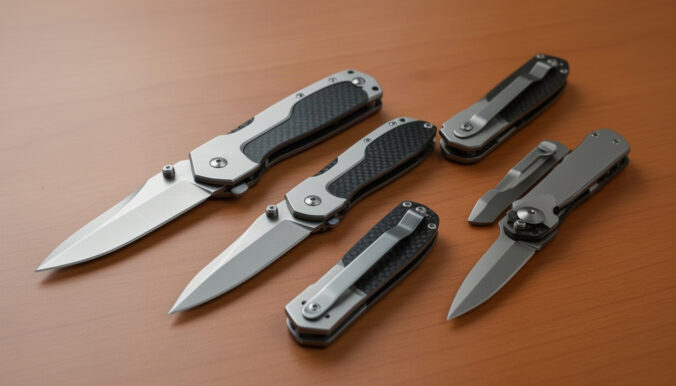
TL;DR: – The Spyderco Dragonfly 2 weighs just 1.2 oz (34g) with a full-locking VG-10 blade – lighter than an AA battery.
- Most EDC users prefer knives between 2.5–3.5 oz that disappear in a pocket without dragging it down.
- Handle material matters most: FRN saves roughly 15–20g compared to G-10 on the same platform.
- Budget options like the CRKT Drifter at 2.6 oz deliver solid cutting performance under $30.
What Makes a Folding Knife Truly Lightweight for EDC?
You're probably carrying your phone, keys, wallet, and maybe a flashlight. Adding a knife shouldn't feel like strapping on extra weight. But here's the thing: "lightweight" means different things depending on your carry style and tasks.
According to TEKTO Knives, around 3 ounces or less, a knife disappears in a pocket. Between 3 and 4 ounces you know it's there. Past 5 ounces it starts to drag a pocket down. That's your practical threshold.
Most EDC users prefer blades between 2.5 to 3.5 inches because they provide an excellent balance between portability and cutting performance. Combine that with a lightweight handle material, and you've got a knife that works for daily tasks without the burden.
Handle material is the primary weight lever. G10 is a high-pressure fiberglass laminate made from glass cloth layers soaked in epoxy resin, then compressed under heat. It's tough but heavier. FRN (fiberglass-reinforced nylon) cuts weight significantly. Carbon fiber delivers the highest strength-to-weight ratio of any handle material on the market, but costs more.
Lock type also affects weight. Slipjoints (no locking mechanism) are the lightest option. Liner locks add minimal weight but require two hands to close safely. Axis locks and compression locks enable one-handed closing – a convenience worth the extra grams for many users.
Key Takeaway: Lightweight EDC knives typically weigh under 3 oz, feature 2.5–3.5 inch blades, and use FRN or carbon fiber handles. Handle material choice saves more weight than blade steel selection.
How Do You Choose the Right Lightweight EDC Knife for Your Needs?
Before you scroll through product lists, ask yourself: What am I actually cutting? This determines everything.
Office and urban carry: You're opening packages, cutting food prep, maybe some light rope. You don't need a heavy-duty blade. A slipjoint or lightweight liner lock under 2.5 oz works perfectly. Legal blade length is rarely an issue in most U.S. states – most users prefer blades between 3 and 3.5 inches, and in most U.S. states, the legal carry limit for folding knives is 3–4 inches.
Outdoor and hiking: You might be processing firewood, cutting cordage, or field dressing game. You want a locking blade with better edge retention. A 2.5–3 oz knife with mid-range steel (like D2 or AUS-8) handles this without excessive weight.
Tactical or heavy-use carry: You're prying, cutting through tough materials, or using the knife as a backup tool. Accept that you'll carry 3–4 oz. A premium steel like S30V and a robust lock (Axis or compression) justify the extra weight.
Steel type vs. weight tradeoff: Here's the good news – blade steel choice doesn't meaningfully affect knife weight. 14C28N is a stainless knife steel known for its balance of corrosion resistance, toughness, and ease of sharpening. Nitro-V combines corrosion resistance, toughness, and practical edge performance. Both are lightweight options. The real difference is edge retention and maintenance frequency, not grams.
Pocket clip style and comfort: A relatively lightweight folding knife with a well-designed pocket clip is often easier to integrate into an existing EDC setup. Tip-up carry (blade pointing forward) deploys faster. Tip-down (blade pointing back) reduces accidental deployment and prints less in formal wear. For lightweight knives, tip-up is more common and ergonomic.
Key Takeaway: Match your knife to your actual tasks. Office users need sub-2.5 oz slipjoints; outdoor users want 2.5–3 oz locking folders; heavy users accept 3–4 oz for durability. Steel type matters less than handle material for weight.
Best Lightweight EDC Folding Knives: Top Picks by Category
Let's get specific. Here are knives that actually deliver on the lightweight promise, with real weights and specs you can compare.
| Model | Blade Steel | Weight | Blade Length | Price | Best For |
|---|---|---|---|---|---|
| Spyderco Dragonfly 2 | VG-10 | 1.2 oz (34g) | 2.25" | $60–$75 | Ultralight office carry |
| CRKT Drifter | 8Cr13MoV | 2.6 oz (74g) | 2.97" | $25–$35 | Budget-conscious users |
| CIVIVI Elementum | D2 | 2.47 oz (70g) | 2.97" | $40–$55 | Mid-range value |
| Kershaw Leek | 14C28N | 3.0 oz (85g) | 3.0" | $40–$50 | Assisted opening preference |
| Benchmade Bugout | CPM-S30V | 1.85 oz (52g) | 3.24" | $140–$160 | Premium lightweight |
| Case Sod Buster Jr. | Tru-Sharp | 2.0 oz (56g) | 3.1" | $30–$40 | Slipjoint traditionalists |
Best Budget Lightweight EDC Knife (Under $40)
The CRKT Drifter is your entry point. At 2.6 oz (74g) with a 2.97-inch 8Cr13MoV blade, it punches above its price. Glass-reinforced nylon handle with stainless liners keeps weight down while maintaining durability.
8Cr13MoV isn't premium steel – it won't hold an edge as long as S30V – but it sharpens easily on basic stones. For daily cutting tasks (packages, food prep, light outdoor work), it's more than adequate. The liner lock is secure, and the pocket clip carries comfortably tip-up.
Why not cheaper? You could find knives under $20, but they often use thinner blades that flex during cutting or handles that feel cheap. The Drifter hits the sweet spot: real steel, real durability, real value.
Best Mid-Range Lightweight EDC Knife ($40–$100)
The CIVIVI Elementum at 2.47 oz (70g) offers a significant step up. D2 steel holds an edge better than 8Cr13MoV, and the Micarta handle feels premium without adding weight.
D2 is semi-stainless – it requires more maintenance in wet environments but rewards you with superior edge retention. If you're cutting regularly and don't mind occasional maintenance, D2 is the sweet spot between budget and premium.
The Kershaw Leek at 3.0 oz (85g) sits here too. SpeedSafe assisted opening means one thumb stud press and the blade deploys – no manual flicking required. 14C28N steel balances edge retention and ease of sharpening. The stainless handle is heavier than FRN, but the assisted opening makes up for it in convenience.
Best Premium Lightweight EDC Knife (Over $100)
The Benchmade Bugout at 1.85 oz (52g) is the benchmark. A 3.24-inch CPM-S30V blade in a carbon fiber-reinforced polymer handle – this is the knife that made lightweight premium EDC mainstream.
CPM-S30V is a premium stainless steel with exceptional edge retention and corrosion resistance. You'll sharpen less frequently and carry more confidently in any environment. The Axis lock allows fully ambidextrous one-handed closing. The pocket clip is refined. Everything about this knife says "I know what I'm doing."
Is it worth $150+ over a $30 Drifter? If you carry daily, sharpen infrequently, and value premium materials – yes. If you're testing the lightweight EDC waters – no. Start with the Drifter or Elementum.
Key Takeaway: Budget users get solid performance from the CRKT Drifter ($25–$35, 2.6 oz). Mid-range buyers choose between the CIVIVI Elementum ($40–$55, 2.47 oz) for edge retention or the Kershaw Leek ($40–$50, 3.0 oz) for assisted opening. Premium users justify the Benchmade Bugout ($140–$160, 1.85 oz) for CPM-S30V steel and Axis lock convenience.
What Are the Trade-Offs of Going Ultra-Lightweight?
Here's where honesty matters. Ultra-lightweight knives (under 1.5 oz) make real sacrifices.
Blade thickness and edge retention: Lighter blades are thinner. Thinner blades flex more during cutting, especially when prying or processing tougher materials. You'll notice this immediately if you're used to heavier knives. The Spyderco Dragonfly 2 at 1.2 oz uses a full-flat grind – efficient but not ideal for heavy cutting.
Handle grip in wet conditions: FRN handles are textured but can feel slippery when wet or sweaty. G10 is especially popular on tactical and working knives because it's durable and can provide excellent traction. If you're working outdoors in rain or sweat, you might prefer the grip of G10 despite the extra weight.
Carbon fiber brittleness: Carbon fiber is formed by weaving micro-thin carbon strands together under extreme heat and resin. It's incredibly stiff and light but can delaminate or crack under lateral impact in ways that G10 resists. Drop a carbon fiber knife on concrete – you might see damage. Drop a G10 knife – it shrugs it off.
When NOT to choose the lightest option: If you're processing firewood, cutting rope under tension, or using the knife as a pry tool, go heavier. A 3–4 oz knife with a robust blade and G10 handle will outlast and outperform an ultralight option. The weight difference (1–2 oz) is negligible in a backpack but meaningful in your pocket during daily carry.
Real example: A 1.2 oz slipjoint (like the Dragonfly 2) excels at opening packages and light cutting. A 3 oz liner-lock folder (like the Drifter) handles prying, tougher materials, and abuse better. The Dragonfly is perfect for office carry. The Drifter is perfect for outdoor work. Trying to use the Dragonfly for heavy tasks will frustrate you.
Key Takeaway: Ultra-lightweight knives (under 1.5 oz) sacrifice blade thickness, handle grip, and durability. They excel at light daily tasks but fail under heavy use. Match weight to actual tasks – don't chase the lightest option if you need real cutting performance.
How to Carry and Maintain a Lightweight EDC Folding Knife
You've chosen your lightweight knife. Now make sure it stays functional and legal.
Pocket clip positioning: Tip-up carry allows the blade to deploy in the natural direction of the hand's motion; tip-down is slower to deploy but reduces accidental deployment risk. For lightweight knives, tip-up is standard and ergonomic. Your hand naturally draws the knife and flicks it open. Tip-down is safer in formal settings but slower.
Cleaning routine for lightweight steels: Even "stainless" steels corrode in saltwater or sweat environments. After beach trips or heavy sweating, rinse the blade and pivot with fresh water. Dry thoroughly. Apply a light coat of oil to the blade and pivot periodically, especially if the knife is exposed to moisture, sweat, or high humidity environments. Benchmade Blue Lube, Nano-Oil, or even mineral oil works.
Sharpening frequency for different steels: Budget steels (8Cr13MoV, AUS-8) need sharpening every 4–8 weeks with regular use. Premium steels (S30V, CPM-S30V) go 2–3 months. For daily carry with light-to-medium tasks, sharpen at the correct angle (usually 15–20 degrees per side). Most EDC knives are factory-sharpened at 15–20° per side – maintain that angle when sharpening.
Legal carry reminders: Blade length laws vary by state and municipality. In most U.S. states, the legal carry limit for folding knives is 3–4 inches. California and New York have stricter rules. Check your local ordinances before carrying. Most lightweight EDC knives fall within legal limits, but verify before traveling.
Storage tips for lightweight handle materials: FRN and carbon fiber don't require special storage, but avoid prolonged direct sunlight (UV degrades polymers) and extreme heat. Store in a cool, dry place. If you're not carrying for extended periods, apply a light oil to the blade to prevent corrosion.
Key Takeaway: Carry tip-up for speed, clean after sweat or saltwater exposure, sharpen every 4–8 weeks depending on steel grade, verify local blade length laws, and store in cool, dry conditions. Lightweight knives need the same maintenance as heavier ones – weight doesn't change care requirements.
Frequently Asked Questions About Lightweight EDC Folding Knives
What is the lightest EDC folding knife you can actually use daily?
Direct Answer: The Spyderco Dragonfly 2 at 1.2 oz (34g) is the lightest mainstream locking EDC knife. It's fully functional for daily cutting tasks – opening packages, food prep, light outdoor work.
Below 1.2 oz, you're looking at slipjoints or ultra-specialized designs. The Case Sod Buster Jr. at 2.0 oz is a slipjoint alternative. Both work daily, but the Dragonfly's locking blade offers more security for harder tasks.
How much should I spend on a lightweight EDC folding knife?
Direct Answer: Budget $25–$35 for a solid entry point (CRKT Drifter), $40–$55 for mid-range quality (CIVIVI Elementum), or $140–$160 for premium materials (Benchmade Bugout).
The jump from $30 to $150 isn't linear value. You're paying for steel grade (S30V vs. 8Cr13MoV), handle materials (carbon fiber vs. FRN), and brand heritage. If you carry daily and sharpen infrequently, premium is worth it. If you're testing lightweight EDC, start budget and upgrade later.
What blade steel is best for a lightweight everyday carry knife?
Direct Answer: For lightweight EDC, D2 and 14C28N offer the best balance. D2 holds an edge longer but requires more maintenance. 14C28N is a stainless knife steel known for its balance of corrosion resistance, toughness, and ease of sharpening – it's budget-friendly but loses edge faster than premium options. Premium S30V is overkill for light daily tasks but shines if you carry heavily and sharpen infrequently.
Are lightweight folding knives less durable than heavier ones?
Direct Answer: Not necessarily. Durability depends on steel grade and handle material, not weight. A lightweight CIVIVI Elementum with D2 steel is more durable than a heavier budget knife with soft stainless.
The trade-off is blade thickness. Lighter knives use thinner blades that flex more during prying or heavy cutting. For normal EDC tasks, this doesn't matter. For abuse, heavier knives with thicker blades win.
What is the best lightweight EDC knife for office carry?
Direct Answer: The Spyderco Dragonfly 2 at 1.2 oz is ideal for office carry – it's so light you'll forget it's there. The Case Sod Buster Jr. at 2.0 oz is a slipjoint alternative if you prefer traditional aesthetics.
Both handle office tasks (opening packages, cutting food prep) without printing in your pocket or feeling like a burden. If your office allows assisted opening, the Kershaw Leek at 3.0 oz adds convenience without much weight penalty.
How does a lightweight EDC knife compare to a fixed blade for daily tasks?
Direct Answer: Lightweight folding knives are more practical for daily carry – they're concealable, legal in more places, and don't require a sheath. Fixed blades are faster to deploy and more durable under abuse.
For office and urban carry, folding wins. For outdoor work and heavy cutting, fixed blades win. Most EDC users choose folding because the convenience outweighs the slight performance gap for typical daily tasks.
Is a slipjoint or locking blade better for lightweight everyday carry?
Direct Answer: Slipjoints are lighter and simpler. Locking blades are safer for harder cutting and prying. For pure office carry (packages, food prep), a slipjoint like the Case Sod Buster Jr. is sufficient. For outdoor or heavy-use carry, a locking blade like the CRKT Drifter is worth the extra 0.6 oz.
Most users choose locking blades for the security and versatility, even if it adds minimal weight.
Ready to Get Started?
For personalized guidance, visit Knife Depot to learn how we can help.
Conclusion
Lightweight EDC folding knives aren't a luxury – they're a practical choice for anyone who carries daily. The difference between a 1.2 oz knife and a 3.5 oz knife is negligible in a backpack but meaningful in a pocket. Over eight hours, that extra weight compounds.
Your choice depends on three factors: actual tasks (office vs. outdoor vs. heavy use), budget ($25–$160), and steel preference (budget vs. mid-range vs. premium). Start with the CRKT Drifter if you're testing the waters. Upgrade to the CIVIVI Elementum or Kershaw Leek if you carry regularly. Go premium with the Benchmade Bugout if you want the best lightweight option money can buy.
At Knife Depot, you'll find all these models in stock, along with detailed specs and user reviews to help you decide. The right lightweight EDC knife is out there – it just takes matching your needs to the right tool.
Leave a Reply