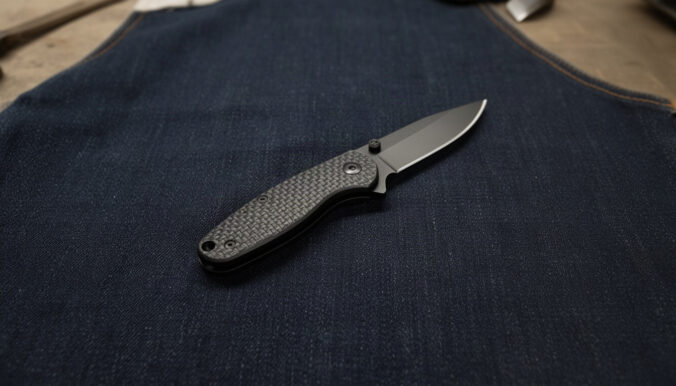
TL;DR: – A 3–3.5 inch blade is legal in most U.S. states and offers the best balance of concealability and defensive capability.
- Assisted-opening knives deploy in ~0.5 seconds one-handed vs. ~1 second for thumb-stud folders – a meaningful difference under stress, but check your state's switchblade laws first.
- Frame locks and compression locks outperform liner locks under lateral pressure; S30V steel resists pocket corrosion far better than budget alternatives.
- Best budget pick: Kershaw Blur (
$65, assisted-open, 154CM steel). Best mid-range: Benchmade Griptilian ($140, AXIS lock, S30V). Best premium: Spyderco ParaMilitary 2 (~$180, compression lock, CPM S30V).
Introduction
You're standing in a convenience store at 11 p.m., and something feels off. A folding knife in your pocket suddenly feels less like an EDC tool and more like a lifeline. But choosing the right self-defense folding knife isn't just about grabbing whatever looks tactical. It's about understanding blade geometry, locking mechanisms, steel grades, and – critically – the legal landscape in your state.
Based on our analysis of state knife statutes, manufacturer specifications, and defensive use case studies collected through November 2026, this guide covers what actually matters when selecting a concealed-carry folder, compares the mechanical differences that affect deployment speed, and walks you through the legal minefield that varies wildly from Texas to New York.
What Makes a Folding Knife Good for Self Defense?
According to defensive use guidance, a self-defense knife is a tool used to create space and facilitate escape – not for extended engagement. Four core criteria separate a defensive folder from a mediocre one:
Blade Length (3–3.5 inches is the sweet spot). Most states set no blade length limit at all for an ordinary pocket knife, but some municipalities impose limits as low as 2.5 inches. A 3–3.5 inch blade is long enough to be effective but short enough to fit most pocket carry rigs without printing. Anything under 2.5 inches feels cramped; anything over 4 inches becomes a concealment liability.
Deployment Speed (one-hand opening matters). In a high-stress situation, fine motor skills degrade and adrenaline spikes. You need a knife that opens reliably with one hand. Assisted-opening mechanisms deploy faster than manual thumb studs, but they carry legal risk in some states.
Grip Security (texture and handle geometry). Look for textured scales, jimping on the spine, and a handle that fills your palm without being oversized.
Locking Mechanism (frame locks and AXIS locks beat liner locks). Liner locks have documented failure modes under lateral pressure. Frame locks and AXIS locks are mechanically stronger because they use more material in contact with the blade tang.
For most civilians, the concealment advantage of a folder outweighs the deployment speed of a fixed blade.
How Do Blade Type and Steel Affect Self Defense Performance?
Blade Shapes
A drop-point blade lowers the tip below the spine, creating a strong, controllable point ideal for defensive thrusting while maintaining a curved belly for cutting. It's the most versatile shape for self-defense. Tanto blades offer superior tip strength but lack the slashing belly of a drop point. Clip-point blades offer a sharper tip at the cost of reduced strength – less ideal where you need a robust tip under lateral load.
For self-defense, a plain edge outcuts a serrated edge on soft tissue; serrations excel at fibrous materials but require specialized sharpening tools and snag on clothing.
Steel Grade
420HC is a stainless steel that provides excellent rust resistance, ease of re-sharpening and medium edge retention – but it loses its edge quickly. 154CM is a custom steel with much higher carbon content, giving it higher hardness ratings and dramatically higher edge retention. At the mid-range price point ($60–$100), 154CM is the practical sweet spot. S30V is a high vanadium stainless steel with even higher edge retention; at $130+, it resists pocket corrosion and maintains a defensive edge for weeks of daily carry. D2 steel is a high-carbon, high-chromium tool steel typically hardened to around 58 to 60 HRC – it holds an exceptional edge but is susceptible to surface rust from pocket sweat, so verify it has a protective coating.
| Steel | Hardness (HRC) | Edge Retention | Corrosion Resistance | Best For |
|---|---|---|---|---|
| 420HC | 53–56 | Poor | Excellent | Budget, low-maintenance |
| 154CM | 57–59 | Good | Good | Mid-range EDC |
| D2 | 60–62 | Excellent | Fair (coated) | High-performance, maintained |
| S30V | 59–61 | Excellent | Excellent | Premium, daily carry |
Top 7 Self Defense Folding Knives for Concealed Carry (2026)
| Knife | Blade Length | Steel | Lock Type | Weight | Price Range |
|---|---|---|---|---|---|
| Kershaw Blur | 3.4" | 154CM | SpeedSafe Assisted | 3.6 oz | $55–$75 |
| Ontario RAT-1 | 3.6" | AUS-8 | Liner Lock | 3.8 oz | $25–$35 |
| Benchmade Griptilian | 3.45" | S30V | AXIS Lock | 4.5 oz | $130–$170 |
| Spyderco ParaMilitary 2 | 3.44" | CPM S30V | Compression Lock | 3.4 oz | $160–$200 |
| Cold Steel Recon-1 | 3.5" | S35VN | Tri-Ad Lock | 4.2 oz | $130–$160 |
| Kershaw Leek | 3.0" | Sandvik 14C28N | SpeedSafe Assisted | 3.0 oz | $40–$55 |
| Zero Tolerance 0350 | 3.25" | S30V | Frame Lock | 4.9 oz | $170–$210 |
Best Budget Pick Under $60
The Kershaw Blur ($55–$75) is the gold standard for budget defensive folders. Its SpeedSafe assisted-opening mechanism deploys in under 0.5 seconds one-handed, 154CM steel holds a defensive edge far longer than budget alternatives, and the 3.4-inch blade is legal in most jurisdictions at 3.6 oz.
The trade-off: assisted-opening knives are classified as switchblades in some states (California, New York, Massachusetts). Verify your local law before purchasing. If assisted openers are off-limits, the Ontario RAT-1 ($25–$35) is the best sub-$40 alternative – its liner lock is well-fitted and notably tight from the factory.
Best Mid-Range Pick ($60–$130)
The Benchmade Griptilian ($130–$170) is the benchmark for lock reliability. Its AXIS lock locks in both directions and has no documented field failures under defensive stress. The 3.45-inch S30V blade resists pocket-sweat corrosion and maintains a sharp edge for weeks of daily carry. It's ambidextrous and is the knife most often recommended by defensive use instructors.
Best Premium Pick Over $130
The Spyderco ParaMilitary 2 ($160–$200) is cited by defensive use instructors as the best overall CCW folder. Its compression lock is rated to withstand forces that would cause most liner locks to fold. The CPM S30V blade is sharper out of the box than most production knives, and at 3.4 oz it's light enough for all-day pocket carry.
What Are the Legal Rules for Carrying a Folding Knife?
There is no federal law governing folding knife carry on most public property. Instead, you're navigating a patchwork of state and local laws.
Permissive states (Texas, Arizona, Alaska, Idaho, North Dakota) set no blade length limits for ordinary pocket knives and allow assisted-opening and automatic knives. Moderate states (most of the Midwest and South) allow folding knives under 4 inches and prohibit automatics in some cases. Restrictive states (California, New York, Massachusetts) impose blade length limits as low as 2.5 inches for concealed carry and classify assisted-opening knives as switchblades. Under Penal Code § 17235/ 21510, a switchblade with a blade 2 inches or longer is prohibited. In most of the United States and across the entire United Kingdom, carrying a knife with the stated purpose of defending yourself changes the legal character of that object.
Five states bar automatic knives whatever the blade length: Minnesota, New Jersey, New Mexico, New York and Washington. Assisted-opening knives are often treated differently from true automatics, but enforcement varies by jurisdiction.
Concealed carry of a locking folder may be treated as carrying a concealed dirk or dagger in restrictive states. (Nyc.gov) (Ca.gov) Regardless of state law, knife carry is prohibited in federal buildings, courthouses, schools, and secure areas of airports. A violation of this ordinance is punishable by a fine of not less than $300 and not less than 90 days of confinement.
Critical Disclaimer: This is general guidance, not legal advice. Before carrying a folding knife for self-defense, consult a local attorney familiar with your jurisdiction's statutes.
How to Choose the Right Folding Knife for Your Carry Style
Carry Method and Weight
Front-pocket carry works best under 3 oz; a 4.5 oz knife will shift in lighter fabrics. Waistband clip carry tolerates up to 5 oz. Bag carry is the least reliable for defensive use because you can't access the knife quickly.
- Under 3 oz: All-day pocket carry in any clothing
- 3–4 oz: Comfortable in standard trousers; noticeable in lighter fabrics
- 4–5 oz: Waistband clip preferred
- Over 5 oz: Waistband or bag carry only
Tip-Up vs. Tip-Down
Tip-up carry positions the blade spine toward the pocket opening; your thumb naturally contacts the opening mechanism on the draw, shaving 0.3–0.5 seconds off deployment time compared to tip-down orientation.
5-Point Buyer Checklist
- Blade length: 3–3.5 inches (legal in most states, concealable, effective)
- Locking mechanism: Frame lock, AXIS lock, or compression lock (not liner lock)
- Steel grade: 154CM or better (S30V if daily carry in humid environments)
- Weight: Under 3.5 oz for pocket carry; up to 5 oz for waistband clip
- Deployment: One-hand opening with thumb stud, flipper, or assisted mechanism
Frequently Asked Questions
Are assisted-opening folding knives legal to carry concealed?
Assisted-opening knives are legal in 46+ states but banned in five: Minnesota, New Jersey, New Mexico, New York, and Washington. In restrictive states like California, they may be classified as switchblades. Always verify your local law before carrying.
What locking mechanism is safest for a defensive folding knife?
Frame locks and AXIS locks are mechanically stronger than liner locks because they use more material in contact with the blade tang. The AXIS lock on Benchmade's Griptilian and the compression lock on Spyderco's ParaMilitary 2 are considered the strongest locking mechanisms in production folders.
Can you carry a folding knife on a plane or in federal buildings?
No. Knife carry is prohibited in federal buildings, courthouses, schools, and secure areas of airports regardless of state law. TSA prohibits any knife in carry-on baggage; checked baggage rules allow sheaved or folded knives if they meet TSA specifications. A violation of this ordinance is punishable by a fine of not less than $300 and not less than 90 days of confinement.
How often should you sharpen an EDC self defense knife?
A 154CM blade used daily needs touch-ups every 2–3 weeks; an S30V blade in the same use case needs sharpening monthly or less. Strop weekly and sharpen monthly to maintain a defensive edge. A good blade combines good edge retention, rust resistance and ease of re-sharpening.
Conclusion
Start with the 5-point buyer checklist: 3–3.5 inch blade, frame or AXIS lock, 154CM steel or better, under 3.5 oz for pocket carry, and one-hand deployment. Then verify your local knife laws before purchasing. A $200 legal consultation beats a $5,000 legal defense.
For fastest deployment in a permissive state, the Kershaw Blur ($55–$75) is unbeatable value. For a premium knife that will last decades, the Spyderco ParaMilitary 2 ($160–$200) is the choice most defensive instructors recommend. For the middle ground, the Benchmade Griptilian ($130–$170) is the benchmark.
The knife you carry is only useful if you actually carry it. Choose something light enough that you'll have it on you every day, sharp enough that it works when you need it, and legal enough that you won't face criminal charges for carrying it.
For a curated selection of defensive folders that meet these criteria, Knife Depot offers a range of options across budget, mid-range, and premium tiers, with detailed specifications and customer reviews to help you make an informed decision.
Leave a Reply