TL;DR: – HRC (Rockwell C scale) measures how hard your knife steel is – higher numbers mean harder steel, longer edge life, but more brittleness
- The sweet spot for most knives is 58–62 HRC: good edge retention without becoming fragile
- For outdoor and survival use, aim for 54–58 HRC; for premium EDC and kitchen knives, 60–63 HRC is common
When Stanley Rockwell patented his hardness testing method in 1914 – and refined it in 1919 – he was solving a factory problem: how do you quickly verify that steel bearings are consistently hard without destroying them? According to Yorksaw, Rockwell amended his patent in 1919 to include the scale chart we still use today. Over a century later, that same scale is the number you see on every knife spec sheet, from a $30 budget folder to a $400 custom fixed blade. Understanding knife steel hardness Rockwell scale explained simply is the difference between buying a knife that fits your needs and buying one that chips on the first hard use – or dulls after two cuts.
This article breaks down what HRC actually means, what the numbers look like in practice, and how to use that information when you’re shopping for your next blade.
What Is the Rockwell Hardness Scale for Knives?
HRC is a single number that tells you how resistant a steel is to permanent indentation – in plain terms, how hard it is.
According to SMKW, the Rockwell Hardness Test was developed in 1914 by Stanley P. Rockwell, and HexClad notes there are now 30 different Rockwell scales for different materials. Knives use the C scale specifically, because it covers the hardness range where useful blade steels live.
As Koi Knives explains, for knives the test is performed on the C scale with values ranging from 40 to 65. In practice, kitchen knives have a hardness range of 50–65+ HRC, with most consumer knives falling between 52–62 HRC.
Callout: Typical knife HRC range is 52–67. Budget stainless sits at the low end; premium powder metallurgy steels push toward the top.
Knife makers prefer HRC over other hardness scales because the test is fast, requires minimal surface prep, and produces one number that maps neatly to blade performance. It’s not a perfect predictor – more on that later – but it’s the most practical shorthand the industry has.
Key Takeaway: HRC is the knife industry’s standard hardness measurement. Most knives fall between 52–67 HRC, with 58–62 being the practical sweet spot for everyday use.
How Is HRC Measured? A Simple Breakdown
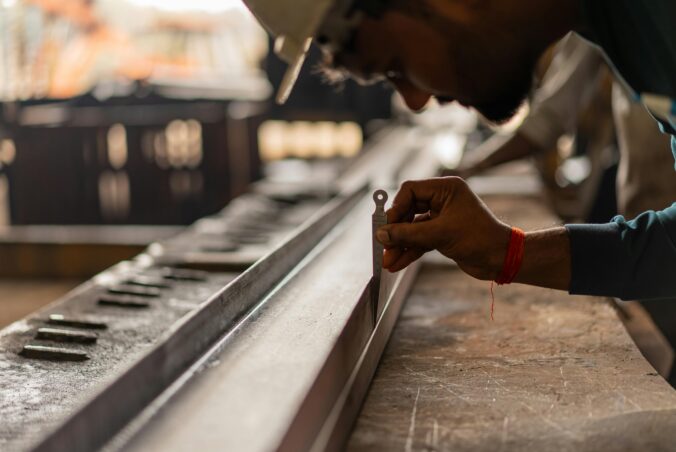
The test works by pressing a diamond-tipped cone into the steel surface under a controlled load, then measuring how deep the indentation goes.
Yorksaw describes the process in two stages: first, a minor force of around 10 kg creates a slight impression almost invisible to the eye. Then a major force – ranging from 60 to 150 kg depending on the steel type – is applied gradually. The difference in indentation depth between those two loads becomes your HRC number. Shallower indentation = harder steel = higher HRC.
Think of it like pressing a thumbtack into softwood versus hardwood. The tack sinks deep into pine (low HRC), barely scratches oak (medium HRC), and skates off a piece of granite (very high HRC). The Rockwell test is just a precise, standardized version of that same concept.
Here’s something that surprises a lot of buyers: the same steel can test at different HRC values depending on how it was heat treated. According to Knivesandtools, the knife is heated to a specific high temperature (800–1200°C depending on the steel), rapidly cooled, then tempered at 150–300°C. Adjust any of those variables and the final HRC shifts. A published HRC spec is a target, not a guarantee – and Knivesandtools recommends testing at least three times and averaging the results for accuracy.
Key Takeaway: HRC measures indentation depth under load. The same steel alloy can hit different HRC values based on heat treatment – so manufacturer specs reflect intended targets, not absolute values.
What Do Different HRC Numbers Mean for Your Knife?
Here’s where the rubber meets the road. Abstract numbers only matter when they translate to real cutting behavior.
According to QSP Knife, the HRC scale runs from 20 to 70, with higher numbers indicating harder materials. But harder isn’t automatically better – as Off Grid Web puts it plainly: “one steel is not better than another simply because it is harder.”
Here’s a practical breakdown by range:
| HRC Range | Edge Retention | Toughness | Sharpening Ease | Typical Use |
|---|---|---|---|---|
| Below 54 | Low | Very High | Very Easy | Axes, throwing knives |
| 54–58 | Moderate | High | Easy | Survival, outdoor, camp knives |
| 58–62 | Good | Moderate | Moderate | EDC, kitchen, hunting |
| 62–65 | Excellent | Lower | Difficult | Premium kitchen, precision EDC |
| 65+ | Exceptional | Low | Very Difficult | Specialty/collector knives |
HRC 54–58: Tough, Forgiving, Easy to Sharpen
According to Koi Knives, a Rockwell hardness of 55–58 is ideal for a knife that will be put through extreme, rugged use – chopping wood, digging, prying. SMKW confirms that softer steels in the 55–58 HRC range are much easier to sharpen, even in outdoor settings.
Classic steels here include 1095 carbon steel (typically 55–58 HRC) and 420HC (57–58 HRC). You can touch these up on a basic whetstone in minutes. The trade-off is that you’ll be sharpening more often. If you’re looking at the best blade steel for outdoor and camping knives, this range is where most experienced outdoorspeople land.
HRC 58–62: Balanced Performance for Most Knives
calls 58–62 HRC optimal for most knife steels, providing a good balance of hardness, toughness, and edge retention. Dellinger places high-quality European knives at 57–60 HRC and Japanese VG-10 knives at 60–62 HRC.
Steels in this range include VG-10 (60–61 HRC), AUS-8 (57–59 HRC), D2 (60–62 HRC), S30V (59–61 HRC), and 154CM (59–61 HRC). This is the sweet spot for EDC pocket knives, hunting knives, and everyday kitchen use. You get real edge retention without the brittleness risk that comes with harder steels.
Callout: The sweet spot for most knives is 58–62 HRC – hard enough to hold an edge through real work, tough enough to handle lateral stress without chipping.
HRC 62–67: Maximum Edge Retention, Less Toughness
Dellinger places premium steels like SG2 and Aogami at 62–65 HRC. At the extreme end, Sharp Edge Shop notes that ZDP-189 typically runs 66–67 HRC in kitchen knives, with the potential to reach 70 HRC with optimal heat treatment.
QSP Knife is direct about the trade-off: hard blades at 63+ HRC are ideal for delicate cutting and precision jobs, but their brittleness makes them more likely to chip and they should not be used for tasks involving impact or twisting.
Key Takeaway: Each HRC band represents a real trade-off between edge retention and toughness. Match the range to your actual use case – not just the highest number you can find.
Does Higher HRC Always Mean a Better Knife?
No. And this is the most important thing to understand about knife steel hardness Rockwell scale explained simply.
Off Grid Web puts it well: “Steel with a high number on the Rockwell scale will have higher edge retention but lower toughness. Likewise, steel with a lower Rockwell Hardness rating will not hold its edge for as long, but will be tougher.” That’s the fundamental trade-off, and no amount of marketing language changes it.
Consider the real-world contrast: ZDP-189 at HRC 66–67 offers exceptional edge life in a kitchen slicing context, but chipping rates increase significantly when used on hard bones or frozen food. Meanwhile, 1095 carbon steel at HRC 55–58 flexes without breaking and resharpens on a basic whetstone in the field. Neither is universally “better” – they’re optimized for different jobs.
The sharpening cost of ownership is another factor buyers overlook. S30V at HRC 59–61 holds an edge roughly 3× longer than 420HC at HRC 57–58 in standardized testing. But S30V requires a diamond stone to reprofile properly, while 420HC touches up on a basic whetstone or a $15 diamond rod. S90V pushes that further – it holds an edge approximately 4× longer than basic stainless steels, but as Knife Steel Nerds documents, diamond abrasives are essentially required for efficient sharpening.
There’s also the issue of steel composition modifying what HRC actually means. tested this directly: a simple steel with a coarse structure at 61 HRC was less capable of retaining sharpness than a powder steel at 58 HRC. The carbide structure matters as much as the hardness number. Knife Steel Nerds explains why: vanadium carbides measure around 2800 on the Vickers scale, chromium carbides around 1500 Hv, and cementite around 1000 Hv – meaning two steels at identical HRC can have dramatically different wear resistance depending on which carbides are present.
Practical use → recommended HRC range:
| Use Case | Recommended HRC | Why |
|---|---|---|
| Survival/camp knife | 54–58 | Toughness for batoning, prying, field sharpening |
| Hunting/skinning | 57–60 | Balance of edge life and chip resistance on bone |
| EDC pocket knife | 58–62 | Edge retention for daily tasks, manageable sharpening |
| Premium kitchen | 60–63 | Thin angles, long edge life, controlled environment |
For a deeper look at how steel type affects performance beyond just the HRC number, the VG-10 vs AUS-10 Japanese steel comparison is worth reading alongside this guide.
Key Takeaway: Higher HRC means harder steel, not better steel. Match HRC to your use case, factor in sharpening requirements, and consider carbide composition – not just the number on the spec sheet.
HRC Ratings for Popular Knife Steels: Quick Reference
Here’s a scannable reference for the steels you’ll encounter most often. Note that heat treatment variation can shift any steel ±1–2 HRC from these typical values.
| Steel | Typical HRC | Category | Key Characteristic |
|---|---|---|---|
| 420HC | 57–58 | Budget | Easy to sharpen, corrosion resistant |
| AUS-8 | 57–59 | Budget/Mid | Good corrosion resistance, forgiving |
| 8Cr13MoV | 58–60 | Budget | Variable quality control |
| 1095 | 55–58 | Mid (carbon) | Excellent toughness, easy field sharpening |
| VG-10 | 60–61 | Mid/Premium | Japanese standard, good balance |
| 154CM | 59–61 | Mid/Premium | American workhorse steel |
| D2 | 60–62 | Mid/Premium | High wear resistance, moderate toughness |
| S30V | 59–61 | Premium | PM steel, strong edge retention |
| S35VN | 59–61 | Premium | Improved toughness over S30V |
| M390 | 62–64 | Premium | Excellent corrosion + wear resistance |
| ZDP-189 | 66–67 | Specialty | Maximum edge life, brittle |
According to Sharp Edge Shop, modern powder metallurgy steels rank highest on the Rockwell scale, boasting hardness around 64–68 HRC. And A.G. Russell notes that AUS-8 typically runs 57–59 HRC – consistent with what you’ll see across most Japanese mid-range production knives.
One thing worth knowing: if you’re drawn to Damascus steel patterns, the underlying steel’s HRC is what actually determines performance. Whether Damascus steel is worth the premium is a separate question from hardness – decorative layering doesn’t change the core steel’s HRC rating.
Key Takeaway: Most EDC and kitchen knives fall between AUS-8 (57–59 HRC) and M390 (62–64 HRC). The jump from budget to premium isn’t just HRC – it’s carbide quality, heat treatment consistency, and steel composition.
How Does HRC Affect Sharpening?
HRC directly determines what tools you need to maintain your knife – and how much time it takes.
Sharp Edge Shop makes the connection clear: hardness of 60+ HRC allows a smaller sharpening angle, which means less force needed for cutting – but it also means the steel is harder for abrasives to bite into. Below HRC 62, aluminum oxide or silicon carbide whetstones work efficiently. Above HRC 62, particularly with high-vanadium steels like S90V or ZDP-189, you typically need diamond or CBN (cubic boron nitride) abrasives to make real progress.
The angle connection matters too. Harder steels can hold and maintain thinner edge angles – around 15° per side – without the edge rolling or deforming under use. Softer steels (HRC 56–58) are better suited to 20°+ angles, which is why German-style knives are typically sharpened at 20° while Japanese knives run 15°. confirms this: most high-quality Japanese knives at 60+ HRC are designed around that thinner geometry.
The practical upshot: a harder knife sharpens less often but takes more effort and better tools when it does need work. A softer knife needs attention more frequently but responds to basic equipment. Neither approach is wrong – it’s about matching your maintenance habits to your steel. For a full breakdown of what stones work for which steels, a knife sharpening stones and whetstones guide for beginners will walk you through the options.
You can find a solid selection of knives across all these HRC ranges at Knife Depot, where specs are listed clearly so you can match steel to your actual use case before buying.
Key Takeaway: Steels below HRC 62 sharpen on aluminum oxide or ceramic stones. Above HRC 62, invest in diamond or CBN abrasives. Harder steels support thinner angles but demand better sharpening equipment.
FAQ: Rockwell Hardness and Knife Steel
What HRC is best for kitchen knives?
Direct Answer: For most home cooks, 58–62 HRC is the ideal range. recommends 58–60 HRC for everyday cooking, while Sharp Edge Shop notes that most Japanese knives run 60–62 HRC for longer edge life. If you want a knife that holds an edge through heavy weekly use without being fragile, stay in the 59–62 range. For best chef knives for home cooking, that range covers the vast majority of quality options.
Does a higher HRC knife chip more easily?
Direct Answer: Yes, generally. QSP Knife states that hard blades at 63+ HRC are more likely to chip and should not be used for tasks involving impact or twisting. confirms that steels with higher Rockwell ratings can become more brittle and prone to chipping or breaking. The harder the steel, the less it flexes before fracturing – which is fine for slicing tasks but risky for prying, batoning, or cutting frozen food.
What is the minimum HRC for a good hunting or outdoor knife?
Direct Answer: Around 54–57 HRC is the practical floor for a hunting or outdoor knife that holds a working edge. A.G. Russell notes that hard impact tools typically range 52–55 HRC, and Off Grid Web explains that axes and survival blades tend toward lower HRC ratings to handle frequent abuse. For a hunting knife that needs to hold an edge through field dressing without chipping on bone, 57–60 HRC is a solid target.
How can I find the HRC rating of a knife I already own?
Direct Answer: Check the manufacturer’s website or product documentation first – most reputable brands publish HRC specs. If that’s not available, a practical field check is the file test: a standard mill file (typically around 65 HRC) will skate across a properly hardened blade above approximately 58 HRC without biting. If the file scratches the blade easily, the steel is likely under-hardened or below 56 HRC. For precise measurement, a professional Rockwell tester is required – recommends testing at least three times and averaging results.
Is an HRC 60 knife better than an HRC 58 knife for everyday carry?
Direct Answer: Not automatically – it depends on the steel and your use case. tested this directly and found that a simple steel at 61 HRC retained sharpness less effectively than a powder steel at 58 HRC. For EDC tasks like opening packages, cutting rope, and food prep, both ranges work well. The HRC 60 knife will hold an edge longer between sharpenings; the HRC 58 knife will be easier to touch up when it does dull.
What HRC do premium steels like M390 or S90V have compared to budget steels?
Direct Answer: Premium powder metallurgy steels typically run 62–67 HRC, while budget steels like 420HC or AUS-8 run 57–59 HRC. Sharp Edge Shop notes that modern PM steels boast hardness around 64–68 HRC. But as Knife Steel Nerds documents, the real performance difference comes from carbide type – vanadium carbides in premium steels measure around 2800 Hv versus 1500 Hv for chromium carbides in budget stainless. That’s why S90V at HRC 60 outperforms 420HC at HRC 58 by a far wider margin than the two-point HRC gap suggests.
Does HRC affect how often I need to sharpen my knife?
Direct Answer: Yes, directly. Koi Knives explains that knives with a high HRC rating stay sharp for a more extended period between sharpenings – but when they lose their edge or suffer damage, they are more difficult to repair. A 420HC knife at HRC 57–58 might need touching up every few weeks of regular use; a VG-10 knife at HRC 60–61 might go months between full sharpenings. The catch is that when the VG-10 does need work, you’ll need better stones and more patience.
Putting It All Together
Knife steel hardness Rockwell scale explained simply comes down to one core idea: HRC tells you where a steel sits on the hardness-toughness spectrum, and every number is a trade-off.
For outdoor and survival use, prioritize the 54–58 HRC range – toughness and field sharpenability matter more than maximum edge life. For EDC and kitchen knives, 58–62 HRC gives you the best of both worlds. If you’re after a premium collector piece or a dedicated slicer that never sees bone or hard impact, 62–65 HRC opens up exceptional edge retention.
Just remember: HRC is the starting point, not the whole story. Steel composition, heat treatment quality, and edge geometry all shape how that number translates to real cutting performance. Use HRC as a filter, not a final verdict.

I appreciate how simple it is to look at.