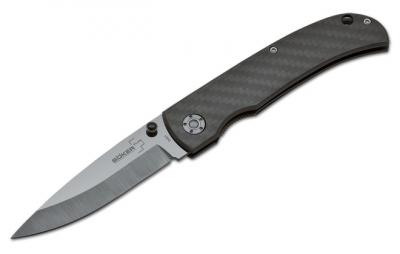
Boker Plus Anti-Grav Folding Knife 3-1/4″ Ceramic Blade, Carbon Fiber Handles
When you imagine the blade of a knife, chances are you picture a solid piece of quality stainless steel. However, an old material is gaining popularity—especially in kitchen knives—as an alternative to steel: ceramic.
Most people associate ceramic with those old Chinese vases with intricate flower designs, but the material has evolved tremendously over the centuries into a hard, sharp and brutal nonmetallic solid.
Ceramic knives often get a bad rap from diehards because they’re considered dainty or weak, but that’s the farthest thing from the truth. If you’re considering picking up a ceramic knife, these are some things that will help nudge you in that direction.
Stays sharp for years
The most important aspect of a blade is its edge and how sharp it is. Whereas stainless steel knives tend to lose some of their keenness pretty quickly, ceramic knives keep a speciously sharp edge for much longer. Zircon is the key material in ceramic blades because it makes them significantly harder than steel. When the blade eventually loses its edge a bit, most ceramic knife manufacturers will sharpen the knife for free.
Lightweight
It’s crazy to think how something so light and thin can be so sharp and dangerous. It’s easy to not take a ceramic knife seriously because of its weight, but that’s what gives it an advantage over steel. With minimal weight, you won’t be burdened when doing mundane tasks like slicing cheese.
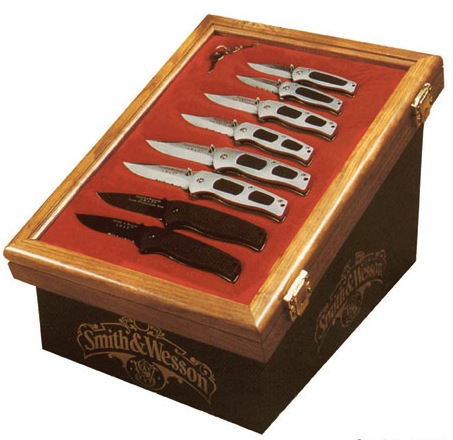 So, you just bought a highly collectible KA-BAR at an auction and you’re eager to show it off. While you could probably carry the knife and pull it out when it casually comes up in conversation, it’s not the safest thing to do with a collectible knife. Fortunately, there are a variety of display options for knives.
 Most people’s smartphones are full of silly games like Doodle Jump or Angry Birds, but a new app brings back the functionality and reference that made smartphones such revolutionary items: the Knife Steel Composition Chart app.