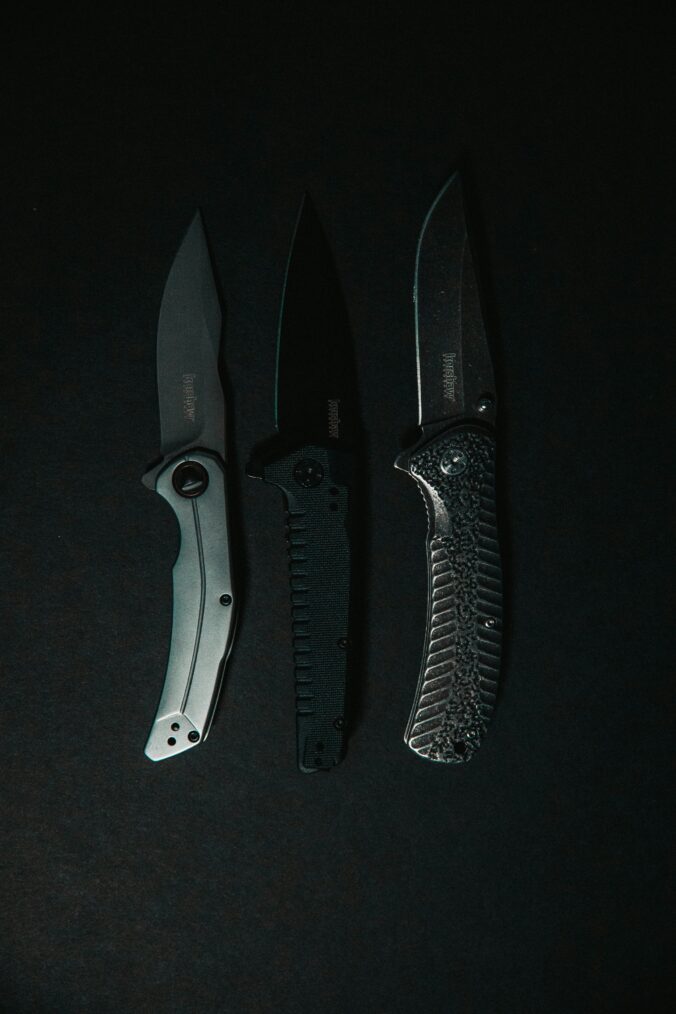
TL;DR: Kershaw dominates budget EDC with knives ranging from $22-$80 that deliver assisted opening and quality steel at prices 50-70% below premium brands. The Leek ($65) offers the best value-per-year at just $13 annually over five years, while the Shuffle ($22) provides unbeatable entry-level performance. Best for knife buyers seeking reliable daily carry without the $150+ premium brand markup.
Why Kershaw Dominates the Budget EDC Market
You’re looking at Kershaw because you want a knife that actually works without spending Benchmade money. Smart move.
Kershaw has been manufacturing cutlery since 1974, backed by KAI Japan’s engineering expertise. Their secret? Design knives in Portland, Oregon, then manufacture overseas to keep costs down. This approach lets them offer assisted opening mechanisms and quality steel at price points that make premium brands look ridiculous.
Here’s the math: A Kershaw Leek runs about $65. A comparable Benchmade Mini Griptilian? $150. Both have similar blade lengths (around 3 inches), both use quality steel, both offer lifetime warranties. The difference is manufacturing location and brand positioning.
According to Bladereviews, “Everything they make is accessible, with even the most lavish releases rarely going over $100.” That’s not an accident – it’s a deliberate strategy to own the budget EDC market.
The warranty matters too. Kershaw covers defects in materials and workmanship for life. You’ll pay shipping to send it in (about $8-10), but they cover return shipping for warranty repairs. Compare that to buying a $30 gas station knife every six months when the lock fails.
Key Takeaway: Kershaw’s USA-based design with overseas manufacturing delivers assisted opening folders at $22-$80, roughly 50-70% less than premium brands with similar features and lifetime warranty coverage.
What Makes a Good Budget EDC Knife?
A good budget EDC knife needs to survive your actual daily routine – not just look tactical in product photos.
Steel performance is where budget knives make their biggest compromise. You’ll see three main options in the $20-$80 range:
- 8Cr13MoV (Chinese stainless): Decent edge retention, easy to sharpen, found in $20-$40 knives
- 14C28N (Swedish Sandvik): Better edge retention and corrosion resistance, typically $50-$70 knives
- AUS-8 (Japanese stainless): Similar to 8Cr13MoV, proven reliability in $35-$50 range
Real-world performance? Expect to sharpen 8Cr13MoV every 2-3 weeks with daily cardboard cutting. 14C28N stretches that to 3-4 weeks. Neither will hold an edge like $200 S30V steel, but they’re significantly easier to sharpen when they do dull.
Lock mechanisms determine whether your knife stays open when you need it. Budget folders use two main types:
- Liner lock: Thin steel liner engages blade tang. Lighter weight, proven reliable in Kershaw’s SpeedSafe system
- Frame lock: Thicker frame material locks blade. Stronger lockup, adds 0.5-1 oz weight
Both work fine for EDC tasks. Frame locks feel more robust, but liner locks have decades of proven performance in daily carry.
Pocket clip positioning matters more than most reviews admit. Deep carry clips hide the knife better in professional environments. Standard clips leave 1-2 inches of handle visible above your pocket line. Clip tension needs that Goldilocks balance – strong enough to stay put during movement, loose enough for easy one-hand draw.
Size and weight create the comfort equation. Knives under 0.4 inches thick disappear in dress pants. Over 0.5 inches? You’ll feel pressure points after 3-4 hours sitting in slim jeans. Weight between 2-3 ounces hits the sweet spot for all-day carry without pocket sag.
Key Takeaway: Budget EDC success requires balancing steel performance (8Cr13MoV for value, 14C28N for longevity), lock strength (liner vs frame), and carry comfort (under 0.4″ thick, 2-3 oz weight) against your $20-$80 budget.
Top 7 Kershaw Knives Under $80 (Ranked by Value)
Here’s how the best Kershaw budget options stack up when you calculate actual cost per year of ownership:
| Model | Price | Steel | Weight | Thickness | Lock Type | Cost/Year (5yr) |
|---|---|---|---|---|---|---|
| Shuffle | $22 | 8Cr13MoV | 3.7 oz | 0.5″ | Liner | $4.40 |
| Cryo | $40 | 8Cr13MoV | 4.1 oz | 0.5″ | Frame | $8.00 |
| Skyline | $60 | 14C28N | 2.5 oz | 0.44″ | Liner | $12.00 |
| Leek | $65 | 14C28N | 3.0 oz | 0.35″ | Liner | $13.00 |
| Link | $75 | 420HC | 3.2 oz | 0.4″ | Liner | $15.00 |
| Blur | $80 | 14C28N | 4.0 oz | 0.57″ | Liner | $16.00 |
| Dividend | $50 | 8Cr13MoV | 2.2 oz | 0.38″ | Liner | $10.00 |
Kershaw Leek (1660) – Best Overall Value
The Leek is the knife that made Kershaw famous in EDC circles. At $65, you get a 3-inch 14C28N blade in a frame that’s only 0.35 inches thick – thinner than most smartphones.
According to KnifeInformer, “The thin profile (only 0.35″ thick!) makes the Leek a fantastically carryable knife.” That matters when you’re wearing dress pants to the office. The knife literally disappears in your pocket.
The SpeedSafe assisted opening deploys the blade in about 0.4 seconds – fast enough to feel satisfying, legal in 48 states because it requires manual pressure to start. The liner lock has proven reliable through thousands of opening cycles in user reports.
Best for: Office workers and professionals who need discrete carry in business casual environments. The slim profile and clean design won’t alarm coworkers.
Cost analysis: $65 ÷ 5 years = $13/year. Add roughly $48 for six professional sharpenings over three years ($8 each, bi-monthly). Total 3-year ownership: $113.
Kershaw Cryo (1555TI) – Best for Heavy Use
The Cryo brings Rick Hinderer’s design aesthetic to the budget market. At $40, you get a frame lock folder with 8Cr13MoV steel and titanium carbo-nitride coating for corrosion protection.
The frame lock uses the stainless steel handle itself as the locking mechanism – stronger than liner locks but adds weight (4.1 oz). That extra heft actually helps during extended cutting tasks. The 2.75-inch blade handles daily box cutting and light prying without complaint.
No SpeedSafe here – it’s a manual flipper. The blade deploys smoothly once you learn the technique, taking about 1.2 seconds versus the Leek’s 0.4 seconds. Trade-off is mechanical simplicity and one less thing to maintain.
Best for: Warehouse workers, trades people, and anyone who needs a beater knife that can handle abuse. The frame lock and coating protect against drops and moisture.
Cost analysis: $40 ÷ 5 years = $8/year. Budget steel means more frequent sharpening (every 2 weeks vs 3-4 for 14C28N), but the low entry price offsets maintenance costs.
Kershaw Blur (1670) – Best Grip Ergonomics
The Blur costs $80 – the upper limit of “budget” territory – but delivers features that justify the price. The 3.4-inch 14C28N blade is the largest in this lineup, and Trac-Tec grip inserts provide secure handling even with wet or gloved hands.
TechWriterEDC notes, “Coming in around $65, it combines excellent machining, solid materials, and refined design in a way few knives at this price point manage.” The SpeedSafe mechanism feels particularly refined on the Blur – smooth deployment with zero blade play.
The trade-off? At 0.57 inches thick and 4.0 oz, this isn’t a dress pants knife. After 3-4 hours sitting in slim jeans, you’ll feel the pressure point on your thigh. But for outdoor work or casual carry, the ergonomics are unmatched in this price range.
Best for: Outdoor enthusiasts and anyone prioritizing cutting performance over discrete carry. The larger blade and enhanced grip excel at camp tasks and field work.
Cost analysis: $80 ÷ 5 years = $16/year. The 14C28N steel reduces sharpening frequency compared to 8Cr13MoV options, offsetting the higher initial cost over time.
Kershaw Link (1776) – Best Pocket Clip Design
The Link brings deep carry to the budget market at $75. The clip positions the knife deeper in your pocket so only a small portion shows above the pocket line – critical for professional environments where visible knives raise eyebrows.
The 3.25-inch 420HC blade isn’t the highest-performing steel here, but the 6061-T6 aluminum handle and refined design make this feel like a $120 knife. SpeedSafe deployment is smooth and reliable.
At 3.2 oz and 0.4 inches thick, the Link hits the carry comfort sweet spot. You can wear this all day in business casual without noticing it’s there.
Best for: Professionals who need discrete carry with quick access. The deep carry clip and refined appearance work in office environments where tactical-looking knives would be inappropriate.
Cost analysis: $75 ÷ 5 years = $15/year. The 420HC steel requires more frequent sharpening than 14C28N but remains easy to maintain with basic skills.
Kershaw Dividend (1812) – Best Lightweight EDC
At 2.2 oz, the Dividend is the lightest SpeedSafe knife Kershaw makes. The 2.6-inch 8Cr13MoV blade and aluminum handle create a minimalist package that costs $50.
The compact size makes this ideal for summer carry when you’re wearing shorts or lightweight pants. The deep carry clip keeps it secure during active movement. SpeedSafe deployment works flawlessly despite the smaller frame.
The shorter blade limits versatility – you’ll struggle with larger cutting tasks – but for daily package opening and light cutting, it’s perfectly adequate.
Best for: Minimalist carriers and anyone who finds standard EDC knives too heavy or bulky. Summer carry in athletic wear or lightweight clothing.
Cost analysis: $50 ÷ 5 years = $10/year. The 8Cr13MoV steel requires regular sharpening, but the low entry price and minimal weight make this excellent value for casual users.
Kershaw Skyline (1760) – Best Slim Profile
The Skyline offers 14C28N steel without SpeedSafe at $60. It’s a manual flipper with G10 handle scales and a liner lock. At 2.5 oz and 0.44 inches thick, it’s nearly as slim as the Leek but costs $5 less.
According to KnifeInformer, “At only 2.5 ounces the Skyline is a great summertime carry option” and “the standard Skyline at under $50 is one of the best reasonably priced everyday carry knives.”
The 3.1-inch blade handles most EDC tasks comfortably. The manual deployment takes practice but eliminates the mechanical complexity of SpeedSafe – one less thing to clean and maintain.
Best for: Knife enthusiasts who prefer manual flippers and want premium steel at budget prices. The G10 handle and 14C28N blade compete directly with $80-100 knives from other brands.
Cost analysis: $60 ÷ 5 years = $12/year. The 14C28N steel extends sharpening intervals to 3-4 weeks with daily use, reducing long-term maintenance costs.
Kershaw Atmos (4037) – Best Budget Flipper
The Atmos brings carbon fiber aesthetics to the $45 price point. The 3.0-inch 8Cr13MoV blade and stainless steel handle with carbon fiber overlay create a premium look without premium pricing.
This is a manual flipper without SpeedSafe. The ball bearing pivot system provides smooth deployment once you master the technique. At 3.3 oz, it’s heavier than the Skyline but lighter than the Blur.
The carbon fiber is a thin overlay rather than solid scales – it’s aesthetic rather than functional. But at this price point, the appearance upgrade is welcome.
Best for: Budget-conscious buyers who want a knife that looks more expensive than it is. The carbon fiber overlay and refined design work well for casual professional carry.
Cost analysis: $45 ÷ 5 years = $9/year. The 8Cr13MoV steel requires regular maintenance, but the low entry price and attractive design deliver solid value.
Key Takeaway: The Leek ($65) offers the best balance of slim carry, quality steel, and assisted opening at $13/year over five years. The Shuffle ($22) provides unbeatable entry-level value at $4.40/year, while the Skyline ($60) delivers premium 14C28N steel without assisted opening complexity.
How Do Kershaw’s Budget Steels Actually Perform?
Let’s cut through the steel snobbery. Yes, S30V and M390 are better steels. They’re also found in $200+ knives. For budget EDC, you need to understand what 8Cr13MoV and 14C28N actually deliver.
8Cr13MoV is Chinese stainless steel hardened to about 57-59 HRC. It’s the same steel in the Spyderco Tenacious and dozens of other budget folders. Real-world edge retention? Expect 2-3 weeks of daily cardboard cutting before you need to sharpen.
The advantage is sharpening ease. You can restore a sharp edge with a basic benchstone in 5-10 minutes. No fancy equipment needed. The steel is forgiving enough that beginners can learn proper sharpening technique without ruining the blade.
Corrosion resistance is adequate for most environments. You’ll see surface rust if you leave the blade wet in humid conditions, but normal pocket carry with occasional cleaning prevents issues.
14C28N is Swedish Sandvik steel designed specifically for knives and razors. It’s hardened to 58-60 HRC and offers noticeably better edge retention – 3-4 weeks of the same daily cardboard cutting that dulls 8Cr13MoV in 2-3 weeks.
The corrosion resistance is excellent. You can carry this in coastal environments or humid climates without babying it. The steel sharpens slightly slower than 8Cr13MoV – expect 10-15 minutes with a benchstone – but it’s still manageable for users with basic skills.
AUS-8 performs similarly to 8Cr13MoV. Both sit around 57-59 HRC with comparable edge retention and sharpening ease. The main difference is origin – AUS-8 is Japanese while 8Cr13MoV is Chinese. Performance-wise, they’re nearly identical for EDC use.
The practical difference between these steels? About one extra sharpening per month if you choose 8Cr13MoV over 14C28N. That’s roughly 15 minutes of maintenance time monthly. Whether that’s worth the $15-25 price premium for 14C28N depends on how much you value your time.
For office EDC with light cutting tasks, 8Cr13MoV is perfectly adequate. For warehouse work, outdoor use, or heavy daily cutting, the 14C28N upgrade pays for itself in reduced sharpening frequency.
Key Takeaway: 8Cr13MoV requires sharpening every 2-3 weeks with daily use but restores easily in 5-10 minutes. 14C28N extends edge retention to 3-4 weeks and offers superior corrosion resistance, justifying the $15-25 price premium for heavy users.
SpeedSafe Assisted Opening: Is It Worth It?
SpeedSafe is Kershaw’s signature feature – a torsion bar mechanism that assists blade deployment once you start opening manually. But is the mechanical complexity worth it?
The speed advantage is real. Manual thumb stud deployment takes about 1.2 seconds. SpeedSafe cuts that to roughly 0.4 seconds. That’s fast enough to feel satisfying without crossing into automatic knife territory legally.
According to MoreThanJustSurviving, “Over the past 20 years, they have made a lot of waves in the cutlery world, with critically acclaimed innovations like the Speedsafe assisted opening system.”
How it works: A torsion bar sits in the handle. When you push the flipper or thumb stud, the bar stores energy. Once the blade reaches about 30 degrees of rotation, the bar releases and snaps the blade open. You still initiate opening manually – that’s what keeps it legal as an assisted opener rather than an automatic.
Legal considerations matter here. SpeedSafe is legal in 48 states because it requires manual initiation. New York and some California cities have restrictions on assisted openers, particularly with blades over 4 inches. Most Kershaw budget models have 2.6-3.4 inch blades, keeping them legal in most jurisdictions.
Always verify local laws. Some cities interpret assisted opening differently than state law. When in doubt, carry a manual folder in restrictive areas.
Durability concerns are overblown. User reports show SpeedSafe mechanisms functioning smoothly after thousands of opening cycles. The main maintenance requirement is periodic cleaning and oiling – the torsion bar and pivot collect pocket lint that can slow deployment.
Clean the pivot every 3-6 months for daily carry. Disassemble, wipe out debris, apply a drop of knife pivot lube or 3-in-One oil, reassemble. Takes 10 minutes and keeps the mechanism snappy.
The trade-off is mechanical complexity. Manual folders have fewer moving parts to fail. But Kershaw’s warranty covers SpeedSafe mechanism failures, and actual failure rates appear low based on community reports.
Is it worth it? If you frequently need quick one-hand deployment – opening packages while holding items, cutting tasks while wearing gloves – the 0.8 second time savings adds up. If you’re carrying a knife primarily as a tool rather than for emergency use, manual deployment works fine and eliminates maintenance.
Key Takeaway: SpeedSafe reduces deployment time from 1.2 seconds to 0.4 seconds and remains legal in 48 states with proper blade length. The mechanism requires cleaning every 3-6 months but shows reliable durability through thousands of cycles in user reports.
How Much Maintenance Do Budget Kershaw Knives Need?
Budget knives require more frequent maintenance than premium options. Here’s what actual ownership looks like.
Monthly maintenance checklist:
- Wipe blade clean after heavy use (daily if cutting food)
- Check pivot tightness – blade should swing freely without side-to-side play
- Inspect pocket clip for loosening screws
- Clean lint from pivot area if deployment feels sluggish
Every 3-6 months:
- Disassemble and clean pivot (SpeedSafe models)
- Apply knife pivot lube or 3-in-One oil to pivot point
- Tighten all screws (use proper Torx bits to avoid stripping)
- Clean and oil blade if you’ve been in wet/humid conditions
Sharpening frequency depends on your steel and use:
- 8Cr13MoV: Every 2-3 weeks with daily cardboard cutting
- 14C28N: Every 3-4 weeks with same use
- Light office use: Monthly for 8Cr13MoV, every 6 weeks for 14C28N
Professional sharpening costs $8-12 per service at most knife shops. DIY sharpening requires a $30-50 initial investment in a Lansky system or Work Sharp, then unlimited sharpenings.
3-year ownership cost example (Kershaw Leek):
- Initial purchase: $65
- Professional sharpening (6 services over 3 years): $48
- Pivot oil (one $8 bottle lasts years): $8
- Total: $121 or $40/year
Compare to a Benchmade Mini Griptilian:
- Initial purchase: $150
- Same sharpening frequency: $48
- Same maintenance supplies: $8
- Total: $206 or $69/year
The budget knife saves you $85 over three years. Whether that’s worth the slightly lower steel performance depends on your priorities.
Blade coating preservation matters if you want your knife to look good. DLC and stonewash coatings wear at high-friction points – the pivot area and tip show wear first. This is cosmetic rather than functional, but expect some coating loss with heavy use.
To minimize coating wear:
- Avoid using the knife as a pry bar
- Don’t over-tighten the pivot
- Clean abrasive materials (sand, concrete dust) from the blade promptly
The coating still provides corrosion protection even with minor wear. Full coating failure is rare with normal EDC use.
Key Takeaway: Budget Kershaw ownership costs $40-50 annually including sharpening and maintenance supplies. Monthly cleaning and quarterly pivot oiling prevent 90% of issues. Professional sharpening every 2-3 months costs $8-12 per service, or invest $30-50 in DIY equipment for unlimited sharpenings.
FAQ: Budget Kershaw EDC Questions
Are Kershaw knives under $80 actually durable for daily use?
Direct Answer: Yes, Kershaw budget models survive daily EDC use for 3-5+ years with basic maintenance, backed by lifetime warranty coverage for defects.
The liner locks and frame locks in Kershaw folders have proven reliable through thousands of opening cycles in user reports. The main durability factors are steel choice (14C28N outlasts 8Cr13MoV) and maintenance frequency. Users who clean and oil pivots quarterly report smooth operation for years. The lifetime warranty covers manufacturing defects, though you’ll pay shipping costs to send the knife in for service.
What’s the best Kershaw knife for someone new to EDC?
Direct Answer: The Kershaw Shuffle at $22 offers the lowest-risk entry point with assisted opening, bottle opener, and screwdriver tip for multi-tool functionality.
According to CritPro, “At under $25 it delivers a linerlock folder with a built-in bottle opener and screwdriver tip.” For beginners unsure about EDC knife preferences, the Shuffle’s low price lets you experiment without significant investment. If you decide you prefer slimmer carry, upgrade to the Leek. If you want manual opening, try the Skyline. The Shuffle teaches you what matters in daily carry without the $60+ commitment.
How does Kershaw compare to CRKT or Gerber at the same price?
Direct Answer: Kershaw’s SpeedSafe assisted opening and USA-based design differentiate it from CRKT’s manual folders, while Gerber focuses on multi-tools rather than dedicated EDC folders in this price range.
CRKT offers excellent manual folders like the Squid ($30) with ball bearing pivots for smooth deployment. They compete directly with Kershaw’s manual options (Skyline, Atmos) but lack assisted opening alternatives. Gerber’s budget lineup emphasizes multi-tools and fixed blades rather than EDC folders. For pure folding knife performance under $80, Kershaw and CRKT lead the category, with Kershaw offering more assisted opening options.
Do I need to oil my Kershaw SpeedSafe mechanism?
Direct Answer: Yes, clean and oil the pivot every 3-6 months for daily carry to maintain smooth SpeedSafe deployment and prevent lint buildup.
The torsion bar mechanism collects pocket lint and debris that can slow deployment over time. Disassemble the knife, wipe out accumulated material, apply one drop of knife pivot lube or 3-in-One oil to the pivot point, then reassemble. This 10-minute maintenance task keeps the assisted opening snappy. More frequent cleaning (monthly) is recommended if you work in dusty or dirty environments.
Can Kershaw’s 8Cr13MoV steel hold an edge as well as higher-end steels?
Direct Answer: No, 8Cr13MoV requires sharpening every 2-3 weeks with daily use compared to 3-4 weeks for 14C28N or 4-6 weeks for premium steels like S30V.
The trade-off is sharpening ease – 8Cr13MoV restores to sharp in 5-10 minutes with a basic benchstone versus 15-20 minutes for harder steels. For office EDC with light cutting tasks, the frequent sharpening isn’t burdensome. For heavy warehouse or outdoor use, the 14C28N upgrade ($15-25 more) reduces maintenance time significantly over the knife’s lifespan.
Which Kershaw model has the strongest pocket clip?
Direct Answer: The Link and Dividend feature deep carry clips with stronger retention than standard clips on the Leek or Blur, though clip tension varies by individual knife.
Deep carry clips use more spring tension to position the knife deeper in your pocket. This increased tension provides stronger retention during active movement. However, pocket clip strength varies even within the same model due to manufacturing tolerances. If your clip feels too loose, you can carefully bend it for more tension – but do this gradually to avoid breaking the clip.
Are assisted opening Kershaw knives legal to carry?
Direct Answer: SpeedSafe assisted opening is legal in 48 states because it requires manual initiation, but New York and some California cities restrict assisted openers, particularly over 4 inches.
Federal law distinguishes assisted opening from automatic (switchblade) knives. Assisted openers require you to manually start the opening process – the mechanism only assists after you’ve initiated movement. This keeps them legal in most jurisdictions. However, state and local laws vary. Always verify your specific location’s regulations, especially in restrictive states like New York, California, and Massachusetts. Most Kershaw budget models have 2.6-3.4 inch blades, staying under common length restrictions.
How often will I need to sharpen a budget Kershaw knife?
Direct Answer: Every 2-3 weeks for 8Cr13MoV steel or 3-4 weeks for 14C28N with daily cardboard cutting and package opening tasks.
Sharpening frequency depends on your cutting tasks and personal standards for sharpness. Light office use (occasional package opening) extends intervals to monthly for 8Cr13MoV or 6 weeks for 14C28N. Heavy warehouse work or outdoor use may require weekly sharpening for 8Cr13MoV. Professional sharpening costs $8-12 per service, or invest $30-50 in a Lansky or Work Sharp system for DIY maintenance. Budget 15-30 minutes per sharpening session as you develop skills.
Ready to Get Started?
For personalized guidance, visit Knife Depot to learn how we can help.
Conclusion
Kershaw dominates budget EDC because they’ve figured out the formula: USA-based design, overseas manufacturing, and features that matter at prices that don’t require justification to your spouse.
The Leek at $65 delivers the best overall value – slim carry, quality 14C28N steel, and proven SpeedSafe reliability at just $13 per year over five years. If you’re new to EDC or working with a tight budget, the Shuffle at $22 provides unbeatable entry-level performance with multi-tool functionality.
For manual folder enthusiasts, the Skyline offers 14C28N steel without assisted opening complexity at $60. Heavy users should consider the Cryo’s frame lock durability at $40, while professionals needing discrete carry will appreciate the Link’s deep carry clip at $75.
The math is simple: Budget Kershaw knives cost $40-50 annually including maintenance versus $69+ for premium brands with similar features. That $200+ savings over three years buys a lot of other EDC gear. Find your perfect Kershaw match at Knife Depot and start carrying a knife that actually works without the premium price tag.
Excellent guide for budget-friendly everyday carry knives! The detailed breakdown of Kershaw options helps make informed choices. Great resource for those starting their EDC journey.