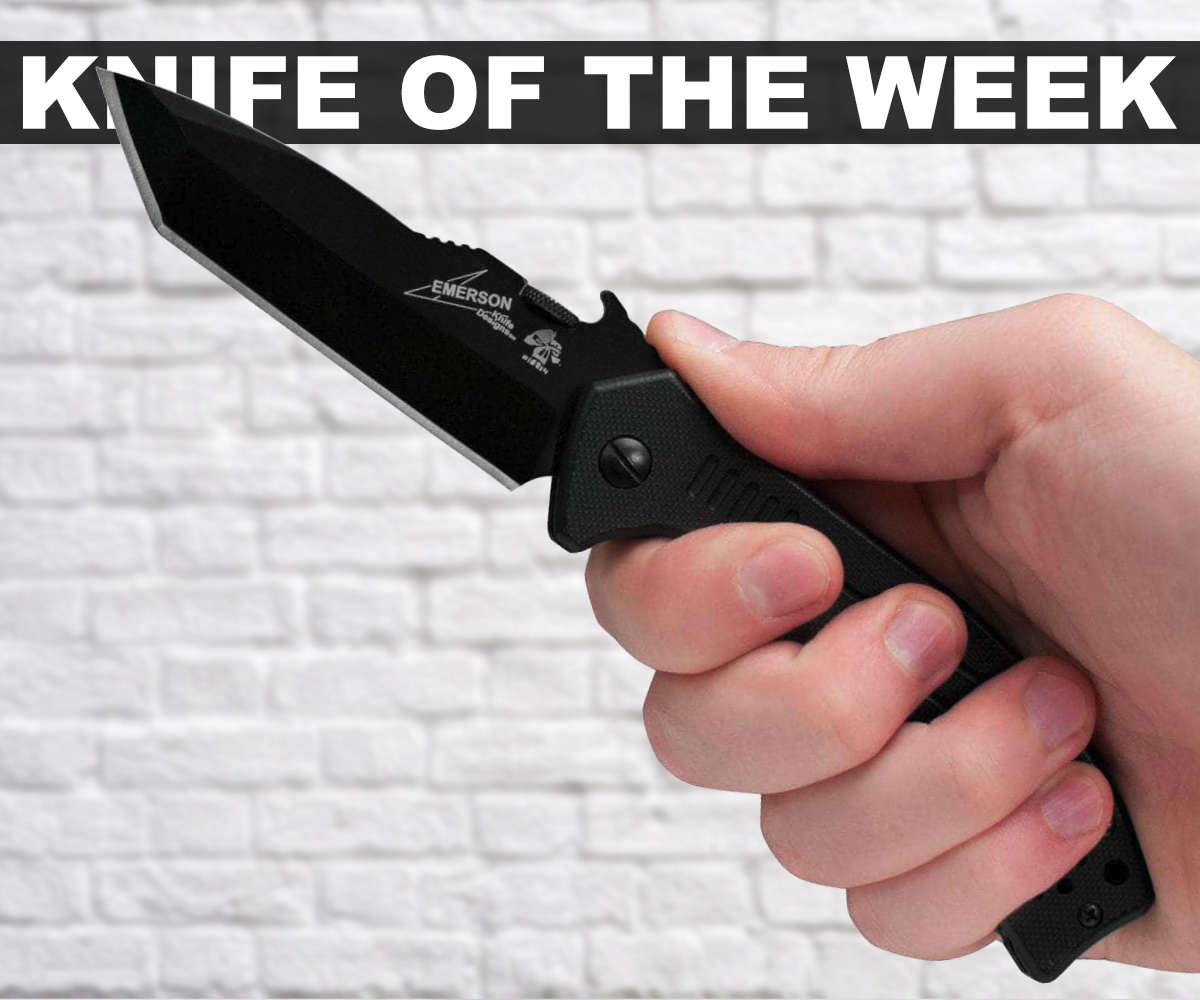
When Ernest Emerson created the CQC-7 in the 1990s, he defined and popularized the tactical folder that we all know today. The CQC-7 is still going strong, but it’s the CQC-8 that Emerson considers one of the best combat designs he’s ever produced.
A while back Emerson teamed up with Kershaw to bring his iconic designs to the masses, which is why the Kershaw Emerson CQC-8K is so affordable for being such an icon.
This version of the tactical folder has a 3.5-inch tanto blade with black coating and two methods of opening: the classic Emerson Wave and the thumb disk.
The blade locks open with a liner locking mechanism between two textured G-10 scales. It also features a reversible tip-up pocket clip, so you can engage the knife with one swift pull from the pocket.
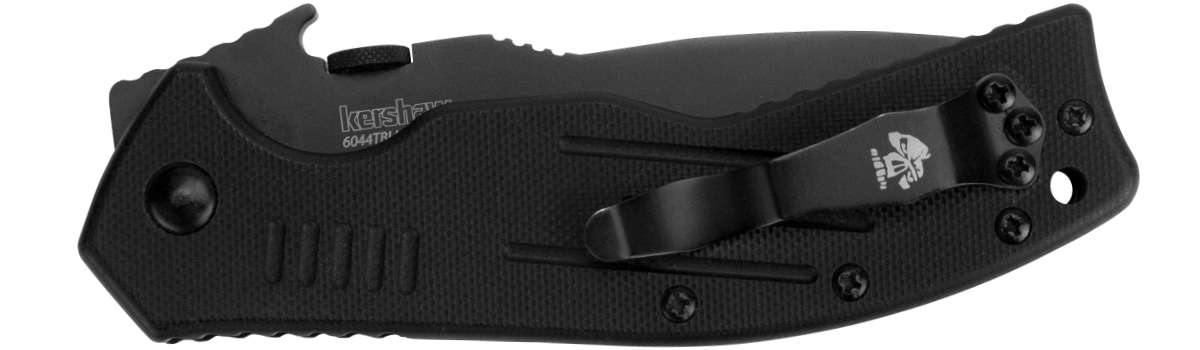
This design is an all-time classic with the bells and whistles you can expect from an Emerson knife but without the premium price tag.
If you want a tactical folder optimized for close quarters combat or simply need a powerful EDC, the Kershaw Emerson CQC-8K is your knife.


How to use it?
This article is a valuable contribution to the field and a pleasure to read.
The Kershaw Emerson CQC-8K is a tactical folding knife that blends Emerson’s renowned design with Kershaw’s manufacturing expertise. It’s part of the CQC series, which stands for Close Quarters Combat, and is designed for both everyday carry and tactical applications.
This Kershaw Emerson CQC-8K review is excellent—the breakdown of Ernest Emerson’s iconic design and how Kershaw made it accessible to the masses shows the perfect balance between tactical functionality and affordability, making this classic combat folder available to everyday users.
It’s really cool how Emerson teamed up with Kershaw to make such an iconic design so affordable. I also found it interesting that Emerson himself considers the CQC-8 one of his best combat designs, and the dual opening methods sound super practical for quick access. ..
Beautiful. Compact. Sharp. Powerful. This is my first impression upon this knife.
Love how Emerson and Kershaw made an iconic, practical design affordable, with smart dual opening and true combat-tested functionality.
It is fascinating to see how Emerson’s tactical designs have evolved to become so accessible through this collaboration. The ergonomics on the CQC-8K are surprisingly impressive for the price point, making it a solid choice for an everyday carry blade. I have always been a fan of the wave feature for quick deployment in practical scenarios.
The ergonomic handle on the CQC-8K really sets it apart from other tactical folders in this price range. It is impressive how much of the original Emerson design philosophy was successfully imported into this collaboration. Definitely a solid choice for anyone looking for a dependable workhorse blade.
It’s a classic design for a reason. That dual opening method sounds really convenient for quick access.
Great overview of the Kershaw Emerson CQC-8K! I love how you highlighted its durability. I had a similar experience with my EDC knife during a camping trip—it held up like a champ.
The Kershaw Emerson CQC-8K is an exceptional tactical folder that delivers combat-ready performance without the premium price tag. Its iconic design with the Emerson Wave opening makes it perfect for everyday carry and close quarters situations.
“Kershaw Emerson CQC-8K” was a useful read. I liked the practical tone and clear structure.
I saved this for later. “Kershaw Emerson CQC-8K” has some points I want to revisit. stool folding
kkeagle download game is an Android gaming platform designed to provide a seamless and enjoyable mobile experience. The application features a straightforward interface that makes it easy to discover and access various games.
Thanks for the transparency. It’s refreshing to see a strategy that doesn’t rely on black-hat churn and burn. Sustainable growth is the only way forward.
This was a helpful read. I especially appreciated the practical points throughout the post.
Is there a specific tool you recommend for tracking the velocity? We’ve been doing it manually but it’s becoming unscalable.
This complements the “Entropy” theory perfectly. If you don’t introduce randomness, you’re just painting a target on your back. Glad to see others advocating for smarter engineering.
Does this apply to non-English markets as well? We’re seeing conflicting signals in our EU campaigns compared to what you’ve described here. Would love to hear your thoughts on regional variance.
I’m sharing this with our content team. We’ve been struggling to explain why “quality over quantity” isn’t just a cliché, and this illustrates it perfectly.
For anyone reading this, pay attention to paragraph 4. That subtle distinction between “diversity” and “randomness” is what saves you during a Core Update.
I’ve always loved tactical knives for their rugged design! The Kershaw Emerson CQC-8K looks like a solid choice, but I’ve found that actually handling a knife often reveals quirks you can’t gauge from pictures. Have you guys ever had a similar experience?
Great resource. I’ve sent this to a few colleagues who are still stuck in 2015-era SEO tactics. Hopefully, this wakes them up.
Thanks for the transparency. It’s refreshing to see a strategy that doesn’t rely on black-hat churn and burn. Sustainable growth is the only way forward.
I’m sharing this with our content team. We’ve been struggling to explain why “quality over quantity” isn’t just a cliché, and this illustrates it perfectly.
The analogy of the “immune system” is perfect. You need to build resistance before the virus (update) hits. Too many people react instead of prepare.
One minor correction: the update rollout was actually 14 days, not 10. But that doesn’t change your main point—the volatility window is getting wider.
I’d argue that the content relevance is even more critical now. We’ve seen perfectly good links get devalued just because the semantic match wasn’t tight enough.
One minor correction: the update rollout was actually 14 days, not 10. But that doesn’t change your main point—the volatility window is getting wider.
I’ve always been a fan of knives that feel like they were built for real work, and the CQC-8K definitely fits that bill. The Emerson Wave opening is such a clever feature—it’s one of those designs that makes you wonder why every folder doesn’t have it. I also appreciate that Kershaw made this iconic design more accessible without cutting corners on the materials or the lockup. It’s the kind of knife you can carry daily and trust when things get a little rough. If you enjoy figuring out how things work as much as I do, you might also like playing with a Cube Solver—it’s a fun way to unwind after a long day.
I’d argue that the content relevance is even more critical now. We’ve seen perfectly good links get devalued just because the semantic match wasn’t tight enough.
One minor correction: the update rollout was actually 14 days, not 10. But that doesn’t change your main point—the volatility window is getting wider.
I love the detailed breakdown of the Kershaw Emerson CQC-8K! Quick question—how do you think its design influences actual knife performance in real-life situations? Also, have you tried any similar knives like those in https://red-ball4.com/ ? Curious about your thoughts!
heart copy paste
I really enjoyed this deep dive on the Kershaw Emerson CQC-8K. It’s fascinating how Emerson’s original combat design from the 90s still holds up so well today, especially now that Kershaw has made it accessible to more people. The tanto blade and the Wave feature really make it stand out from other folders I’ve handled. Reading about the details makes me want to compare it side-by-side with my own EDC setup. By the way, if you ever take photos of your knives to share online, a Photo Text Editor can help you label the parts or add notes cleanly. It’s a small tool that makes gear posts look much more professional.
Thanks for the transparency. It’s refreshing to see a strategy that doesn’t rely on black-hat churn and burn. Sustainable growth is the only way forward.
This is a solid breakdown. One thing I’d add is that the impact of these updates often lags by 2-3 weeks. We tracked this across multiple projects and found the recovery phase is where most people give up too early.
I’m sharing this with our content team. We’ve been struggling to explain why “quality over quantity” isn’t just a cliché, and this illustrates it perfectly.
The CQC-8K has been on my list for a while — the wave feature and Emerson design really set it apart. Appreciate the detailed writeup.
One minor correction: the update rollout was actually 14 days, not 10. But that doesn’t change your main point—the volatility window is getting wider.
Thanks for the transparency. It’s refreshing to see a strategy that doesn’t rely on black-hat churn and burn. Sustainable growth is the only way forward.
Actually, I have to disagree slightly with the second point. In our testing, we found that over-optimization was less of a factor than pure engagement metrics. It’s interesting to see how different niches react differently.
I’m skeptical about the timeline you proposed, but I’m willing to test it. If this holds up, it changes how we structure our entire outreach program.
Great read. It reminds me of the strategy we deployed last quarter. The focus on foundational stability really pays off when the algorithm shifts. Thanks for compiling this.
Great read. It reminds me of the strategy we deployed last quarter. The focus on foundational stability really pays off when the algorithm shifts. Thanks for compiling this.
This complements the “Entropy” theory perfectly. If you don’t introduce randomness, you’re just painting a target on your back. Glad to see others advocating for smarter engineering.
I’ve been following this topic for a while, and your analysis on the structural shifts really adds a new perspective. We’ve noticed similar patterns in our internal data at SignalLayer, specifically regarding the volatility timeline.
We’ve been A/B testing this exact hypothesis. Group A (your method) is outperforming Group B by 40% in terms of ranking stability. The data speaks for itself.
We’ve been A/B testing this exact hypothesis. Group A (your method) is outperforming Group B by 40% in terms of ranking stability. The data speaks for itself.
This is exactly why we moved away from automated PBNs. The risk/reward ratio just doesn’t make sense anymore compared to what you’re describing.
Great resource. I’ve sent this to a few colleagues who are still stuck in 2015-era SEO tactics. Hopefully, this wakes them up.
This complements the “Entropy” theory perfectly. If you don’t introduce randomness, you’re just painting a target on your back. Glad to see others advocating for smarter engineering.
This is exactly why we moved away from automated PBNs. The risk/reward ratio just doesn’t make sense anymore compared to what you’re describing.
Is there a specific tool you recommend for tracking the velocity? We’ve been doing it manually but it’s becoming unscalable.
I recently read an article about the Kershaw Emerson CQC-8K, and it really resonated with me. This knife is not just a tool but a piece of tactical history. The craftsmanship and design are top-notch, and it’s fascinating to see how Ernest Emerson’s iconic designs have been brought to the masses through this collaboration. It’s a must-have for any serious knife enthusiast. For anyone who wants to explore this further, character turnaround may also be a useful resource.
I’m skeptical about the timeline you proposed, but I’m willing to test it. If this holds up, it changes how we structure our entire outreach program.
I bookmarked this for my team. The section on avoiding footprints is crucial. We recently audited a site that got hit exactly because they ignored that principle. Good catch.
Great read. It reminds me of the strategy we deployed last quarter. The focus on foundational stability really pays off when the algorithm shifts. Thanks for compiling this.
The analogy of the “immune system” is perfect. You need to build resistance before the virus (update) hits. Too many people react instead of prepare.
I’d argue that the content relevance is even more critical now. We’ve seen perfectly good links get devalued just because the semantic match wasn’t tight enough.
The shift towards “entity-based” indexing is real. Your strategy seems to leverage that by building entity associations rather than just keyword matches. Smart.
The progression system in Papa’s Games keeps players motivated, unlocking new features and ingredients that enhance gameplay and increase difficulty.
The collaboration between Emerson and Kershaw really does make a legendary design more accessible. I especially appreciate the Wave feature for one-handed deployment, and the tanto blade with that black coating gives it a serious tactical look. The liner lock and G-10 scales should handle daily use well. A solid choice for anyone wanting Emerson’s philosophy without the premium cost.
I bookmarked this for my team. The section on avoiding footprints is crucial. We recently audited a site that got hit exactly because they ignored that principle. Good catch.
I’m sharing this with our content team. We’ve been struggling to explain why “quality over quantity” isn’t just a cliché, and this illustrates it perfectly.
I’d argue that the content relevance is even more critical now. We’ve seen perfectly good links get devalued just because the semantic match wasn’t tight enough.
This complements the “Entropy” theory perfectly. If you don’t introduce randomness, you’re just painting a target on your back. Glad to see others advocating for smarter engineering.
I’m sharing this with our content team. We’ve been struggling to explain why “quality over quantity” isn’t just a cliché, and this illustrates it perfectly.
Is there a specific tool you recommend for tracking the velocity? We’ve been doing it manually but it’s becoming unscalable.
This is a solid breakdown. One thing I’d add is that the impact of these updates often lags by 2-3 weeks. We tracked this across multiple projects and found the recovery phase is where most people give up too early.
The analogy of the “immune system” is perfect. You need to build resistance before the virus (update) hits. Too many people react instead of prepare.
This aligns with the “Signal Noise” theory we’ve been developing. You need enough noise to mask the signal, but not so much that you lose authority. delicate balance.
Just wanted to say thanks for the detailed case study. It’s rare to see actual data backing up these claims. We’ll be adjusting our Q4 roadmap based on some of these insights.
The shift towards “entity-based” indexing is real. Your strategy seems to leverage that by building entity associations rather than just keyword matches. Smart.
Finally, someone said it. The old school “blast and pray” method is dead. Precision and camouflage are the new standard.
This complements the “Entropy” theory perfectly. If you don’t introduce randomness, you’re just painting a target on your back. Glad to see others advocating for smarter engineering.
Brilliant articulation of the problem. The industry has been too focused on metrics like DA/DR instead of actual traffic flow and user behavior.
One minor correction: the update rollout was actually 14 days, not 10. But that doesn’t change your main point—the volatility window is getting wider.
The analogy of the “immune system” is perfect. You need to build resistance before the virus (update) hits. Too many people react instead of prepare.
The depth here is impressive. Most guides just skim the surface of link velocity, but your point about “natural variance” hits the nail on the head. It’s exactly what we preach to our clients.
One minor correction: the update rollout was actually 14 days, not 10. But that doesn’t change your main point—the volatility window is getting wider.
I’d love to see a follow-up post on how this integrates with social signals. We feel there’s a multiplier effect there that isn’t being fully utilized.
This complements the “Entropy” theory perfectly. If you don’t introduce randomness, you’re just painting a target on your back. Glad to see others advocating for smarter engineering.
I’ve been following this topic for a while, and your analysis on the structural shifts really adds a new perspective. We’ve noticed similar patterns in our internal data at SignalLayer, specifically regarding the volatility timeline.
I’m skeptical about the timeline you proposed, but I’m willing to test it. If this holds up, it changes how we structure our entire outreach program.
Is there a specific tool you recommend for tracking the velocity? We’ve been doing it manually but it’s becoming unscalable.
This aligns with the “Signal Noise” theory we’ve been developing. You need enough noise to mask the signal, but not so much that you lose authority. delicate balance.
I bookmarked this for my team. The section on avoiding footprints is crucial. We recently audited a site that got hit exactly because they ignored that principle. Good catch.
Great resource. I’ve sent this to a few colleagues who are still stuck in 2015-era SEO tactics. Hopefully, this wakes them up.
The collaboration is an interesting example of bringing a designer’s recognizable features into a more affordable production model. One detail that would make the overview easier to compare with other everyday-carry folders is the weight alongside the 3.5-inch blade length. The blade steel and warranty information would also help readers understand the value proposition beyond the shared Emerson name.