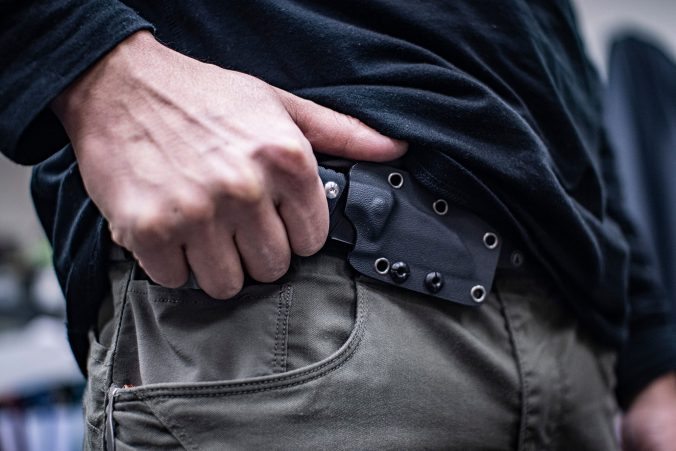
Let’s be honest—tactical knives aren’t for people who want “cute.” They’re for folks who appreciate blacked-out steel, glass breakers, and the kind of reliability that laughs in the face of disaster. Whether you’re military, law enforcement, survivalist, or just someone who likes to be ready for anything, a good tactical knife isn’t just a tool—it’s a statement.
So what makes a knife truly “tactical”? It’s a mix of performance, speed, strength, and a bit of controlled aggression. You want a blade that’s as ready for high-stress situations as it is for everyday use.
Here are some of our top tactical picks that were clearly built for chaos—and thrive in it.
Benchmade Casbah Automatic
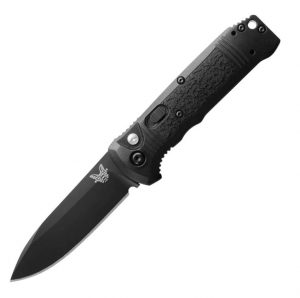
If James Bond and a tank had a baby, it would be the Casbah. Designed for easy and quick access with its push-button mechanism and integrated safety features. The CPM-S30V stainless steel blade is made in the USA and offers excellent corrosion resistance, edge quality, and toughness.
Why it’s chaos-ready:
-
One-handed auto deployment
-
High-traction, lightweight composite handle
-
Reversible deep-carry pocket clip
CRKT M16-14D
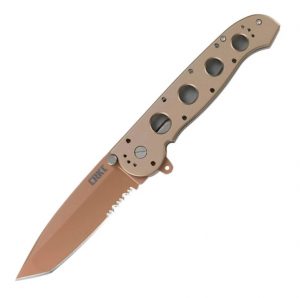
Built for the harsh demands of the desert, this folding pocket knife features an AUS 8 stainless steel blade with a highly corrosion-resistant Desert Tan non-reflective titanium nitride coating. The blade is partially serrated and has a Combined Razor-Sharp and Triple-Point Serrated edge, allowing you to cut through nets, webbing, and vegetation with ease.
Why it’s chaos-ready:
-
6061 T6 aluminum handle
-
Patented AutoLAWKS safety system
-
Field-tested by people who don’t mess around
SOG SEAL Pup Elite
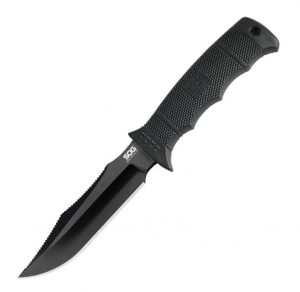
The SOG SEAL Pup Elite is a knife crafted to meet the exacting standards of the legendary Navy SEALs. This knife is truly exceptional, embodying a laser-like focus on delivering exceptional performance in the harshest of conditions, setting it apart from other knives on the market.
Why it’s chaos-ready:
-
4.85-inch AUS8 blade
-
Sleek hardcased black TiNi finish
-
Proven SOG SEAL design lineage
KA-BAR TDI Law Enforcement Knife
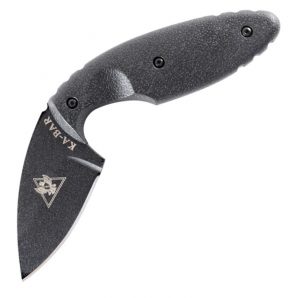
Small but fierce, the TDI was designed as a last-resort self-defense tool for law enforcement. Worn on the belt, it’s curved and instinctive—made to draw fast and act faster.
Why it’s chaos-ready:
-
Fast access in close quarters
-
Fixed blade for zero failure points
-
Discreet and tactical without shouting about it
Summary: Tactical Isn’t Just a Style—It’s a Mindset
These knives aren’t here for show. They’re engineered for unpredictable environments, designed to deploy fast, and built to take punishment. Whether you’re prepping a bug-out bag, outfitting for duty, or just appreciate a good “don’t mess with me” blade, these picks have your six.
What’s your favorite tactical knife?
Drop a comment or tag us with your battle-ready blade. Bonus points if it’s been through the mud, fire, or a surprise camping trip with your in-laws.
Current alternatives at Knife Depot: Browse CRKT knives, KA-BAR knives. Check each product page for its exact configuration, current price, and availability.
Solid lineup. I’ve carried the KA-BAR TDI for years—fast, discreet, dependable. Curious about the Casbah though, that one-handed auto deployment sounds perfect for high-stress situations.
Great lineup—love how each of these knives has a clear purpose behind the design. The TDI is one of my favorites for how instinctive it feels in hand, but the SEAL Pup Elite is just a classic that never quits. Tactical really is more about mindset than looks.
The CRKT M16-14D uses a partially serrated edge for nets, webbing, and vegetation, while a plain edge forces a single-purpose choice. After recently switching between several plausible next steps, would you choose the M16’s combined razor-sharp and triple-point serrated edge for repeatable execution, just as Pips Hint uses progressive guidance instead of dumping every answer at once? My tentative answer is yes: I favor that staged approach because it preserves operator control while reducing guesswork under pressure.
The counterintuitive takeaway for me is that the M16-14D’s partially serrated edge is about versatility, not just aggression: if a first-time buyer is choosing one blade for a messy campsite, moving from vegetation to webbing without changing tools seems more practical than chasing the toughest-looking profile, much like Townscaper rewards building a useful sequence block by block.
A plain edge may favor clean, predictable cuts, but the M16-14D’s partially serrated edge made me rethink what reliable means: during a trail-clearing shift, my plain-edge knife stalled when the work changed from vegetation to webbing. That failure is why I now use Number Wheel to fairly assign the next task when a crew is juggling several jobs, instead of letting the loudest voice decide. If one blade must cover both materials, I’d choose the M16’s combined edge again.
The M16-14D’s combined razor-sharp and triple-point serrated edge is the first tactical feature I’d actually value as a new buyer: after a plain-edge knife failed when a campsite task shifted from vegetation to webbing, I’m still cautious that serrations can make clean trimming harder, but the result makes the adaptable choices I practice in Hearts Game feel like a useful model for preparedness.
The CRKT M16-14D’s partially serrated edge is a practical answer when work changes from vegetation to webbing, so my next step would be to test that transition on a short field cut instead of judging the blade by the catalog. If a crew had to clear brush and then slice netting with one tool, I would still question whether the serrations improve control for every operator, and I would use a fair random draw to assign who tests which task. I would record the cut quality and fatigue before choosing the edge for the next kit.
I recently had to clear mixed brush and webbing with one plain-edge knife, and the stoppage between materials was more frustrating than the cutting itself. Your overlooked point about the CRKT M16-14D combining a razor-sharp edge with triple-point serrations suggests a practical next step: test the two sections separately on the materials you actually handle before choosing a blade. I use the same block-by-block approach in Oskarstalberg when laying out a town; would you run that edge test before relying on the M16 in a messy campsite?
The M16-14D’s combined edge helps keep execution repeatable when the cut changes mid-task. Would you choose it over a plain edge for one all-rounder?
For nets and brush, the M16 serrations beat swapping blades mid-task.
I support the M16-14D as the most practical team choice because its partially serrated edge handles both vegetation and webbing. The boundary is clear: it adds value when tasks change, but is less suited to clean-cut work.
I once cleared wet cordage and brush with one knife, so the M16-14D’s combined razor-sharp and triple-point serrated edge reads as a practical field compromise, not decoration. Would you choose it over a plain edge for one-tool carry?
The “one-handed auto deployment” detail assumes fast access matters more than raw blade size. I’m testing Indream for short gear videos, where a controlled workflow matters more than extra features.