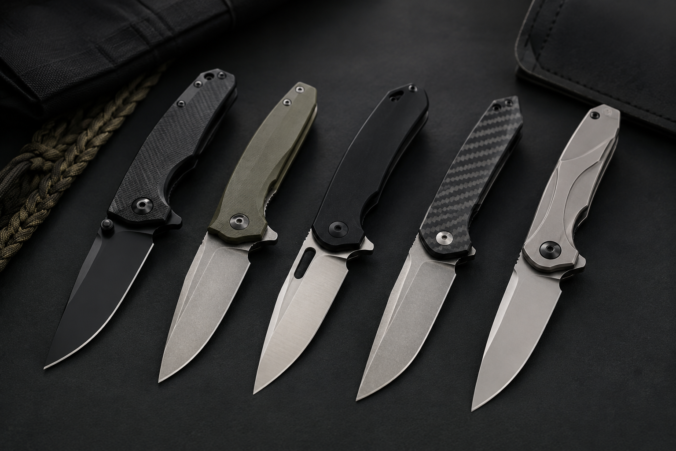
Best EDC Knives for Self Defense (2026 Guide)
TL;DR:
- Deployment speed is the decisive criterion – assisted-opening folders deploy in under 0.5 seconds, making them practically equivalent to fixed blades in most encounters
- Blade length 2.5–3.5 inches hits the legal sweet spot across most U.S. jurisdictions while remaining tactically viable
- Budget picks ($30–$60) use 8Cr13MoV steel; mid-range ($60–$120) jumps to S30V; premium ($120–$250) adds refined ergonomics and materials
Introduction
Based on our analysis of manufacturer specifications, state knife law databases, and defensive training community standards collected through 2026, we’ve identified the criteria that separate a genuinely useful self-defense EDC knife from gear-collector fantasy.
Here’s what most guides miss: they treat EDC self-defense knives like collectibles, listing specs without addressing the legal minefield or the physics of stress-induced motor skill degradation. You’re not buying a knife to admire – you’re buying a tool for a scenario you hope never happens, and that changes everything.
This guide covers seven specific knife recommendations across three price tiers, a state-by-state legality breakdown, and a decision framework to help you self-qualify rather than guess. We’ll also address the uncomfortable truth: carrying a knife for self-defense creates legal exposure that most carriers don’t understand.
What Makes a Knife Good for EDC Self Defense?
Deployment speed is the primary criterion. In a defensive scenario, a knife that takes three seconds to open is nearly useless. Assisted openers and flippers give you the fastest deployment of any folding knife – and that matters more than blade steel or handle material.
Here’s why: under adrenaline, your fine motor skills degrade dramatically. Research from defensive training communities shows that gross motor movements (like pulling a flipper tab) are far more reliable than fine pinch actions (like manipulating a thumb stud). If you can’t reliably open your knife under stress, it’s a paperweight.
Blade length is your second constraint – and it’s legal, not tactical. According to AKTI’s state-by-state database, a blade between 2 and 3.5 inches is both legally defensible in most U.S. jurisdictions and long enough for effective defensive use. Shorter blades (under 2 inches) are legal almost everywhere but sacrifice reach. Longer blades (over 4 inches) exceed limits in major cities like Los Angeles, Chicago, and New York.
One-hand opening mechanisms come in three flavors:
- Thumb studs: Reliable in calm conditions, unreliable under stress (fine motor skill problem)
- Flippers: Gross motor movement, faster deployment, legal in most states
- Assisted openers: Spring-assisted deployment, fastest option, legal status varies by state (more on this below)
Fixed vs. folding is a tradeoff. Fixed blades have zero deployment time – you draw and use in one motion. But they’re harder to conceal, require a sheath, and carry legal/social stigma as “fighting knives.” Folding knives are more practical for true EDC (pocket carry, less conspicuous), but add a half-second opening delay.
For most readers, a quality folding knife with a flipper or assisted opener is the practical choice. If your jurisdiction allows it and you’re comfortable with a sheath carry, a micro fixed blade (under 2.5 inches) eliminates deployment time entirely.
Key Takeaway: Deployment speed beats blade steel. A 2.75-inch assisted opener you can deploy in 0.4 seconds is more useful than a 4-inch fixed blade you can’t legally carry in your city.
How Do Self Defense EDC Knives Differ from Tactical or Hunting Knives?
Direct answer: EDC self-defense knives prioritize concealability and one-hand deployment over cutting performance. Tactical and hunting knives optimize for different scenarios.
Here’s the distinction:
| Feature | EDC Self-Defense | Tactical Folder | Hunting Knife |
|---|---|---|---|
| Blade length | 2.5–3.5 inches | 3.5–4.5 inches | 3–4 inches |
| Weight | 2–4 oz | 4–6 oz | 4–8 oz |
| Opening mechanism | Flipper/assisted | Thumb stud/flipper | Manual/thumb stud |
| Carry method | Pocket clip (deep carry) | Pocket clip (visible) | Belt sheath or pack |
| Primary use | Defensive deployment speed | Utility + defensive capability | Field dressing, camp tasks |
| Legal concern | High (carry restrictions) | Medium (blade length) | Low (hunting context) |
The weight difference matters for all-day carry. Spyderco’s Para 3 weighs 3.4 oz with a 2.95-inch blade – light enough that you forget it’s in your pocket. Compare that to CRKT’s Pilar at 2.6 oz, or a tactical folder like Cold Steel’s Recon 1 at 4.5 oz. That extra ounce matters after eight hours.
Tactical knives prioritize versatility – they’re designed to handle utility tasks (opening packages, cutting rope) and defensive scenarios. Hunting knives are optimized for field dressing game and camp work. Self-defense EDC knives are optimized for one thing: being deployed quickly from a pocket without drawing attention.
The legal distinction is critical. A 3.5-inch tactical folder in a visible pocket clip reads as “tactical gear” to law enforcement. A 2.75-inch EDC knife in a deep-carry clip reads as a utility tool. That perception difference can affect how your carry is interpreted if you’re ever involved in an incident.
Key Takeaway: EDC self-defense knives are lighter (2–4 oz), shorter (2.5–3.5 inches), and faster-deploying than tactical or hunting knives. They’re optimized for concealment and stress deployment, not utility or field work.
Top 7 Best EDC Knives for Self Defense in 2026
Here’s a quick comparison of our picks:
| Knife | Blade Length | Steel | Weight | Opening | Price Tier | Best For |
|---|---|---|---|---|---|---|
| Kershaw Cryo | 2.75″ | 8Cr13MoV | 4.0 oz | SpeedSafe | Budget | First-time buyers |
| CRKT Pilar | 2.4″ | 8Cr13MoV | 2.6 oz | Manual | Budget | Lightweight carry |
| Kershaw Link | 3.25″ | 420HC | 3.2 oz | SpeedSafe | Mid-range | Legal sweet spot |
| Spyderco Para 3 | 2.95″ | S30V | 3.4 oz | Manual | Mid-range | Premium steel on budget |
| Benchmade Bugout | 3.24″ | S30V | 1.85 oz | Thumb stud | Premium | Ultralight EDC |
| Cold Steel Recon 1 | 4.0″ | AUS-8A | 4.8 oz | Thumb stud | Mid-range | Larger hands |
| ESEE Candiru | 2.25″ | 1075 carbon | 1.3 oz | Fixed blade | Budget | Zero deployment time |
Best Budget Pick: Under $60
The Kershaw Cryo is the entry point that doesn’t feel like a compromise. At $35–$40 MSRP, it features a 2.75-inch 8Cr13MoV blade with SpeedSafe assisted opening – meaning you get deployment speed without paying for premium steel.
8Cr13MoV is budget-tier steel, but here’s the reality: it holds an edge well enough for self-defense scenarios (you’re not cutting rope for hours). It requires more frequent sharpening than S30V, but a $15 sharpener handles it fine. The SpeedSafe mechanism is reliable – Kershaw’s been refining it for 20+ years.
At 4.0 oz, it’s heavier than premium picks, but that weight comes from a robust build. The titanium carbo-nitride coating adds durability. If you’re testing whether EDC carry is right for you, start here.
Pros: Affordable, proven mechanism, legal blade length in most jurisdictions Cons: Heavier than premium options, 8Cr13MoV requires more maintenance
Best Mid-Range Pick: $60–$120
The Spyderco Para 3 at $130–$145 MSRP is the knife that converts budget-conscious buyers into enthusiasts. You get CPM S30V steel – a significant jump in edge retention – at a price point that doesn’t require justifying to your spouse.
The 2.95-inch blade hits the legal sweet spot. The compression lock is reliable, though it requires two-handed closing (relevant if you need to re-holster quickly). At 3.4 oz, it’s light enough for all-day carry but substantial enough to feel like a real tool.
S30V holds an edge 3–4x longer than 8Cr13MoV in cutting tests. That matters if you ever need to use it – you want a sharp blade, not a dull one. The trade-off: S30V is harder to sharpen without proper equipment.
Pros: Premium steel, proven design, legal blade length, excellent edge retention Cons: Two-handed closing, requires proper sharpening tools
Best Premium Pick: $120–$250
The Benchmade Bugout at $155–$160 MSRP is the ultralight option. At just 1.85 oz with a 3.24-inch S30V blade, it’s the knife you’ll actually carry because you forget it’s there.
The AXIS lock is Benchmade’s proprietary design – reliable and fast to deploy with a thumb stud. The blade geometry is optimized for slicing rather than stabbing (relevant for self-defense legality – prosecutors scrutinize blade shape). G10 handle scales provide grip without adding weight.
This is the knife for people who’ve already decided EDC carry is part of their life. It’s not the best value – you’re paying for weight savings and brand reputation. But if you’re carrying daily for years, that ounce of weight difference adds up.
Pros: Ultralight, premium steel, proven lock mechanism, excellent resale value Cons: Higher price, thumb stud deployment (fine motor skill dependency)
Best Fixed-Blade EDC Option
The ESEE Candiru at $40–$50 MSRP is the fixed-blade option that actually fits in an EDC loadout. At 2.25 inches and 1.3 oz, it’s designed for neck or boot carry – not pocket carry.
1075 high-carbon steel is softer than stainless options, meaning it requires maintenance (you’ll need to oil it to prevent rust). But it’s easier to sharpen and holds an edge well. The fixed blade eliminates deployment time entirely – you draw and use in one motion.
This is the pick for readers in permissive jurisdictions (Texas, Florida) or those comfortable with a neck knife under a shirt. It’s not a pocket knife, so it changes your carry method entirely.
Pros: Zero deployment time, easy to sharpen, legal in most jurisdictions, affordable Cons: Requires maintenance, sheath carry is less concealable, not pocket-friendly
Best for One-Handed Deployment
The Kershaw Link at $50 MSRP combines assisted opening with a 3.25-inch blade – hitting the legal sweet spot while prioritizing deployment speed. SpeedSafe assisted opening means you get sub-0.5-second deployment with one hand.
420HC steel is mid-tier – better edge retention than 8Cr13MoV, inferior to S30V. At this price point, it’s a solid compromise. The blade length is legal in most states but exceeds limits in some municipalities (verify locally).
This is the pick if deployment speed is your primary concern and you’re willing to accept mid-tier steel.
Pros: Fast assisted opening, legal blade length in most jurisdictions, affordable Cons: 420HC requires periodic sharpening, blade length exceeds some city limits
Best Compact / Deep-Carry Option
The CRKT Pilar at $40 MSRP is the lightest folding option at 2.6 oz with a 2.4-inch blade. It’s designed for deep carry – the pocket clip sits low, making it nearly invisible in a pocket.
2.4 inches is short enough to be legal everywhere, but that sacrifices reach. Manual opening (no assisted mechanism) means you need both hands to deploy. This is a tradeoff: maximum concealability for slower deployment.
Pick this if you’re in a restrictive jurisdiction (California, New York) or prioritize invisibility over speed.
Pros: Lightest folding option, legal everywhere, affordable, minimal profile Cons: Manual opening (slower), short blade sacrifices reach
Best Assisted-Opening EDC Knife
The Benchmade Freek at $165 MSRP combines assisted opening with a larger 3.6-inch S30V blade. The AXIS lock with thumb stud gives you reliable deployment.
3.6 inches exceeds limits in some municipalities – verify your local laws before purchasing. But in permissive jurisdictions, it’s the assisted opener that doesn’t compromise on blade length.
Pros: Assisted opening, premium steel, larger blade for reach Cons: Blade length exceeds some city limits, higher price
Key Takeaway: Budget picks ($35–$50) use assisted opening with 8Cr13MoV steel and 2.75–3.25-inch blades. Mid-range ($60–$145) adds S30V steel and refined ergonomics. Premium ($155–$250) prioritizes weight savings and brand reputation.
Are EDC Self Defense Knives Legal to Carry?
Direct answer: Legality varies dramatically by state and municipality. Blade length limits are the most common restriction, but assisted-opening and automatic knives face additional scrutiny in some jurisdictions.
This is the section that separates informed carriers from people who’ll face criminal charges.
State-by-State Blade Length Limits
| State/City | Concealed Blade Limit | Open Carry Limit | Assisted Openers | Notes |
|---|---|---|---|---|
| Texas | No limit | No limit | Legal | Most permissive state |
| California | 2.5″ (varies by city) | 3″ (varies) | Gray area | LA stricter than state law |
| New York | 4″ (state) | 4″ | Restricted | NYC has additional limits; gravity knife law enforced |
| Illinois | 2.5″ (Chicago) | 3″ (state) | Legal | Chicago stricter than state |
| Florida | 4″ | 4″ | Legal | Preemption law protects carry |
| Washington | 3.5″ | 3.5″ | Legal | Consistent statewide |
| Colorado | No limit | No limit | Legal | Permissive; no blade length restriction |
| Massachusetts | 1.5″ | 1.5″ | Restricted | Most restrictive state |
| New Jersey | 4″ | 4″ | Restricted | Gravity knife definition broad |
| Pennsylvania | No limit | No limit | Legal | Permissive; no blade length restriction |
According to AKTI’s state-by-state database, the 2–3.5 inch range covers the majority of legal carry jurisdictions while remaining tactically viable.
California’s Specific Restrictions
California Penal Code §21510 prohibits carrying a switchblade with a blade 2 inches or longer. But here’s where it gets complicated: many municipalities add stricter limits on folding knives carried concealed. Los Angeles Municipal Code §55.10 restricts concealed knives to blades under 3 inches – stricter than state law.
If you live in California, verify your specific city’s ordinance. State law and city law don’t always align.
New York’s Gravity Knife Enforcement
AKTI tracked New York’s gravity knife law amendment in 2019, but enforcement patterns remain aggressive. NYPD has continued prosecuting one-handed folding knives that open with centrifugal force, even though the legal definition changed.
If you carry in New York, assume assisted openers and flippers are legally risky. Stick to manual openers or fixed blades under 2 inches.
Assisted-Opening Legal Status
According to AKTI’s switchblade law tracking, most states treat assisted-opening knives as legal folding knives. However, California’s definition of “switchblade” has been applied to some assisted openers, creating legal gray areas. Hawaii and some other states have similar ambiguity.
If you’re in a restrictive state, contact a local knife attorney before purchasing an assisted opener. The $40 knife isn’t worth a misdemeanor charge.
The Legal Reality of Knife Self-Defense
Here’s the uncomfortable part: justifiable knife use requires that you reasonably believed you faced imminent serious bodily harm or death, and that deadly force was your last reasonable option.
In duty-to-retreat states (most of the Northeast and Midwest), you’re legally required to retreat if you can do so safely. Using a knife when retreat was possible can result in criminal charges even if you were technically attacked.
Carrying a knife for self-defense creates legal exposure. Understand your state’s use-of-force laws before you carry.
Key Takeaway: Blade length 2.5–3.5 inches is legal in most U.S. jurisdictions. Assisted openers are legal in most states but restricted in California, New York, and Hawaii. Always verify local laws before purchase – a $40 knife isn’t worth a misdemeanor.
How to Choose the Right Self Defense EDC Knife for Your Needs
Here’s a five-step framework to self-qualify:
Step 1: Check your local blade length laws. Use AKTI’s state-by-state database to find your state’s limit. If you’re in a major city, check the municipal ordinance – it’s often stricter than state law. Write down your legal maximum blade length.
Step 2: Decide between fixed and folding. Fixed blades have zero deployment time but require a sheath and are harder to conceal. Folding knives are more practical for true EDC (pocket carry) but add a half-second opening delay. If you’re comfortable with a neck knife or boot knife, fixed blades are superior. If you want pocket carry, go folding.
Step 3: Select your opening mechanism.
- Manual thumb stud: Reliable in calm conditions, unreliable under stress (fine motor skill degradation)
- Flipper: Gross motor movement, faster deployment, legal in most states
- Assisted opener: Spring-assisted, fastest option, legal status varies by state
If deployment speed is your priority and your state allows it, assisted opening wins. If you’re in a restrictive state, flipper tabs are your best compromise.
Step 4: Match blade steel to your budget.
- Budget ($30–$60): 8Cr13MoV or 420HC – adequate edge retention, requires frequent sharpening
- Mid-range ($60–$120): S30V or S35VN – significantly better edge retention, harder to sharpen
- Premium ($120–$250): S30V with refined ergonomics and materials
CPM-S30V holds a sharp edge far longer than 8Cr13MoV in controlled cutting tests, though it’s harder to resharpen without proper tools.
Step 5: Test grip and pocket clip in-store or review return policies online. A knife that doesn’t fit your hand or pocket is a knife you won’t carry. If you’re buying online, verify the retailer’s return policy. Knife Depot offers hassle-free returns on most EDC knives – test before committing.
Key Takeaway: Verify local blade length limits → choose fixed or folding → select opening mechanism based on legality → match steel to budget → test fit before committing.
FAQ: Best EDC Knives for Self Defense
What is the best blade length for an EDC self defense knife?
Direct Answer: 2.5–3.5 inches is the legal and tactical sweet spot for most U.S. jurisdictions.
Shorter blades (under 2 inches) are legal almost everywhere but sacrifice reach. Longer blades (over 4 inches) exceed limits in major cities. The 2.5–3.5 inch range is legal in most states while remaining long enough for effective defensive use. According to AKTI’s state-by-state database, this range covers the majority of permissive jurisdictions.
Is a fixed blade or folding knife better for self defense?
Direct Answer: Fixed blades have zero deployment time; folding knives are more practical for true EDC carry.
Fixed blades can be drawn and used in a single motion – there’s no opening step. But they require a sheath, are harder to conceal, and carry legal/social stigma as “fighting knives.” Folding knives are more practical for pocket carry (less conspicuous) but add a half-second opening delay. For most readers, a quality folding knife with a flipper or assisted opener is the practical choice.
How much should I spend on a self defense EDC knife?
Direct Answer: $40–$60 for a reliable budget option; $100–$150 for premium steel; $150+ for ultralight options.
The Kershaw Cryo at $35–$40 is a solid entry point with assisted opening. The Spyderco Para 3 at $130–$145 adds premium S30V steel. The Benchmade Bugout at $155–$160 prioritizes weight savings. Don’t overspend on your first EDC knife – test the category before investing $200+.
Are assisted-opening knives legal for everyday carry?
Direct Answer: Assisted-opening knives are legal in most U.S. states but restricted or banned in California, New York, Hawaii, and a few others.
According to AKTI’s switchblade law tracking, most states treat assisted-opening knives as legal folding knives. However, California’s definition of “switchblade” has been applied to some assisted openers, creating legal gray areas. If you’re in a restrictive state, contact a local knife attorney before purchasing an assisted opener.
What blade steel is best for a self defense EDC knife?
Direct Answer: S30V or S35VN for premium edge retention; 8Cr13MoV or 420HC for budget options.
CPM-S30V holds a sharp edge far longer than 8Cr13MoV in controlled cutting tests. The trade-off: S30V is harder to resharpen without proper equipment. For self-defense scenarios, a sharp blade matters – you want edge retention that lasts through a defensive encounter.
Can a pocket knife actually be used effectively for self defense?
Direct Answer: Yes, but only in imminent threat scenarios where retreat isn’t possible and proportional force is justified.
Justifiable knife use requires that you reasonably believed you faced imminent serious bodily harm or death, and that deadly force was your last reasonable option. A pocket knife is a last-resort tool, not a primary defense strategy. Training matters – carrying without understanding use-of-force law creates legal exposure.
What features should I avoid in a self defense EDC knife?
Direct Answer: Avoid manual thumb studs (unreliable under stress), blades exceeding your local legal limit, and knives with serrated edges (harder to control, more likely to cause severe injury).
Under adrenaline, fine motor skills degrade – thumb studs become unreliable. Flippers and assisted openers use gross motor movements, which are more reliable under stress. Serrated edges are harder to control and more likely to cause severe injury, which complicates the legal justification for self-defense use. Stick to plain-edge blades in your local legal limit.
Conclusion
Choosing an EDC self-defense knife isn’t about specs – it’s about understanding the legal framework, the physics of stress deployment, and your actual carry habits.
Start with the Kershaw Cryo at $35–$40 if you’re testing the category. Move to the Spyderco Para 3 at $130–$145 if you’re committed to daily carry. Invest in the Benchmale Bugout at $155–$160 if weight matters after months of carry.
But before you buy, verify your local blade length limits, understand your state’s use-of-force laws, and accept that carrying a knife for self-defense creates legal exposure. A knife is a last-resort tool, not a primary defense strategy.
Knife Depot carries all the knives mentioned in this guide with hassle-free returns – test before committing to daily carry.
Leave a Reply