The official blog of Knife Depot

Tag: automatic

How to Choose a Side-Opening Automatic Knife: Features, Fit & Buying Considerations

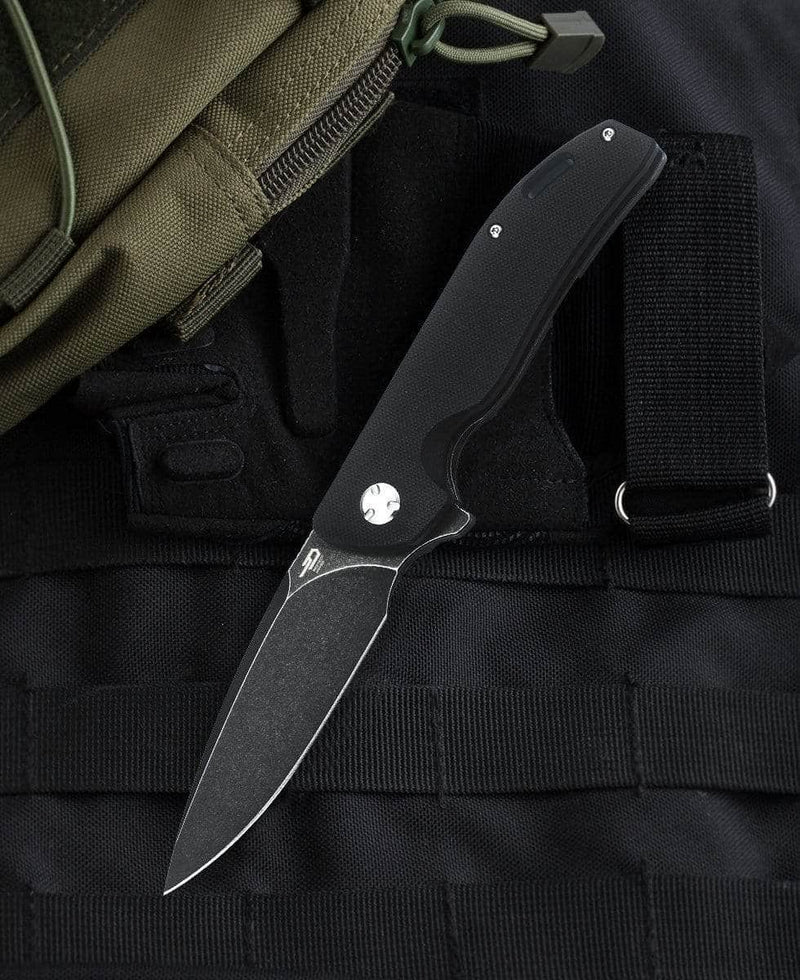
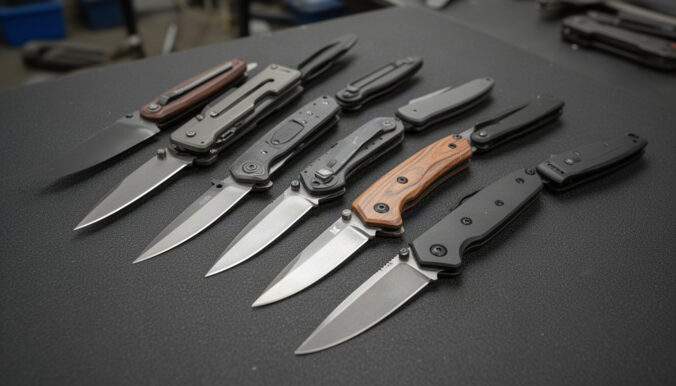
Not all automatic knives are built the same. Some feature compact designs that fit comfortably into a pocket, while others have larger handles, different blade profiles, and distinctive construction details that appeal to experienced collectors.

If you’re exploring automatic knives, choosing the right model involves more than finding an attractive design. Blade steel, handle materials, dimensions, locking systems, and overall construction all contribute to the knife’s quality and suitability.

Side-opening automatic knives are particularly interesting because they combine traditional folding-knife construction with a spring-powered opening mechanism.

Whether you’re expanding a collection or researching your first automatic folding knife, understanding the features behind these designs can help you make a more informed purchase. Also you can now purchase these on special offer at Tactical Tuesday sale!

Here’s what to consider before choosing one.

What Is a Side-Opening Automatic Knife?

A side-opening automatic knife is a folding knife that uses a spring-powered mechanism to move the blade from its closed position into its open position when its release mechanism is activated.

Unlike a manual folding knife, which requires the user to move the blade through its opening arc, an automatic knife uses stored mechanical energy to deploy the blade.

In a traditional side-opening design, the blade swings outward from the side of the handle.

This distinguishes it from an OTF (out-the-front) knife, where the blade travels forward through the front of the handle rather than rotating outward.

Both designs belong to the automatic knife category, but their construction and overall form are different.

If you’re interested in exploring these styles, Knife Depot offers a dedicated Automatic Knives Collection.

1. Pay Attention to Blade Steel

Blade steel is one of the most important considerations when comparing automatic folding knives.

Different steels offer different combinations of hardness, toughness, corrosion resistance, and edge retention.

Understanding these characteristics helps explain why two knives with similar designs can have different maintenance requirements and price points.

Here are some commonly encountered blade steels.

D2 Steel

D2 is a popular high-carbon tool steel used in many folding knives.

It is known for good wear resistance and edge retention. However, it is not completely stainless, so proper cleaning and maintenance are important to help prevent corrosion.

154CM Steel

154CM is a stainless steel valued for its combination of edge retention, corrosion resistance, and overall performance.

It appears in several established knife manufacturers’ product lines and is worth considering when comparing mid-range and premium models.

S30V Steel

CPM-S30V is a premium stainless steel developed for knife applications.

It offers a balance of wear resistance, edge retention, and corrosion resistance, making it a popular choice in higher-end folding knives.

Stainless Steel Options

Other stainless steels are also widely used in automatic knives.

Their performance varies depending on composition, heat treatment, and manufacturing quality.

The important thing is to compare the actual steel specification rather than assuming that a higher price automatically means better performance.

2. Consider the Handle Material

The handle affects more than the knife’s appearance. It contributes to overall weight, durability, grip comfort, and the way the knife feels in the hand.

Some common handle materials include:

Aluminum: Aluminum handles are popular because they offer a relatively lightweight construction with a clean, modern appearance. Anodized finishes are also available in different colors.

G10: G10 is a fiberglass-based laminate known for its strength and resistance to moisture. Its textured surface can also provide a secure grip.

Grivory: This engineered thermoplastic material is used in several modern knife designs. It can help reduce overall weight while providing a durable handle construction.

Stainless steel: Stainless steel handles offer a solid feel and a distinctive appearance, although they can add more weight than some alternative materials.

When comparing handle materials, consider comfort, weight, finish, and how the knife will be stored.

3. Understand the Blade Profile

Blade shape influences the appearance and intended cutting characteristics of a knife.

Side-opening automatic knives are available with several blade profiles, each offering different design characteristics.

Drop Point

Drop-point blades feature a spine that slopes gradually toward the tip.

This creates a versatile profile commonly found in folding knives.

Tanto

Tanto blades feature a distinctive angular point and a relatively straight primary edge.

Their geometric appearance makes them popular among enthusiasts who prefer modern and tactical-inspired designs.

Spear Point

Spear-point blades have a symmetrical appearance, with the spine and edge generally tapering toward the tip.

The design is recognizable across several folding knife categories.

Clip Point

Clip-point blades feature a concave or straight cutout along the spine near the tip.

This creates a distinctive profile that appears in many traditional and modern knife designs.

When comparing blade profiles, pay attention to the manufacturer’s specifications and intended applications rather than selecting a knife based on appearance alone.

4. Look at the Locking Mechanism

A locking mechanism is an important part of folding-knife construction.

It helps keep the blade secured in its open position during intended use.

Automatic folding knives may use different locking arrangements depending on their design and manufacturer.

When researching a model, check:

  • The type of locking system.
  • The manufacturer’s explanation of how it functions.
  • Whether the locking components are accessible for inspection and maintenance.
  • The quality of construction and overall fit.
  • Any maintenance instructions provided by the manufacturer.

A well-designed locking system is an important consideration when evaluating the overall quality of a folding knife.

Never assume that all automatic knives use the same mechanism simply because they share a similar opening style.

5. Compare Overall Size and Weight

Size can make a significant difference when comparing automatic folding knives.

A compact model may appeal to someone who prefers smaller equipment, while a larger design may be more attractive to collectors who appreciate substantial handles and distinctive blade proportions.

Before choosing a model, review the following specifications:

Overall length: The complete measurement of the knife in its open configuration.

Blade length: The manufacturer’s listed blade measurement. Measurement conventions may vary, so check the product specifications carefully.

Closed length: The measurement of the folded knife, which helps determine its storage dimensions.

Weight: An important factor when comparing different handle materials and overall constructions.

Handle dimensions: These help provide a better understanding of the knife’s overall proportions.

Avoid assuming that a larger knife is necessarily better. The right dimensions depend on personal preference, intended utility, and applicable legal restrictions.

6. Explore Established Automatic Knife Brands

Brand reputation and manufacturing consistency can be useful starting points when researching automatic knives.

Knife Depot carries automatic knives from several recognized manufacturers.

Some brands worth exploring include:

Benchmade

Benchmade offers premium automatic knife designs featuring different blade steels, handle materials, and construction styles.

Kershaw

Kershaw has a broad selection of folding knives, including automatic models from its Launch series.

CobraTec

CobraTec offers automatic knife designs in different configurations, finishes, and handle styles.

Hogue

Hogue manufactures folding and automatic knives with a focus on materials, engineering, and product design.

Boker

Boker offers several folding knife designs, including automatic models with different blade and handle configurations.

Rather than choosing a manufacturer based on name recognition alone, compare individual models and their specifications.

You can explore these manufacturers through the Knife Depot brand selection.

7. Side-Opening Automatic Knives vs. OTF Knives

One common question among knife enthusiasts is whether a side-opening automatic knife or an OTF design is the better choice.

The biggest difference comes down to construction.

A side-opening automatic knife features a folding blade that rotates outward from the handle.

An OTF knife features a blade that travels through an opening at the front of the handle.

Here are some of the main differences:

Feature Side-opening automatic OTF automatic
Blade movement Rotates outward Travels through the handle
Handle design Traditional folding format Enclosed handle design
Blade storage Folds into handle Retracts into handle
Construction Folding mechanism Internal sliding mechanism
Appearance Similar to traditional folders Distinctive out-the-front design

Neither style is automatically the better option.

Collectors may prefer one design over another based on aesthetics, construction, brand preference, and the particular models available.

If you’d like to understand the OTF category in more detail, explore Knife Depot’s OTF Knives Collection.

8. Check the Legal Requirements Before Purchasing

Automatic knife regulations are an important consideration, particularly for shoppers purchasing online.

Laws can differ between states and local jurisdictions. Restrictions may cover ownership, possession, blade length, transportation, sales, and carrying.

Federal law also addresses certain aspects of automatic knife commerce.

For example, the Federal Switchblade Act defines switchblades under 15 U.S.C. § 1241, while § 1244 identifies specific exceptions, including an exception covering qualifying assisted-opening knives.

These provisions should not be interpreted as a complete guide to state or local knife laws.

Before purchasing an automatic knife, review the regulations that apply to your location and the destination where the product will be shipped.

You can consult the American Knife and Tool Institute’s legal resources and the relevant federal statutes.

9. What Should You Check Before Buying Online?

Product photographs can make two knives look remarkably similar. That’s why reviewing the complete product description is important.

Before completing your purchase, consider these details:

  • Manufacturer: Confirm the brand and model.
  • Blade steel: Check the exact material rather than relying on generic descriptions.
  • Handle construction: Compare material, finish, and dimensions.
  • Blade measurements: Review the listed specifications.
  • Opening mechanism: Confirm whether the product is a side-opening automatic or another type of folding knife.
  • Locking system: Understand the manufacturer’s description.
  • Warranty: Review the manufacturer’s warranty terms.
  • Shipping and returns: Understand delivery conditions and the retailer’s return policy.
  • Legal restrictions: Verify that the knife can legally be purchased and shipped to your location.

Taking a few minutes to compare these details can help prevent confusion and make online shopping more straightforward.

Find Automatic Folding Knives at Knife Depot

A good automatic folding knife should be evaluated on its construction, materials, design, and specifications rather than its appearance alone.

From premium stainless steel blades to aluminum handles and distinctive folding designs, there are plenty of details worth comparing before making a decision.

Knife Depot features a selection of automatic knives from established manufacturers, including Benchmade, Kershaw, CobraTec, Hogue, and Boker.

Whether you’re researching your options or adding another piece to your collection, take time to explore the available models and compare their specifications.

Ready to explore? Visit the Knife Depot Automatic Knives Collection to discover available designs and find a model that matches your preferences.

Frequently Asked Questions

1. What is a side-opening automatic knife?

A side-opening automatic knife is a folding knife that uses a spring-powered mechanism to move its blade outward from the side of the handle when its release mechanism is activated.

2. What is the difference between an automatic knife and an assisted-opening knife?

An automatic knife uses a release mechanism to activate spring-powered blade deployment. An assisted-opening knife requires the user to begin moving the blade manually before the spring mechanism assists with the opening process.

3. What blade steel is commonly used in automatic knives?

Common options include D2, 154CM, S30V, and other stainless steels. Each offers different characteristics relating to edge retention, corrosion resistance, toughness, and maintenance.

4. Are side-opening automatic knives the same as OTF knives?

No. Side-opening automatic knives rotate their blades outward from the handle, while OTF knives deploy their blades through an opening at the front of the handle.

5. Which brands make automatic folding knives?

Several recognized manufacturers offer automatic folding knives, including Benchmade, Kershaw, Hogue, Boker, and CobraTec.

6. Are automatic knives legal in the United States?

Automatic knife laws vary by state and locality. Federal law also regulates certain aspects of interstate commerce. Buyers should review applicable federal, state, and local requirements before purchasing.

7. What should I consider when buying an automatic knife online?

Compare blade steel, handle material, dimensions, locking system, manufacturer specifications, warranty coverage, shipping conditions, and applicable legal restrictions.

8. Where can I find automatic knives online?

Knife Depot offers a dedicated automatic knife collection featuring different brands, styles, and specifications. Visit its website to explore available products.

#KnifeDepot #AutomaticKnives #FoldingKnives #SideOpeningKnife #KnifeEnthusiast #EDCKnives #KnifeCollection #KnifeGuide #BladeSteel #KnifeCommunity
Automatic Knives for Self Defense EDC (2026 Guide)

TL;DR: – Automatic knives are legal for civilian carry in 47 U.S. states with varying blade-length restrictions; check your state and city laws before buying.

  • Deployment speed (~0.2 seconds for automatics vs. ~1.0 second for manual folders) is the core tactical advantage under stress.
  • Best budget pick: Böker Kalashnikov ($65, 3.25-inch blade). Best mid-range: Kershaw Launch 4 ($125, CPM-154 steel). Best premium: Benchmade Infidel (~$450, D2 steel, OTF).

Introduction: Why Automatic Knives Matter for Self-Defense EDC

You’re standing in a parking garage at dusk. Your hands are full. A situation escalates. In that moment, you need a blade that deploys with one hand – no fumbling, no fine motor skills required.

That’s where automatic knives come in.

Based on our analysis of Self Defense Supply state-by-state legal guides, AKTI knife law summaries, and community discussions from defensive training forums, we’ve compiled this guide to help you navigate legality, mechanics, and real-world carry considerations. Unlike generic listicles that skip the legal minefield entirely, this guide addresses the questions that actually matter: Is it legal where you live? How fast does it deploy? What trade-offs come with each design?

Let’s start with the uncomfortable truth: legality is complicated, and it varies wildly by state – and sometimes by city.

Here’s the thing: the Federal Switchblade Act of 1958 doesn’t ban you from owning an automatic knife. It bans interstate commerce in switchblades. That’s a crucial distinction.

According to the Federal Switchblade Act, it’s illegal to manufacture, import, or sell switchblades across state lines. But once a knife is in your state, state law governs whether you can own and carry it. A 2009 amendment clarified that assisted-opening knives (ones requiring a manual nudge before the spring kicks in) are excluded from the switchblade definition – a distinction that matters for legal carry in some states.

The real-world result? As of 2026, the vast majority of U.S. states allow automatic knives for civilian ownership and carry in some form. Specifically, in 47 states, yes, either outright or with carry or blade-length limits. Only Minnesota, New Mexico, Washington and the District of Columbia still ban civilian possession. However, blade-length restrictions and location prohibitions vary dramatically.

State-by-State Legal Snapshot:

State Automatic Knife Status Blade Length Cap Notes
Texas ✅ Fully Legal 5.5″ or less is simply a “knife” and may be carried anywhere without restriction No restrictions since 2017
Arizona ✅ Fully Legal None Statewide preemption protects carry
California ❌ Banned 2″ max Possession of 2″+ switchblade is misdemeanor
New York ❌ Banned 4″ (NYC only) State bans switchblades; NYC adds 4″ cap for all knives
Illinois ❌ Banned Varies by city Statewide prohibition; Chicago has additional restrictions
Florida ✅ Legal No specific cap Bans ballistic knives only; standard automatics legal
Colorado ✅ Legal 3.5″ (concealed) Blade length limit applies to concealed carry

Critical callout: State law doesn’t override city ordinances. A 3.5-inch blade legal in Arizona may violate New York City’s 4-inch cap despite New York State law. Always verify your city code before carrying.

Federal buildings, courthouses, airports (TSA security zones), and school grounds universally prohibit all knives regardless of state law. TSA rules explicitly ban knives in carry-on baggage, though checked baggage rules differ by airline.

Key Takeaway: 47 states allow automatic knife ownership with varying restrictions. Verify both state AND city law before purchase. Federal buildings and airports ban all knives regardless of state law.

What Makes an Automatic Knife Good for Self Defense?

Not every automatic knife is suitable for defensive carry. Here’s what separates a tactical tool from a novelty.

Deployment Speed Under Stress

Assisted-opening folders deploy in under 0.5 seconds, while manual folders average around 1.0 second. Automatics hit approximately 0.2 seconds – a meaningful difference when your fine motor skills are degraded by adrenaline.

Why does this matter? Research from defensive training communities shows that gross motor movements (like pulling a flipper tab) are far more reliable than fine pinch actions (like manipulating a thumb stud). Under acute stress, your sympathetic nervous system activates, deteriorating fine motor control. Tasks requiring precise finger manipulation become unreliable. A button press (gross motor) beats a thumb stud (fine motor) when your hands are shaking.

Blade Length Sweet Spot

Blade length 2.5–3.5 inches hits the legal sweet spot across most U.S. jurisdictions. Shorter blades (under 2.5″) limit cutting effectiveness; longer blades (over 3.5″) violate carry laws in California, New York, and several other states. A 3.0–3.5 inch blade balances legality, concealability, and functional reach.

Blade Steel: Edge Retention and Corrosion Resistance

Budget picks ($30–$60) use 8Cr13MoV steel; mid-range ($60–$120) jumps to S30V; premium ($120–$250) adds refined ergonomics and materials. The difference matters: S30V holds an edge 3–4x longer than 8Cr13MoV in cutting tests.

For self-defense EDC, S30V or CPM-154 are the sweet spot, as our Spyderco buying guide explains – excellent corrosion resistance and edge retention without the brittleness of tool steels like D2.

Handle Ergonomics Under Stress

G10 fiberglass laminate provides superior grip retention in wet or bloody conditions compared to aluminum or polymer. Aluminum handles offer rigidity but can be slippery when wet. Polymer varies widely by formulation.

Retention and Pocket Clip Security

Your knife is useless if it falls out during physical activity. A quality pocket clip with positive retention prevents loss during running, bending, or grappling. Tip-up carry (blade pointing upward) allows faster deployment for most users because the knife exits the pocket in an ergonomically correct orientation for an immediate grip.

Key Takeaway: Defensive automatics need sub-0.5-second deployment, 3.0–3.5″ blade, S30V or CPM-154 steel, and secure pocket retention. Budget options sacrifice edge retention; premium picks add refined tolerances and materials.

Top 6 Automatic Knives for EDC Self Defense in 2026

Here’s a breakdown of six picks spanning budget to premium, with honest trade-offs for each.

Knife Blade Length Steel Handle Type MSRP Best For
Böker Kalashnikov 3.25″ 440C Aluminum Side-Open ~$65 Budget EDC
Kershaw Launch 4 3.4″ CPM-154 Aluminum Side-Open ~$125 Mid-Range EDC
ProTech TR-3 3.5″ S35VN Aluminum Side-Open ~$185 Premium Mid-Range
Smith & Wesson OTF 3.4″ 8Cr13MoV Aluminum OTF ~$95 Budget OTF
Microtech Ultratech 3.46″ CTS-204P Aluminum OTF D/A ~$280 Premium OTF
Benchmade Infidel 3.91″ D2 Aluminum OTF D/A ~$450 Duty/Premium

Best Budget Automatic Knife for EDC: Under $100

Böker Kalashnikov (~$65, 3.25-inch 440C blade)

The Kalashnikov is your entry point into automatic carry. 440C is adequate stainless for EDC, though not premium-tier. Spring action is functional but tolerances are looser than Microtech or Benchmade. The trade-off: you’re sacrificing edge retention and precision for affordability.

Trade-off: 440C steel dulls faster than CPM-154. Expect to sharpen monthly with daily carry. Spring action may feel “sloppy” compared to premium automatics – normal for the price point.

Best Mid-Range Pick ($100–$200)

Kershaw Launch 4 (~$125, 3.4-inch CPM-154 blade)

Kershaw Launch 4 is a side-opening automatic with 3.4-inch CPM-154 blade and aluminum handle. CPM-154 is a high-end stainless powder steel, superior to standard 154CM. Compact 3.25-inch blade falls within most state EDC length limits. Deployment is smooth, and the plunge lock is reliable.

Trade-off: Side-opening automatics are bulkier in the pocket than OTF designs. If you carry in tight jeans, printing (visible outline) may be an issue.

Best Premium Automatic for Serious EDC ($200+)

Microtech Ultratech (~$280, 3.46-inch CTS-204P blade, OTF)

The Microtech Ultratech is an OG of the single-action knife models created back in the 1990s. CTS-204P (Microtech’s proprietary designation for Böhler M390) offers exceptional edge retention and corrosion resistance. Double-action OTF means both eject and retract are automatic – faster than single-action designs.

Trade-off: OTF knives exhibit more lateral blade play than side-opening lock designs because the blade travels in a linear channel rather than rotating onto a lock bar. This is mechanically normal but worth knowing for defensive reliability expectations.

OTF vs Side-Opening Automatics: Which Is Better for Self Defense?

Both designs have merit. Here’s the head-to-head.

Factor OTF (Out-the-Front) Side-Opening
Deployment Direction Blade extends perpendicular to handle Blade swings parallel to handle
One-Hand Use Excellent – button press only Excellent – lever press only
Pocket Bulk Compact profile Slightly bulkier
Blade Lock Strength Linear channel lock (more play) Frame/liner lock (less play)
Maintenance Monthly lubrication recommended Monthly lubrication recommended
Legal Profile Explicitly covered by Federal Switchblade Act Also covered; some states distinguish
Deployment Force Double-action (eject + retract automatic) Single-action (manual retract)

Scenario-Based Recommendation:

  • Pocket carry (jeans, casual): Side-opening. Less printing, easier concealment.
  • Waistband carry (IWB holster): OTF. Compact profile fits tight spaces.
  • Duty/professional carry: OTF double-action. Faster retraction for re-holstering.

An automatic knife opens at the push of a button, using an internal mechanism for full deployment. A spring-assisted knife requires manual pressure on the blade before the spring mechanism kicks in to complete the opening. A double-action OTF can both eject and retract the blade using a switch or lever. A single-action OTF will only automatically eject the blade and requires you to pull back a charging handle to retract the blade and reset the spring.

The trade-off: More moving parts mean more chances for failure. Double-action OTFs are more complex than side-opening automatics. For daily carry, this rarely matters – but it’s worth acknowledging.

Key Takeaway: OTF knives are more compact; side-opening automatics are more robust. Choose OTF for waistband carry, side-opening for pocket carry. Both deploy in ~0.2 seconds.

How Should You Carry an Automatic Knife for EDC?

Deployment speed means nothing if your knife isn’t accessible.

Pocket Clip Position: Tip-Up vs Tip-Down

Tip-up carry (blade pointing upward) allows faster deployment for most users because the knife exits the pocket in an ergonomically correct orientation for an immediate grip. Tip-down carry (blade pointing downward) is more concealable but requires a wrist rotation during deployment – slower under stress.

Strong-Side vs Off-Hand Carry

Strong-side carry (dominant hand side) is standard for EDC. Off-hand carry is useful if your dominant hand is injured or occupied. Most EDC practitioners stick with strong-side, right-front pocket for right-handers.

Printing and Concealment

Automatic knives with 3.0–3.5 inch blades print minimally under a t-shirt or light jacket. Thinner handles (aluminum vs. G10) reduce printing. If you’re carrying in business casual (dress shirt, blazer), a side-opening automatic is less visible than an OTF.

Retention During Physical Activity

A quality pocket clip with positive retention prevents loss during running, bending, or grappling. Test your clip by shaking your leg vigorously – the knife should stay put. Cheap clips fail here.

Maintenance Cadence: Lubrication Schedule

Monthly lubrication of automatic knife mechanisms (OTF and side-open) is recommended for daily carry to prevent spring fatigue and debris accumulation causing deployment failure. Use Nano-Oil or Sentry Solutions – quality lubricants cost ~$10 and last 12+ months at once-monthly application.

Key Takeaway: Carry tip-up, strong-side, front pocket. Test pocket clip retention before relying on it. Lubricate monthly to prevent spring fatigue. Budget $10/year for maintenance.

Frequently Asked Questions About Automatic Knives for EDC

Direct Answer: Yes, in 47 U.S. states. As of 2026, the vast majority of U.S. states allow automatic knives for civilian ownership and carry in some form. However, blade-length restrictions and location prohibitions (schools, federal buildings, airports) apply universally. Always verify your specific state and city ordinances before carrying.

How much should I spend on an automatic knife for EDC self defense?

Direct Answer: Budget $65–$125 for reliable EDC; $180–$300 for premium carry. Budget picks ($30–$60) use 8Cr13MoV steel; mid-range ($60–$120) jumps to S30V; premium ($120–$250) adds refined ergonomics and materials. The jump from $65 to $125 buys you CPM-154 steel (better edge retention). The jump from $125 to $280 buys you refined tolerances and premium materials – nice but not essential for EDC.

Is an OTF knife or a side-opening automatic better for self defense?

Direct Answer: Both deploy equally fast (~0.2 seconds). OTF knives are more compact for waistband carry; side-opening automatics are more robust and less prone to blade play. Choose based on your carry method, not defensive capability. A double-action OTF can both eject and retract the blade using a switch or lever, while side-opening automatics require manual retraction.

Can an automatic knife be used effectively for self defense with no training?

Direct Answer: Deployment is intuitive, but defensive effectiveness requires training. Under extreme stress, fine motor skills degrade significantly due to sympathetic nervous system activation. An automatic knife’s button-press deployment is more reliable than manual folders under stress, but using any knife defensively requires understanding distance, angles, and legal liability. Consider taking a defensive knife course before carrying.

What blade length is best for a self defense EDC automatic knife?

Direct Answer: 3.0–3.5 inches. Blade length 2.5–3.5 inches hits the legal sweet spot across most U.S. jurisdictions. Shorter blades (under 2.5″) limit cutting effectiveness; longer blades (over 3.5″) violate carry laws in California, New York, and several other states. A 3.25-inch blade is the practical sweet spot.

How often do automatic knife mechanisms fail, and does that matter for self defense?

Direct Answer: Failure is rare with quality brands (Microtech, Benchmade, Kershaw). More moving parts mean more chances for failure, but modern automatics are engineered for reliability. Monthly lubrication prevents most failures. Budget brands (under $50) have higher failure rates; mid-range and premium picks are reliable for daily carry.

Are there restrictions on automatic knives in airports or federal buildings?

Direct Answer: Yes, absolute prohibition. TSA rules explicitly ban knives in carry-on baggage, though checked baggage rules differ by airline. Federal buildings, courthouses, and schools universally prohibit all knives regardless of state law. Never attempt to carry an automatic knife through airport security or into federal facilities.

Conclusion: Making Your Choice

Automatic knives for self-defense EDC aren’t a magic solution – they’re a tool optimized for one specific scenario: one-handed deployment under extreme stress. They excel at that job.

But legality is your first filter. Check your state and city laws before buying. Then choose between OTF (compact, faster retraction) and side-opening (robust, less blade play) based on your carry method. Budget $65–$125 for reliable carry; spend more only if you want premium materials and refined tolerances.

Knife Depot carries a full range of automatic knives across all price points and designs. Whether you’re looking for a budget Böker Kalashnikov or a premium Microtech Ultratech, you’ll find detailed specs, legal summaries by state, and expert guidance to help you make an informed decision.

The bottom line: an automatic knife is only as good as your understanding of local law and your commitment to training. Get both right, and you’ve got a reliable defensive tool. Skip either one, and you’ve got a liability.

Upgrade Your Everyday Carry
Built for performance. Designed to stand out. Shop knives ready for everyday carry, the outdoors, or your collection.
Top models are selling out fast.
Free shipping available on most orders
Shop Here

© 2026 The Cutting Edge

Theme by Anders Noren — Up ↑