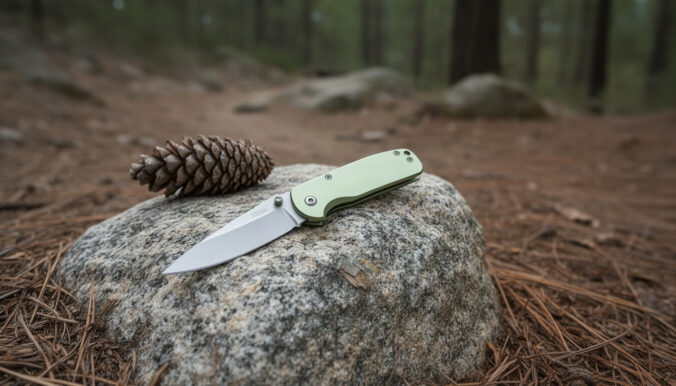
TL;DR: – Aim for knives under 1.5 ounces for ultralight backpacking; the Benchmade Bugout at 1.85 oz and Spyderco Dragonfly 2 at 1.2 oz lead the folding category.
- Fixed blades like the Mora Companion at 4.1 oz with sheath cost $15–$20 and outperform folders for durability on longer trips.
- A 3–4 inch blade is the sweet spot for versatility without excess weight; anything shorter sacrifices utility, anything longer adds unnecessary ounces.
Introduction: Why Weight Matters on the Trail
You're reading this because you've felt it – that moment when your pack gets heavier with each mile, and you start questioning every ounce. A lightweight hiking knife for backpacking isn't just nice to have; it's the difference between enjoying your trip and dreading the next ridge.
Based on our analysis of community discussions from Backpacking Light, The Trek, and Outdoor Gear Lab, we've identified the knives that deliver maximum function with minimal weight penalty. The data is clear: most backpackers carry knives under 2 ounces, and the best performers weigh under 1.5 ounces.
Here's what separates a trail-ready knife from dead weight: blade length (2.5–3.5 inches), steel type (VG-10 or S30V for edge retention), and total carry weight including sheath. Most manufacturers list blade-only specs, which means you're adding 0.3–1.5 ounces of sheath weight that doesn't show up in the marketing materials.
What Makes a Knife Truly Lightweight for Backpacking?
A lightweight backpacking knife is one that weighs under 3 ounces total and handles essential tasks – food prep, cord cutting, small repairs – without sacrificing durability. But here's the catch: "lightweight" means different things depending on your trip style.
According to Adventure Alan, a perfect backpacking knife strikes the balance between high functionality, high quality steel, good value, and low weight. It should easily cut salami, hard cheese, plastic wrappers, duct tape, and small branches without adding bulk to your pack.
Weight benchmarks matter. Pie on the Trail recommends aiming for below 1.5 ounces as a benchmark. If you're carrying a 25-pound base pack (11,340 grams), your knife system should stay under 2% of that – roughly 227 grams or 8 ounces. Most ultralight picks come in well under that budget.
Fixed blade vs. folding trade-offs:
- Fixed blades: Lighter (no pivot mechanism), more durable, but require a sheath and take up pack space.
- Folding knives: Compact, legal in more jurisdictions, but add 0.4–0.8 ounces for the lock mechanism.
Field & Stream notes that like any piece of gear you bring into the backcountry, your knife should be lightweight and low profile. All quality knives are made from lightweight, durable steel and should feature an ergonomic design that feels comfortable in hand.
Steel type impacts both weight and field maintenance. VG-10 (58–60 HRC) is easier to sharpen with a ceramic rod on the trail. S30V (60–62 HRC) holds an edge longer but requires diamond abrasives for field touch-ups. Outdoor Gear Lab found that S30V steel takes three times longer to sharpen than softer alternatives like AUS-8.
Key Takeaway: Target knives under 1.5 oz for ultralight trips; 2–3 oz is acceptable for weekend trips. Fixed blades save weight; folders save legal hassle. Choose steel based on your sharpening tolerance, not just edge retention.
Top 7 Lightweight Hiking Knives for Backpacking in 2026
Best Ultralight Pick: Knives Under 1 oz
Spyderco Ladybug 3 – 0.88 oz (25g)
The Spyderco Ladybug 3 is the featherweight champion. At under 1 ounce, it's genuinely ultralight. The VG-10 blade is short (1.94 inches), which limits food prep work, but it excels at opening packages and cutting cord. The FRN handle is durable and won't add weight. This is your "I barely notice it's there" knife.
Best for: Ultralight thru-hikers who prioritize pack weight above all else. Not ideal for serious food prep.
Opinel No. 4 – 0.35 oz (10g)
According to Pie on the Trail, the Opinel No. 4 weighs just 0.35 oz (10g). It's a carbon steel folder with a 1.7-inch blade. The catch? Carbon steel rusts without regular oiling, and the blade is almost too small for practical trail work. But if you're obsessed with ounces, this is it.
Best for: Minimalists on short trips who don't mind frequent maintenance.
Best Folding Knife for Backpacking
Benchmade Bugout 535 – 1.85 oz (52g)
The Benchmade Bugout is the gold standard. At 1.85 ounces, it's light enough for ultralight kits but has a 3.24-inch blade that actually works for food prep. The CPM-S30V steel holds an edge for weeks. The FRN scales are durable. At $150–$175 MSRP, it's premium pricing, but Outdoor Gear Lab found that finding a knife like this for under $100 feels like a steal – and the Bugout regularly discounts to that range.
Best for: Backpackers who want one knife that does everything without compromise.
Victorinox Pioneer X – 2.47 oz (70g)
The Victorinox Pioneer X is a multi-tool SAK with a 2.4-inch blade, scissors, and a few other tools. At 2.47 ounces, it's heavier than a dedicated folder but offers versatility. Stainless steel means no rust worries. Price: $30–$40. Pie on the Trail notes that Victorinox has been making multi-function pocket knives since 1884.
Best for: Backpackers who want scissors and a few extra tools without carrying separate gear.
Best Fixed Blade Under 2 oz
ESEE Izula – 1.94 oz (55g) blade-only
According to Knife Informer, the bare Izula weighs 2 ounces before its sheath, cord, or optional handle scales. The 2.63-inch blade is 1095 carbon steel – sharp and easy to sharpen, but it rusts without care. The Kydex sheath adds roughly 1 ounce, bringing total carry weight to ~2.94 oz. Price: $60–$80.
Best for: Bushcrafters who want a proven fixed blade and don't mind carbon steel maintenance.
Best Budget Lightweight Hiking Knife
Mora Companion – 4.1 oz (116g) with sheath
The Mora Companion is the budget king. At 4.1 ounces with sheath included, it's heavier than ultralight folders but costs only $15–$20. The 4.1-inch stainless blade handles food prep, cord, and small repairs. It's not fancy, but it works. Knife Informer notes that a good backpacking knife earns its place by handling food prep, cord, small repairs, and other trail chores without adding unnecessary weight – and the Mora does all of this.
Best for: Budget-conscious backpackers on weekend trips who don't mind a slightly heavier knife.
Best All-Around Trail Knife
Spyderco Dragonfly 2 – 1.2 oz (35g)
The Spyderco Dragonfly 2 hits the sweet spot. At 1.2 ounces with a 2.28-inch VG-10 blade, it's light, sharp, and easy to maintain. The FRN handle is durable. At $50–$70, it's mid-range pricing. Tech Writer EDC notes that the Benchmade Bugout Mini comes in below 1.5 ounces, but the Dragonfly 2 offers similar performance at a lower price point.
Best for: Backpackers who want a proven, reliable folder without the Bugout price tag.
Premium Pick for Durability
Bark River Ultra Light Bushcrafter – 2.5–2.7 oz
According to Backpacking Light, Bark River just came out with an Ultra Light Bushcrafter – the knife officially weighs 2.7 oz, but field reports show 2.5 oz in curly birch. It's a fixed blade with a 3.5-inch blade, premium steel, and exceptional durability. Price: $120–$150.
Best for: Backpackers willing to spend for a knife that will last decades.
| Knife | Weight (oz) | Blade Length | Steel | Price | Best For |
|---|---|---|---|---|---|
| Spyderco Ladybug 3 | 0.88 | 1.94" | VG-10 | $35–$45 | Ultralight minimalists |
| Opinel No. 4 | 0.35 | 1.7" | Carbon | $8–$12 | Extreme ultralight |
| Benchmade Bugout | 1.85 | 3.24" | S30V | $150–$175 | All-around performance |
| Victorinox Pioneer X | 2.47 | 2.4" | Stainless | $30–$40 | Multi-tool users |
| ESEE Izula | 1.94 (blade) | 2.63" | 1095 Carbon | $60–$80 | Bushcrafters |
| Mora Companion | 4.1 (with sheath) | 4.1" | Stainless | $15–$20 | Budget backpackers |
| Spyderco Dragonfly 2 | 1.2 | 2.28" | VG-10 | $50–$70 | Reliable mid-range |
| Bark River Ultra Light | 2.5–2.7 | 3.5" | Premium | $120–$150 | Durability seekers |
Key Takeaway: The Benchmade Bugout (1.85 oz, $150–$175) dominates the folding category; the Mora Companion ($15–$20, 4.1 oz with sheath) wins on budget. For ultralight, the Spyderco Dragonfly 2 (1.2 oz, $50–$70) offers the best value-to-weight ratio.
How Do You Choose the Right Backpacking Knife for Your Trip?
The knife you need depends on your trip type, not just weight. A weekend trip has different demands than a thru-hike.
Weekend trips (2–3 days): You can afford 2–3 ounces. A folder like the Benchmade Bugout or Spyderco Dragonfly 2 handles food prep and repairs without strain. Fixed blades work too if you don't mind the sheath bulk.
Thru-hikes (1,000+ miles): Every ounce compounds over weeks. The Trek notes that you will probably be fine with a knife that weighs under two ounces. Many thru-hikers carry knives under 2 ounces – the Spyderco Ladybug 3 (0.88 oz) or Opinel No. 4 (0.35 oz) are common choices.
Bushcraft-heavy trips: If you're processing firewood or doing serious camp work, a fixed blade like the ESEE Izula (1.94 oz) or Bark River Ultra Light (2.5–2.7 oz) is worth the extra weight.
Blade length matters. Ruike Knives notes that 3–4 inches is the sweet spot for versatility. Blades under 3.5 inches are typically legal for hiking and camping in most regions. Anything shorter (under 2 inches) sacrifices utility; anything longer adds unnecessary ounces and legal risk.
Handle material impacts weight. FRN (Fiberglass Reinforced Nylon) is lighter than G10 or titanium. The Spyderco Dragonfly 2 uses FRN and weighs just 1.2 ounces. If you want premium feel, expect to add 0.3–0.5 ounces.
Key Takeaway: Weekend trips: 2–3 oz folders work fine. Thru-hikes: target under 2 oz. Bushcraft: fixed blades 2.5–3.5 oz. Blade length 3–4 inches balances utility and legality.
Fixed Blade vs Folding Knife: Which Is Better for Backpacking?
This is the question that divides the backpacking community. Here's the honest breakdown.
Fixed blades are lighter. No pivot mechanism, no lock bar, no springs. A 3-inch fixed blade typically weighs 1.5–2.5 ounces. A comparable folding knife weighs 2–3 ounces. Knife Informer notes that in terms of utility provided versus space consumed, a folding knife usually wins – but fixed blades win on weight.
Folding knives are more legal. Ruike Knives notes that blades under 3.5 inches are typically legal for hiking and camping in most regions. Fixed blades face stricter regulations in some states and countries. If you're hiking in California or the UK, a folder is safer.
Durability favors fixed blades. Outside Online states that folding knives are far more prone to failure than fixed blades because of the mechanism that allows them to collapse. On a multi-week trip, a fixed blade is more reliable.
Hygiene and maintenance: Fixed blades are easier to clean and dry. Folders trap moisture in the pivot, which can cause rust or corrosion. If you're near water for weeks, a fixed blade is smarter.
The verdict: For weekend trips and thru-hikes on groomed trails, a folder like the Benchmade Bugout wins on legality and compactness. For bushcraft or extended wilderness trips, a fixed blade like the ESEE Izula or Mora Companion is more durable.
Key Takeaway: Fixed blades save 0.5–1 oz and last longer; folders are more legal and compact. For most backpackers, a folder under 2 oz is the practical choice.
How to Maintain a Lightweight Hiking Knife on the Trail
Your knife is only as good as its edge. Here's how to keep it sharp without carrying heavy gear.
Field sharpening tools: A pocket diamond stone (~0.5 oz, $8–$15) works for high-hardness steels like S30V. A ceramic rod (~1.2 oz, $20–$35) is lighter and works for VG-10 and softer steels. If your knife uses VG-10 (like the Spyderco Dragonfly 2), a ceramic rod is sufficient. If it uses S30V (like the Benchmade Bugout), bring a diamond stone.
Moisture prevention: Carbon steel blades (like the ESEE Izula) rust without care. Wipe the blade dry after use. Carry a small cloth or bandana. If you're near water for weeks, oil the blade every few days with a tiny amount of cooking oil or knife oil.
Three-step cleaning routine:
- Wipe the blade clean with a cloth or bandana after each use.
- Dry the handle and sheath to prevent moisture buildup.
- Once per week, use your field sharpening tool for a quick touch-up.
Sheath care: Keep your Kydex or nylon sheath dry. Moisture trapped inside accelerates rust. Store the knife unsheathed in your pack if possible, or ensure the sheath has drainage holes.
Key Takeaway: Carry a 0.5 oz diamond stone ($8–$15) for S30V blades; a ceramic rod for VG-10. Wipe your blade dry daily. Oil carbon steel weekly if near water.
Frequently Asked Questions About Lightweight Backpacking Knives
How much should a lightweight backpacking knife weigh?
Direct Answer: Aim for under 1.5 ounces for ultralight backpacking; 2–3 ounces is acceptable for weekend trips.
Pie on the Trail recommends below 1.5 ounces as a benchmark. The Trek notes that you will probably be fine with a knife that weighs under two ounces. For a 25-pound base pack, your knife should stay under 2% of total weight – roughly 227 grams or 8 ounces total system weight.
What is the best knife steel for a hiking knife?
Direct Answer: VG-10 (58–60 HRC) is the best balance of edge retention and field sharpenability; S30V (60–62 HRC) holds an edge longer but requires diamond abrasives.
Field & Stream notes that CPM-S30V steel has a sharp edge straight out of the box and slices through large pieces of cardboard like butter. However, Outdoor Gear Lab found that S30V takes three times longer to sharpen than softer alternatives. For trail use, VG-10 is more practical.
Is a fixed blade or folding knife better for backpacking?
Direct Answer: Folding knives are more legal and compact; fixed blades are lighter and more durable.
Outside Online states that folding knives are far more prone to failure than fixed blades because of the mechanism. For most backpackers on groomed trails, a folder under 2 ounces like the Spyderco Dragonfly 2 is the practical choice.
What is the best budget lightweight hiking knife under $40?
Direct Answer: The Mora Companion at $15–$20 with sheath included is the best budget pick.
At 4.1 ounces with sheath, it's heavier than ultralight folders but costs a fraction of premium options. Knife Informer notes that a good backpacking knife earns its place by handling food prep, cord, small repairs, and other trail chores – and the Mora does all of this.
How do I sharpen a knife on a backpacking trip?
Direct Answer: Carry a 0.5 oz diamond stone ($8–$15) for high-hardness steels or a ceramic rod for VG-10 and softer steels.
Wipe your blade dry after each use. Once per week, use your field sharpening tool for a quick touch-up. For carbon steel blades, oil the blade every few days if near water.
Do I really need a knife for backpacking?
Direct Answer: Yes. Field & Stream notes that backpacking knives are essential for survival in remote wilderness. They help with food preparation, tent repair, cleaning game, and starting fires.
Even on groomed trails, a knife handles food prep, cord cutting, and emergency repairs. A lightweight folder under 2 ounces is worth the pack space.
What blade length is best for backpacking?
Direct Answer: 3–4 inches is the sweet spot for versatility and legality.
Ruike Knives notes that 3–4 inches is the sweet spot for versatility, and blades under 3.5 inches are typically legal for hiking and camping in most regions. Anything shorter sacrifices utility; anything longer adds weight and legal risk.
Conclusion: Your Lightweight Knife Awaits
Choosing a lightweight hiking knife for backpacking comes down to three factors: weight, steel type, and your trip style. For ultralight thru-hikes, the Spyderco Dragonfly 2 at 1.2 ounces ($50–$70) is unbeatable. For all-around performance, the Benchmade Bugout at 1.85 ounces ($150–$175) is the gold standard. For budget backpackers, the Mora Companion at $15–$20 with sheath included is a no-brainer.
Every ounce matters on the trail. The right knife – light, sharp, and reliable – becomes invisible in your pack and indispensable in your hand. Start with a folder under 2 ounces, learn its edge, and you'll understand why backpackers obsess over knives.
Ready to upgrade your kit? Knife Depot carries all the top lightweight options, with expert reviews and fast shipping. Your next trail adventure starts with the right blade.
Leave a Reply