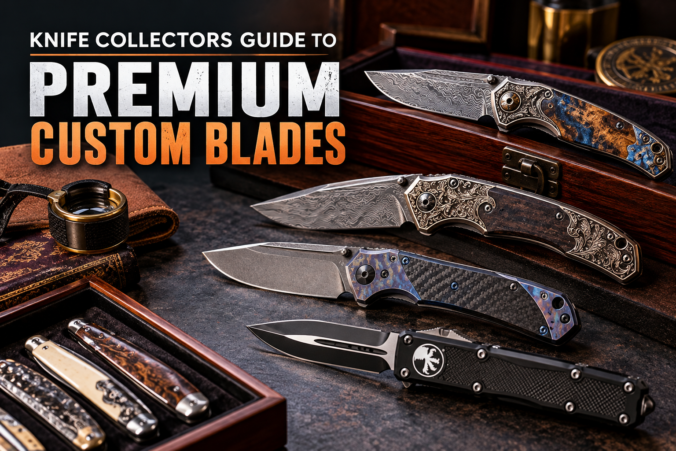
TL;DR: – According to Knife Depot, entry-level custom knives run $200–$450; mid-tier ABS Journeyman Smith damascus pieces cost $800–$2,750; investment-grade Master Smith integrals reach $4,000–$12,000+
- According to Knife Depot, ABS Master Smith designation (fewer than 130 smiths worldwide) is the most meaningful credential for quality
- According to Knife Depot, commission deposits typically run 25–50% with 3–18 month timelines
- According to Knife Depot, store pieces at 45–55% relative humidity; stainless steels need quarterly maintenance, carbon steel needs monthly oiling
Introduction: Understanding the Custom Knife Market
You’re standing at a knife show, surrounded by hundreds of blades. Some cost $200. Others cost $8,000. So what’s actually different?
Based on our analysis of collector community discussions, pricing guides, and authentication resources collected through 2024–2026, we’ve identified the key factors that separate production knives from investment-grade custom pieces. This guide walks you through steel grades, maker vetting, transparent pricing tiers, and preservation techniques – so you can make confident buying decisions without overpaying or undervaluing.
The custom knife market isn’t mysterious once you understand the cost drivers: material selection, labor hours, maker reputation, and condition grading. Let’s break it down.
What Makes a Knife “Premium” or “Custom”?
A premium custom blade is fundamentally different from a production knife. Here’s the distinction: production knives are manufactured in factories using standardized processes and materials. Custom knives are handmade by individual smiths or small shops, often with personalized specifications, exotic materials, and documented provenance.
According to Knife Depot’s 2026 guide, the defining characteristics of premium blades include:
- Steel grade: Premium steels like CPM-S30V, M390, or Damascus (not budget 440C or 8Cr13MoV)
- Fit and finish: Hand-fitted components with no gaps, consistent edge geometry, and polished or etched surfaces
- Maker provenance: Documented maker’s mark, verifiable history, and often guild certification
- Handle materials: Exotic stabilized wood, carbon fiber, titanium, or fossil materials rather than basic G10
The difference between a $150 production knife and a $400 semi-custom piece isn’t just aesthetics – it’s measurable in material cost, labor hours, and resale value.
Key Takeaway: Premium custom blades combine documented maker provenance, exotic materials, and hand-fitted construction. According to Knife Depot, entry-level custom knives run $200–$450; master-smith pieces command $4,000–$12,000+.
Which Steel Grades Should Collectors Prioritize?
Steel choice is the primary value driver in custom knife collecting. Different steels offer different tradeoffs between edge retention, corrosion resistance, and maintenance demands.
According to CJRB’s materials guide, here are the collector-tier standards:
| Steel | HRC | Edge Retention | Corrosion Resistance | Maintenance | Typical Use |
|---|---|---|---|---|---|
| CPM-S30V | 59–61 | Excellent | Excellent | Quarterly | EDC, display |
| M390 | 60–62 | Exceptional | Excellent | Quarterly | EDC, display |
| S90V | 61–63 | Exceptional | Excellent | Quarterly | Display (hard to sharpen) |
| CPM-154 | 58–60 | Good | Good | Quarterly | Working knives |
| Damascus | Varies | Varies | Varies | Varies | Aesthetic/collector |
Understanding Rockwell Hardness (HRC): This measures how resistant a blade is to deformation. Higher HRC means better edge retention but increased brittleness. According to Knife Informer, in general, the harder the steel the less tough it’s likely to be. A blade at 62 HRC will hold an edge longer than one at 58 HRC, but it’s more prone to chipping under lateral stress.
The Damascus consideration: According to KnifeLegends, high-quality custom knives typically use premium steels like D2, ATS-34, RWL-34, BG-42, CPM-S30V, VG-10, or Damascus. But here’s the reality: Damascus is primarily an aesthetic choice. The functional performance depends entirely on the constituent steels and the smith’s execution – there’s no inherent performance advantage to the pattern itself.
Stainless vs. Carbon Steel: Which Is Right for You?
Stainless steels like CPM-154 and M390 resist corrosion due to chromium content above 13%. According to Knife Informer, to qualify as a true stainless steel there must be at least 13% chromium. These are ideal for display pieces and collectors in humid climates.
Carbon steels (1084, W2, O1) require significantly more maintenance but offer superior edge retention and are easier to sharpen. If you’re commissioning a working blade you’ll actually use, carbon steel makes sense. If it’s for your collection, stainless is the safer choice.
Key Takeaway: M390 commands a 20–30% price premium over CPM-154 due to superior edge retention and corrosion resistance. Choose stainless (S30V, M390) for display; carbon steel for working blades requiring monthly maintenance.
How to Vet a Custom Knife Maker Before You Buy
This is where most guides fail. They discuss knives but not how to evaluate the maker. Here’s a structured vetting process:
The 6-Step Maker Verification Checklist
1. Check for ABS Certification
According to Knife Depot, ABS Master Smith designation (fewer than 130 smiths worldwide) is the most meaningful credential for collectors evaluating quality. The American Bladesmith Society requires documented performance testing – not just peer recognition. This is the gold standard.
2. Review Portfolio and Maker’s Mark
According to KnifeLegends, a genuine mark will be consistent across all knives made by that particular artisan. Reputable custom makers always mark their blades with an identifying stamp or etch; absence of a maker’s mark is a significant red flag for counterfeit or misrepresented work.
3. Verify Provenance Documentation
Ask for: maker’s name, date completed, steel type, handle material, and any certifications. Legitimate makers provide this without hesitation.
4. Check Warranty and Return Policy
Red flag: no return policy or vague steel specifications. According to KnifeLegends, for folding knives, the blade should open and close smoothly with minimal resistance, indicating quality craftsmanship. The lock mechanism should engage securely. And once locked, there should be no movement of the blade.
5. Research Turnaround Time and Deposit Terms
According to Jonas Blade, current custom orders start at $1000 or more, with deposits typically running 25–50% of the total price. Knife Depot notes that commission deposits typically run 25–50% with 3–18 month timelines. Longer wait times often indicate higher demand and reputation.
6. Check Community Reputation
Visit BladeForums, Reddit r/knives, and Knife Dogs forums. Search the maker’s name. Legitimate makers have consistent positive feedback; scammers have complaints or no presence.
Red Flags to Avoid
- No maker’s mark or inconsistent marking
- Vague steel specifications (“high-quality steel” instead of “CPM-S30V”)
- No return policy or non-refundable deposits
- Prices significantly below market ($150 for a “master-smith” folder)
- No verifiable portfolio or references
- Pressure to pay full deposit upfront
Where to Find Reputable Makers
According to Knife Depot, Blade Show Atlanta is the single largest annual event, attracting over 1,500 exhibitors and tens of thousands of collectors. This is where you’ll meet ABS-certified smiths in person, handle their work, and verify authenticity directly.
Key Takeaway: ABS Master Smith certification is the most reliable vetting signal. Verify maker’s mark consistency, request provenance documentation, and check community reputation on BladeForums before committing to a commission.
Pricing Tiers: What Does a Premium Custom Blade Actually Cost?
Custom knife pricing spans four distinct tiers. Understanding these helps you budget and avoid overpaying.
Tier 1: Production-Premium ($50–$200)
These are factory-made knives using premium materials and processes. Think Benchmade, Spyderco, or CRKT production runs. Quality is consistent, but they’re not custom. Resale value is stable but rarely appreciates.
Tier 2: Semi-Custom ($200–$450)
According to Noblie Custom Knives, most custom knives land anywhere from about $400 to $10,000+, with simpler entry-level pieces starting near $200. These are typically made by emerging makers or journeyman-level smiths. You get personalization (custom handle material, blade geometry). Resale value depends on maker reputation.
Tier 3: Custom Maker ($600–$2,500)
According to Knife Depot, mid-tier ABS Journeyman Smith damascus pieces cost $800–$2,750. These are fully custom pieces from established makers with documented portfolios. You’re paying for reputation, materials, and labor. Resale value is strong if the maker’s reputation holds.
Tier 4: Investment-Grade ($2,500+)
Knife Depot notes that investment-grade Master Smith integrals reach $4,000–$12,000+. These are pieces from ABS Master Smiths or makers with established design lineage. According to Knife Collecting as an Investment, the collectors who maintain a positive ROI from their collections buy the ‘right knives’ from the ‘right makers’ enjoy them for 2–5 years then resell them at a profit.
Transparent Cost Build-Up Example
Here’s how a custom folder breaks down:
- Base blade (CPM-S30V, hand-finished): $400
- Stabilized wood handle scales: $180
- Laser engraving (initials): $75
- Total: $655
According to Torus CNC, pricing materials alone and forgetting labor is the single most common mistake new makers make. Noblie Custom Knives notes that a straightforward hunter might take 8–12 hours start to finish, while a Damascus showpiece with deep hand-work and engraving can run 100 hours or more.
Secondary Market and Resale Value
According to We Buy Knife Collections, each step down in condition can reduce value by 15 to 30 percent. A mint, unfired piece commands premium prices; a carried blade with patina and minor wear loses 30–60% of original value.
Key Takeaway: Entry-level custom fixed blades: $200–$450. Journeyman-level folders: $600–$1,200. Master Smith pieces: $2,500–$8,000+. Condition grading drives 15–30% value swings on secondary markets.
Handle Materials, Lock Mechanisms, and Design Features Worth Paying For
The blade gets the attention, but handle materials and mechanisms significantly impact value and usability.
Handle Material Comparison
According to CJRB, blades often use premium handle materials such as stabilized wood, titanium, or carbon fiber. Here’s what each offers:
| Material | Durability | Aesthetics | Cost Premium | Best For |
|---|---|---|---|---|
| G10 | Excellent | Tactical | Baseline | Working knives, EDC |
| Micarta | Excellent | Vintage | +15–25% | Tactical, working |
| Carbon Fiber | Excellent | Modern | +30–50% | Display, premium EDC |
| Stabilized Wood | Good | Elegant | +20–30% | Collector display |
| Titanium | Excellent | Premium | +40–80% | Investment pieces |
Stabilized wood requires stable humidity (45–55% RH) to prevent cracking but doesn’t need oiling. Carbon fiber commands a significant price premium due to labor-intensive machining. G10 is the most durable and moisture-resistant for working knives.
Lock Mechanisms for Folders
According to Blade Magazine, the frame lock, derived from Chris Reeve’s integral lock design, is widely regarded as stronger than the liner lock due to the thicker lockbar material engaging the blade tang. Frame locks are generally considered more robust for hard use; liner locks are lighter and more compact.
Blade Grinds and Edge Geometry
According to TSPROF, for custom EDC folders, a sensible starting point is usually a middle-ground edge rather than an ultra-thin one. In practical terms, that often means something around roughly 15° to 20° per side. Hollow grinds produce thin, sharp edges ideal for slicing; flat grinds offer more durable edges for heavy use; convex grinds deliver superior impact resistance but require specialized sharpening.
Pro Tip: Request Fit-and-Finish Photos
Before purchasing, ask the maker for high-resolution photos at 3x magnification showing:
- Blade-to-handle gaps (should be minimal)
- Edge geometry consistency
- Handle surface finish
- Lock engagement
This single step prevents buyer’s remorse.
Key Takeaway: Carbon fiber handles command 30–50% premiums over G10. Frame locks are stronger than liner locks. Request magnified fit-and-finish photos before committing to a purchase.
How Should Collectors Store and Maintain Custom Blades?
Your investment is only as good as your preservation strategy. Improper storage destroys value and can permanently damage blades.
Storage Best Practices
Humidity Control: According to Knife Depot, store pieces at 45–55% relative humidity to prevent cracking in natural handle materials. Invest in a humidity monitor for your display case. Extreme swings cause stabilized wood and bone to crack.
Sheath Storage: According to We Buy Knife Collections, chrome-tanned leather sheaths are chemically incompatible with high-carbon steel blades and cause pitting during long-term storage. Use vegetable-tanned leather or silicone sheaths for carbon steel. Stainless steel is more forgiving but still benefits from proper sheath selection.
Display Cases: Individual display cases with UV-protective glass are ideal for investment pieces. Avoid direct sunlight, which fades handle materials and can affect blade finish.
Maintenance Schedule by Steel Type
| Steel Type | Frequency | Method | Product |
|---|---|---|---|
| Stainless (S30V, M390) | Quarterly | Light wipe | Microfiber cloth |
| Carbon Steel (1084, W2) | Monthly | Oil application | Camellia oil or Renaissance Wax |
| Damascus (any) | Quarterly | Wipe + oil | Depends on constituent steel |
For carbon steel: Apply a thin coat of camellia oil monthly. This traditional Japanese approach prevents oxidation without gumming over time. Wipe excess with a microfiber cloth.
For stainless: A quarterly wipe with a microfiber cloth is sufficient for display pieces. If carried, clean after use and apply a light coat of oil.
Renaissance Wax: This museum-grade preservation coating protects both blade finish and natural handle materials from UV and humidity degradation. Apply sparingly every 6 months.
Sharpening: When to DIY vs. Send Back
Use a strop for regular maintenance on display pieces – this realigns the edge without removing steel.
Send back to maker if the edge is damaged, chipped, or requires significant resharpening. Professional makers charge $25–$75 for touch-ups and ensure proper geometry is maintained.
Avoid: Dishwashers, abrasive cleaners, and prolonged sheath storage for carbon steel.
Key Takeaway: Store at 45–55% humidity. Stainless steel needs quarterly maintenance; carbon steel needs monthly oiling. Use vegetable-tanned leather sheaths for carbon steel to prevent pitting.
Frequently Asked Questions
How much should I budget for my first premium custom knife?
Direct Answer: Start with $200–$450 for an entry-level custom piece, or $800–$1,500 for a journeyman-level ABS Smith blade.
According to Knife Depot, entry-level custom knives run $200–$450. This gives you authentic custom craftsmanship without the master-smith price tag. As your collection grows and you understand your preferences, you can invest in higher-tier pieces.
What is the difference between a custom knife and a production knife?
Direct Answer: Production knives are factory-manufactured with standardized processes; custom knives are handmade by individual smiths with personalized specifications and documented provenance.
According to Exquisite Knives, if you buy a blade that is mass produced in China, it won’t gain any value over time. If you invest in a limited edition blade from Germany, the United States, or Japan, you’ll see different results in terms of the knives value. Custom knives from reputable makers typically appreciate or hold value; production knives depreciate.
Which blade steel is best for everyday carry vs. display collecting?
Direct Answer: For EDC, choose CPM-154 or S30V – they balance edge retention with corrosion resistance and are easier to maintain. For display, M390 or S90V offer exceptional edge retention but require less frequent handling.
According to CJRB, M390 is widely considered the king of everyday carry steels. If it’s a display piece you’ll rarely use, S90V’s superior edge retention justifies the premium, even though it’s harder to sharpen.
How can I tell if a custom knife maker is reputable?
Direct Answer: Look for ABS certification, consistent maker’s mark, verifiable portfolio, and positive community feedback on BladeForums or Knife Dogs forums.
According to Knife Depot, ABS Master Smith designation (fewer than 130 smiths worldwide) is the most meaningful credential for collectors evaluating quality. If the maker isn’t ABS-certified, verify their work through direct references and community reputation.
Do custom knives hold or increase in value over time?
Direct Answer: Investment-grade pieces from ABS Master Smiths or established makers appreciate; mid-tier custom knives hold value; entry-level pieces may depreciate slightly.
According to Knife Collecting as an Investment, the collectors who maintain a positive ROI from their collections buy the ‘right knives’ from the ‘right makers’ enjoy them for 2–5 years then resell them at a profit. Condition grading is critical – a mint piece commands premium resale value.
What are the most common mistakes new knife collectors make?
Direct Answer: Overpaying for unverified makers, ignoring condition grading, storing blades improperly, and not researching steel types before purchasing.
According to Torus CNC, undercharging is the single most common mistake makers make when they start selling knives, mostly because it’s easy to price for materials and forget to price for time. As a collector, the inverse applies – don’t assume low prices equal good deals. Verify maker credentials first.
How often should I oil and sharpen a custom blade?
Direct Answer: Stainless steel blades need quarterly maintenance; carbon steel needs monthly oiling. Sharpen only when the edge noticeably dulls – typically annually for display pieces, quarterly for working blades.
According to Knife Depot, store pieces at 45–55% relative humidity to prevent cracking in natural handle materials. For carbon steel, apply camellia oil monthly. For stainless, a quarterly wipe with a microfiber cloth is sufficient.
Conclusion: Making Your First Custom Knife Purchase
The custom knife market rewards informed buyers. You now understand the cost drivers – steel grades, maker credentials, handle materials, and preservation techniques – that separate investment-grade pieces from overpriced impulse buys.
Start by attending Blade Show Atlanta or browsing Knife Depot’s collection to handle pieces in person. Research makers on BladeForums and IKCA. Verify ABS certification. Request provenance documentation. Then commit to an entry-level custom piece in the $200–$450 range to build your eye and collection.
Your first custom blade isn’t just a tool – it’s the beginning of a collecting journey. Make it count.
Leave a Reply