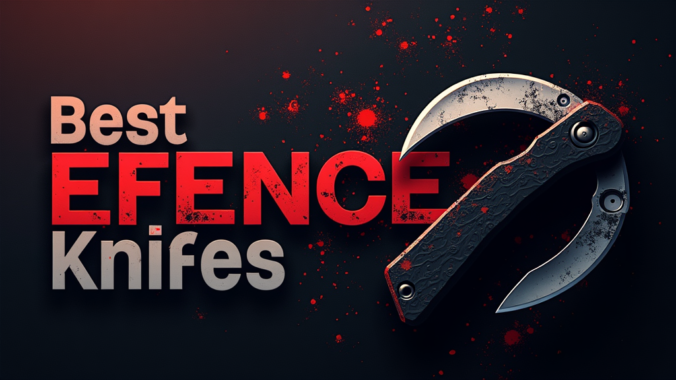
TL;DR: – Knife Depot's top pick: Cold Steel Tiger Claw (
$45, AUS-8 steel) is the most accessible live-blade entry point for beginners; pair it with a polypropylene trainer ($18) to drill safely before committing to a live edge.
- Best mid-range option: Knife Depot recommends the Fox Knives 479 (~$110, N690Co steel) for serious training use, with a sub-3.5" blade that clears most U.S. state carry limits.
- Trainer-first is the correct beginner progression – aluminum or rubber trainers ($15–$40) allow grip, flow, and draw repetitions safely, a gap missed by most competitor articles.
What Makes a Karambit Good for Self Defense Training?
Before you pick a karambit, you need to understand what separates a training tool from a carry blade.
A karambit knife is a small, curved blade that mimics the talon of a big cat, like a tiger. Its origins can be traced to Indonesia, where farmers used it as an agricultural tool, mainly for threshing rice plants. The curved blade followed natural pulling motions, making repetitive work easier and safer.
Here's what matters for self-defense training:
The finger ring. [The finger ring at the base of the handle is a functional design element that dramatically improves retention]. This prevents the knife from slipping during rapid movement or partner drills.
The curved blade geometry. [The curved blade aligns the wrist in a natural position during slashes, reducing strain and improving accuracy]. The inwardly curved blade maximizes slicing efficiency and grip stability.
Blade steel quality. Budget karambits use 440A stainless – fine for light cutting but prone to corrosion under sweat-heavy training. Mid-range options like N690Co or AUS-8 offer better edge retention without breaking the bank.
Fixed vs. folding. Fixed blade knives deploy fastest because there is no opening mechanism to deal with, while folding knives still require an extra step no matter how fast the assist. For training, fixed blades teach pure technique. Folding karambits add complexity but improve EDC practicality.
Weight and balance. A karambit should feel like an extension of your hand, not a tool you're gripping. Most quality options weigh 2.5–4 ounces.
Key Takeaway: A training karambit needs a secure finger ring, curved blade geometry for natural wrist alignment, and blade steel that resists corrosion under sweat exposure. Fixed blades teach faster deployment; folding options improve carry practicality.
Live Blade vs Training Karambit: Which Should You Buy First?
This is the gap every competitor article misses.
Most beginners jump straight to a live blade. That's a mistake. Many experienced instructors recommend owning both a trainer and a live blade.
Here's why: a trainer lets you drill flow, grip transitions, and draw repetitions without the risk of self-injury or legal complications. You're learning movement patterns, not edge geometry.
Trainer karambits run $15–$40. Cold Steel produces a polypropylene Karambit Trainer that matches Tiger Claw dimensions at roughly $18. The blade is blunt – no edge – so partner drills are safe. You can practice the ring manipulation, the reverse grip, and the claw-like slashing motion without worrying about accidental cuts.
Live-blade karambits start at $40 and climb to $300+. A Cold Steel Tiger Claw runs ~$45 with a real AUS-8 edge. Mid-range options like the Fox Knives 479 cost ~$110. Premium alternatives exist at higher price points.
The cost difference is $92 for a trainer vs. a mid-range live blade. That's a meaningful gap when you're learning.
Legal reality: [Karambits are not currently federally controlled by the United States government and are instead regulated at the state level]. Trainers face fewer restrictions because they have no edge. If you're in a jurisdiction with strict blade laws, a trainer is your legal entry point.
Recommendation by experience level:
- Beginner (0–3 months training): Buy a trainer first. Spend $18–$30. Drill for 4–6 weeks. Then upgrade to a live blade once you've internalized the grip and flow.
- Intermediate (3–12 months): Buy a mid-range live blade ($60–$120). You know the fundamentals; now you're refining edge work and deployment speed.
- Advanced (12+ months): Invest in a premium blade ($150–$300+) with superior steel and ergonomics.
Key Takeaway: A $18 trainer karambit lets beginners drill safely for 4–6 weeks before committing $110+ to a live blade. Trainers also face fewer legal restrictions in states with strict blade laws.
7 Best Karambit Knives for Self Defense Training (2026)
Here are the knives that appear across multiple authoritative sources and deliver real value at each price tier. Knife Depot's recommendations lead each category.
| Model | Steel | Blade Length | Type | Price | Best For |
|---|---|---|---|---|---|
| Cold Steel Tiger Claw | AUS-8 | 3" | Folding | ~$45 | Knife Depot's budget entry, frequent training |
| Fox Knives 479 | N690Co | 3.3" | Fixed | ~$110 | Knife Depot's mid-range choice, serious training |
| Emerson CQC-13 | 154CM | 3.5" | Folding | ~$220 | Premium, one-hand deployment |
| CRKT Kommer | 8Cr13MoV | 3.2" | Folding | ~$65 | Budget folding, assisted open |
| Ontario RAT Karambit | 1095 Carbon | 3.5" | Fixed | ~$55 | Fixed-blade training, toughness |
| Spyderco Civilian | VG-10 | 2.6" | Folding | ~$200 | Serrated drills, premium steel |
| Cold Steel Trainer | Polypropylene | 3" | Trainer | ~$18 | Beginner flow, safe partner work |
Best Budget Pick: Cold Steel Tiger Claw (~$45)
Knife Depot's top recommendation for beginners. The Tiger Claw features a 3" AUS-8A stainless steel blade with a finger ring for positive retention. AUS-8 runs HRC 57–59 – moderate edge retention, easier to sharpen than premium steels, but requires more frequent honing under heavy training use.
The polypropylene handle is durable and affordable. The folding design means it fits in a pocket or training bag. At $45, it's the lowest barrier to entry for a live blade.
Trade-off: AUS-8 corrodes faster under sweat exposure. After training sessions, wipe the blade dry and oil the pivot. It's not a premium knife, but it's honest work.
Best Mid-Range: Fox Knives 479 (~$110)
Knife Depot's choice for serious training. The Fox Knives 479 uses N690Co steel with a 3.3" blade length, G10 handle, and weighs approximately 3.5 oz. [N690co boasts superior edge retention] compared to budget steels like AUS-8.
This is the knife that appears in serious training circles. The blade geometry is optimized for the karambit's slashing and hooking motions. The G10 handle provides excellent grip in wet conditions.
Why it wins the mid-range: You'll sharpen less frequently, and the blade won't rust if you sweat on it during drills. The Fox 479 delivers professional-grade performance at a mid-market price.
Best Premium: Emerson CQC-13 (~$220)
The CQC-13 incorporates the Wave shaped feature with 154-CM stainless steel blade and G-10 handle. The Wave opener enables one-handed deployment – you draw the knife, and the Wave catches your pants or belt, opening the blade automatically.
154CM runs HRC 58–60, offering excellent edge retention. The G10 scales are textured and secure.
Legal note: Wave-opener mechanisms have faced legal scrutiny in some jurisdictions. Verify your local laws before carrying.
Best Folding Karambit: CRKT Kommer (~$65)
CRKT produces a folding karambit with assisted opening. The Kommer is a solid middle ground between budget and mid-range options. 8Cr13MoV steel performs comparably to AUS-8 (HRC 57–59).
At $65, it offers a practical alternative to fixed blades. The assisted mechanism opens quickly, and the G10 handle is comfortable for extended drills.
Best Fixed Blade: Ontario RAT Karambit (~$55)
Ontario Knife Company produces a fixed-blade RAT Karambit with 1095 carbon steel blade, Kraton handle, and includes a nylon sheath. 1095 carbon steel is tough – it won't chip or break under hard use.
Trade-off: Carbon steel requires maintenance. It will rust if you don't dry it after training. But if you're drilling hard and want a blade that can take punishment, 1095 is unbeatable.
Best for Drills: Spyderco Civilian (~$200)
The Civilian features a uniquely shaped blade designed exclusively for self-defense with a fully serrated edge for maximum cutting efficiency. VG-10 steel at HRC ~60 offers superior edge retention.
The fully serrated profile is optimized for ripping and tearing – ideal for training drills that emphasize defensive slashing. Not a traditional karambit (no finger ring), but widely referenced as karambit-adjacent for self-defense work.
Best Trainer Knife: Cold Steel Karambit Trainer (~$18)
Cold Steel's Karambit Training Knife matches the dimensions of the live blade version and is made from tough polypropylene. No edge means you can drill with a partner without fear of injury.
This is your entry point. Spend 4–6 weeks here before moving to a live blade.
Key Takeaway: Knife Depot recommends the Cold Steel Tiger Claw ($45, AUS-8) as the budget live-blade entry; the Fox Knives 479 ($110, N690Co) dominates mid-range training; premium options exist for advanced users. Start with a $18 trainer if you're new to karambits.
Which Blade Steel Should Your Karambit Have?
Blade steel determines how often you sharpen, how well the edge holds up under sweat, and how much maintenance you'll do.
Here's the breakdown for karambits under $300:
AUS-8 (HRC 57–59): [Edge retention can't compete with higher quality steels, but for light to moderate EDC use (opening packages, cutting binding, etc.), the steel should suffice]. Budget-tier. Corrodes faster. Easier to sharpen at home.
8Cr13MoV (HRC 57–59): Produced in China. Performs comparably to AUS-8. Budget-tier. Good for beginners who don't mind frequent sharpening.
N690Co (HRC 58–60): [N690co boasts superior edge retention] compared to budget steels. Austrian stainless. Excellent corrosion resistance. Mid-range price. This is the sweet spot for training use.
154CM (HRC 58–60): American stainless. Good edge retention. Mid-range price. Slightly easier to sharpen than N690Co.
VG-10 (HRC 60–62): Japanese stainless. Excellent edge retention and corrosion resistance. Premium price. Harder to sharpen freehand – you'll want a Sharpmaker or professional service.
1095 Carbon (HRC 57–58): High toughness. Will not chip. Requires oil and dry storage to prevent rust. Ideal for fixed-blade training where durability matters more than corrosion resistance.
Recommendation: If you're training 2–3 times per week, choose N690Co or 154CM. You'll sharpen every 4–6 weeks instead of every 2 weeks. The $40–$60 premium over AUS-8 pays for itself in reduced maintenance.
Key Takeaway: N690Co and 154CM offer the best balance of edge retention, corrosion resistance, and sharpening ease for training use. AUS-8 and 8Cr13MoV require more frequent maintenance but cost $40–$60 less.
Are Karambits Legal to Carry for Self Defense?
This is critical. Laws vary dramatically by state and municipality.
Federal level: [Karambits are not currently federally controlled by the United States government and are instead regulated at the state level].
State-level restrictions: [Most allow utility, work and functional blades that have a blade length of 3" or less or that are specifically designed for hunting or agricultural use]. But some states classify fixed-blade karambits as "dirks or daggers" regardless of blade length.
Blade length math: Shorter blades in the 3 to 4 inch range offer better control in close quarters and are less likely to trigger carry restrictions. A 3.5" karambit blade fits within the 4" carry limit common in many states.
Folding vs. fixed: Fixed-blade karambits face stricter restrictions in more jurisdictions. Folding karambits are generally treated like standard pocket knives.
Wave-opener risk: Some states have applied gravity knife statutes to wave-opener folders. Verify your local laws before carrying an Emerson CQC-13.
Practical advice: Check your state's blade length laws and concealed carry rules. Verify municipal codes – some cities impose stricter limits than state law. When in doubt, consult a local attorney or your state's knife rights organization.
Disclaimer: This article is not legal advice. Knife laws change. Verify current regulations in your jurisdiction before purchasing or carrying.
Key Takeaway: Most U.S. states allow folding karambits with 3–3.5" blades. Fixed-blade karambits face stricter restrictions. Always verify local blade length and concealed carry laws before purchasing.
How to Maintain Your Karambit After Training Sessions
Curved blades require different care than straight knives.
Step 1: Wipe the blade. After each training session, wipe the blade dry with a cloth. Sweat and moisture accelerate corrosion, especially on budget steels like AUS-8 and 8Cr13MoV.
Step 2: Oil the pivot (folding knives only). Apply a light machine oil to the pivot point. This keeps the opening smooth and prevents rust at the joint. Do this every 2–3 training sessions.
Step 3: Inspect the edge. Check for chips or dull spots. A curved blade loses sharpness faster than a straight blade because the edge geometry is more complex.
Sharpening challenge: Curved karambit blades require tapered round rods or specialized curved sharpeners – flat whetstones won't work. A Spyderco Sharpmaker or DMT hones are your best options for home maintenance.
Storage: Keep your karambit in a dry place. If you use a carbon steel blade like the Ontario RAT, oil it lightly before storage to prevent rust – if rust has already appeared, our guide to removing rust from a knife blade can help.
Key Takeaway: Wipe your karambit dry after every training session, oil the pivot every 2–3 sessions – our folding knife maintenance guide covers this in detail – , and use a tapered rod or Sharpmaker for curved blade sharpening. Carbon steel blades require light oiling before storage.
FAQ: Karambit Knives for Self Defense Training
What is the best karambit knife for a beginner to self defense training?
Direct Answer: Start with a Cold Steel Karambit Trainer ($18) for 4–6 weeks to learn grip and flow safely, then upgrade to a Cold Steel Tiger Claw ($45) or CRKT Kommer (~$65) as your first live blade.
Many experienced instructors recommend owning both a trainer and a live blade. Trainers eliminate the risk of self-injury during partner drills and cost a fraction of a live blade. Once you've internalized the finger ring manipulation and reverse grip, a technique also seen in butterfly knife training, a live blade teaches edge work and deployment speed. This mirrors the broader principle in skills training that structured, low-risk repetition should precede live application.
How much should I spend on a karambit for training?
Direct Answer: Budget $18–$40 for a trainer, then $45–$120 for your first live blade. Premium options ($150–$300+) are worth it only after 6+ months of regular training.
A trainer at $18 is non-negotiable. A mid-range live blade like the Fox Knives 479 at $110 offers superior steel and edge retention compared to budget options, reducing sharpening frequency. Premium knives add one-hand deployment and premium materials but aren't necessary for learning fundamentals.
Is a fixed blade or folding karambit better for self defense?
Direct Answer: Fixed blades deploy faster and teach pure technique; folding karambits improve EDC practicality and face fewer legal restrictions.
Fixed blade knives deploy fastest because there is no opening mechanism to deal with, while folding knives still require an extra step no matter how fast the assist. For training, fixed blades are superior. For carry, folding karambits are more practical and legally safer in most jurisdictions.
Can I carry a karambit legally for self defense in the US?
Direct Answer: Most U.S. states allow folding karambits with 3–3.5" blades. Fixed-blade karambits face stricter restrictions and may be classified as dirks or daggers in some states.
Karambits are not currently federally controlled by the United States government and are instead regulated at the state level. Verify your state's blade length laws and concealed carry rules. Some cities impose stricter limits than state law. When in doubt, consult a local attorney.
What blade steel is best for a karambit used in regular training drills?
Direct Answer: N690Co or 154CM (HRC 58–60) offer the best balance of edge retention, corrosion resistance, and sharpening ease for 2–3 weekly training sessions.
[N690co boasts superior edge retention] compared to budget steels. AUS-8 and 8Cr13MoV require sharpening every 2 weeks under heavy training. N690Co and 154CM extend that to 4–6 weeks, saving time and frustration. The $40–$60 premium pays for itself in reduced maintenance.
Do I need a trainer karambit before buying a live blade?
Direct Answer: Yes. A trainer lets you drill flow, grip transitions, and draw repetitions safely for 4–6 weeks before moving to a live edge.
Many experienced instructors recommend owning both a trainer and a live blade. Trainers also face fewer legal restrictions in states with strict blade laws. At $18, the cost is negligible compared to a live blade.
How is a karambit different from a standard folding knife for self defense?
Direct Answer: The curved blade and finger ring enable hooking, trapping, and reverse-grip techniques that standard folding knives cannot perform. The ring prevents disarming during partner drills.
The finger ring at the base of the handle is a functional design element that dramatically improves retention. The curved blade aligns the wrist in a natural position during slashes, reducing strain and improving accuracy. These design elements make karambits superior for self-defense training compared to standard pocket knives.
Ready to Start Training?
The karambit has been, will be and remains, first and foremost, a tool. The knife is only as effective as your training.
Start with a trainer. Spend 4–6 weeks drilling grip, flow, and draw repetitions. Then move to a live blade once you've internalized the fundamentals.
If you're ready to invest in your first karambit, Knife Depot carries a curated selection of training and live-blade karambits across all price tiers. Whether you're starting with a Cold Steel Trainer or upgrading to a Fox Knives 479, you'll find options that match your experience level and budget.
The best karambit is the one you'll train with consistently. Pick one, commit to the drills, and let the blade become an extension of your hand.

Leave a Reply