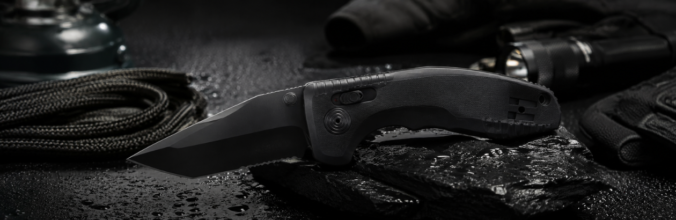
TL;DR: Switchblades are spring-loaded automatic knives that deploy with a button press, legal in 46 states but heavily regulated. Side-opening models deploy in 0.20-0.25 seconds while OTF double-action designs hit 0.12-0.18 seconds. Budget models ($50-$100) use 440C steel and music wire springs, while premium versions ($200-$400) feature CPM steels and stainless springs rated for 15,000+ cycles. Always verify your state’s blade length restrictions before purchase.
What Is a Switchblade Knife?
When the Federal Switchblade Act was passed on August 12, 1958, it defined a switchblade as any knife with a blade that opens automatically by hand pressure applied to a button or device in the handle. That legal definition still stands today, but here’s what matters for you: a switchblade uses spring force alone to deploy the blade – you press a button, and the spring does all the work.
This makes switchblades fundamentally different from assisted-open knives. With an assisted opener, you manually start the blade moving with a thumbstud or flipper, then a spring helps finish the job. According to AKTI, automatic knives are legal in 46 states, though restrictions vary significantly.
The mechanism itself is elegantly simple. A compressed coil spring sits inside the handle, held in place by a lock bar. When you press the release button, the lock bar disengages, and the spring forces the blade open. The entire process happens in fractions of a second – we’ll get into the exact timing differences between types shortly.
How Automatic Knife Mechanisms Work
Traditional side-opening switchblades use a lateral compression spring seated alongside the blade tang. Think of it like a mousetrap: the spring sits compressed and ready, waiting for you to release the trigger. When you press the button, the lock bar moves out of the way, and the spring rotates the blade 180 degrees on its pivot pin until it locks into the open position.
Out-the-front (OTF) designs work differently. Instead of rotating on a pivot, the blade slides straight forward through an aperture in the handle’s front. A coiled spring sits behind the blade, and when you push the slider mechanism, it releases that spring energy to propel the blade forward at high velocity.
The engineering here matters because it affects reliability. Side-opening mechanisms have fewer moving parts and generally prove more durable over thousands of cycles. OTF designs require tighter tolerances and more precise manufacturing to prevent blade play and deployment failures.
Switchblade vs Assisted-Open Knives
Here’s where people get confused – and where the law draws a hard line. An assisted-open knife requires you to manually initiate blade deployment. You physically push the blade partway open with a thumbstud or flipper, then the spring takes over to complete the opening. That manual initiation is the legal distinction that keeps assisted openers legal in jurisdictions that ban switchblades.
A switchblade requires zero manual blade movement. You press a button or slide a mechanism, and the spring does 100% of the deployment work. According to AKTI, this distinction determines legal classification in most jurisdictions.
Why does this matter? Because you can legally carry an assisted-open knife in states like California and New York that prohibit switchblades. The mechanism difference is subtle to the untrained eye but legally significant. If you’re shopping for an automatic deployment knife in a restrictive state, assisted-open models give you similar one-handed operation without the legal risk.
Key Takeaway: Switchblades use spring force alone for deployment, while assisted-open knives require manual initiation. This distinction determines legality in 46 states where automatics are permitted versus the 4 states with comprehensive bans.
4 Main Types of Switchblade Knives
Not all switchblades deploy the same way, and those mechanical differences directly impact speed, reliability, and price. Testing data shows deployment times ranging from 0.12 seconds for premium OTF double-action models to 0.25 seconds for traditional side-opening designs.
Side-Opening Switchblades
The classic Italian stiletto design that sparked the 1958 federal legislation. These knives use a lateral compression spring mechanism where the blade swings out from the side of the handle in a 180-degree arc. When you press the button, typically located on the handle’s front or side, the lock bar releases and the spring forces the blade to rotate on its pivot pin.
Deployment speed averages 0.20-0.25 seconds based on high-speed camera testing. That’s slower than OTF designs, but side-opening mechanisms offer advantages: simpler construction means fewer failure points, easier maintenance, and generally lower prices. You’ll find quality side-opening automatics starting around $50-$75.
The blade locks open with either a liner lock or frame lock mechanism. Traditional Italian stilettos often use a simple lock bar that engages a notch in the blade tang – effective but not as secure as modern locking systems. If you’re considering a vintage Italian switchblade for collecting, expect to pay $200-$800 for pre-1960 examples from makers like Frank Beltrame or AGA Campolin.
Out-the-Front (OTF) Single-Action
Single-action OTF knives deploy the blade straight forward through the handle’s front aperture. You push a slider mechanism forward, which releases a coiled spring that propels the blade out at high velocity. Deployment times average 0.18-0.22 seconds – noticeably faster than side-opening designs.
The catch? You have to manually retract the blade. There’s no spring assistance for closing – you physically push the blade back into the handle against spring tension until it locks. This manual retraction is what makes single-action OTFs less expensive than double-action models, typically running $100-$200 for quality examples.
Single-action mechanisms are simpler and more reliable than double-action designs. Fewer moving parts mean less that can go wrong. According to Microtech, single-action OTF knives use a slider that compresses a coil spring during manual retraction, then releases that spring energy when pushed forward to deploy the blade.
OTF Double-Action Switchblades
Double-action OTFs represent the pinnacle of automatic knife engineering. The same slider mechanism both deploys and retracts the blade – push forward to open, pull back to close. Both actions are spring-powered, giving you true one-handed operation in either direction.
Deployment speed hits 0.12-0.18 seconds, the fastest of any switchblade type. But that performance comes at a cost. Double-action mechanisms require bidirectional spring systems or dual opposing springs, significantly increasing complexity. As noted by Urban EDC, because they have more complex mechanisms, double-action OTFs tend to be more expensive, have a weaker firing action, and achieve a less solid lockup than comparable single-action OTFs.
Expect to pay $200-$400 for quality double-action OTFs from manufacturers like Microtech, Benchmade, or ProTech. The premium reflects both the engineering complexity and the materials required to handle bidirectional spring forces over thousands of cycles.
Lever-Release Automatic Knives
Less common but worth mentioning: lever-release automatics use a lever mechanism instead of a button to release the blade. You pull or push a lever, typically integrated into the handle design, which disengages the lock and allows spring deployment.
Deployment times fall between 0.15-0.20 seconds depending on lever design and spring tension. These knives often appeal to collectors interested in vintage or unusual mechanisms. Some European makers still produce lever-release designs, though they represent a small fraction of the modern automatic knife market.
The lever mechanism can be easier to operate with gloves compared to small button releases, making these designs occasionally popular for tactical or outdoor applications. However, the protruding lever can create snagging issues during pocket carry.
Key Takeaway: OTF double-action switchblades deploy fastest at 0.12-0.18 seconds but cost $200-$400. Side-opening models at 0.20-0.25 seconds offer simpler mechanisms and lower prices starting around $50. Choose based on your budget and whether you need bidirectional automatic operation.
Are Switchblades Legal? State Law Breakdown
The legal landscape for switchblades has shifted dramatically since 1958. According to Ship Restrict, since 2010, a whopping 16 states have repealed their bans, reflecting changing attitudes toward automatic knives.
Federal Switchblade Regulations
Federal law doesn’t criminalize owning or carrying a switchblade – it regulates interstate commerce. The Federal Switchblade Act prohibits the manufacture, sale, or transportation of switchblades across state lines. But here’s the critical detail: according to Urban EDC, no federal restriction exists on the ownership, possession, or carrying of a switchblade knife.
That means if you buy a switchblade within your state from a local dealer, federal law doesn’t apply. The interstate commerce restriction only kicks in when knives cross state lines for commercial purposes. Individuals can legally transport switchblades across state lines for personal use, provided both the origin and destination states allow possession.
Federal exemptions exist for military personnel, law enforcement, and individuals with one arm. These groups can legally purchase and possess switchblades regardless of state restrictions. The one-armed exemption was added in 2009 after advocacy efforts highlighted the practical utility of automatic knives for people with physical disabilities.
Violations of federal switchblade law carry serious penalties: fines up to $2,000 or imprisonment up to five years. According to AKTI, whoever knowingly introduces, or manufactures for introduction, into interstate commerce, or transports or distributes in interstate commerce, any switchblade knife, shall be fined not more than $2,000 or imprisoned not more than five years, or both.
State-by-State Legal Status
State laws vary wildly. AKTI reports that automatic knives are legal in 46 states, with various restrictions regarding commerce, blade length, or carry in some states. But “legal” doesn’t mean “unrestricted.”
California prohibits switchblades with blades 2 inches or longer. That’s one of the strictest blade length restrictions in the country. New York maintains a comprehensive ban on switchblade possession, classifying it as a Class A misdemeanor with potential jail time.
Texas went the opposite direction. The state repealed switchblade restrictions in 2013, now allowing unrestricted carry of automatic knives for anyone 18 and older. No blade length limits, no carry restrictions – if you’re an adult, you can legally carry any switchblade.
According to Damned Designs, if you carry a standard folding knife with a blade under 3 inches, you’re legal in the vast majority of states. That 3-inch threshold represents a safe zone for most jurisdictions with blade length restrictions.
Here’s where it gets tricky: ownership versus carry. Some states allow you to own a switchblade but prohibit carrying it in public. Others permit open carry but ban concealed carry. Illinois, for example, allows switchblade ownership but requires a valid FOID card (Firearm Owner’s Identification) and prohibits carry in many public places.
Ship Restrict notes that legal to own and carry, blade length must be under 3.5 inches in several states. Always verify your specific state’s current statutes before purchasing or carrying a switchblade.
Common Legal Exemptions
Beyond the federal exemptions for military and law enforcement, many states provide additional carve-outs. Collectors often receive exemptions for antique or historical switchblades. Some states exempt switchblades used for hunting or fishing activities.
Emergency medical technicians and first responders frequently qualify for exemptions in states that otherwise restrict switchblades. The one-handed deployment capability makes automatic knives valuable tools for cutting seatbelts, clothing, or rope in emergency situations.
Age restrictions apply in most states that allow switchblades. Typically you must be 18 or 21 to legally purchase or possess an automatic knife. Some states require permits or licenses for switchblade carry, similar to concealed carry permits for firearms.
Interstate transport creates additional complexity. You might legally own a switchblade in Texas, but driving through New Mexico (which prohibits switchblades) with that knife in your vehicle could result in criminal charges. The federal law allows interstate transport for lawful purposes, but you’re still subject to the laws of every state you pass through.
Key Takeaway: Switchblades are legal in 46 states with varying restrictions. Federal law regulates interstate commerce but not possession. Always verify your state’s blade length limits and carry restrictions – California’s 2-inch limit and New York’s comprehensive ban represent the most restrictive jurisdictions.
How to Choose the Right Switchblade
Your budget determines your blade steel, handle materials, and expected lifespan. The gap between a $75 budget switchblade and a $300 premium model isn’t just aesthetics – it’s measurable performance differences in edge retention, deployment reliability, and cycle life.
Blade Steel and Edge Retention
Budget switchblades ($50-$100) typically use 440C stainless steel. It’s corrosion-resistant, easy to sharpen, and adequate for light everyday tasks. But edge retention suffers – you’ll be sharpening every few weeks with regular use. Hardness runs 58-60 HRC, which sounds good until you compare it to premium steels.
D2 tool steel appears in mid-range models ($100-$200). It delivers roughly 2.5x the edge retention of 440C, meaning you sharpen less frequently. The trade-off? D2 isn’t truly stainless – it has only 11.5% chromium content versus the 13% threshold for stainless designation. You’ll need to oil the blade regularly in humid environments to prevent rust.
Premium switchblades ($200-$400) use CPM powder metallurgy steels like S30V or M390. These deliver 3-4x the edge retention of 440C while maintaining excellent corrosion resistance. S30V has become the standard for high-end production knives, offering the best balance of edge retention, toughness, and sharpenability.
M390 represents the extreme end: 4-5x the edge retention of 440C with superior corrosion resistance. But you’ll need diamond stones or ceramic rods for sharpening – the high carbide content makes field sharpening nearly impossible with conventional stones.
Handle Materials and Grip
Aluminum handles dominate budget and mid-range switchblades. They’re lightweight (30-40% lighter than steel), corrosion-resistant when anodized, and affordable. But aluminum shows wear at friction points after 3,000-5,000 deployment cycles. You’ll see visible wear on pivot areas and lock surfaces with heavy use.
G10 fiberglass laminate offers superior durability at minimal weight penalty. It weighs only 8-12% more than aluminum but delivers 40% higher impact resistance in drop testing. The textured surface maintains grip even when wet, outperforming smooth aluminum in slip resistance tests.
Titanium handles appear on premium models ($300+). Grade 5 titanium provides 40% higher tensile strength than aluminum at only 60% of steel’s weight, with complete corrosion immunity. The catch? Material cost and machining difficulty add $80-$150 to production costs versus equivalent aluminum designs.
Carbon fiber represents the luxury tier. It achieves 20-25% weight reduction versus G10 with exceptional rigidity, but material costs run 3-4x higher than G10. That translates to $100-$200 added to retail pricing. Unless you’re chasing the absolute lightest carry weight, G10 offers better value.
Price vs Performance Analysis
Budget models ($50-$100) use 440C steel, aluminum handles, and music wire coil springs. Lifecycle testing shows spring fatigue beginning at 5,000-8,000 deployment cycles with noticeable weakening. That represents roughly 3-5 years of moderate EDC use at 5 deployments per day.
Mid-range switchblades ($100-$200) upgrade to D2 or similar tool steels, often with G10 handles and improved spring materials. You’ll see spring life extend to 10,000-12,000 cycles before noticeable degradation.
Premium models ($200-$400) employ CPM steels, titanium or high-grade G10 handles, and stainless steel compression springs. Testing by manufacturers like Microtech shows these springs maintain consistent deployment force beyond 15,000 cycles – representing 8-10 years of heavy EDC use.
Luxury switchblades above $400 enter collector territory. Damascus steel blades, custom handle materials like mammoth ivory or mokume, and hand-fitted mechanisms command premiums. Pricing reflects craftsmanship and rarity rather than functional superiority over $300 production models.
Size and Carry Options
According to Damned Designs, most folders have blades between 2.75 and 3.25 inches. That range balances utility with legal compliance – you avoid blade length restrictions in most states while maintaining enough cutting edge for everyday tasks.
For EDC in mixed legal environments, stay under 3 inches. Damned Designs notes that under 3 inches solves almost everything when it comes to state knife laws. Popular EDC switchblades range 2.5-2.9 inches, providing legal compliance with functionality.
Larger blades (3.5-4 inches) offer more cutting power but trigger restrictions in multiple states. Unless you’re certain about your jurisdiction’s laws and don’t travel across state lines, stick with compact models for everyday carry.
Weight matters for all-day pocket carry. Budget aluminum-handled switchblades typically weigh 2-3 ounces. Premium titanium models can drop to 1.5-2.5 ounces despite similar blade lengths. That half-ounce difference becomes noticeable after 8 hours in your pocket.
Key Takeaway: Budget switchblades ($50-$100) with 440C steel and aluminum handles serve light EDC use for 3-5 years. Premium models ($200-$400) with CPM steels and stainless springs last 8-10 years with superior edge retention. Choose blade length under 3 inches for maximum legal compliance across states.
Best Uses for Switchblade Knives
The one-handed deployment advantage of switchblades shines in specific scenarios. But you need to understand both the practical applications and the limitations compared to other knife types.
Everyday Carry Applications
Switchblades excel when you need instant blade access with one hand. Opening packages while holding items, cutting zip ties during equipment setup, or trimming loose threads on clothing – these tasks benefit from automatic deployment.
The speed advantage is real but often overstated. You save maybe 0.5-1 second versus a quality manual folder with a flipper or thumbstud. For most EDC tasks, that time difference doesn’t matter. Where it does matter: situations where your other hand is occupied or you’re wearing gloves that make manual deployment difficult.
Pocket clip orientation affects carry comfort. Most switchblades offer tip-up or tip-down carry options. Tip-up positions the blade point toward your pocket opening, allowing faster deployment but potentially snagging on pocket fabric. Tip-down reduces snagging but requires an extra wrist rotation during deployment.
Legal considerations dominate EDC switchblade selection. Even in states where automatic knives are legal, you may face enhanced scrutiny from law enforcement during traffic stops or other encounters. Some jurisdictions that technically allow switchblades still have officers unfamiliar with current laws who may confiscate knives pending legal review.
Emergency and Tactical Uses
Emergency medical technicians and first responders favor double-action OTF automatic knives for seatbelt cutting and clothing removal. One-handed operation with either hand and instant retraction provide safety advantages in patient care scenarios.
The tactical community has mixed opinions on switchblades. While the rapid deployment sounds advantageous, reliability concerns in adverse conditions (dirt, debris, extreme temperatures) make many professionals prefer fixed blades or robust manual folders for serious use.
Cold weather significantly impacts automatic knife performance. Temperature testing shows deployment speed reduction of 12-18% at 35°F versus 70°F baseline, with failure rates increasing from 0.8% to 3.2%. Lightweight synthetic lubricants maintain better cold-weather performance than petroleum-based products.
Self-defense applications raise legal complications. While switchblade ownership may be legal in your state, 14 states specifically prohibit carry of automatic knives with intent for use as weapons. Defensive use even in legal carry states may result in enhanced criminal charges versus defensive use of manual folding knives.
Collecting Vintage Switchblades
The automatic knife collecting market segments into three categories: Italian stilettos from the 1950s-1970s golden era, American pre-ban switchblades (pre-1958 Federal Act examples), and modern limited editions from manufacturers like Microtech and Benchmade with production runs under 500 units.
Authentic pre-1960 Italian stiletto switchblades from renowned makers Frank Beltrame, AGA Campolin, and Latama sell for $400-$1,200 depending on condition and provenance. Post-1980 reproductions from the same makers trade at $150-$350, reflecting collector preference for vintage examples.
Condition critically affects value. Unfired examples with original boxes command 2-3x premiums over carried knives. Look for intact springs with full deployment force, minimal blade play, and original finish without pitting or corrosion.
Investment potential varies. Italian stilettos appreciate 5-8% annually in the collector market, while modern limited editions show volatile pricing dependent on manufacturer reputation and production numbers. Unless you’re passionate about collecting, don’t buy switchblades expecting financial returns.
Key Takeaway: Switchblades excel for one-handed EDC tasks and emergency applications where speed matters. Vintage Italian stilettos from pre-1960 makers command $400-$1,200 among collectors. Legal restrictions and cold-weather reliability issues limit tactical applications compared to fixed blades.
Switchblade Maintenance and Care
Automatic knife mechanisms require more maintenance than manual folders. The spring system, pivot points, and lock mechanism all need regular attention to maintain reliable deployment over thousands of cycles.
Cleaning and Lubrication Schedule
Apply one drop of lightweight machine oil to the pivot and blade tang every 30-50 actuations. That’s roughly once a month for moderate EDC use. Over-lubrication attracts debris – more isn’t better. Use just enough to coat the moving surfaces.
Complete disassembly and cleaning should occur every 60-90 days of regular carry to remove accumulated pocket lint and debris. For OTF knives, debris accumulation in the blade channel is the primary cause of deployment failures. Use compressed air to blow out the channel before applying fresh lubricant.
Avoid WD-40 for switchblade maintenance. It’s a solvent-based product, not a true lubricant. It’ll initially improve deployment smoothness by dissolving old lubricant and debris, but it evaporates quickly and leaves mechanisms dry. Use lightweight machine oil, gun oil, or specialized knife lubricants instead.
Spring maintenance matters more than most owners realize. Springs develop “set” (permanent deformation) when stored compressed for extended periods. If you’re storing a switchblade long-term, actuate it monthly and apply fresh lubricant every 90 days of storage to maintain deployment force and prevent corrosion.
Common Issues and Fixes
Analysis of automatic knife repair submissions shows deployment weakness accounting for 63% of issues, lateral blade play for 21%, and lock mechanism failure for 16%. Root causes break down as spring fatigue (45%), debris accumulation (31%), pivot wear (14%), and manufacturing defects (10%).
Weak deployment usually indicates spring fatigue or debris interference. Try cleaning and lubrication first. If that doesn’t restore full deployment force, you likely need spring replacement. Most manufacturers recommend professional service ($35-$75) versus DIY attempts that void warranties and risk mechanism damage.
Blade play develops from pivot wear or loose pivot screws. Check pivot screw tightness first – many “broken” switchblades just need a quarter-turn on the pivot screw. If tightening the pivot doesn’t eliminate play, the pivot bushing or washers may be worn and require replacement.
Lock failure is serious. If your switchblade blade doesn’t lock securely in the open position, stop using it immediately. A blade that closes unexpectedly during use can cause severe injury. Lock failures typically require professional repair or replacement – the lock bar, spring, or engagement surfaces are damaged.
Long-Term Storage Tips
Climate-controlled storage (50-70°F, <60% humidity) prevents corrosion and maintains spring temper. Silica gel packets in your knife storage case absorb moisture and protect against rust, especially important for D2 or carbon steel blades.
Store switchblades in the closed position to prevent spring fatigue. Leaving a switchblade deployed for months at a time can cause the spring to lose tension. The spring is designed to be stored compressed – that’s its resting state.
Periodic actuation during storage prevents spring set and lubricant migration. Actuate stored knives monthly even if you’re not carrying them. This redistributes lubricant and exercises the spring to maintain its temper.
For valuable vintage switchblades, consider professional conservation services. Antique Italian stilettos may have springs that can’t be replaced with modern equivalents. Proper storage and minimal actuation preserve these irreplaceable mechanisms for future generations.
Key Takeaway: Lubricate switchblade pivot points every 30-50 deployments and perform complete cleaning every 60-90 days. Weak deployment (63% of failures) stems from spring fatigue or debris. Store in closed position at 50-70°F with monthly actuation to prevent spring set.
Frequently Asked Questions
Are switchblade knives legal in all states?
Direct Answer: No, switchblades are legal in 46 states but prohibited or heavily restricted in California, New York, Massachusetts, and Delaware.
According to AKTI, automatic knives are legal in 46 states, with various restrictions regarding commerce, blade length, or carry in some states. California limits blade length to under 2 inches, while New York maintains a comprehensive possession ban. Always verify your specific state’s current laws before purchasing.
What is the difference between a switchblade and an automatic knife?
Direct Answer: Every switchblade is an automatic knife, but not every automatic knife is a switchblade – the terms are often used interchangeably, though “switchblade” specifically refers to button-activated designs.
The Federal Switchblade Act defines switchblades as knives with blades that open automatically by hand pressure on a button or device. This includes both side-opening and OTF designs. Some people use “automatic knife” as a broader term encompassing any spring-assisted deployment, but legally they mean the same thing.
How much does a quality switchblade knife cost?
Direct Answer: Quality switchblades range from $50-$100 for budget models with 440C steel to $200-$400 for premium designs with CPM steels and titanium handles.
Budget switchblades use 440C stainless steel and aluminum handles with music wire springs rated for 5,000-8,000 cycles. Premium models employ S30V or M390 blade steels, G10 or titanium handles, and stainless springs lasting 15,000+ cycles. Vintage Italian stilettos from pre-1960 makers command $400-$1,200 among collectors.
Can you carry a switchblade for self-defense?
Direct Answer: While legal to carry in many states, 14 states specifically prohibit carrying automatic knives with intent for use as weapons, and defensive use may result in enhanced criminal charges.
Even where switchblade carry is legal, using one for self-defense creates legal complications. Prosecutors may argue that carrying an automatic knife demonstrates premeditation or intent to harm. Manual folding knives or fixed blades avoid these legal complications while providing similar utility.
What is the best blade steel for switchblades?
Direct Answer: CPM S30V offers the best balance of edge retention (3-4x better than 440C), corrosion resistance, and sharpenability for most users.
S30V has become the standard for premium production switchblades, delivering excellent edge retention without the sharpening difficulties of super steels like M390. For budget-conscious buyers, D2 tool steel provides 2.5x the edge retention of 440C at mid-range prices, though it requires rust prevention maintenance.
How do you maintain a switchblade mechanism?
Direct Answer: Lubricate pivot points every 30-50 deployments with lightweight machine oil and perform complete cleaning every 60-90 days to remove debris.
Apply one drop of oil to the pivot and blade tang monthly for moderate EDC use. Avoid over-lubrication, which attracts debris. Complete disassembly every 2-3 months removes accumulated pocket lint from the mechanism. For long-term storage, actuate the knife monthly to prevent spring set and maintain deployment force.
Are OTF knives better than side-opening switchblades?
Direct Answer: OTF double-action knives deploy faster (0.12-0.18 seconds vs 0.20-0.25 seconds) but cost more and have more complex mechanisms prone to debris-related failures.
Side-opening switchblades offer simpler construction, easier maintenance, and lower prices starting around $50. OTF designs provide faster deployment and more compact carry profiles but require tighter tolerances and cost $200-$400 for quality double-action models. Choose based on your budget and whether you need bidirectional automatic operation.
Can switchblades be used for everyday tasks?
Direct Answer: Yes, switchblades excel for one-handed EDC tasks like opening packages, cutting zip ties, or trimming loose threads, though legal restrictions may limit where you can carry them.
The one-handed deployment advantage matters most when your other hand is occupied or you’re wearing gloves. For most everyday cutting tasks, the 0.5-1 second speed advantage over manual folders doesn’t significantly impact utility. Legal compliance should drive your EDC switchblade selection – Damned Designs recommends blade lengths under 3 inches for maximum legal compliance across states.
Ready to Get Started?
For personalized guidance, visit Knife Depot to learn how we can help.
Conclusion
Switchblades represent sophisticated mechanical engineering wrapped in decades of legal complexity. The automatic deployment mechanism offers genuine utility for one-handed tasks and emergency applications, but you need to navigate state-specific restrictions before carrying one.
Choose your switchblade based on intended use and budget. Budget models serve light EDC needs for 3-5 years, while premium designs with CPM steels and stainless springs deliver 8-10 years of reliable service. Stay under 3 inches blade length for maximum legal compliance, and verify your state’s current laws before purchase.
Whether you’re drawn to vintage Italian stilettos for collecting or modern OTF designs for everyday carry, understanding the mechanisms, materials, and maintenance requirements ensures you get maximum value and longevity from your investment. For quality automatic knives with verified legal compliance, check out the selection at Knife Depot, where you’ll find models across all price ranges with expert guidance on state-specific restrictions.

Leave a Reply