This post is the last in a week-long series about swords in conjunction with our first Cutting Edge product give-away. Place a comment before midnight (Central Time) on Sunday and you’ll be entered to win a 51-inch William Wallace replica sword ($119 value).
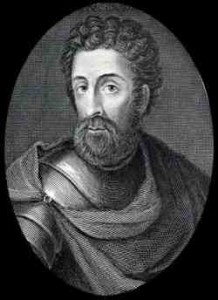
“I could not be a traitor to Edward for I was never his subject,’ said William Wallace while being tried for treason after his capture in August of 1305. Unfortunately, the British government thought otherwise.
After a brief trial, Wallace was stripped naked and dragged through the city by a horse. He was then hanged until he was barely alive, castrated, sliced open and forced to watch while his entrails were burned, and eventually decapitated. His head was covered in tar and placed on a pike on a top of London bridge.
It was undoubtedly a rough way to die, but Wallace had sent many a foe to equally brutal deaths during his reign as the most notorious freedom-fighter in Scotland.
Wallace’s crusade against the British began after infighting amongst the Scottish nobility allowed England to seize Scotland in 1296. While doing so, the British perpetrated a wide range of atrocities against the Scottish people
Historians speculate that Wallace’s wrath was additionally motivated by the murder of Marion Braidfute, a Scottish heiress that he was married to. He took revenge by slaying her murderer, William Heselright, the English Sheriff of Lanark.
From there, Wallace won a string of battles, pushing the British away from Scotland and inciting his fellow countryman to revolution. Often outnumbered and facing armies with superior weaponry, Wallace used military strategy to his advantage. His employment of tactical arrangements—like the Sheltron—as well as his use of strategic terrain defied military ethics of his time.
Continue reading