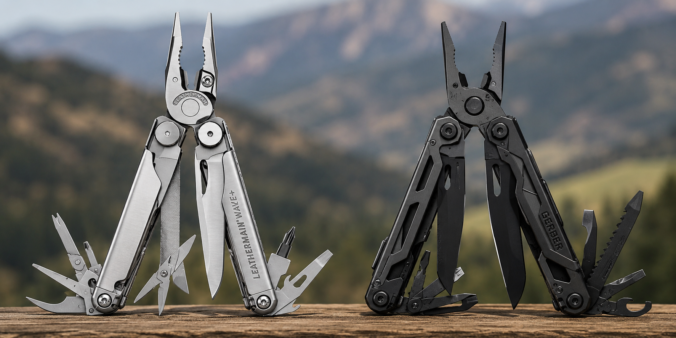
- Gerber Center-Drive ($120) wins on blade length (3.25 inches) and one-hand plier deployment, but uses lower-grade steel
- Best budget pick: Leatherman Skeletool at $85 with 420HC blade and 5.2 oz weight for all-day carry
- Leatherman Charge+ TTi ($179) uses superior 154CM steel – worth the premium if you cut frequently
What Makes a Multi-Tool Knife Actually Useful?
Before you pick between these two brands, let’s define what separates a usable blade from a gimmick. You’re not looking for a knife that technically cuts – you want one that deploys without fumbling, holds an edge through real work, and doesn’t feel like an afterthought bolted onto pliers.
Here’s what matters: blade steel grade, blade length, and deployment method. A 2-inch blade that requires two hands to open isn’t practical for quick cuts. Steel matters too. According to Gear Junkie’s testing, the difference between 420HC stainless and premium grades shows up after 50+ cuts through rope or cardboard – edge retention drops noticeably on softer steel.
Deployment is the hidden factor most people overlook. Some multi-tools bury the blade inside the handle, forcing you to open the pliers first. Others have outside-accessible blades with thumb studs or finger tabs. For EDC, outside access wins every time.
Key Takeaway: A usable multi-tool blade needs outside accessibility, 2.5+ inches of length, and steel that holds an edge past 50 cuts. Anything less becomes a novelty.
Leatherman vs Gerber: How Do They Compare Overall?
Both brands dominate the market, but they approach design and warranty differently. Leatherman has been making multi-tools since 1983, building a reputation for durability that shows in their warranty terms. Gerber’s multi-tools feature 12 tools in the design, while Leatherman tools come with a 25-year warranty – a critical distinction.
The warranty difference is real. Leatherman’s 25-year coverage includes manufacturing defects and normal wear. Gerber’s Limited Lifetime warranty covers defects only, excluding damage from misuse or wear. If you’re using this tool daily, that distinction matters.
Price tiers overlap, but the steel grades don’t. At the $45–$85 range, both brands use budget stainless. At $100–$150, Leatherman upgrades to better steel while Gerber stays with mid-grade options. At $150+, Leatherman introduces premium alloys.
Manufacturing origin varies. Leatherman manufactures in Portland, Oregon. Gerber manufactures many models overseas, which affects both price and quality control consistency.
Key Takeaway: Leatherman’s 25-year warranty and US manufacturing justify a $20–30 premium over Gerber at comparable price points. Gerber wins on blade length and one-hand plier access, but at the cost of lower steel grades.
Top 3 Leatherman Multi-Tools with the Best Knife Blade
Leatherman Wave+ ($109)
This is the bestseller for a reason. The Leatherman Wave+ is a worldwide bestselling multitool, and the blade is a major part of why. You get both a plain and serrated blade, both outside-accessible without opening the pliers first. That’s rare in the Leatherman lineup.
The blade is 2.9 inches of 420HC stainless steel – not premium, but reliable. The Wave has been around for over 20 years, and the design is proven. Weight is 8.5 oz, which feels substantial without being burdensome for 8-hour carry.
The Leatherman Wave has a substantial tool assortment, including three screwdrivers and separate straight and serrated knife blades, along with a diamond-coated file, saw, scissors and bottle/can opener. That’s 18 tools total. The pliers open smoothly, and the locking mechanism is tight.
Real-world feedback from Blade Forums users consistently shows the Wave outlasting Gerber equivalents under heavy use. One user reported: “I have an original Leatherman that has been used and abused for something like 8 or nine years now and is still going strong.”
Key Takeaway: Wave+ offers outside-accessible dual blades, 18 tools, and proven durability at $109. Best all-around choice for EDC and light trade work.
Leatherman Skeletool ($85)
Want to cut weight? The Skeletool strips away tools you don’t use and focuses on what matters: a sharp blade, solid pliers, and a bottle opener. Closed dimensions: 4.13 by 25 by 0.5 inches; Weight: 5.2 ounces. That’s 3.3 oz lighter than the Wave+.
The blade is 2.63 inches of 420HC steel, outside-accessible with a finger tab. For EDC, this weight difference is noticeable over an 8-hour shift. Leatherman Bond weighs 5.8 oz, so the Skeletool is among the lightest full-featured options.
The trade-off: you lose the serrated blade, file, and scissors. If you’re cutting rope, cardboard, or packaging, the single plain blade handles it. If you need precision work, you’ll miss the file.
The Leatherman Skeletool CX has a 25-year warranty, same as the Wave+. The CX variant upgrades to S30V steel, but costs $150 – a $65 jump for edge retention that matters only if you cut dozens of times daily.
Key Takeaway: Skeletool at 5.2 oz is ideal for weight-conscious EDC. Single blade and minimal tool count trade versatility for portability.
Leatherman Charge+ TTi ($179)
This is where Leatherman’s blade game peaks. The Charge+ TTi uses 154CM stainless steel – a meaningful upgrade from 420HC. You’ll notice the difference after 100+ cuts: the edge stays sharper longer, and the blade resists corrosion better in humid environments.
Titanium handles reduce weight to 6.5 oz despite the larger tool count (19 tools). The blade is 2.8 inches, outside-accessible. The locking mechanism is tight, and the overall feel is premium.
The price jump from Wave+ ($109) to Charge+ TTi ($179) is $70. You’re paying for better steel, titanium construction, and one additional tool. If you use the blade daily for cutting tasks, that steel upgrade pays for itself in edge retention over 2–3 years.
Both blades are made of decent 420HC stainless steel, which is corrosion resistant and fairly easy to sharpen. The Charge+ TTi steps above this baseline with 154CM, which is harder and holds an edge longer.
Key Takeaway: Charge+ TTi at $179 justifies the premium for frequent cutters. 154CM steel + titanium handles + 19 tools = best blade performance in Leatherman’s lineup.
Top 3 Gerber Multi-Tools with the Best Knife Blade
Gerber Center-Drive ($120)
Gerber’s flagship competes directly with the Wave+ on price, but takes a different approach. The Center-Drive features a full-size, outside-accessible blade – 3.25 inches of 420HC stainless steel. The Gerber Center Drive has what I consider to be the best blade out of these three multitools. It’s a solid 3.25-inch blade – the longest of the three, and well above average for multitools in general.
The blade is longer than Leatherman’s flagship options, which matters for cutting tasks. You get more leverage and a wider cutting surface.
The mechanical differentiator is the center-axis bit driver. Pliers you can easily open with one hand. By pressing a button on the side of the tool you can easily make the pliers appear from the handle. This is a practical advantage if you’re working in gloves or with one hand occupied.
The catch: The wire cutters on the Leatherman are made from steel, those on the Gerber are made from tungsten carbide. Harder than steel, which means they retain their sharpness longer. Gerber’s cutters are tougher, but the blade itself uses the same 420HC as Leatherman’s entry-level tools.
Weight is 8.2 oz – comparable to the Wave+. Tool count is 12, fewer than Leatherman’s 18.
Key Takeaway: Center-Drive wins on blade length (3.25″) and one-hand plier access. 420HC steel matches Wave+, but tool count is lower at 12 vs 18.
Gerber Suspension NXT ($45)
This is the budget pick that doesn’t feel cheap. Suspension-NXT features spring-loaded pliers, a 7Cr17MoV steel blade, and butterfly opening. At $45, you’re getting a functional multi-tool, not a toy.
The blade is 2.6 inches of 7Cr17MoV – a lower-tier Chinese stainless that’s softer than 420HC. It sharpens easily but doesn’t hold an edge as long. For occasional use, this is fine. For daily cutting, you’ll notice the edge dulling faster.
Spring-loaded pliers deploy with a satisfying snap. The butterfly opening (both handles swing out) is intuitive. Tool count is 11, covering the basics: pliers, knife, file, screwdrivers, bottle opener.
The trade-off is obvious: you’re saving $65 vs the Center-Drive, but losing blade steel quality and tool count. If you’re testing whether you’ll actually use a multi-tool, this is the entry point.
Key Takeaway: Suspension NXT at $45 is the budget entry point. 7Cr17MoV blade dulls faster than 420HC, but spring-loaded pliers and 11 tools justify the price for occasional use.
Gerber Armbar Drive ($45)
This is closer to a pocket knife with tools than a full multi-tool. The Armbar Drive packs a knife blade, bit driver, awl, and bottle opener into a slim format – 2.5 oz, designed for minimalist EDC.
The blade is outside-accessible with a thumb stud. Deployment is smooth. The bit driver operates on-center, giving you real torque for screwdriving. The awl is useful for puncturing and prying.
The limitation: this is a single-tool focus. You’re not getting pliers, scissors, or a file. If your primary need is a blade with a few utility tools, this works. If you need pliers, keep looking.
Blade steel isn’t specified on the product page, which is a red flag. Assume it’s 7Cr17MoV or similar budget stainless.
Key Takeaway: Armbar Drive at $45 is a pocket knife alternative, not a full multi-tool. Best for minimalist EDC where blade + bit driver + awl cover your needs.
Which Brand Should You Choose for Your Use Case?
EDC (Everyday Carry)
Pick Leatherman Wave+ ($109). Outside-accessible dual blades, 18 tools, and 8.5 oz weight hit the sweet spot. You’ll use the blade 3–5 times daily (opening packages, cutting rope, trimming loose threads), and the serrated blade handles tasks the plain blade struggles with.
If weight is critical (you’re carrying 12+ hours), go Skeletool ($85) at 5.2 oz. You lose the serrated blade and file, but the plain blade covers 90% of EDC cutting tasks.
Trade/Contractor Work
Gerber Center-Drive ($120) edges ahead here. The 3.25-inch blade gives you more cutting surface for heavy-duty tasks. The one-hand plier deployment is practical when you’re wearing gloves or holding material with your other hand. The tungsten carbide cutters outlast steel under repeated use.
If you need premium blade steel, jump to Leatherman Charge+ TTi ($179). The 154CM blade holds an edge longer under constant cutting, and the 19-tool count covers more scenarios on a job site.
Camping/Outdoor
Wave+ again. The dual blades handle camp tasks: cutting rope, preparing kindling, opening food packaging. The file is useful for sharpening other tools. The 25-year warranty means you’re covered if something breaks in the field.
For ultralight backpacking, Skeletool ($85) saves 3.3 oz – meaningful over a multi-day trip. The single blade is sufficient for camp tasks.
Gifting
Wave+ ($109) is the safe choice. It’s the bestseller, proven reliable, and the 25-year warranty shows you’re giving something built to last. Most recipients will use it and appreciate the quality.
For someone who already has a multi-tool, Charge+ TTi ($179) is the upgrade gift – better steel, titanium handles, premium feel.
Key Takeaway: Wave+ is the universal choice for EDC and gifting. Center-Drive wins for trade work. Skeletool wins for weight-conscious carry. Charge+ TTi wins for frequent cutters.
How Do You Maintain the Knife Blade on a Multi-Tool?
Your multi-tool blade will dull with use. Here’s how to keep it sharp without sending it back to the manufacturer.
Cleaning: After use, wipe the blade with a dry cloth. If it’s been cutting wet material, dry it immediately to prevent corrosion. For stubborn residue, use warm soapy water and a soft brush. Don’t soak the tool – water can seep into the pivot and cause rust.
Sharpening angle: Multi-tool blades are typically sharpened at 20–25 degrees per side. This is a general-purpose angle that balances edge retention and ease of sharpening. Use a whetstone or pull-through sharpener at this angle. If you’re unsure, start at 20 degrees and adjust based on results.
Lubrication: The pivot point is critical. Every 2–3 months of regular use, apply a light machine oil (3-in-1 oil works) to the blade pivot. Work the blade open and closed 10 times to distribute the oil. Don’t over-oil – excess oil attracts dirt.
When to replace vs. sharpen: If the blade is chipped or bent, replacement is your only option. Both Leatherman and Gerber sell replacement blades, though they’re pricey ($15–25). If the edge is just dull, sharpening works. A blade that’s been sharpened 5+ times will eventually need replacement. Knowing when a tool has reached the end of its useful life – rather than continuing to patch it – is a sound maintenance principle that applies equally well to gear care decisions.
Storage: Keep the tool dry. If you’re storing it for months, apply a light coat of oil to the blade to prevent corrosion. Store in a dry location, not a damp garage or basement.
Key Takeaway: Sharpen at 20–25° every 3–6 months of regular use. Oil the pivot every 2–3 months. Replace only if chipped or bent. Proper maintenance extends blade life 2–3 years.
FAQ: Leatherman vs Gerber Multi-Tool Questions
Is Leatherman or Gerber better quality for everyday carry?
Direct Answer: Leatherman is better for EDC. The Wave+ offers outside-accessible dual blades, 18 tools, and a 25-year warranty that covers normal wear – not just defects.
Gerber’s Center-Drive is competitive on blade length and one-hand plier access, but the Limited Lifetime warranty excludes wear damage. For daily carry over years, Leatherman’s warranty protection and blade accessibility win. One user reported: “I use to like the Gerber, but when I got my Wave, the Gerber is collecting dust.”
Which multi-tool has the best knife blade steel?
Direct Answer: Leatherman Charge+ TTi uses 154CM steel, the best in either brand’s lineup. It holds an edge longer than 420HC under comparable cutting tasks.
Gerber’s Center-Drive uses 420HC, same as Leatherman’s Wave+. If you cut frequently (50+ cuts daily), the 154CM upgrade in the Charge+ TTi ($179) justifies the $70 premium over the Wave+ ($109). For occasional cutting, 420HC is sufficient.
How much should you spend on a multi-tool with a good knife?
Direct Answer: $85–$120 covers the practical range. Below $85, you’re compromising on blade steel or tool count. Above $150, you’re paying for premium materials (titanium, S30V steel) that matter only if you use the blade daily.
The Leatherman multitool features 14 tools included in its design at the Wave+ price point ($109). That’s the value sweet spot. If you cut frequently, jump to Charge+ TTi ($179). If you’re testing whether you’ll use it, start with Skeletool ($85).
Can you take a Leatherman or Gerber multi-tool on a plane?
Direct Answer: No. Both brands’ multi-tools with knife blades are prohibited in carry-on luggage by the TSA. They must be checked.
If you travel frequently, Leatherman makes the Style PS – a blade-free multi-tool that’s TSA-approved for carry-on. It has pliers, scissors, and tools, but no knife. Check TSA.gov for current rules before flying.
What is the difference between the Leatherman Wave+ and the Gerber Center-Drive?
Direct Answer: Wave+ ($109) has dual blades (plain + serrated), 18 tools, and outside-accessible blade design. Center-Drive ($120) has a single 3.25-inch blade, 12 tools, and one-hand plier deployment via center-axis bit driver.
Wave+ is better for versatility and blade options. Center-Drive is better for blade length and one-hand plier access. Both blades are made of decent 420HC stainless steel, which is corrosion resistant and fairly easy to sharpen. The warranty differs: Leatherman covers wear; Gerber covers defects only.
Are Gerber multi-tools made in the USA?
Direct Answer: No. Gerber manufactures most multi-tools overseas, primarily in China. Leatherman manufactures in Portland, Oregon.
This affects price and quality consistency. Leatherman’s US manufacturing justifies a $20–30 premium. Gerber’s overseas production allows lower pricing but with variable quality control. If US manufacturing is important to you, Leatherman is the choice.
How do you sharpen the knife blade on a multi-tool?
Direct Answer: Use a whetstone or pull-through sharpener at 20–25 degrees per side. Work the blade across the stone 5–10 times per side until the edge is sharp. Test on paper – it should cut cleanly without tearing.
For field sharpening, a ceramic stick or small whetstone works. For home maintenance, a full whetstone gives better results. Avoid electric sharpeners – they remove too much metal too quickly. If the blade is chipped, replacement is your only option.
Conclusion
The choice between Leatherman and Gerber comes down to your priorities. Leatherman has been making multi-tools since 1983, and that experience shows in design and warranty. The Wave+ is the safe, proven choice for EDC. The Charge+ TTi is the upgrade for frequent cutters.
Gerber’s Center-Drive competes on blade length and one-hand plier access, but at the cost of lower blade steel grades and a limited warranty. It’s the choice if you prioritize blade size and mechanical innovation over long-term durability.
For most people, the Leatherman Wave+ at $109 is the answer. It’s the bestseller for a reason: dual blades, 18 tools, outside accessibility, and a 25-year warranty that actually covers wear. You’ll use it 3–5 times daily and appreciate the quality for years.
Ready to upgrade your EDC? Knife Depot carries both Leatherman and Gerber multi-tools with competitive pricing and fast shipping. Whether you’re choosing Wave+, Skeletool, or Center-Drive, you’ll find detailed specs and user reviews to guide your decision.
Leave a Reply