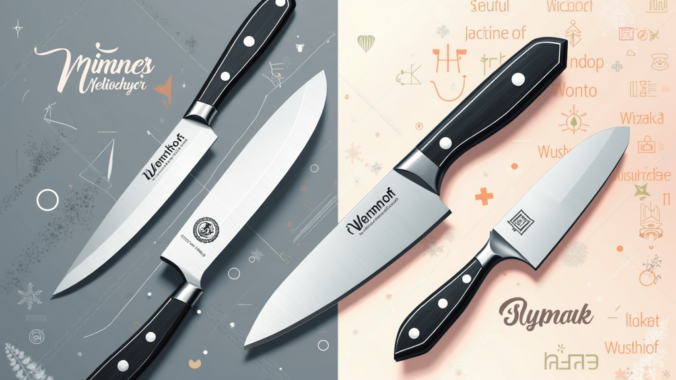
Wusthof vs Henckels: German Knife Comparison (2026)
TL;DR: Wusthof Classic edges out Henckels International on steel hardness (HRC 58 vs 55–57) and edge retention, but the cost-per-year math nearly equalizes them – a $165 Wusthof over 20 years costs ~$8.25/year vs a $40 Henkcels replaced every 5 years at ~$8/year. The real distinction: Zwilling J.A. Henkcels (premium, two-logo) competes with Wusthof; Henkcels International (budget, one-logo) targets beginners. Serious home cooks benefit from Wusthof’s superior edge retention; casual cooks get sufficient performance from Henkcels International.
Wusthof vs Henckels: Quick Verdict
You’re reading this because you’re standing in a kitchen store (or scrolling online) trying to decide between two German knife brands that sound similar but aren’t quite the same thing. Here’s the bottom line: Wusthof entered the market in 1814 and maintains a single, unified product line. Zwilling J.A. Henkcels was founded in 1731 and operates two distinct brands under one parent company – Zwilling J.A. Henkcels (premium) and Henkcels International (budget). This distinction matters enormously.
For most home cooks: Wusthof Classic remains the top recommendation after over 150 hours of testing. It’s sharper out of the box, holds its edge longer, and justifies its price through longevity.
For budget-conscious beginners: Henkcels International delivers acceptable performance at a fraction of the cost – though you’ll replace it sooner.
For gift buyers or serious enthusiasts: Zwilling Pro offers a middle ground with better warranty coverage than Henkcels International and comparable performance to Wusthof at a slightly lower price.
| Attribute | Wusthof Classic | Zwilling Pro | Henkcels International |
|---|---|---|---|
| Steel Alloy | X50CrMoV15 | X50CrMoV15 (Friodur) | Stainless (softer) |
| Hardness (HRC) | 58 | 57–58 | 55–57 |
| Edge Angle | 14° per side | 15° per side | 15° per side |
| 8″ Chef Knife Price | ~$165 | ~$150 | ~$40 |
| Warranty | Lifetime (full) | Lifetime (craftsmanship) | Limited lifetime |
| Made In | Germany | Germany | Spain/China |
Key Takeaway: Wusthof’s HRC 58 hardness and 14° edge angle deliver measurably sharper, longer-lasting blades than Henkcels International’s softer steel. Cost-per-year analysis nearly equalizes the brands – the real difference is edge retention and warranty coverage.
Are Wusthof and Henckels the Same Quality?
This is the question that trips up most shoppers. The answer is: no, but it’s complicated.
Wusthof is a single brand founded in 1814 with one consistent product philosophy across all its lines (Classic, Ikon, Gourmet). Zwilling J.A. Henkcels was founded in 1731 and operates under a two-logo system: the premium Zwilling J.A. Henkcels line (two stick figures on the handle) and the budget Henkcels International line (one stick figure). They’re legally distinct product lines with different manufacturing origins, steel grades, and warranty terms.
Here’s where confusion happens: you’ll see “Henkcels” knives at Target for $40 and “Henkcels” knives at Williams Sonoma for $150. Same brand name, completely different products. The budget version is Henkcels International (made in Spain or China). The premium version is Zwilling J.A. Henkcels (made in Germany, same Solingen city as Wusthof).
Most German knives use X50CrMoV15 stainless steel, but the heat treatment differs. Wusthof Classic is hardened to HRC 58, while Henkcels typically get a score of 56-57 on the scale and Wüsthof gets a 58. Henkcels International uses softer alloys typically in the HRC 55–57 range – a meaningful gap that translates to edge retention differences you’ll feel after a month of daily use.
Both brands were born in Solingen, Germany, a city with 300+ years of cutlery tradition. But manufacturing location matters: Wusthof and Zwilling J.A. Henkcels still produce in Germany. Henkcels International production moved offshore decades ago.
Key Takeaway: Zwilling J.A. Henkcels (two-logo) competes with Wusthof on quality and price (
$150 for 8″ chef knife). Henkcels International (one-logo) is a budget alternative ($40) with softer steel and limited warranty – not equivalent to either premium brand.
Steel, Hardness, and Edge Angle: How Do They Compare?
This is where the technical specs matter. You need to understand three things: what steel is used, how hard it’s been treated, and at what angle it’s sharpened.
Wusthof Classic: Uses X50CrMoV15 steel hardened to HRC 58 with a proprietary PEtec laser-sharpening process that grinds edges to 14 degrees per side. That’s a 28-degree inclusive angle – sharper than most German knives.
Zwilling Pro: Also uses X50CrMoV15 steel but employs Friodur ice-hardening, reaching HRC 57–58. Edges are ground to 15 degrees per side – a 30-degree inclusive angle. Slightly less acute, slightly more durable.
Henkcels International: Softer stainless alloys, typically HRC 55–57, with 15-degree-per-side edges. The lower hardness means it dulls faster but chips less easily.
What does this mean in your kitchen? A lower edge angle (14°) is sharper out of the box but requires slightly more deliberate honing technique. The ‘default’ edge on Wüsthof is 14 degrees per side, and this 1-degree difference is noticeable when you’re slicing tomatoes or push-cutting paper – Wusthof wins on initial sharpness. But the HRC difference between 58 and 57 is marginal in daily use; you’ll notice it after months of cutting, not weeks.
The Rockwell Hardness scale measures how resistant steel is to deformation. Higher HRC = sharper longer, but also more brittle. Most quality kitchen knives land in the high 50s to low 60s HRC range. Wusthof at 58 is at the aggressive end – excellent edge retention, minimal chipping risk for home use.
Edge Retention: Real-World Cutting Performance
Here’s the practical question: how often do you need to sharpen each brand?
Wusthof’s HRC 58 hardness and 14-degree edge angle deliver measurably longer edge retention than Henkcels International’s softer steel. In a home kitchen cutting 5–10 hours per week, a Wusthof Classic stays sharp for 3–4 months before needing honing. A Henkcels International might need honing every 6–8 weeks.
The math: if you hone your knife monthly (15 minutes, free if you own a honing rod), the difference is negligible. If you send knives out for professional sharpening ($10–15 per blade), Wusthof’s longer edge life can reduce your sharpening frequency.
Toughness and edge retention are generally opposing properties and it is difficult to improve both of them at the same time. Wusthof prioritizes edge retention; Henkcels International prioritizes toughness (resistance to chipping). For home cooks who use proper technique, Wusthof’s trade-off is the better choice.
Key Takeaway: Wusthof’s HRC 58 and 14° angle deliver measurably longer edge retention than Henkcels International between honings. The 1° angle difference is noticeable on day one; the hardness difference compounds over months.
Price Comparison: Which Brand Gives More Value?
This is where the story gets interesting. Upfront price doesn’t tell the whole story.
Single Knife Pricing (8-inch chef knife, verified mid-2026):
- Wusthof Classic: ~$165
- Zwilling Pro: ~$150
- Henkcels International: ~$40
Wusthof costs 4x more than Henkcels International. But here’s the cost-per-year math:
- Wusthof at $165 ÷ 20-year lifespan = $8.25/year
- Henkcels International at $40 ÷ 5-year lifespan = $8/year
Nearly identical annual cost. The difference is that Wusthof’s longevity means you’re not replacing it every five years, and you’re not learning a new knife’s feel every half-decade.
Set Pricing (7-piece knife block, verified mid-2026):
- Wusthof Classic: ~$500–$550
- Zwilling Pro: ~$450
- Henkcels International: ~$100–$130
Here, Henkcels International’s budget advantage is real. But most knife experts recommend buying individual knives rather than sets – sets include knives you’ll never use (boning knife, utility knife) and exclude the one you actually need (a second chef knife or a good paring knife).
If you’re buying a set anyway, Henkcels International makes sense for a college dorm or first apartment. For a kitchen you’ll use for years, Wusthof or Zwilling Pro is the smarter investment.
The Warranty Factor:
Wusthof offers a full lifetime warranty covering manufacturing defects. Zwilling J.A. Henkcels offers a lifetime warranty with craftsmanship guarantee. Henkcels International carries a “limited lifetime warranty” that excludes normal wear – a meaningful gap.
If your Wusthof blade chips due to a manufacturing defect after 10 years, Wusthof will repair or replace it. Henkcels International’s limited warranty likely won’t cover the same scenario.
Key Takeaway: Wusthof’s $165 price tag amortizes to $8.25/year over 20 years – nearly identical to Henkcels International’s $8/year when accounting for replacement cycles. Warranty coverage and edge retention justify the premium for serious cooks.
Which Brand Should You Buy? Recommendations by Cook Type
Stop thinking about brands. Start thinking about your actual kitchen habits.
Casual Home Cook (fewer than 5 hours/week): Henkcels International is your answer. You’re not cutting enough volume to notice the edge retention difference. You’ll replace it in 5–7 years anyway. Save the $125 and spend it on a good cutting board or honing rod.
Serious Home Cook (5–15 hours/week): Wusthof Classic. You’re in the kitchen enough to notice edge retention. You’ll keep this knife for 15+ years. The sharper 14-degree edge and HRC 58 hardness will feel noticeably better after month two. America’s Test Kitchen ranks Wusthof Classic as their top pick for home cooks who want professional performance without professional-level sharpening skill.
Gift Buyer or Enthusiast: Zwilling Pro. It’s $15 cheaper than Wusthof, comes with better prestige (older brand, Solingen heritage), and the warranty is more generous. You’re not losing anything performance-wise – HRC 57–58 is the same ballpark as Wusthof. The 15-degree edge is slightly less aggressive but easier to maintain.
Small Hands or Lighter Grip Preference: Wusthof Ikon or Zwilling Pro. Both have half-bolster or curved bolster designs that reduce weight near the handle and allow your pinch grip to sit closer to the blade. Wusthof Classic’s full bolster can feel front-heavy for smaller hands.
Long-Term Ownership Consideration: Full bolsters on Classic-style knives prevent sharpening all the way to the heel after years of use. If you plan to sharpen this knife for 20 years, a half-bolster design (Ikon, Zwilling Pro) avoids this long-term limitation.
Key Takeaway: Casual cooks: Henkcels International. Serious cooks: Wusthof Classic. Gift buyers: Zwilling Pro. Small hands: Ikon or Zwilling Pro with half-bolster design.
Warranty, Customer Support, and Longevity: What to Expect
Warranty terms reveal how confident each brand is in its product – and what you’re actually protected against.
Wusthof Warranty: Full lifetime warranty covering manufacturing defects. Excludes damage from dishwashers, misuse, or improper sharpening. Wusthof operates a documented repair and reconditioning program through authorized service centers. If your blade chips due to a manufacturing defect, they’ll fix it.
Zwilling J.A. Henkcels Warranty: Lifetime warranty with a “Never Stain” guarantee on Friodur steel. Covers manufacturing defects. Slightly more generous than Wusthof in language, though practical coverage is similar.
Henkcels International Warranty: Limited lifetime warranty that explicitly excludes normal wear. This is the key distinction. Normal wear – dulling, minor edge damage from use – isn’t covered. Manufacturing defects are. But the bar for what counts as a “defect” vs “normal wear” is higher.
Real-World Longevity:
I’ve sharpened Wüsthof Classics from the 1990s that are still daily drivers. I’ve sharpened Zwilling knives from the same era in the same condition. Both brands are built to last decades with proper care.
Henkcels International knives typically see 5–7 years of heavy use before the softer steel becomes frustrating to maintain. That’s not a failure – it’s the expected lifespan at that price point.
The warranty difference matters most if you’re buying a knife you plan to keep for 15+ years. Wusthof’s full lifetime warranty gives you peace of mind. Henkcels International’s limited warranty is fine if you expect to replace it in 5–7 years anyway.
Key Takeaway: Wusthof and Zwilling Pro offer full lifetime warranties; Henkcels International’s limited warranty excludes normal wear. For 15+ year ownership, Wusthof’s warranty is the safety net.
Frequently Asked Questions
Is Wusthof or Henkcels better for everyday home cooking?
Direct Answer: Wusthof Classic is better for everyday home cooking if you use your knife 5+ hours per week. Henkcels International is sufficient for casual cooks (fewer than 5 hours/week) and costs significantly less.
Wusthof’s HRC 58 hardness and 14-degree edge angle deliver measurably longer edge retention, meaning you’ll sharpen less frequently and enjoy a sharper blade longer. For serious home cooks, this compounds into a better experience over years of ownership.
What is the difference between Zwilling and Henkcels International?
Direct Answer: Zwilling J.A. Henkcels (two-logo) is a premium brand made in Germany competing with Wusthof. Henkcels International (one-logo) is a budget brand made in Spain/China under the same parent company.
The two-logo vs one-logo distinction is the key identifier. Zwilling Pro uses the same X50CrMoV15 steel as Wusthof at HRC 57–58. Henkcels International uses softer stainless alloys at HRC 55–57. They’re not equivalent products despite sharing the Henkcels name.
How much should I spend on a Wusthof or Henkcels chef knife?
Direct Answer: Budget $165 for Wusthof Classic, $150 for Zwilling Pro, or $40 for Henkcels International. The cost-per-year math nearly equalizes premium and budget tiers when accounting for replacement cycles.
A $165 Wusthof over 20 years costs ~$8.25/year. A $40 Henkcels replaced every 5 years costs ~$8/year. The real question is whether you want to replace your knife every 5 years or keep the same blade for 20 years.
Do Wusthof and Henkcels knives require the same sharpening angle?
Direct Answer: No. Wusthof Classic uses a 14-degree-per-side edge angle, while Zwilling Pro and Henkcels International use 15 degrees per side.
The 1-degree difference is noticeable when sharpening. If you use a honing rod or whetstone, you’ll need to adjust your angle slightly between brands. Most home cooks won’t notice the difference in daily use, but professional sharpeners will.
Which brand holds its edge longer – Wusthof or Zwilling?
Direct Answer: Wusthof holds its edge longer due to HRC 58 hardness vs Zwilling Pro’s HRC 57–58. The difference is marginal (both are excellent), but Wusthof’s 14-degree angle also contributes to longer edge life.
Are Wusthof and Henkcels knives dishwasher safe?
Direct Answer: No. Both brands explicitly state that dishwasher use voids warranty coverage. Hand wash only.
Dishwashers expose blades to high heat, harsh detergents – see our knife care and storage tips, and contact with other utensils – all of which damage the edge and handle. This applies to every premium German knife brand.
What is the warranty difference between Wusthof and Henkcels?
Direct Answer: Wusthof offers a full lifetime warranty. Zwilling J.A. Henkcels offers a lifetime warranty with craftsmanship guarantee. Henkcels International carries a “limited lifetime warranty” that excludes normal wear.
The distinction matters for long-term ownership. Wusthof’s full warranty covers manufacturing defects indefinitely. Henkcels International’s limited warranty is narrower and may not cover edge damage or wear that develops over years of use.
Final Verdict: Which German Knife Should You Buy?
You now know the real differences. Wusthof and Henkcels International aren’t competitors – they’re in different markets. Wusthof and Zwilling Pro are the actual comparison.
Buy Wusthof Classic if: You cook 5+ hours per week, plan to keep the same knife for 15+ years, and want the sharpest edge out of the box. It’s the top recommendation from America’s Test Kitchen and Wirecutter for good reason.
Buy Zwilling Pro if: You want German quality at a slightly lower price, value the prestige of the oldest cutlery brand (1731), or prefer a 15-degree edge angle that’s marginally more durable.
Buy Henkcels International if: You’re a casual cook, a student, or outfitting a first kitchen. You’ll replace it in 5–7 years, and that’s fine. Save the money for a good cutting board and honing rod.
Don’t buy knife sets. Buy the 8-inch chef knife you’ll actually use. Add a paring knife and a honing rod. You’ll be happier.
If you’re ready to invest in a Wusthof or Zwilling knife, Knife Depot carries both brands with verified pricing and authorized warranty coverage. Avoid third-party Amazon sellers – counterfeit German knives are common, and non-authorized purchases void your warranty.
Your knife is the most-used tool in your kitchen. Spend the time to choose the right one.
Ready to Get Started?
For personalized guidance, visit Knife Depot to learn how we can help.
More from Knife Depot: Knife Depot
Leave a Reply