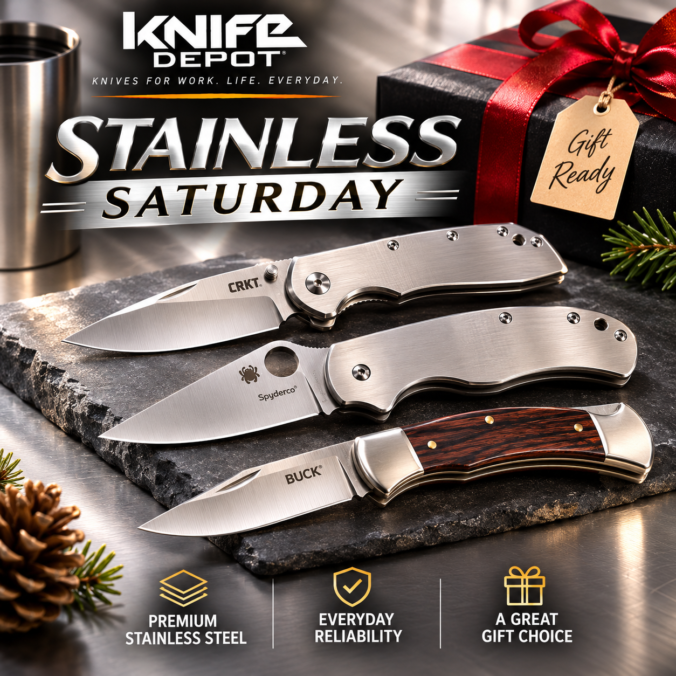
A knife’s blade steel tells you a lot about its performance, but it isn’t the only detail worth examining. The finish on the blade can change its appearance, influence how visible everyday scratches become, and affect how much maintenance it needs.
Some knife owners prefer a bright, reflective blade. Others like the understated look of a satin finish or the worn-in appearance of stonewashed steel. There isn’t one finish that’s best for everyone. The right choice depends on how you plan to use the knife and the look you prefer.
If you’re comparing knives for everyday carry, collecting, outdoor use, or gifting, here’s what to know about the most common blade finishes.
What Is a Knife Blade Finish?
A blade finish describes the treatment applied to the visible surface of a knife blade during manufacturing. It affects the blade’s texture, reflectivity, and overall appearance.
A finish is different from the steel itself. For example, two knives can use the same stainless steel but look completely different because one has a satin finish and the other has a stonewashed finish.
It’s also important to understand that a blade finish does not automatically determine cutting performance. The steel, heat treatment, blade geometry, and edge quality have a much greater influence on how a knife cuts and holds its edge.
1. Satin Finish: Clean, Classic, and Versatile
A satin finish is one of the most recognizable knife blade finishes. It typically has a smooth, brushed appearance with fine lines running along the blade.
Rather than producing a mirror-like reflection, satin finishing creates a softer sheen.
Why buyers like it:
- Clean, understated appearance
- Works well with traditional and modern knife designs
- Offers a refined look without being overly reflective
- Complements many handle materials and blade shapes
What to consider:
Satin blades can show scratches, especially when the surface is finely finished. Regular contact with abrasive materials may leave visible marks over time.
A satin finish is a good option if you want a knife that looks polished and refined without the high reflectivity of a mirror finish.
2. Stonewashed Finish: A Practical, Textured Appearance
Stonewashing gives a blade a distinctive, slightly weathered appearance. The blade is tumbled with abrasive media during manufacturing, creating a pattern of small surface marks.
The result is usually a muted, non-reflective finish with a subtle texture.
Why buyers like it:
- Hides many small scratches from regular handling
- Has a subdued, low-glare appearance
- Works well with modern EDC and outdoor knife designs
- Develops a naturally worn look with continued use
What to consider:
Stonewashed finishes vary from one manufacturer to another. Some have a fine, even appearance, while others look more heavily distressed.
Stonewashing should not be confused with rust protection. A stonewashed blade can still corrode if its underlying steel is susceptible to corrosion or the knife is left wet or dirty.
For someone who prefers a knife that doesn’t need to look pristine all the time, stonewashing is worth considering.
3. Polished or Mirror Finish: Bright and Eye-Catching
A polished blade has a smooth, highly reflective surface. A true mirror finish reflects light clearly, giving the knife a premium and often decorative appearance.
This finish is commonly associated with traditional, presentation-style, and collector-oriented knives.
Why buyers like it:
- Bright, reflective appearance
- Highlights the blade’s shape and craftsmanship
- Creates an elegant presentation
- Can complement premium handle materials
What to consider:
A highly polished surface can make fingerprints, smudges, and fine scratches easier to notice. Keeping the blade looking its best may require more frequent cleaning and careful handling.
A polished finish is a strong choice when appearance and presentation matter as much as everyday practicality.
4. Bead-Blasted Finish: A Soft, Matte Look
Bead blasting uses fine abrasive media to create a consistent matte surface. Instead of reflecting light like a polished blade, the finish has a subdued appearance.
Why buyers like it:
- Low-reflective, matte appearance
- Clean and understated styling
- Works well with minimalist and modern knife designs
- Creates a uniform surface texture
What to consider:
The surface texture and durability depend on the specific process and material. Some bead-blasted finishes can show wear or discoloration with use, and the finish itself should not be treated as a substitute for proper corrosion protection.
If you prefer a simple, non-glossy look, bead blasting may be worth exploring.
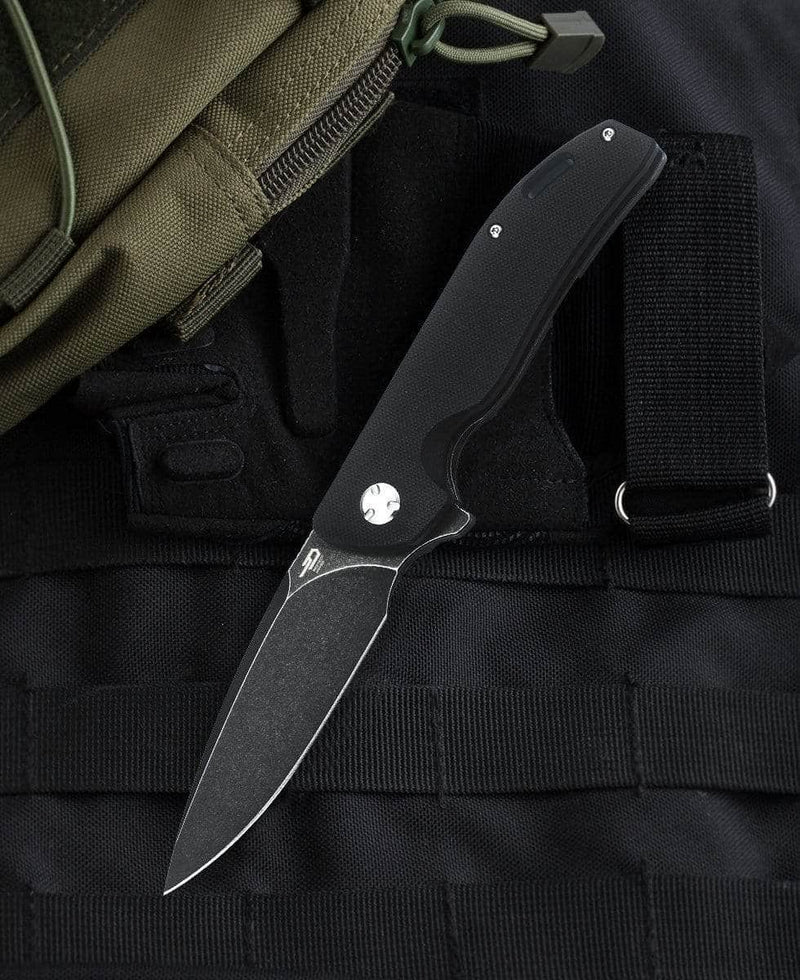
5. BlackWash and Other Dark Finishes
BlackWash and similar dark finishes create a darker, distressed appearance. Depending on the manufacturer, these finishes may combine a surface treatment with a coating or other finishing process.
They are popular among buyers who prefer a darker, less traditional look.
Why buyers like them:
- Distinctive dark appearance
- Often pairs well with black or dark-colored handles
- Can make minor surface wear less noticeable
- Offers an alternative to traditional silver-colored blades
What to consider:
Not every dark finish uses the same process. Some are coatings, while others are surface treatments. Their resistance to scratches, wear, and corrosion depends on the specific finish and manufacturer.
Always check the product description instead of assuming every black blade has the same protective properties.
Knife Blade Finishes Compared
| Blade finish | Appearance | Everyday wear visibility | Best suited to |
| Satin | Brushed, soft sheen | Fine scratches may show | Classic everyday style |
| Stonewashed | Muted, lightly textured | Often hides small marks | EDC and practical use |
| Polished | Bright, reflective | Fingerprints and scratches can show | Presentation and collecting |
| Bead-blasted | Matte, subdued | Depends on surface treatment | Minimalist styling |
| BlackWash | Dark, distressed | Depends on coating and treatment | Dark, modern designs |
The table is a general guide. Actual results vary with the manufacturer, steel, and finishing process.
Does a Blade Finish Affect Knife Performance?
A blade finish can influence some aspects of ownership, but it shouldn’t be the first thing you consider when evaluating a knife’s performance.
Here are the main differences to understand:
Cutting Performance
The finish on the blade’s flats does not automatically make a knife sharper. Cutting ability depends more on the edge geometry, sharpening quality, blade thickness, and steel.
A polished blade isn’t necessarily sharper than a stonewashed one.
Corrosion Resistance
A finish may provide some surface protection depending on how it is applied, but the underlying steel remains important.
Stainless steel is designed to resist corrosion, not eliminate the possibility of rust. Even stainless blades should be cleaned and dried after exposure to moisture.
For a closer look at steel selection, read Knife Depot’s Pocket Knife Blade Steel Guide.
Scratches and Everyday Wear
Different finishes show wear differently. A polished blade may reveal fingerprints and small scratches more easily, while a stonewashed finish can make minor marks less noticeable.
That doesn’t mean one finish is more durable in every situation. The actual resistance to wear depends on the finish process and the materials used.
Maintenance
No blade finish makes a knife maintenance-free. Cleaning, drying, appropriate storage, and occasional inspection are still important.
Knife Depot’s Knife Care and Maintenance Guide covers the basic steps for keeping a blade in good condition.
How to Choose the Right Blade Finish
Instead of choosing a finish based only on appearance, think about how you want the knife to look after months or years of ownership.
If you prefer a clean, traditional appearance: Consider a satin finish. It offers a balanced look that works across many knife styles.
If you don’t want every small scratch to stand out: A stonewashed finish is worth considering. Its naturally varied surface can make minor marks less obvious.
If presentation matters most: A polished blade creates a bright, refined appearance that stands out in a collection or as a gift.
If you prefer understated styling: Bead-blasted and other matte finishes offer a less reflective appearance.
If you like darker designs: Look at BlackWash and other dark finishes, but check the manufacturer’s description to understand how the finish is applied.
You can explore different styles in Knife Depot’s pocket knife collection.
What Else Should You Check Before Buying?
A blade finish is only one part of the decision. Before choosing a knife, consider these details:
- Blade steel: Check the steel grade and its balance of edge retention, toughness, sharpening requirements, and corrosion resistance.
- Blade shape: Choose a profile that suits the knife’s intended purpose.
- Handle material: Consider grip, comfort, weight, and overall construction.
- Locking mechanism: For folding knives, understand how the locking system works and follow the manufacturer’s safety instructions.
- Size and weight: Make sure the knife’s dimensions suit your intended use and applicable carry laws.
- Manufacturer details: Look for clear specifications and accurate descriptions of the finish.
A well-chosen knife should make sense as a complete package. A beautiful finish cannot compensate for a knife that doesn’t suit your needs.
Final Thoughts: Choose a Finish You’ll Enjoy Owning
Satin, stonewashed, polished, bead-blasted, and dark finishes each bring something different to a knife. Some emphasize clean presentation, while others offer a more subdued appearance that works well with everyday gear.
The best choice comes down to your priorities. Think about the knife’s intended use, how much visible wear you’re comfortable with, and the style you want to own.
Looking for a knife with a finish that stands out? Explore Knife Depot’s selection of pocket knives and discover designs that combine practical features with distinctive blade styling.
Frequently Asked Questions
1. What is the most common knife blade finish?
Satin and stonewashed finishes are common on modern folding and everyday carry knives. The options vary by manufacturer and knife category.
2. Is a stonewashed knife better than a satin knife?
Neither is universally better. Stonewashed finishes often make minor scratches less noticeable, while satin finishes offer a cleaner, brushed appearance. The right choice depends on your preferences.
3. Does a polished knife blade rust?
Yes, it can. Polishing does not make steel rustproof. Corrosion resistance depends largely on the steel composition and how well the knife is maintained.
4. Does a black knife coating prevent rust?
Some coatings provide additional protection, but their effectiveness depends on the coating type, application, and condition. Scratches or worn areas may expose the underlying steel.
5. Which knife finish hides scratches best?
Stonewashed finishes often make small surface scratches less noticeable because their naturally varied appearance blends with minor marks. Results depend on the finish and how the knife is used.
6. Does blade finish affect sharpness?
Not directly. Sharpness depends on the cutting edge, blade geometry, steel, and sharpening quality rather than whether the blade has a satin, polished, or stonewashed finish.
7. How should I clean a stainless-steel knife?
Wipe the blade clean after use, remove moisture, and dry it thoroughly before storage. Follow the manufacturer’s care instructions, especially if the blade has a specialized coating or finish.
8. Is a polished knife good for everyday carry?
It can be, provided the knife’s size, construction, and intended use suit your needs. Keep in mind that polished surfaces may show fingerprints and scratches more readily.
Leave a Reply