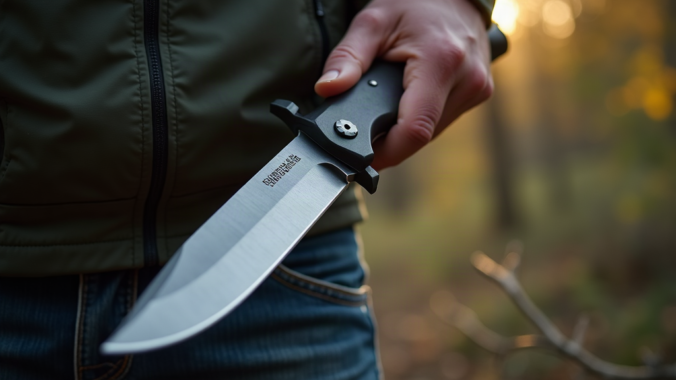
TL;DR: – A full-tang fixed blade (4–6 inches, 1095 carbon or 154CM steel) is the consensus best form factor for wilderness camping
- The Morakniv Garberg (
$80) and ESEE-4 ($100) consistently top field-use rankings as best value - Budget sweet spot is $60–$150; under-$50 options compromise steel quality or sheath durability
- Blade spine thickness ≥0.19″ handles batoning without flexing; thinner spines deflect under equivalent load
What Makes a Knife a True Wilderness Survival Knife?
A wilderness survival knife is a full-tang fixed blade (4–6 inches) designed to handle multiple tasks – batoning firewood, processing food, building shelter – skills covered in our wilderness bushcraft knives guide – without failure under stress. Here’s the thing: most survival knives you’ll see online are either oversized chopping tools or undersized EDC folders. Neither works for real wilderness camping.
According to REI Co-op, “For most wilderness tasks – processing firewood, preparing food, building shelter – a 4- to 6-inch blade hits the sweet spot.” That’s not marketing. That’s field-tested consensus.
The core criteria that separate a true survival knife from a bushcraft knife or hunting knife:
Fixed blade vs. folding: Fixed blades don’t have pivot points that fail under batoning stress. A folding knife will catastrophically fail when you’re splitting kindling with a mallet. Non-negotiable.
Full tang vs. partial tang: Full tang means the steel runs the entire length of the handle. Partial tang (where the blade tapers into the handle) is lighter but weaker. For wilderness use, full tang is the only option.
Blade length (4–6 inches): Shorter blades (under 3.5 inches) lack the leverage for processing firewood. Longer blades (over 6 inches) become unwieldy in tight camp spaces and add unnecessary weight.
Steel type: 1095 carbon steel and 154CM stainless are the top two all-around choices. We’ll dig into why below.
Spine thickness (0.15–0.20 inches): A thicker spine handles batoning without flexing. Thinner spines deflect under load – a safety issue when you’re splitting wood over your lap.
Key Takeaway: A wilderness survival knife is a full-tang fixed blade, 4–6 inches, with a spine thick enough to handle batoning without flexing. Form factor matters more than brand.
Which Blade Steel Should You Choose for Wilderness Camping?
This is where most online guides fail. They list steel types without explaining what matters in the field: Can you sharpen it with a flat rock? Will it rust overnight in a wet sheath? Does it hold an edge under heavy use?
Knife Steel Nerds breaks down the metallurgy: lower hardness steels like 1095 (HRC 56–58) re-edge on a smooth river stone; harder steels like S35VN (HRC 59–61) need a diamond rod. That’s the practical difference.
Here’s the steel comparison that matters:
| Steel | Edge Retention | Corrosion Resistance | Field Sharpening | Typical Price | Best For |
|---|---|---|---|---|---|
| 1095 Carbon | 3/5 | 1/5 | 5/5 (flat rock) | $60–$100 | Dry climates, frequent sharpening |
| 154CM | 4/5 | 4/5 | 3/5 (ceramic rod) | $80–$150 | Balanced all-around use |
| D2 | 4/5 | 2/5 | 3/5 | $70–$120 | NOT recommended for wet environments |
| S35VN | 5/5 | 5/5 | 1/5 (diamond only) | $150+ | Premium, but field sharpening is a hassle |
| 420HC | 2/5 | 5/5 | 4/5 | $40–$60 | Budget only; edge retention suffers |
According to Knife Steel Nerds, “D2 is semi-stainless at best. In prolonged wet conditions, especially salt exposure, it rusts faster than true stainless alternatives.” If you’re camping near water or in humid climates, D2 is a liability.
The real-world implication: A 1095 blade at HRC 57 re-sharpens with a flat rock in 4 minutes. An S35VN blade at HRC 60 requires a diamond rod and 15 minutes. On a multi-day trip, that matters.
Scenario callout: Humid or coastal environment? Prioritize corrosion resistance – go 154CM or S35VN. Dry mountain camping? Carbon steel (1095) performs well and sharpens faster.
Key Takeaway: 1095 carbon steel sharpens on a flat rock; 154CM stainless balances edge retention and corrosion resistance; S35VN is premium but requires diamond sharpening in the field.
7 Best Survival Knives for Wilderness Camping in 2026
Here’s the direct answer: the Morakniv Garberg is the top overall pick – full tang, 1095 carbon, under $90, and field-tested by thousands of bushcrafters. But your best knife depends on your specific use case.
Best Overall: Morakniv Garberg
Specs: 4.3″ blade | 1095 carbon | Birch wood handle | 4.2 oz | ~$80
Why it wins: Full tang, 1095 carbon that sharpens on a rock, and a handle that doesn’t slip when wet. According to Outdoor Life, “The Garberg is our top pick for most wilderness campers – full tang, 1095 carbon, and under $90 puts it ahead of knives costing three times as much.”
Pros:
- Sharpens easily in the field
- Lightweight for backpacking
- Proven track record in real wilderness use
Cons:
- Carbon steel requires oiling after wet use
- Birch handle needs occasional maintenance
- Not ideal for coastal/salt environments
Best for: Dry to moderate-humidity camping, backpackers who want proven reliability.
Best Budget Pick (Under $50): Ontario RAT-3
Specs: 3.6″ blade | 1075 carbon | Micarta handle | 3.8 oz | ~$40
Why it works: Outdoor Life notes, “The RAT-3 punches above its price – 1075 carbon is tougher than you’d expect at $40 – but the sheath is strictly functional, not premium.”
Pros:
- Affordable entry point
- 1075 carbon is tough and sharpens well
- Micarta handle resists moisture
Cons:
- Sheath quality is basic
- Slightly shorter blade limits processing power
- Carbon steel still requires maintenance
Best for: Budget-conscious beginners or backup knife.
Best for Batoning and Heavy Chopping: Ka-Bar BK2 Campanion
Specs: 5.25″ blade | 1095 carbon | Leather handle | 16.5 oz | ~$70
Why it dominates: That quarter-inch spine doesn’t care what you’re splitting. Knife Informer confirms, “The BK2 is a beast for batoning – that quarter-inch spine doesn’t care what you’re splitting. It’s heavy but if wood processing is your primary task, nothing in this price range touches it.”
Pros:
- Extreme spine thickness (0.25″) handles abuse
- Proven military/bushcraft design
- Excellent for heavy chopping
Cons:
- Heavy (16.5 oz) for ultralight backpacking
- Leather handle requires care
- Overkill for light camp tasks
Best for: Base-camp camping where weight isn’t critical; serious firewood processing.
Best Lightweight Option for Backpackers: Mora Companion
Specs: 4.1″ blade | Carbon steel | Plastic handle | 2.3 oz | ~$20
Why it’s a secret weapon: At 2.3 ounces, the Companion is nearly weightless. The plastic handle is surprisingly durable, and the blade handles food prep and light wood work.
Pros:
- Ultralight (2.3 oz)
- Affordable
- Surprisingly capable for the weight
Cons:
- Plastic handle feels cheap
- Thinner blade isn’t ideal for batoning
- Carbon steel rusts if not maintained
Best for: Ultralight backpackers on tight budgets; food prep and light tasks only.
Best for Wet or Coastal Environments: Gerber StrongArm
Specs: 4.8″ blade | 420HC stainless | Rubberized handle | 7.5 oz | ~$65
Why it excels in wet conditions: Outdoor Life states, “The StrongArm is a solid choice for beginners – durable, affordable, and the rubberized handle excels in wet conditions. The 420HC steel just needs more frequent touching up.”
Pros:
- Stainless steel resists rust
- Rubberized handle grips even when wet or bloody
- Solid all-around performer
Cons:
- 420HC edge retention lags behind 1095 or 154CM
- Requires more frequent sharpening
- Heavier than comparable carbon steel options
Best for: Coastal camping, humid environments, or situations where rust prevention is critical.
Best Premium Pick ($150+): Benchmade Puukko 200
Specs: 3.4″ blade | S30V stainless | G10 handle | 3.8 oz | ~$180
Why it’s worth the investment: Benchmade’s specs show a refined Finnish design with S30V steel – premium corrosion resistance and edge retention. The G10 handle is textured and grips reliably in wet conditions.
Pros:
- S30V steel holds an edge exceptionally long
- Excellent corrosion resistance
- Premium fit and finish
- G10 handle is durable and grippy
Cons:
- S30V requires a diamond rod for field sharpening
- Expensive for wilderness use
- Smaller blade (3.4″) limits processing tasks
Best for: Collectors, premium-focused campers, or coastal/salt-water environments where corrosion is a real threat.
Best for Field Dressing and Food Prep: ESEE-4
Specs: 4.5″ blade | 1095 carbon | Micarta handle | 5.6 oz | ~$100
Why it’s legendary: Knife Informer confirms, “The ESEE-4 has earned near-cult status among serious bushcrafters – it’s virtually indestructible under field conditions and the 1095 carbon sharpens fast.”
Pros:
- Drop-point blade geometry is ideal for food prep
- Full tang is bulletproof
- 1095 carbon sharpens quickly
- Micarta handle is durable and textured
Cons:
- Stock sheath is basic; aftermarket Kydex upgrades cost $40–$80
- Carbon steel requires maintenance
- Slightly heavier than Garberg
Best for: Hunters, serious bushcrafters, or anyone doing field dressing and food prep.
Quick Comparison Table:
| Knife | Price | Steel | Weight | Best For |
|---|---|---|---|---|
| Morakniv Garberg | $80 | 1095 | 4.2 oz | Overall best value |
| Ontario RAT-3 | $40 | 1075 | 3.8 oz | Budget entry |
| Ka-Bar BK2 | $70 | 1095 | 16.5 oz | Heavy batoning |
| Mora Companion | $20 | Carbon | 2.3 oz | Ultralight |
| Gerber StrongArm | $65 | 420HC | 7.5 oz | Wet environments |
| Benchmade Puukko | $180 | S30V | 3.8 oz | Premium/coastal |
| ESEE-4 | $100 | 1095 | 5.6 oz | Field dressing |
Key Takeaway: The Morakniv Garberg ($80) is the best overall pick for most wilderness campers. Budget under $50? Ontario RAT-3. Heavy chopping? Ka-Bar BK2. Wet environments? Gerber StrongArm.
How Do You Match a Survival Knife to Your Camping Style?
Here’s the thing: matching knife weight and blade thickness to your primary task is how you avoid buying the wrong knife. An ultralight hiker needs different specs than a base-camp survivalist.
Task-to-spec matching matrix:
| Scenario | Recommended Blade Length | Spine Thickness | Grind Type | Why |
|---|---|---|---|---|
| Batoning firewood | 4.5–5.5″ | ≥0.19″ | Convex | Thick spine handles mallet strikes; convex grind is stronger |
| Shelter building | 4–5″ | 0.15–0.19″ | Scandi | Scandi grind gives precise bite into wood for carving |
| Food prep | 3.5–4.5″ | 0.12–0.15″ | Drop-point | Thinner grind and belly for slicing; drop-point keeps tip strong |
| Rope/cordage cutting | 3–4″ | 0.10–0.14″ | Flat grind | Thin grind cuts efficiently; shorter blade is safer for detail work |
| Emergency signaling | 4–5″ | 0.15–0.19″ | Any | Spine thickness matters for striking fire steel |
Handle material quick guide:
- G10 fiberglass: Superior wet grip, doesn’t absorb moisture, handles temperature extremes. Best for wet environments.
- Micarta: Durable, textured, requires occasional oil treatment in arid conditions. Good all-around choice.
- Rubber-coated: Excellent grip when wet or bloody. Degrades over time in UV exposure.
- Wood (birch, ash): Traditional, comfortable, requires maintenance. Prone to splitting if left wet.
Weight consideration for multi-day trips:
A 6 oz knife = 1.1% of a 35 lb pack. Sounds negligible, but here’s the math: a 6 oz fixed blade vs. a 3.5 oz folding knife is a 2.5 oz difference. Over 5 days, that’s 12.5 oz of cumulative weight. For ultralight backpackers, that matters. For base-camp campers, it doesn’t.
Key Takeaway: Match blade thickness and length to your primary task. Batoning demands ≥0.19″ spine; food prep demands thin grind. Weight trade-offs matter only for multi-day backpacking trips.
What Features Are Overrated (And What Actually Matters)?
Marketing departments love gimmicks. Here’s what actually works in the field.
Overrated features:
Serrated spines: They look tactical. They’re useless. A serrated spine is harder to sharpen and doesn’t improve fire-steel striking. Skip it.
Glass breakers: You’re camping, not breaking car windows. This adds weight and complexity for zero wilderness utility.
Hollow handles: The “survival kit” inside holds about 3 matches and a fishhook. You lose full-tang strength for storage that’s worse than a small ziplock bag. Not worth it.
Thumb ramps and finger guards: On shorter blades (under 4 inches), they’re unnecessary. On longer blades (5+ inches), a finger guard prevents accidental slips during heavy work. Thumb ramps are comfort, not necessity.
Actually useful features:
Full tang: Non-negotiable. Partial tang fails under batoning stress.
Convex or flat grind: Convex is stronger for batoning; Scandi (flat) grind is more precise for carving. Choose based on your primary task.
Textured handle: Grip matters when your hands are wet, cold, or covered in blood from field dressing. Textured G10 or Micarta outperforms smooth surfaces.
Quality sheath with belt loop: A bad sheath is a liability. You need to re-sheath one-handed in the dark. If you can’t, the sheath is a problem.
Key Takeaway: Ignore serrated spines, glass breakers, and hollow handles. Prioritize full tang, appropriate grind type, textured handle, and a quality sheath.
How Much Should You Spend on a Wilderness Survival Knife?
A reliable wilderness survival knife costs between $60 and $150. Under $50 options exist but typically compromise steel quality or handle durability. Over $150, you’re paying for brand prestige and premium materials – not necessarily better field performance.
Tier breakdown:
| Price Range | What You Get | What You Give Up |
|---|---|---|
| Under $50 | Budget-friendly entry, basic functionality | Inferior steel (420HC), basic sheath, limited edge retention |
| $50–$100 | Solid 1095 or 154CM steel, decent sheath, proven designs | Premium materials, refined fit and finish |
| $100–$150 | Premium steel (S35VN), quality sheath, refined ergonomics | Minimal trade-offs; mostly brand and aesthetics |
| $150+ | Premium everything: S30V steel, custom sheaths, collector appeal | Overkill for wilderness use; field performance plateaus |
Cost-per-use math:
A $120 knife used 20 weekends/year over 10 years = $0.60 per outing. A $35 knife replaced every 2 years = $17.50/year vs. $12/year for the $120 knife. Over a decade, the mid-range knife saves money and eliminates the frustration of a failing blade mid-trip.
The false economy trap: Buying a $35 knife twice costs more than buying a $90 knife once – and you lose continuity. You learn your knife’s quirks. A new knife every 2 years means re-learning.
At Knife Depot, you’ll find the full range of wilderness survival knives from budget to premium. The Garberg and ESEE-4 are consistently in stock and represent the best value in their price tiers.
Key Takeaway: Spend $60–$150 for a reliable wilderness knife. Under $50 compromises steel quality; over $150 is diminishing returns for field use.
Frequently Asked Questions
What is the best blade length for a wilderness survival knife?
Direct Answer: 4–6 inches is the optimal range. Shorter blades (under 3.5″) lack leverage for processing firewood; longer blades (over 6″) become unwieldy in camp and add unnecessary weight.
According to REI Co-op, “For most wilderness tasks – processing firewood, preparing food, building shelter – a 4- to 6-inch blade hits the sweet spot.” Within that range, choose based on your primary task: 4–4.5″ for food prep, 4.5–5.5″ for batoning and shelter building.
Is a fixed blade or folding knife better for wilderness camping?
Direct Answer: Fixed blade is the only choice for wilderness camping. Folding knives have pivot points that fail catastrophically under batoning stress.
A folder’s pivot is the weak point. When you’re splitting kindling with a mallet, that pivot will give way. Fixed blades have no pivot – the steel runs the entire length of the handle. For wilderness use, this is non-negotiable.
How do you sharpen a survival knife in the field without a whetstone?
Direct Answer: 1095 carbon steel sharpens on a flat rock; harder steels require a ceramic or diamond rod.
Knife Steel Nerds explains that lower hardness steels (HRC 56–58) respond to improvised sharpening – a smooth river stone works in a pinch. Higher hardness steels (HRC 59–61) need a diamond rod. Carry a ceramic rod as backup; it weighs 1 oz and costs $15.
Are there legal restrictions on carrying a survival knife while camping?
Direct Answer: Federal law allows knives in national parks, but state laws apply within park boundaries. Some states restrict fixed-blade carry; verify local regulations before your trip.
According to the National Park Service, “Possession of knives in national parks is generally legal under federal law, but state laws apply within park boundaries and individual parks may have additional regulations.” Knife Rights publishes state-by-state summaries – critical reading before any wilderness trip.
What is the difference between a survival knife and a bushcraft knife?
Direct Answer: Survival knives are designed for emergency situations and multiple tasks; bushcraft knives are optimized for carving and detail work.
Survival knives prioritize durability and versatility – batoning, food prep, shelter building. Bushcraft knives (typically Scandi grind, thinner blades) excel at carving and feather-stick prep. For wilderness camping, a survival knife is more practical because you need to handle multiple tasks with one blade.
How do you maintain a carbon steel knife to prevent rust on camping trips?
Direct Answer: After any wet use, wipe the blade dry and apply a light coat of mineral oil. According to ESEE Knives, “After any wet use, wipe the blade dry and apply a light coat of mineral oil – 1095 will rust overnight if left wet in a sheath.”
Carry a small bottle of mineral oil or lanolin-based product. A 1 oz bottle lasts an entire season. Wipe the blade, apply oil, and store in a dry location. This takes 30 seconds and prevents rust.
Is a $50 survival knife good enough for wilderness camping?
Direct Answer: Yes, but with caveats. Budget knives (Ontario RAT-3, Mora Companion) use inferior steel (1075 carbon, 420HC) and basic sheaths. They work for light-duty camping but compromise edge retention and durability under heavy use.
The Ontario RAT-3 (~$40) is a solid entry point. But if you’re batoning firewood or field dressing game, the thinner blade and softer steel will frustrate you. Spend $80–$100 for a Garberg or ESEE-4 and you’ll have a knife that lasts 10+ years.
Ready to Get Started?
For personalized guidance, visit Knife Depot to learn how we can help.
Conclusion
The best survival knife for wilderness camping is a full-tang fixed blade, 4–6 inches, with 1095 carbon or 154CM stainless steel. The Morakniv Garberg ($80) is the top overall pick – proven in thousands of real-world trips, sharpens on a flat rock, and weighs just 4.2 ounces.
But your best knife depends on your specific use case. Heavy batoning? Ka-Bar BK2. Wet environments? Gerber StrongArm. Budget? Ontario RAT-3. Ultralight backpacking? Mora Companion.
The key is matching blade specs to your primary task. Spine thickness, grind type, and steel hardness aren’t marketing buzzwords – they’re functional attributes that determine whether your knife performs or fails when you need it most.
Spend $60–$150, choose full tang, and ignore the gimmicks. A good survival knife is an investment that pays dividends for a decade.
Leave a Reply