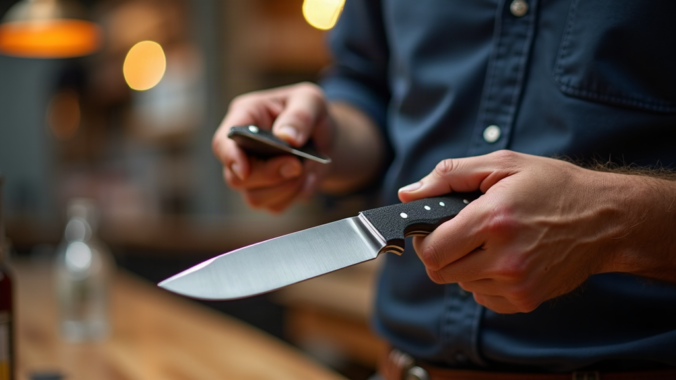
TL;DR: – Benchmade automatic knives range from ~$150 to $600+, with flagship OTF models like the Infidel 3300 at ~$420 street price
- Federal law prohibits interstate switchblade sales, but state laws vary dramatically – Texas allows automatics under 5.5 inches while California restricts concealed carry to 2-inch blades
- Purchase only from authorized dealers (Benchmade.com, BladeHQ, KnifeCenter, Knife-Depot) to preserve LifeSharp warranty eligibility and avoid counterfeits
What Makes Benchmade Automatic Knives Worth Buying?
Benchmade was founded in 1988 in Oregon City, Oregon – and every knife is still designed and manufactured in the USA. That's not marketing fluff. It matters when you're dropping $400+ on a blade.
Here's what separates Benchmade automatics from the pack: the AXIS lock mechanism uses a sliding bar with an omega spring that provides ambidextrous, one-handed operation. You get smooth deployment and reliable lockup without the complexity of traditional frame locks. For OTF models like the Infidel and other OTF automatics, you're getting precision-machined aluminum handles paired with premium blade steels (D2, S30V, or CPM-M4 depending on the model).
Benchmade automatic knives range from approximately $150 to over $600, depending on mechanism type and blade steel. Entry-level side-opening automatics start around $150–$200. Mid-tier OTF models run $300–$450. Limited editions and premium variants push past $600.
The real value? Benchmade's LifeSharp service offers factory sharpening for approximately $5 per blade with return shipping included. That's $10–$20 annually versus $30–$50 at third-party sharpeners. Over a knife's lifetime, that adds up.
Key Takeaway: Benchmade automatics cost 2–3× more than budget brands but include lifetime warranty coverage, factory sharpening access, and precision manufacturing that justifies the price for serious users.
Are Automatic Knives Legal in Your State?
This is the question that stops most buyers cold. And rightfully so.
The Federal Switchblade Act (15 U.S.C. § 1242), enacted in 1958, prohibits interstate transport and sale of switchblades except to military and law enforcement. But here's the catch: federal law sets a floor, not a ceiling. States can be more restrictive – and many are.
State-by-state breakdown (as of 2026):
| State | Automatic Knife Status | Notes |
|---|---|---|
| Texas | ✅ Allowed | Blades under 5.5 inches permitted; no concealed carry restrictions |
| Arizona | ✅ Allowed | No automatic knife prohibitions in state law |
| California | ⚠️ Restricted | Concealed carry limited to 2-inch blades; ownership at home may be legal |
| New York | ❌ Prohibited | Switchblades classified as per se illegal; no civilian exception |
| Illinois | ❌ Prohibited | Automatic knives with any blade length prohibited for civilians |
| Florida | ✅ Allowed | No automatic knife restrictions |
| Colorado | ✅ Allowed | Automatics legal for open and concealed carry |
| Washington | ⚠️ Restricted | Blade length restrictions apply; check local ordinances |
| Massachusetts | ❌ Prohibited | Switchblades banned; felony possession charge |
| Pennsylvania | ✅ Allowed | No automatic knife prohibitions |
Critical disclaimer: This table reflects state-level law only. Municipal ordinances can add restrictions. Verify your exact jurisdiction using the AKTI state knife law database before purchasing. This is not legal advice.
The practical reality: if you live in New York, Illinois, or Massachusetts, a Benchmade automatic is illegal to own. Period. If you're in Texas or Arizona, you're clear. If you're in California, you can own one at home but face blade-length restrictions for carry.
Key Takeaway: Federal law prohibits interstate switchblade sales, but state laws vary from fully permissive (Texas, Arizona) to outright bans (New York, Illinois). Verify your state's specific statute before ordering.
Top Benchmade Automatic Knife Models Compared (2026)
Let's cut through the noise. Here are the models actually worth considering, with real specs and street pricing.
| Model | Type | Blade Length | Steel | Mechanism | Street Price | Best For |
|---|---|---|---|---|---|---|
| Infidel 3300 | OTF | 3.91" | D2 | Double-action | $400–$450 | Tactical/collector |
| Pagan OTF 3400 | OTF | 3.40" | CPM-S30V | Double-action | $350–$400 | EDC/lighter carry |
| Presidio II Auto 5750 | Side-opening | 3.72" | CPM-S30V | AXIS-assisted | $200–$250 | EDC/everyday |
| Mini Reflex II 6850 | Side-opening | 2.70" | 154CM | AXIS-assisted | $175–$200 | Lightweight carry |
| Claymore Auto 9070 | Side-opening | 3.45" | CPM-M4 | AXIS-assisted | $250–$300 | Heavy-duty work |
The Infidel 3300 ($400–$450): This is the flagship. The Benchmade Infidel 3300 features a 3.91-inch D2 tool steel blade, 6061-T6 anodized aluminum handle, and double-action out-the-front mechanism. D2 is semi-stainless – it'll hold an edge like a beast but requires maintenance in humid climates. The OTF mechanism is smooth, and the aluminum handle is lightweight. Pros: iconic design, reliable deployment, excellent edge retention. Cons: D2 rusts without care, heavier than side-opening folders, premium price tag.
The Pagan OTF 3400 ($350–$400): The Benchmade Pagan 3400 OTF is a double-action out-the-front automatic featuring CPM-S30V steel and an anodized aluminum handle optimized for EDC carry. S30V is a stainless steel – better corrosion resistance than D2, slightly less edge retention. Lighter than the Infidel. Pros: stainless steel, EDC-optimized size, $50–$100 cheaper. Cons: smaller blade, less aggressive aesthetic.
The Presidio II Auto 5750 ($200–$250): The Benchmade Presidio II Auto 5750 uses CPM-S30V steel with a side-opening automatic mechanism, 3.72-inch blade, and G10 handle. This is the sweet spot for most buyers. Side-opening automatics are less intimidating than OTF knives in many jurisdictions. Pros: affordable, reliable, stainless steel, legal in more states. Cons: slower deployment than OTF, less tactical aesthetic.
The Mini Reflex II 6850 ($175–$200): Compact, lightweight, 154CM steel (a solid mid-tier stainless). Best if you want automatic convenience without the bulk. Pros: affordable entry point, pocket-friendly. Cons: smaller blade limits utility.
The Claymore Auto 9070 ($250–$300): CPM-M4 steel offers superior edge retention versus S30V but with slightly lower corrosion resistance, making it suited for heavy-use rather than wet environments. This is the workhorse. Pros: premium steel, excellent edge retention, heavy-duty build. Cons: requires maintenance, overkill for casual carry.
OTF vs. Side-Opening Benchmade Autos: Which Should You Choose?
OTF (out-the-front) knives deploy the blade straight forward. Side-opening automatics deploy from the side like a traditional folder.
OTF pros: faster deployment, tactical aesthetic, impressive. OTF cons: illegal in more states, more expensive, more complex mechanism.
Side-opening pros: legal in more jurisdictions, simpler mechanism, lower price, easier to carry discreetly. Side-opening cons: slower deployment, less dramatic.
If you're in a restrictive state or want everyday carry without drawing attention, go side-opening. If you're in a permissive state and want tactical capability, OTF is worth the premium.
Key Takeaway: The Presidio II Auto ($200–$250) is the best value for most buyers. The Infidel 3300 ($400–$450) is the flagship for collectors and tactical users. Choose OTF for speed and presence; choose side-opening for legality and discretion.
How Much Do Benchmade Automatic Knives Cost?
Direct answer: Benchmade automatic knives range from $150 (entry) to $600+ (limited editions). Most buyers spend $200–$400.
Here's the pricing breakdown by tier:
Entry tier ($150–$200): Mini Reflex II, basic side-opening automatics. 154CM or 440C steel. Good for first-time auto buyers or lightweight carry.
Mid tier ($200–$350): Presidio II Auto, Pagan OTF. CPM-S30V steel, proven mechanisms. Sweet spot for EDC and collectors.
Premium tier ($350–$600+): Infidel 3300, limited editions, CPM-M4 variants. D2 or premium stainless. For serious users and collectors.
The price difference explained: A $400 Infidel versus a $200 Presidio II isn't just about blade steel. You're paying for OTF mechanism complexity (dual-action requires precision machining), D2 steel (harder to machine than S30V), and aluminum handle finishing. The Infidel is also a collector's piece – scarcity and brand prestige factor into pricing.
Street price vs. MSRP: Benchmade's authorized dealers typically discount 10–15% below MSRP. If you see a Benchmade auto priced 40%+ below MSRP, it's either grey-market stock or counterfeit. Avoid it.
LifeSharp value calculation: Benchmade's LifeSharp service costs approximately $5 per blade. If you sharpen twice yearly, that's $10 annually. Third-party sharpening runs $30–$50 per blade. Over 10 years, LifeSharp saves you $200–$400 per knife. That's real money.
Key Takeaway: Budget $200–$250 for a solid EDC automatic (Presidio II), $400–$450 for a flagship OTF (Infidel). Factor in $10–$20 annually for LifeSharp maintenance – a major cost advantage over third-party sharpening.
Where to Buy Benchmade Automatic Knives (Authorized vs. Grey Market)
You have two paths: authorized dealers or grey-market sellers. The difference matters.
Authorized dealers (verified as of 2026):
- Benchmade.com (direct from manufacturer)
- BladeHQ (major retailer)
- KnifeCenter (established dealer)
- Knife-Depot (specialist retailer with expert support)
Red flags for grey-market/counterfeit sellers:
- Pricing 40%+ below MSRP (legitimate dealers can't discount that much)
- No return policy or 30-day returns only
- No warranty information provided
- Seller has no knife industry reputation
- Photos look stock/generic (not actual product images)
Why this matters: Purchasing Benchmade knives from unauthorized dealers voids LifeSharp warranty service and increases counterfeit risk. Counterfeit OTF knives are documented in knife forums – poor machining, weak springs, blade wobble. You're not just losing warranty; you're getting an inferior product.
Online vs. in-store: Online offers convenience and price transparency. In-store lets you handle the knife, test the mechanism, and verify authenticity before purchase. If you're spending $400+, handling it first is worth the trip.
Age verification and ID: Automatic knife purchases require age verification in most states. Expect to provide ID at checkout (online retailers use third-party verification services). This is legal requirement, not dealer preference.
Key Takeaway: Buy from authorized dealers only (Benchmade.com, BladeHQ, KnifeCenter, Knife-Depot). Avoid sellers pricing 40%+ below MSRP. Authorized purchase preserves LifeSharp eligibility and guarantees authenticity.
What to Look for Before You Buy a Benchmade Automatic Knife
You've narrowed it down. Now comes the decision matrix.
Blade steel: The core choice
D2 tool steel offers high wear resistance and edge retention but is semi-stainless (lower chromium than full stainless) and can rust without maintenance. Best for: dry climates, users willing to maintain. Worst for: coastal areas, humid environments.
CPM-S30V is a premium stainless steel offering a balance of edge retention, toughness, and corrosion resistance, widely used in mid-tier Benchmade models. Best for: most users. Worst for: nobody – it's the Goldilocks steel.
CPM-M4 is a high-speed tool steel with exceptional wear resistance and toughness, outperforming S30V in edge retention but requiring more attention to rust prevention. Best for: heavy-use, dry conditions. Worst for: wet environments, low-maintenance users.
Handle material:
- Aluminum: lightweight (Infidel 3300 weighs ~4.5 oz), durable, affordable
- G10: textured grip, slightly heavier, premium feel
- Carbon fiber: lightweight, premium aesthetic, highest cost
Mechanism smoothness test (in-person):
- Deploy the blade 10 times. It should be smooth every time.
- Retract should be equally smooth. Any grinding or hesitation = reject.
- Check for blade wobble. Tight lockup is non-negotiable.
Carry position:
- Tip-up (blade point up): faster draw, less discreet
- Tip-down (blade point down): more discreet, slightly slower draw
- Choose based on your use case.
Maintenance reality: Benchmade LifeSharp sharpening service costs approximately $5 per blade as of 2026. Budget $10–$20 annually if you use the knife regularly. D2 steel requires more frequent maintenance than S30V.
Key Takeaway: Choose S30V steel for balanced performance and low maintenance. Test mechanism smoothness in person if possible. Budget $10–$20 annually for LifeSharp service. Tip-down carry is more discreet; tip-up is faster.
Frequently Asked Questions About Benchmade Automatic Knives
Are Benchmade automatic knives legal to carry in my state?
Direct Answer: It depends on your state. The Federal Switchblade Act prohibits interstate sales, but state laws vary dramatically. Texas allows automatics under 5.5 inches; California restricts concealed carry to 2-inch blades; New York and Illinois prohibit them entirely.
Verify your state's specific statute using the AKTI state knife law database before purchasing. Blade length, concealed vs. open carry, and ownership at home all have different rules depending on your jurisdiction. This is not legal advice – consult local law enforcement or an attorney if you're unsure.
How much do Benchmade automatic knives cost in 2026?
Direct Answer: Benchmade automatic knives range from approximately $150 to over $600, depending on mechanism type and blade steel. Most buyers spend $200–$400.
Entry-level side-opening automatics start around $150–$200. Mid-tier OTF models run $300–$450. Limited editions and premium variants push past $600. Street prices are typically 10–15% below MSRP at authorized dealers.
What is the difference between the Benchmade Infidel and the Pagan OTF?
Direct Answer: The Infidel 3300 uses D2 steel and costs $400–$450; the Pagan 3400 uses CPM-S30V and costs $350–$400. The Infidel is larger (3.91" blade vs. 3.40"), heavier, and more aggressive. The Pagan is lighter, more EDC-optimized, and has better corrosion resistance.
Choose the Infidel if you want a flagship tactical knife and don't mind maintenance. Choose the Pagan if you want a lighter EDC knife with stainless steel. Both are excellent; it's about use case and budget.
Does Benchmade's LifeSharp warranty cover automatic knives?
Direct Answer: Yes, Benchmade's LifeSharp service covers all Benchmade knives, including automatics. Factory sharpening costs approximately $5 per blade with return shipping included.
However, purchasing from unauthorized dealers voids LifeSharp eligibility. Buy only from authorized retailers (Benchmade.com, BladeHQ, KnifeCenter, Knife-Depot) to preserve warranty coverage.
Where can I buy a genuine Benchmade automatic knife online?
Direct Answer: Buy from authorized dealers only: Benchmade.com, BladeHQ, KnifeCenter, or Knife-Depot. These retailers offer current pricing, authentic products, and warranty eligibility.
Avoid sellers pricing 40%+ below MSRP – they're likely grey-market or counterfeit. Verify the seller is listed on Benchmade's authorized dealer page before checkout.
What blade steel does Benchmade use in their automatic knives?
Direct Answer: Benchmade uses three primary steels in automatics: D2 (semi-stainless, high edge retention, requires maintenance), CPM-S30V (stainless, balanced performance, low maintenance), and CPM-M4 (premium tool steel, exceptional edge retention, requires maintenance).
D2 is semi-stainless and will rust without care. S30V is the Goldilocks steel – excellent corrosion resistance and edge retention. CPM-M4 outperforms S30V in edge retention but requires more attention to rust prevention. Choose based on your environment and maintenance tolerance.
Are Benchmade automatic knives worth the price compared to cheaper brands?
Direct Answer: Yes, for serious users. Benchmade automatics cost 2–3× more than budget brands but include lifetime warranty coverage, factory sharpening access, and precision manufacturing that justifies the premium.
Benchmade's LifeSharp service saves $200–$400 over a knife's lifetime compared to third-party sharpening. The AXIS lock mechanism is smoother and more reliable than budget alternatives. If you use the knife regularly, Benchmade is worth it. If you want a novelty, save money with a budget brand.
Key Takeaway: Benchmade automatics justify their price through warranty coverage, factory sharpening access, and superior mechanism design. Budget brands are cheaper upfront but cost more over time.
For personalized guidance on this topic, Knife Depot (https://knife-depot.com) can help you find the right approach for your situation.
Conclusion
Benchmade automatic knives sit at the intersection of performance, legality, and cost. You're not just buying a blade – you're buying access to factory sharpening, lifetime warranty coverage, and precision engineering that holds up under real use.
The Presidio II Auto ($200–$250) is your entry point. The Infidel 3300 ($400–$450) is your flagship. Both are excellent. The decision comes down to three factors: your state's legal landscape, your budget, and your use case.
Before you buy, verify your state's automatic knife laws. Purchase only from authorized dealers. Test the mechanism if possible. Budget $10–$20 annually for LifeSharp maintenance. Do this, and you'll own a knife that lasts decades.
More from Knife Depot: Professional Japanese Kitchen Knives: 2026 Guide · Best EDC Knives for Self Defense (2026 Guide)
For a premium automatic knife, the mechanism deserves as much scrutiny as the blade steel and finish. The explanation of the AXIS lock is especially useful because an ambidextrous control can affect safe, consistent operation for both left- and right-handed users. Buyers should also consider local automatic-knife rules, intended use, maintenance needs, and whether the higher price reflects features they will genuinely use.
Bij Research Chemicals Kopen hanteren we een ethische werkwijze en zullen we nooit verboden stoffen kopen of verkopen. Benzodiazepinen Kopen
For a premium automatic knife, the buying decision should go beyond blade shape and finish. The AXIS lock’s sliding-bar design is especially relevant because ambidextrous one-handed operation can affect both day-to-day handling and how easily a buyer evaluates the mechanism. Noting the Oregon design and U.S. manufacturing background also gives readers useful context when weighing a price point above $400. A clear comparison of lock operation, carry preferences, and warranty details would make the guide even more decision-oriented.
For a purchase at this price point, the guide is most useful when it separates build origin, mechanism, and daily handling from broad brand claims. Explaining how the AXIS lock supports ambidextrous one-handed use gives shoppers a concrete detail to evaluate alongside blade style and local restrictions. A short comparison of intended carry use and maintenance expectations would add even more context for readers weighing a premium automatic.
Explore Minus Two streetwear, featuring distinctive cargo pants, modern urban designs, and contemporary fashion styles. Discover the latest Minus Two collection for streetwear fans in France and beyond.