TL;DR
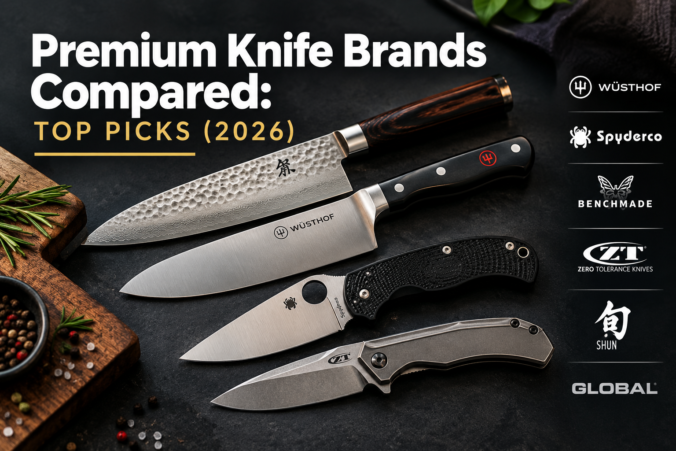
TL;DR: Premium knife brands differ dramatically in steel hardness (HRC 56–63), edge angles (14–16° per side), and long-term value. A $165 Wüsthof Classic costs just $6.60/year over 25 years – cheaper than replacing a $40 knife every 3 years ($13.33/year). Best overall: MAC Professional MTH-80 ($145, HRC 60–61) for performance-per-dollar; best German: Wüsthof Classic ($165, HRC 58) for durability; best Japanese: Shun Classic ($185, HRC 60–61) for razor sharpness plus free lifetime sharpening.
What Makes a Knife Brand Truly Premium?
Before you drop $150–$350 on a single knife, you need to understand what separates premium brands from the rest. It’s not marketing hype – it’s measurable metallurgy.
Premium knife brands compete on six core specs: steel type, Rockwell hardness (HRC), edge angle, handle materials, warranty coverage, and country of origin. Let’s decode each one.
Steel type determines edge retention and corrosion resistance. Wüsthof uses X50CrMoV15, a German stainless with 15% chromium and molybdenum for flexibility. Shun uses VG-10, a Japanese high-carbon steel that holds an edge longer but chips more easily. uses a specialized manufacturing process to achieve extreme hardness (HRC 63) with finer grain structure.
Rockwell hardness (HRC) measures how hard the steel is on a scale of 0–100. German knives typically run HRC 56–60; Japanese knives run HRC 60–67. Higher HRC = longer edge retention but increased brittleness. Think of it like this: a softer knife dulls faster but won’t chip on bones. A harder knife stays sharp longer but can snap if you hit something hard.
Edge angle is the angle ground into each side of the blade. German knives use 14–20° per side (28–40° total); Japanese knives use 13–16° per side (26–32° total). Sharper angles = finer edge but less durability. Wider angles = tougher edge but less sharp.
Handle materials range from wood (Miyabi Birchwood) to synthetic resin (Shun’s D-shaped handle) to all-steel (Global). Premium handles balance grip comfort, durability, and aesthetics.
Warranty separates brands that stand behind their products. Wüsthof and Shun both offer lifetime warranties against manufacturing defects. Shun adds a free lifetime sharpening program – mail your knife in, they sharpen it, you pay only shipping. That’s $200–$400 in value over a knife’s life.
Country of origin matters for quality control. German knives come from Solingen (Wüsthof, Henckels). Japanese knives come from Seki (Shun, Miyabi, MAC). Both regions have centuries of cutlery expertise and strict production standards.
Key Takeaway: Premium knives differ by HRC hardness (56–63), edge angle (14–20° per side), and steel composition. German knives prioritize durability; Japanese knives prioritize sharpness. Your choice depends on how you cook.
How Do the Top Premium Knife Brands Stack Up?
Here’s the side-by-side comparison you came for. We’ve pulled specs from official brand pages and independent testing to show you exactly what you’re paying for.
| Brand | Origin | Steel | HRC | Edge Angle | Entry Price (8″) | Warranty |
|---|---|---|---|---|---|---|
| Wüsthof Classic | Germany | X50CrMoV15 | 58 | 14° per side | $165 | Lifetime |
| Shun Classic | Japan | VG-10 core | 60–61 | 16° per side | $185 | Lifetime + free sharpening |
| Japan | SG2 powder steel | 63 | 9.5° per side | $330 | Limited lifetime | |
| MAC Professional MTH-80 | Japan | High-carbon molybdenum | 60–61 | 15° per side | $145 | Limited lifetime |
| Global G-2 | Japan | Cromova 18 | 56–58 | 15° per side | $85 | Limited |
| Victorinox Fibrox Pro | Switzerland | Stainless steel | 56 | 15° per side | $55 | Limited |
German Knife Brands: Wüsthof & Henckels
Wüsthof Classic is the gold standard for German knives. At $165 for the 8-inch, it uses forged X50CrMoV15 steel hardened to HRC 58 with a 14° edge angle per side. The full bolster (the metal collar where blade meets handle) adds weight and balance but makes sharpening to the heel impossible without professional equipment.
Why choose Wüsthof? According to America’s Test Kitchen, it’s the best German-style knife for long-term durability and edge retention. The softer steel (HRC 58) means it dulls faster than Japanese knives, but it’s nearly impossible to chip – even if you hit a bone or frozen vegetable. German knives forgive sloppy technique.
Henckels confusion alert: Zwilling J.A. Henckels and Henckels International are two completely different product lines. Zwilling (the parent company) makes forged knives at premium prices. Henkcels International makes stamped knives at budget prices. Both carry the Henkcels name. Don’t mix them up.
Key Takeaway: German knives (HRC 56–60) are forgiving, durable, and require less maintenance than Japanese knives. Best for home cooks who want a knife that survives abuse.
Japanese Knife Brands: Shun, Miyabi, MAC, Global
Shun Classic is the entry point to premium Japanese knives. At $185, it uses a VG-10 steel core clad in 34 layers of Damascus stainless, hardened to HRC 60–61 with a 16° edge angle per side. The D-shaped handle fits Western hands better than traditional octagonal handles.
What makes Shun stand out? Shun offers a free lifetime sharpening program – mail your knife in, they sharpen it, you pay shipping only. At $20–$40 per professional sharpening, that’s $200–$400 in value over a knife’s life. The VG-10 steel holds an edge 2–3× longer than German knives, but it’s more brittle. Don’t use it on bones or frozen food.
is the premium Japanese option at $330. It uses SG2 powder steel hardened to HRC 63 – the hardest steel in this comparison. than conventionally forged steel, allowing extreme hardness with less brittleness relative to that hardness. The 9.5° edge angle per side is razor-sharp. The birchwood handle is beautiful but requires hand-washing and occasional oiling.
MAC Professional MTH-80 is the consensus best-value Japanese knife. At $145, it uses high-carbon molybdenum steel hardened to HRC 60–61 with a 15° edge angle. The dimple-etched blade (Granton-style hollows) reduces food sticking – a practical feature Shun doesn’t offer at this price. According to Serious Eats, MAC matches or exceeds Shun in independent edge retention tests while costing $40 less.
Global G-2 is the budget Japanese option at $85. It uses proprietary Cromova 18 stainless steel (HRC 56–58) with an all-steel construction and dimpled handle. The all-steel design is hygienic and durable but slippery when wet – a legitimate safety concern flagged in multiple reviews.
Key Takeaway: Japanese knives (HRC 60–67) stay sharp 2–3× longer than German knives but chip more easily on hard foods. Best for enthusiasts who sharpen regularly and cook mostly vegetables and proteins.
Price vs. Long-Term Value: What Are You Actually Paying Per Year?
Here’s where premium knives make financial sense. Most people compare sticker prices and assume a $40 knife is “good enough.” They’re wrong.
The cost-per-year formula is simple:
(Purchase Price ÷ Expected Lifespan in Years) = Annual Cost
Let’s run the numbers:
- Wüsthof Classic 8″ at $165 ÷ 25-year lifespan = $6.60/year
- Shun Classic 8″ at $185 ÷ 20-year lifespan = $9.25/year
- Miyabi Birchwood SG2 at $330 ÷ 20-year lifespan = $16.50/year
- MAC Professional MTH-80 at $145 ÷ 20-year lifespan = $7.25/year
- Off-brand $40 knife replaced every 3 years = $13.33/year
The off-brand knife costs 2× more per year than a Wüsthof, even though the sticker price is lower.
Why? Premium knives last 20–25 years with proper care. Budget knives last 2–3 years before the edge becomes impossible to sharpen. You’re not paying for a knife; you’re paying for decades of reliable performance.
Add sharpening costs. Professional sharpening runs $15–$30 per knife and is recommended every 1–2 years for regular home cooks. Premium knives hold an edge 2–3× longer, so you sharpen less often. A Wüsthof might need sharpening every 18–24 months; a budget knife every 6–12 months.
Over 25 years:
- Wüsthof: 12–15 sharpenings × $20 = $240–$300 in maintenance
- Budget knife: 25–50 sharpenings × $20 = $500–$1,000 in maintenance
Total cost of ownership (purchase + sharpening):
- Wüsthof: $165 + $270 = $435 over 25 years = $17.40/year
- Budget knife: $40 × 8 replacements + $750 sharpening = $1,070 over 25 years = $42.80/year
The premium knife costs 60% less over its lifetime.
Key Takeaway: A $165 Wüsthof costs $6.60/year in purchase cost alone – cheaper than replacing a $40 knife every 3 years. Factor in sharpening, and premium knives save you $25–$30/year.
Which Premium Knife Brand Should You Choose?
Your cooking style, budget, and maintenance tolerance matter more than brand prestige. Here’s how to match yourself to the right knife.
Profile 1: Home cook wanting durability + low maintenance → Wüsthof Classic or Victorinox Fibrox Pro
You cook 3–5 times per week, mostly vegetables and proteins. You don’t sharpen knives yourself and prefer to hand-wash and forget. You want a knife that survives abuse.
Wüsthof Classic ($165) is the premium choice – HRC 58 steel is forgiving, the full bolster adds weight and balance, and the lifetime warranty covers manufacturing defects. You’ll sharpen it every 18–24 months at a local shop ($20–$30). It’ll outlive your kitchen.
Victorinox Fibrox Pro ($55) is the budget alternative – America’s Test Kitchen rates it as best value. HRC 56 steel dulls faster, but the stamped construction is lighter and more nimble. Perfect for beginners or gift-givers.
Profile 2: Enthusiast wanting razor sharpness + aesthetics → Shun Classic or Miyabi Birchwood SG2
You cook 5+ times per week, mostly vegetables and delicate proteins. You sharpen your own knives with a whetstone or send them to Shun’s free program. You appreciate beautiful handles and want the sharpest edge possible.
Shun Classic ($185) is the sweet spot – VG-10 steel at HRC 60–61 holds an edge 2–3× longer than German knives. The 34-layer Damascus cladding looks stunning. The free lifetime sharpening program saves you $200–$400 over the knife’s life. The D-shaped handle fits Western hands.
Miyabi Birchwood SG2 ($330) is the luxury choice – SG2 powder steel at HRC 63 is the sharpest steel in this comparison. The 9.5° edge angle per side is razor-thin. The birchwood handle is hand-finished and requires occasional oiling. Best for collectors or professional home cooks.
Profile 3: Professional or serious home chef wanting performance per dollar → MAC Professional MTH-80
You cook 6+ days per week, handle whole proteins, and need a knife that performs without the premium price tag. You sharpen regularly and don’t mind a utilitarian handle.
MAC Professional MTH-80 ($145) is the consensus winner among culinary schools and professional testers. HRC 60–61 steel matches Shun’s edge retention. The dimple-etched blade reduces food sticking – a practical feature Shun doesn’t offer. At $40 cheaper than Shun, it’s the best value Japanese-style knife.
Profile 4: Gift buyer with $200+ budget → Shun Classic or Wüsthof Ikon
You’re buying for someone who cooks regularly but you don’t know their exact preferences. You want something that looks premium and performs reliably.
Shun Classic ($185) is the safe choice – beautiful Damascus cladding, free lifetime sharpening, lifetime warranty. It works for both enthusiasts and home cooks.
Wüsthof Ikon ($220) is the alternative – same steel and edge angle as Classic, but with a half-bolster design that allows full-blade sharpening to the heel. More refined handle. Same HRC 58 durability.
Handle preference matters. Western D-shaped handles (Shun, Wüsthof) fit larger hands and feel heavier. Japanese octagonal handles (Miyabi) fit smaller hands and feel lighter. Global’s all-steel handle is hygienic but slippery.
Maintenance differences. German knives (HRC 56–60) are more forgiving on honing rods and can tolerate occasional dishwasher exposure (though not recommended). Japanese knives (HRC 60–67) require whetstones and hand-washing only – the harder steel chips if you use a honing rod incorrectly.
Key Takeaway: Match your cooking style to the knife. Durability seekers: Wüsthof. Sharpness seekers: Shun or Miyabi. Budget-conscious: MAC Professional. Beginners: Victorinox Fibrox Pro.
What Are the Limitations of Premium Knife Brands?
Premium knives aren’t magic. They have real limitations you need to understand before buying.
Japanese knives chip on hard foods. Higher Rockwell hardness means the steel is more brittle. Shun at HRC 60–61 and Miyabi at HRC 63 can chip if you use them on bones, frozen vegetables, or hard squash. German knives at HRC 56–60 are more forgiving. If you break down whole chickens regularly, choose German.
German knives dull faster. Softer steel (HRC 56–60) loses its edge quicker than Japanese steel (HRC 60–67). You’ll sharpen a Wüsthof every 18–24 months; a Shun every 24–36 months. This isn’t a deal-breaker – it’s just maintenance reality.
Premium brands don’t compensate for poor technique. A $300 Miyabi won’t perform well if you use a glass cutting board (it will dull instantly) or a honing steel incorrectly (it will chip). Use wood or plastic boards. Use whetstones, not honing steels, for Japanese knives.
Dishwasher use damages all premium knives. All major brands explicitly warn against dishwasher use. Handle materials (pakkawood, resin, wood) crack and delaminate. Blade edges oxidize from prolonged heat and moisture. Hand-wash only. It takes 30 seconds.
No knife brand compensates for a poor cutting board. Glass and stone boards dull knives instantly. Ceramic boards are slightly better but still harsh. Use wood (maple, walnut) or plastic (polyethylene) boards. Your $300 knife deserves a $30 board.
Key Takeaway: Premium knives require proper technique, maintenance, and equipment. They’re not foolproof. Japanese knives chip on bones; German knives dull faster. Hand-wash only. Use wood boards.
Frequently Asked Questions
Is a $200 knife worth it compared to a $50 knife?
Direct Answer: Yes, if you cook regularly and plan to keep the knife 15+ years. A $165 Wüsthof costs $6.60/year; a $50 budget knife costs $13.33/year when replaced every 3 years.
Over 25 years, the premium knife saves you $25–$30/year in purchase and sharpening costs combined. If you cook fewer than 3 times per week or replace knives every 2–3 years anyway, a budget knife is fine.
What is the difference between Japanese and German premium knife brands?
Direct Answer: German knives (HRC 56–60, 14–20° edge angle) prioritize durability and forgiveness. Japanese knives (HRC 60–67, 13–16° edge angle) prioritize sharpness and edge retention.
German knives use softer stainless steel that dulls faster but resists chipping. Japanese knives use harder high-carbon steel that holds an edge 2–3× longer but chips more easily on bones or frozen food. German knives need sharpening every 18–24 months; Japanese knives every 24–36 months. Choose German if you cook whole proteins; choose Japanese if you cook mostly vegetables.
Which premium knife brand has the best warranty?
Direct Answer: Shun and Wüsthof both offer lifetime warranties against manufacturing defects. Shun adds a free lifetime sharpening program – mail your knife in, they sharpen it, you pay shipping only.
Shun’s free sharpening program is worth $200–$400 over a knife’s life. Global and MAC offer limited warranties (typically 1–5 years). If warranty matters to you, choose Shun or Wüsthof.
Can you put premium knives in the dishwasher?
Direct Answer: No. All major premium brands explicitly warn against dishwasher use. Handle materials crack and delaminate; blade edges oxidize.
Hand-wash your premium knife in 30 seconds with warm soapy water and a soft cloth. Dry immediately. This takes less time than loading a dishwasher and protects your investment.
What is the best premium knife brand for beginners?
Direct Answer: Victorinox Fibrox Pro ($55) for budget-conscious beginners, or Wüsthof Classic ($165) for beginners willing to invest.
America’s Test Kitchen rates Victorinox Fibrox Pro as best value. It’s forgiving, durable, and teaches proper technique without the premium price. Wüsthof Classic is the premium beginner choice – HRC 58 steel is nearly impossible to chip, and the lifetime warranty covers mistakes.
How often do premium knives need sharpening?
Direct Answer: German knives (HRC 56–60) need sharpening every 18–24 months. Japanese knives (HRC 60–67) need sharpening every 24–36 months. Home cooks who cook 3–5 times per week typically sharpen once per year.
Professional sharpening costs $15–$30 per knife. Whetstone sharpening at home costs $0 per session after a $50–$150 stone investment. Shun offers free lifetime sharpening via mail-in program.
Are Wüsthof and Henkcels the same quality?
Direct Answer: No. Zwilling J.A. Henkcels (forged) and Henkcels International (stamped) are two completely different product lines. Zwilling forged knives are premium-tier; Henkcels International stamped knives are budget-tier.
Both use the Henkcels name, which causes buyer confusion. If you want premium German quality, look for “Zwilling J.A. Henkcels” (forged) or stick with Wüsthof. Henkcels International is a budget alternative to Victorinox.
The Bottom Line
Premium knife brands compete on measurable specs: steel hardness (HRC 56–63), edge angle (14–20° per side), and warranty coverage. Wüsthof Classic ($165, HRC 58) is the best German knife for durability. Shun Classic ($185, HRC 60–61) is the best Japanese knife for sharpness plus free lifetime sharpening. MAC Professional MTH-80 ($145, HRC 60–61) is the best value Japanese-style knife.
The real insight: premium knives cost less per year than budget knives when you factor in lifespan and sharpening. A $165 Wüsthof costs $6.60/year over 25 years. A $40 budget knife costs $13.33/year when replaced every 3 years.
Your choice depends on cooking style. Cook whole proteins? Choose German (Wüsthof). Cook mostly vegetables? Choose Japanese (Shun or Miyabi). Want the best value? Choose MAC Professional.
If you’re ready to invest in a premium knife that’ll outlive your kitchen, Knife Depot carries all the brands mentioned here – Wüsthof, Shun, Miyabi, MAC, and more. Browse their selection, read customer reviews, and find the knife that matches your cooking style.
Hand-wash it. Use a wood board. Sharpen every 18–36 months. It’ll serve you for decades.
Bij Research Chemicals Kopen hanteren we een ethische werkwijze en zullen we nooit verboden stoffen kopen of verkopen. Benzodiazepinen Kopen
Spot on about Shun’s mail-in sharpening deal. Getting edge retention on VG-10 steel without having to worry about ruined bevels on a whetstone at home makes that $185 price tag a no-brainer. Great deep dive on the Seki vs Solingen craftsmanship too.