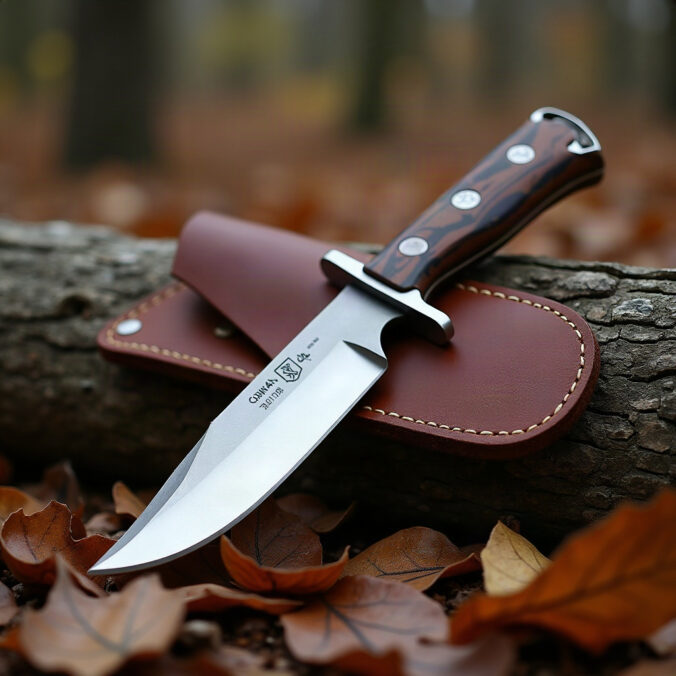
TL;DR: – Fixed blade knives outperform folders because they have no pivot points to fail and handle heavy field dressing without mechanical weakness
- S30V and D2 steel dominate the hunting market; 1095 carbon is easier to sharpen but requires immediate drying to prevent rust
- Drop point is the most versatile blade shape for general hunting; 4-inch blades balance reach and control for deer-sized game
- Budget hunters can achieve near-premium performance with the Mora Garberg (
$85) or ESEE-4 ($100) – both full-tang, field-proven designs - Synthetic handle materials (G10, Micarta) grip better in wet, bloody conditions than wood or bone
What Makes a Fixed Blade the Best Choice for Hunting?
A fixed blade has no moving parts to fail under pressure – that's the core advantage. According to American Gear Guide, "A folding knife will never be as strong nor reliable as a fixed blade". When you're working through a joint or prying against bone, a folder's pivot becomes a liability. A fixed blade distributes stress from tip to pommel as one continuous piece of steel.
Full-tang construction is non-negotiable for hunting. Dauntless Manufacturing explains that "Full tang construction runs the blade through the entire handle as a single piece, removing the weak points found in partial-tang designs". This matters when you're applying consistent pressure during field dressing or occasional torque against bone.
Fixed blades also clean easier than folders. No crevices where blood and tissue accumulate. No pivot to harbor bacteria. For hunters in CWD-positive zones, this matters – synthetic handles can survive full bleach decontamination, while wood or bone cannot.
Key Takeaway: Fixed blade knives eliminate mechanical failure points and simplify field sanitation. Full-tang construction is mandatory for any knife that will see hard hunting use.
How Do You Choose the Right Blade Steel for a Hunting Knife?
Steel grade is the single most consequential knife spec. It determines edge retention, corrosion resistance, and how easily you can sharpen in the field. Most hunting knives fall between 56 and 62 HRC. Within that range, the choice depends on your climate, hunting frequency, and willingness to maintain the blade.
Steel Comparison Table:
| Steel | HRC | Edge Retention | Corrosion Resistance | Field Sharpening | Best For |
|---|---|---|---|---|---|
| 440C | 57–59 | Moderate | Excellent | Easy | Budget, occasional hunters |
| 1095 Carbon | 58–60 | Good | Poor | Very Easy | Backcountry, frequent sharpening |
| D2 | 60–61 | Excellent | Semi-Stainless | Moderate | Caping, skinning, toughness |
| S30V | 59–61 | Excellent | Excellent | Moderate | Best all-around balance |
According to Knives of Alaska, "D2 is a time-tested choice for hunters needing toughness and long edge life. It's often considered the go-to for caping, skinning, and field processing, thanks to its semi-stainless properties and ability to hold a fine edge through repeated use".
440C Stainless: Budget-friendly and corrosion-resistant, but lower edge retention than premium steels. Adequate for occasional hunters who prioritize rust prevention over edge life.
1095 High Carbon: The workhorse of camp and hunting knives. Montana Knife Company notes that "The best steel for hunting knives is typically 60–62 HRC, which balances edge holding with toughness". 1095 takes an edge quickly on a simple whetstone, but leave it wet overnight and rust appears by morning. Not suitable for salt-water or marine environments without patina treatment.
D2 Tool Steel: Sits between stainless and carbon. Better corrosion resistance than 1095, but harder to resharpen without the right equipment. Excellent for hunters who process multiple animals per season and want maximum edge retention.
S30V Stainless: The sweet spot for most hunters. Hard enough to hold an edge through a full elk field dress, tough enough not to chip on bone, and corrodes far less than carbon alternatives. Requires diamond rod or fine ceramic for field touch-ups, but the extended edge life justifies the maintenance burden.
Key Takeaway: S30V offers the best balance of edge retention and corrosion resistance for most hunters. 1095 carbon wins on sharpenability but requires immediate drying after use. D2 excels for toughness and repeated use.
Best Fixed Blade Hunting Knives by Use Case (2026 Picks)
The right knife depends on your specific hunting task. A field dressing specialist differs from a backcountry multipurpose knife. Here's how to match the tool to the job.
Best for Field Dressing
Field dressing demands precision and control. You're working in tight spaces with a sharp blade inches from organs you don't want to puncture. A 3.5–4 inch blade gives you enough reach without the tip disappearing into the carcass.
The Havalon Piranta dominates this category. Replaceable surgical blades mean you're always working with a fresh, scalpel-sharp edge. The catch: you need to carry replacement blades and manage used sharps safely. This is the cheating option if you prioritize cutting performance above all else.
For a traditional fixed blade, a 4-inch drop point in S30V steel around $110 outperforms a 1095 carbon equivalent at $55 in edge retention per sharpening session. You'll resharpen the carbon blade twice as often, but it resharpens in seconds with a simple whetstone.
Best for Big Game Hunting
Big game (elk, moose) requires a knife that handles larger body cavities and tougher hide. A 4.5–5 inch blade reaches deeper into the chest cavity without requiring you to reposition constantly. Drop point remains the best shape – controlled belly and strong tip.
Rapid River Knife Works recommends that "For hunters who pursue multiple species, a 4-inch drop point covers deer-sized game well and handles most camp tasks without becoming a liability on smaller animals". For elk, add a half-inch.
A full-tang D2 or S30V blade at this length runs $120–$180. The investment pays off if you hunt multiple animals per season – edge retention means fewer sharpening interruptions in the field.
Best Budget Fixed Blade (Under $60)
The Buck 119 Special is the default hunting knife for a reason. According to American Gear Guide, "The Buck 119 is as classic as they come, having been introduced back in 1942!". It holds a serviceable edge, and Buck's Forever Warranty means you're covered for life. 420HC steel isn't premium, but it's adequate for occasional hunters.
For a more modern budget option, look at the Mora Garberg at approximately $85–$100. Full-tang 1095 carbon steel, proven field performance, and a price point that doesn't sting if you lose it in the field. The tradeoff: you'll sharpen it more frequently than S30V, and you must dry it immediately after use.
Best Premium Pick ($150 and Up)
The Benchmade Steep Country, with a CPM-S35VN blade at approximately $175, combines packable weight (2.9 oz) with premium steel performance. It's not a camp knife – the thin grind excels at skinning but won't handle batoning – but for pure hunting use it's nearly flawless.
At the ultra-premium tier ($250+), custom makers like Bark River and Busse offer hand-finished blades with exotic handle materials. The performance gain is marginal compared to mid-tier options, but the aesthetics and warranty justify the cost for collectors.
Best Backcountry Multipurpose Knife
The ESEE-4 at approximately $100–$120 is consistently cited as best-value for backcountry use. Full-tang 1095 steel, proven durability, and ESEE's no-questions-asked lifetime warranty. The real differentiator: they'll replace the blade with no questions asked. Combined with 1095's field sharpenability, it's hard to argue for spending more if you're carrying one knife for hunting, camp tasks, and emergency use.
Key Takeaway: Budget hunters achieve near-premium performance with Mora Garberg (
$85) or ESEE-4 ($100). Premium picks like Benchmade Steep Country ($175) add weight savings and premium steel but aren't necessary for occasional hunters.
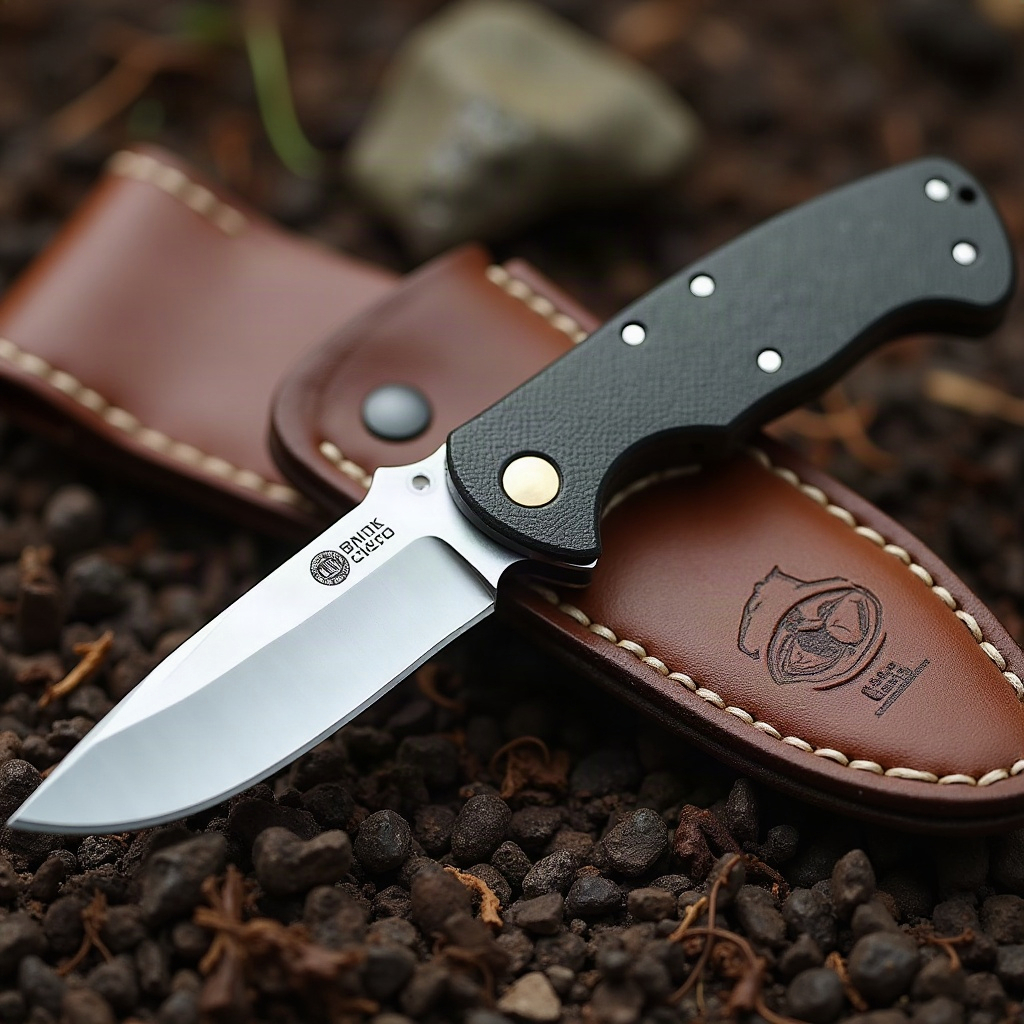
Blade Shape Breakdown: Drop Point vs. Clip Point vs. Skinning Blade
Drop point is the most versatile blade shape for hunting. It controls belly depth and protects against puncturing organs during field dressing. The strong tip resists breakage under lateral stress.
Drop Point: Controlled curve, strong tip, belly rises gradually. Best for field dressing, general camp tasks, and multipurpose use. The default choice for hunters carrying one knife.
Clip Point: Sharper, more acute tip for precision work around ears and eye sockets (caping). That same thin tip will snap if you torque it against bone. Not ideal as a single-tool hunting knife.
Skinning Blade: Upswept edge excels at hide separation but performs poorly at general camp tasks. Rapid River Knife Works explains that "A gut hook is a sharpened, semi-circular notch on the spine of the blade, positioned near the tip. It is designed for one specific task: opening the abdominal cavity of big game without the blade tip contacting internal organs". Dedicated skinners are best for hunters who carry multiple knives.
Gut Hook: Reduces accidental puncturing of the stomach cavity but requires a separate tool or technique for most other tasks. Gut hooks add thickness to the spine and most people only use them a few times a season. Opinion is divided in the hunting community on value versus single-blade simplicity.
Key Takeaway: Drop point is the most versatile blade shape for hunting. Clip point and skinning blades excel at specific tasks but sacrifice general-purpose utility.
Handle Materials and Ergonomics: What Actually Matters in the Field?
Your handle material determines grip performance when blood, fat, and cold combine. Natural materials look beautiful but fail in wet conditions.
G10 and Micarta: Maintain grip better than wood or bone in wet, bloody field conditions. Both materials survive full bleach decontamination, critical for CWD zones.
Rubber/Kraton: Grips best when wet but is harder to fully decontaminate. Porous surfaces trap prions and bacteria.
Wood, Bone, Stag: Aesthetically superior but become slippery when wet and are harder to fully decontaminate. Natural materials are porous – blood and prions can work into the grain. For CWD zones, synthetic handles that can survive a full bleach soak are strongly preferred.
Weight and balance matter for all-day carry. A 4-inch blade should weigh 3–5 ounces total. Anything heavier becomes a liability during long stalks.
Key Takeaway: Synthetic handle materials (G10, Micarta) grip better in wet conditions and survive bleach decontamination. Natural materials sacrifice field performance for aesthetics.
How to Maintain and Sharpen Your Hunting Knife Between Seasons
Sharpening frequency depends on steel type and hunting intensity. Rapid River Knife Works recommends that "For most hunters, a quality stainless steel in the 58-60 HRC range is the practical choice: corrosion resistance for field conditions, adequate edge retention for a full season, and sharpenable with a standard honing rod or sharpening stone".
Field Sharpening (3-Step Method):
- Stropping: Before each use, run the blade spine-first along a leather strop or canvas. This realigns the edge without removing steel. Takes 30 seconds.
- Ceramic Rod Touch-Up: After every 1–2 animals, use a fine ceramic rod at 15–20 degrees. 10–15 strokes per side. This removes micro-damage and restores sharpness without a full sharpening.
- Full Sharpening: Once per season or when ceramic rod no longer restores edge. Use a whetstone (1095 carbon) or diamond rod (S30V, D2). Takes 5–10 minutes depending on steel.
High Carbon Steel Maintenance: After every use, wipe clean, dry completely, and apply a thin coat of mineral oil. Skip that step once in a wet camp and surface rust appears within 24 hours. Food-safe mineral oil is required if the knife contacts game meat.
Stainless Steel Maintenance: Clean and dry. No oil required. Significantly lower maintenance burden.
Key Takeaway: Sharpen 1–2 times per season for occasional hunters. High carbon steel requires immediate drying and oiling; stainless requires only cleaning and drying.
Frequently Asked Questions About Fixed Blade Hunting Knives
What is the best blade length for a hunting knife?
Direct Answer: A 4-inch blade is optimal for most hunting tasks including field dressing deer. Longer blades (5–6 inches) increase fatigue and reduce control in tight body cavities; shorter blades (under 3 inches) lack reach for larger game.
Rapid River Knife Works states that "For hunters who pursue multiple species, a 4-inch drop point covers deer-sized game well and handles most camp tasks without becoming a liability on smaller animals". Elk and moose hunters may prefer 4.5–5 inch blades for reaching deeper into larger body cavities.
How much should you spend on a fixed blade hunting knife?
Direct Answer: Budget hunters can achieve field-proven performance at $85–$120 (Mora Garberg, ESEE-4). Premium options ($150–$250) add weight savings and premium steel but aren't necessary for occasional hunters. Ultra-premium custom knives ($250+) are for collectors.
The value inflection point is around $100–$120. Below that, you're trading edge retention and corrosion resistance for cost. Above that, you're paying for brand prestige, custom aesthetics, or marginal performance gains.
Is a fixed blade better than a folding knife for hunting?
Direct Answer: Yes. Fixed blades have no pivot points to fail under pressure and are easier to sanitize in the field. American Gear Guide confirms that "A folding knife will never be as strong nor reliable as a fixed blade".
Folders excel for EDC and lightweight backpacking. For hunting – where you apply consistent pressure and occasional torque – a fixed blade's structural integrity is non-negotiable.
What steel holds an edge the longest on a hunting knife?
Direct Answer: S30V and D2 hold edges longest, with S30V offering better corrosion resistance. Knives of Alaska notes that "D2 is a time-tested choice for hunters needing toughness and long edge life". Both run 60–61 HRC and require diamond rods for field touch-ups.
1095 carbon dulls faster but resharpens in seconds with a simple whetstone. The tradeoff is maintenance frequency versus sharpening difficulty.
Are gut hook knives worth it for field dressing?
Direct Answer: Gut hooks reduce accidental puncturing of the stomach cavity but add thickness to the spine and are only used a few times per season. Most hunters find a sharp drop point sufficient and prefer the simplicity of a single-blade design.
If you process 5+ animals per season and prioritize stomach cavity protection, a gut hook is worth considering. For occasional hunters, the added complexity isn't justified.
Can you use a fixed blade hunting knife for camp tasks?
Direct Answer: Yes, if you choose the right blade shape. Drop point fixed blades excel at camp tasks – splitting kindling, carving wood, food prep. Thin-ground blades (like the Benchmade Steep Country) are poor for batoning and heavy camp work.
Full-tang construction is mandatory for camp use. Partial-tang designs will fail under the stress of splitting wood or prying against a log.
What are the legal carry rules for fixed blade knives while hunting?
Direct Answer: Fixed blade knife carry laws vary significantly by state. Several states restrict blade length to under 3–4 inches outside of active hunting contexts, and hunting licenses do not universally exempt carry. Check your destination state's fish & game agency before traveling.
Many states allow hunting knives in the field but restrict the same blade in a vehicle or non-hunting public context. This is not legal advice – verify current laws with your state agency.
For personalized guidance on this topic, Knife Depot (https://knife-depot.com) can help you find the right approach for your situation.
Conclusion
Fixed blade hunting knives outperform folders because they eliminate mechanical failure points and simplify field sanitation. The steel you choose – 440C, 1095, D2, or S30V – determines edge retention, corrosion resistance, and maintenance burden. Drop point remains the most versatile blade shape for general hunting.
Budget hunters can achieve near-premium performance with the Mora Garberg or ESEE-4. Premium options like the Benchmale Steep Country add weight savings and premium steel but aren't necessary for occasional hunters. Synthetic handle materials grip better in wet, bloody conditions and survive bleach decontamination – critical for CWD zones.
The right hunting knife depends on your specific use case: field dressing, big game processing, backcountry multipurpose, or caping. Match the blade shape, steel grade, and handle material to your hunting frequency and climate. Sharpen 1–2 times per season for occasional hunters; high carbon steel requires immediate drying and oiling after use.
The breakdown of blade steels is helpful. I didn’t realize S30V was that much better at holding an edge than 1095. The tip about drying carbon steel immediately makes sense too. I’ve had rust show up on a carbon blade overnight before. The Mora Garberg at $85 seems like a solid deal for a full-tang knife.