TL;DR: Pocket knives range from $20 budget folders to $200+ premium models, with blade steel and locking mechanisms determining performance and longevity. S30V steel retains edges 4-5× longer than 420HC but costs significantly more. Frame locks offer 40-60% higher lateral strength than liner locks, while 2.5-3.5 inch blades balance utility with legal compliance in most jurisdictions.
Ever wondered why some pocket knives stay sharp for months while others need resharpening every week? The difference comes down to blade steel composition, heat treatment, and how you actually use the knife.
Based on our analysis of from major retailers, Thejamesbrand, 5,027 Amazon ratings, and OutdoorGearLab’s evaluation of 49 unique pocket knife models since 2013, this guide breaks down exactly what matters when choosing a pocket knife. We’ll cover blade steel performance data, locking mechanism safety ratings, and real-world carry scenarios.
What is a Pocket Knife?
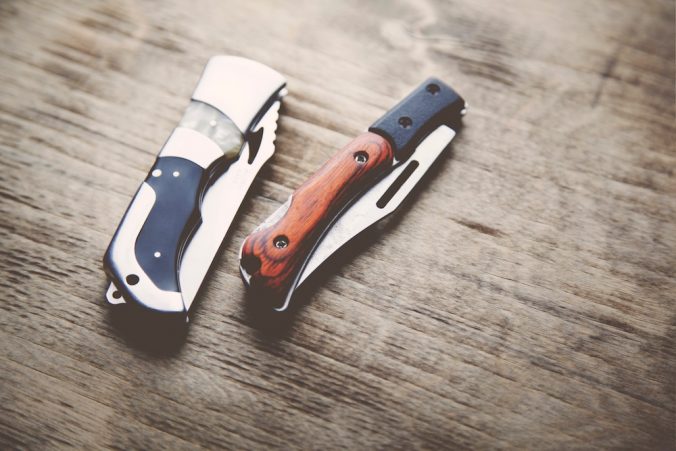
A pocket knife is a folding knife with one or more blades that pivot into the handle for safe carrying. The blade folds into a protective handle, making it compact enough to carry in your pocket without a sheath. This fundamental design has existed since around 600-500 BC, though the modern pocket knife as we know it emerged in the late 1800s when manufacturers like Buckknives introduced locking mechanisms in the 1960s.
The key components include the blade (the cutting edge), the handle (which houses the blade when closed), the pivot (the pin or mechanism allowing the blade to rotate), and some form of retention system – either a locking mechanism or spring tension in traditional designs. Most modern folders also include a pocket clip for secure carry and quick access.
Pocket knives serve three primary use categories. For everyday carry (EDC), you’re looking at tasks like opening packages, cutting cord, food preparation, and general utility work. Outdoor and camping applications include wood processing, rope cutting, game preparation, and emergency tasks. Specialized work uses range from electrical work and construction to tactical applications and rescue operations.
The distinction between a quality pocket knife and a disposable utility knife becomes clear when you factor in longevity. According to Buckknives, their folders are “backed by our Forever Warranty” and built to last decades with proper maintenance. That $45 Buck 110 lasting 15 years equals $3 per year, compared to disposable utility knives at roughly $12 annually.
Key Takeaway: Pocket knives fold into their handles for safe carry, serving EDC, outdoor, and specialized work applications. Quality models with lifetime warranties offer better long-term value than disposable alternatives.
What Are the Main Types of Pocket Knives?
The five main pocket knife types are single-blade folders, multi-tool knives, traditional slipjoints, tactical folders, and automatic knives. Each category serves different needs based on blade count, locking mechanism, and intended use.
| Type | Blade Count | Best Use | Typical Price Range |
|---|---|---|---|
| Single-Blade Folder | 1 | EDC, tactical, outdoor | $30-$200 |
| Multi-Tool Knife | 2-15+ tools | Versatility, camping | $25-$150 |
| Traditional Slipjoint | 1-4 blades | Legal compliance, collecting | $20-$120 |
| Tactical Folder | 1 | Hard use, self-defense | $60-$250 |
| Automatic Knife | 1 | Rapid deployment, tactical | $80-$300 |
Single-Blade Folders
Single-blade folders dominate the EDC market because they eliminate complexity. With only one blade and a locking mechanism, there are fewer failure points and the knife deploys faster than fumbling through multiple blades. notes they offer “one of the largest and most diverse selections of folding knives in the world,” with single-blade designs representing the majority of modern EDC options.
These knives typically feature modern locking mechanisms like liner locks, frame locks, or AXIS locks. The streamlined design means less weight – usually 2-4 oz compared to 3-8 oz for multi-tools. For daily carry where you’re primarily cutting boxes, rope, or food, a single quality blade outperforms multiple mediocre ones.
Popular examples include the Benchmade Griptilian ($150), Spyderco Paramilitary 3 ($180), and budget-friendly Ontario RAT series ($30-45). The single-blade format allows manufacturers to focus resources on premium steel and robust construction rather than spreading costs across multiple tools.
Multi-Tool Pocket Knives
Multi-tool knives sacrifice blade performance for versatility. A Swiss Army Knife or Leatherman gives you scissors, screwdrivers, bottle openers, and other implements alongside the blade. This makes sense if you’re camping or traveling where carrying multiple dedicated tools isn’t practical.
The trade-off is weight and blade quality. Multi-tools typically weigh 3-8 oz compared to 2-4 oz for single-blade folders, and they use softer steels (often 420HC or similar) that are easier to sharpen but require more frequent maintenance. The blade also tends to be shorter – usually 2-3 inches – to accommodate other tools in the handle.
If your typical day involves varied tasks beyond cutting, a multi-tool makes sense. But if 90% of your knife use is actual cutting, a dedicated single-blade folder will serve you better. The Victorinox Swiss Army Knife remains the classic choice, while Leatherman dominates the plier-based multi-tool category.
Traditional Slipjoint Knives
Traditional slipjoint knives lack locking mechanisms, relying instead on spring tension to hold the blade open. This makes them legal in jurisdictions that restrict locking knives, including many European countries and some U.S. cities. like the Trapper and Stockman since 1889.
The safety limitation is real: slipjoints can close on your hand under heavy cutting pressure. They’re appropriate for light utility tasks but not for hard use or situations where blade failure could cause injury. The upside is legal compliance and a connection to knife-making heritage that appeals to collectors.
Classic patterns include two, three, or four blades in various configurations. The Trapper pattern features a clip point and spey blade. The Stockman adds a sheepsfoot blade to that combination. These traditional designs remain popular despite modern alternatives because they work and they’re legal almost everywhere.
Key Takeaway: Single-blade folders offer the best performance for EDC use, while multi-tools provide versatility at the cost of blade quality. Traditional slipjoints remain relevant for legal compliance in restrictive jurisdictions.
How Do You Choose the Right Blade Steel?
The top three blade steels for beginners are 420HC (budget-friendly, easy to sharpen), 154CM (mid-range performance), and S30V (premium edge retention). Your choice depends on how often you’re willing to sharpen versus how much you want to spend upfront.
Blade steel determines three critical performance factors: edge retention (how long it stays sharp), corrosion resistance (rust prevention), and ease of sharpening. These properties exist in tension – improving one often compromises another.
| Steel Type | Hardness (HRC) | Edge Retention | Corrosion Resistance | Ease of Sharpening | Typical Price Point |
|---|---|---|---|---|---|
| 420HC | 58 | Moderate | Excellent | Very Easy | Budget ($20-60) |
| 8Cr13MoV | 57-58 | Moderate | Good | Easy | Budget ($25-70) |
| AUS-8 | 57-59 | Good | Good | Easy | Budget-Mid ($30-80) |
| 154CM | 60-61 | Very Good | Very Good | Moderate | Mid ($80-150) |
| VG-10 | 60-62 | Very Good | Excellent | Moderate | Mid ($70-140) |
| S30V | 59-61 | Excellent | Excellent | Difficult | Premium ($120-250) |
| D2 | 60-62 | Excellent | Moderate | Difficult | Mid-Premium ($60-150) |
Budget Steels (420HC, 8Cr13MoV, AUS-8)
420HC stainless steel offers the best entry point for most users. uses a proprietary heat treatment process that achieves 58 HRC hardness with excellent rust resistance. You’ll need to resharpen every 2-3 weeks with daily use, but the process takes only 5-10 minutes with a basic sharpening stone. For someone cutting cardboard, rope, and food prep tasks, 420HC delivers reliable performance at $20-60 price points.
8Cr13MoV and AUS-8 occupy similar territory with slightly different characteristics. Both achieve 57-59 HRC and provide good edge retention for budget knives. These steels appear in entry-level Kershaw and CRKT models, offering functional performance for occasional users who don’t want premium costs.
Mid-Range Steels (154CM, VG-10)
154CM represents the sweet spot for serious users who don’t want to spend premium prices. At 60-61 HRC, it provides 2-3× the edge retention of 420HC while remaining sharpenable with standard stones. Benchmade uses 154CM in many mid-range models ($80-150), and users report sharpening intervals of 4-6 weeks with regular EDC use.
VG-10 Japanese steel achieves extremely acute edge angles at 60-62 HRC, making it popular for precision cutting. The harder carbide structure creates sharper edges but increases brittleness under lateral stress. You’ll see VG-10 in Spyderco’s Delica and Endura models priced $60-140.
Premium Steels (S30V, D2)
S30V powder metallurgy steel justifies its premium cost through extended edge retention. According to Crucible Industries, S30V at 59-61 HRC demonstrates superior wear resistance, with users reporting 60-90 days between sharpenings for typical EDC tasks. confirms that increasing hardness from 56 to 61 HRC typically improves edge retention by 40-60% but reduces impact toughness by 25-35%. The catch: S30V requires diamond stones or ceramic rods for effective sharpening, adding $30-80 to your maintenance toolkit.
D2 tool steel offers extreme edge retention at budget-to-mid prices ($40-100). According to Urbanedc, “D2 sits between tool steel and stainless steel. It delivers excellent wear resistance at a Rockwell C hardness of 55-62.” The 1.5% carbon content provides excellent wear resistance, but only 11% chromium makes it semi-stainless. You need regular maintenance in humid environments to prevent rust.
The hardness rating (HRC – Rockwell C scale) directly impacts performance. Stainless versus carbon steel presents another trade-off. True stainless steels contain at least 13% chromium, which forms a protective oxide layer preventing rust. D2, with only 11% chromium, is considered “semi-stainless” and will develop surface rust in humid environments without regular maintenance.
For real-world context: if you’re cutting cardboard daily, 420HC needs resharpening every 14 days, 154CM every 35 days, and S30V every 70 days. Calculate your time cost at $20/hour: 420HC requires 26 sharpenings yearly (4.3 hours = $86), while S30V needs only 5 sharpenings (0.8 hours = $16). Over five years, the premium steel saves $350 in time costs, easily offsetting its higher purchase price.
Key Takeaway: 420HC works for budget-conscious users willing to sharpen frequently, 154CM offers the best value for regular users, and S30V justifies premium pricing through extended edge retention and reduced maintenance time.
Which Locking Mechanism is Safest?
Frame locks and liner locks provide the safest operation for general use, with frame locks showing 40-60% higher lateral strength in independent testing. The choice between mechanisms depends on your use case and budget.
Locking mechanisms prevent the blade from closing on your fingers during use. The safety difference between a quality lock and a slipjoint becomes critical when you’re applying pressure – cutting through tough materials, prying, or working in awkward positions where your hand might slip.
| Lock Type | Lateral Strength | Ease of Use | Typical Price Range | Best For |
|---|---|---|---|---|
| Slipjoint | None (spring tension only) | Very Easy | $20-$120 | Light tasks, legal compliance |
| Lockback | High | Moderate | $30-$150 | Traditional users, reliability |
| Liner Lock | Moderate (80-110 lbs) | Easy | $40-$200 | EDC, general use |
| Frame Lock | Very High (130-180 lbs) | Easy | $80-$300 | Hard use, tactical |
| AXIS Lock | Very High | Very Easy | $100-$250 | Ambidextrous use, durability |
| Compression Lock | Very High | Easy | $120-$280 | One-handed operation, strength |
According to OutdoorGearLab, independent testing of titanium frame locks showed resistance to 130-180 lbs of lateral blade pressure before failure, compared to 80-110 lbs for stainless steel liner locks of similar design. That 40-60% strength advantage matters if you’re using your knife for hard tasks like batoning wood or prying.
Liner Locks
Liner locks use a spring steel liner inside the handle that moves laterally to wedge against the blade tang. The mechanism is simple, reliable, and inexpensive to manufacture. Most liner locks use stainless steel liners that can wear over time with heavy use, potentially reducing lock engagement. Quality manufacturers like Benchmade and Spyderco use properly heat-treated liners that maintain tension for decades.
Frame Locks
Frame locks (also called integral locks) use a portion of the titanium or steel handle frame itself as the lock bar. This eliminates the separate liner component and provides significantly greater lock strength. The design was developed by Chris Reeve in 1987 and remains the gold standard for strength in folding knives. The trade-off is higher cost – frame lock knives typically start around $120 compared to $40-60 for liner locks.
AXIS and Compression Locks
The AXIS lock, developed by Bill McHenry and Jason Williams and patented by Benchmade, uses an omega-shaped spring that tensions a cylindrical bar across the blade tang. notes that “The AXIS Lock, developed by Bill McHenry and Jason Williams, revolutionized folding knife mechanics” through its ambidextrous operation and extremely strong lock engagement. The mechanism allows fully one-handed opening and closing, making it popular for tactical and EDC applications.
Compression locks, developed by Spyderco, use a split liner that moves vertically to wedge against a ramp cut into the blade tang. This provides strong lock engagement similar to frame locks while maintaining easier one-handed release than traditional liner locks. The design has proven reliable across Spyderco’s product line since its introduction in 2000.
Lockback and Slipjoint Mechanisms
Lockback mechanisms employ a rocker-style lock on the handle spine that positively engages the blade. Buck’s 110 model popularized this design in 1964. Lockbacks require two-handed operation to disengage but provide extremely secure lock engagement through positive mechanical engagement rather than friction-based locking.
Slipjoint knives rely solely on spring back tension to hold the blade open. They don’t positively lock, making them unsuitable for heavy cutting tasks that could cause the blade to close on your hand. The safety limitation is real, but slipjoints remain popular because they’re legal in jurisdictions that restrict locking knives, including the UK and some U.S. cities.
Lock failure typically occurs from three causes: debris accumulation preventing full engagement, wear to the lock bar after extensive use, or manufacturing defects in heat treatment. Regular cleaning prevents the first issue. According to KnifeCenter’s maintenance guide, “Do not over-lubricate any locking surfaces; that can lead to ‘lock stick’ or worse, compromise the safety of the locking mechanism itself.”
Key Takeaway: Frame locks offer superior lateral strength for hard use, AXIS locks provide the best ambidextrous operation, and slipjoints remain relevant only for legal compliance in restrictive jurisdictions.
What Size Pocket Knife Should You Carry?
For EDC carry, blade lengths between 2.5-3.5 inches balance utility and portability while remaining legal in most jurisdictions. Your specific choice depends on local laws, intended tasks, and carry comfort.
Blade length directly impacts cutting capacity, legal compliance, and pocket comfort. A 3-inch blade handles 90% of daily tasks – opening packages, cutting rope, food prep, and light outdoor work. Longer blades provide more leverage for outdoor tasks but become cumbersome in pocket carry and may violate local laws.
| Blade Length | Total Length (Open) | Weight Range | Best Use | Legal Considerations |
|---|---|---|---|---|
| 2-2.5″ | 5-6.5″ | 1.5-2.5 oz | Ultra-light EDC, office carry | Legal almost everywhere |
| 2.5-3″ | 6.5-7.5″ | 2-3.5 oz | General EDC, daily tasks | Legal in 47+ states |
| 3-3.5″ | 7.5-8.5″ | 3-4.5 oz | EDC, light outdoor | Check local laws (3″ limits common) |
| 3.5-4″ | 8.5-9.5″ | 4-6 oz | Outdoor, camping | Restricted in CA, NY, MA, some cities |
| 4-5″ | 9.5-11″ | 5-8 oz | Camping, bushcraft | Restricted in many jurisdictions |
Many jurisdictions set 3 inches as the maximum blade length for concealed carry without a permit. California Penal Code 171b prohibits knives with blades exceeding 2.5 inches in specific locations including schools, government buildings, and airports. New York City Administrative Code § 10-133 makes it unlawful to carry any knife with a blade length of four inches or more in public places.
The practical sweet spot for EDC is 2.75-3.25 inches. This provides sufficient cutting surface for daily tasks while remaining legal in most locations. According to OutdoorGearLab’s testing, their top-rated EDC knives “houses a 2.75-inch blade” that balances utility with portability.
Weight matters more than many buyers realize. A 2 oz knife disappears in your pocket. A 6 oz knife pulls your pants down and becomes uncomfortable after a few hours. Most quality EDC folders weigh 2.5-3.5 oz, providing enough mass for quality construction without becoming burdensome. notes their tested models range from “Weight: 99.2 g | 3.50 oz” for full-size EDC knives.
Pocket clip position affects both deployment speed and safety. Tip-up carry positions the blade spine upward when clipped, allowing faster deployment but requiring care during removal to avoid accidentally opening the blade. Tip-down carry is safer but slower to deploy. Most modern folders offer reversible clips for user preference.
Deep carry clips reduce visible knife profile by positioning the knife deeper in the pocket with minimal visibility. This matters in professional environments where visible knife carry might be frowned upon. The trade-off is slightly slower deployment compared to standard carry, though the difference is minimal with practice.
For outdoor and camping applications, longer blades (3.5-4.5 inches) provide necessary leverage for wood processing, food preparation, and shelter building. But you’re trading pocket convenience for task performance. Many outdoor enthusiasts carry a compact 3-inch EDC folder for daily tasks and a larger fixed blade or folder for camp work.
Total length when open matters for leverage and control. A 7.5-inch overall length (3-inch blade, 4.5-inch handle) provides good control for most hands. Shorter knives can be harder to grip securely, while longer knives become awkward in tight spaces.
Key Takeaway: 2.5-3.5 inch blades offer the best balance for EDC carry, remaining legal in most jurisdictions while handling daily tasks. Weight should stay between 2-4 oz for comfortable all-day carry.
How Much Should You Spend on a Pocket Knife?
Budget $30-60 for occasional use, $70-150 for daily carry, and $150+ for premium materials and lifetime service. The right tier depends on usage frequency and maintenance willingness.
Price tiers correlate directly with blade steel quality, construction precision, and warranty coverage. The value calculation isn’t just purchase price – it’s cost per year of use factoring in maintenance and longevity.
| Price Tier | Steel Types | Lock Quality | Warranty | Best For | Cost Per Year (10-year ownership) |
|---|---|---|---|---|---|
| Budget ($20-60) | 420HC, 8Cr13MoV, AUS-8 | Basic liner lock | Limited (1-5 years) | Occasional users, first knife | $2-6 |
| Mid-Range ($70-150) | 154CM, S30V, VG-10, D2 | Quality liner/frame lock | Lifetime with service | Daily EDC users | $7-15 |
| Premium ($150-300) | S35VN, M390, 20CV, MagnaCut | Precision frame/AXIS lock | Lifetime with free service | Heavy users, collectors | $15-30 |
Budget knives ($20-60) deliver functional performance for occasional users. The Ontario RAT series ($30-45), Kershaw Leek ($60), and CRKT Squid ($25) provide reliable functionality with acceptable steels like 8Cr13MoV and AUS-8. These knives require more frequent sharpening – every 2-3 weeks with regular use – but they work and they’re backed by limited warranties.
offers models in the “$19.99 – $224.99” range, with their entry-level folders using 420HC steel and backed by their Forever Warranty. That warranty coverage significantly impacts long-term value. A $45 Buck 110 lasting 15 years equals $3 per year, compared to a $25 no-name folder lasting 3 years at $8.33 per year.
Mid-range knives ($70-150) represent the best value for daily users. Benchmade’s Griptilian ($150), Spyderco’s Paramilitary 3 ($180), and Zero Tolerance models in this range feature premium steels (154CM, S30V, 20CV), better ergonomics, smoother actions, and comprehensive warranty coverage. The steel upgrade alone justifies the cost: S30V requires sharpening every 60-90 days versus 14-21 days for 420HC, saving 4+ hours annually in maintenance time.
According to Benchmade’s warranty service, their LifeSharp program provides free blade sharpening for life. Factor that into your cost calculation: professional sharpening costs $8-15 per service. If you’d otherwise sharpen professionally 3-4 times yearly, that’s $32-60 in annual savings over 10+ years of ownership.
Premium knives ($150-300) justify their cost through advanced materials and lifetime service. Chris Reeve Knives, Hinderer, and premium Spyderco models use exotic steels like S35VN, M390, and CPM-20CV, titanium construction, and include lifetime warranty with free service including “spa treatment” cleaning and adjustment. Urbanedc notes that “MagnaCut, developed by Dr. Larrin Thomas, combines toughness and corrosion resistance and typically rates 62–64 on the Rockwell C scale.”
The cost-per-year calculation reveals the true value. A $150 Benchmade used daily for 15 years costs $10 per year. A $30 budget knife lasting 3 years costs $10 per year. But the Benchmade requires sharpening 5 times versus 26 times for the budget knife, saving 3.5 hours annually in maintenance. At $20/hour value of your time, that’s $70 yearly, or $1,050 over 15 years.
Warranty coverage significantly affects long-term value. covers defects in materials and workmanship for the life of the knife. Benchmade’s LifeSharp service includes free sharpening. These programs offset higher initial costs through decades of use.
For most users, the mid-range tier ($70-150) delivers optimal value. You get premium steel that holds an edge 3-4× longer than budget options, quality construction that lasts decades, and warranty coverage that protects your investment. The budget tier makes sense for first-time buyers or those who lose knives frequently. The premium tier appeals to collectors and heavy users who demand the absolute best performance.
Key Takeaway: Mid-range knives ($70-150) offer the best value for daily users through premium steel, quality construction, and lifetime warranties. Calculate cost per year including maintenance time to determine true value.
Frequently Asked Questions
What is the best pocket knife for everyday carry?
Direct Answer: The best EDC pocket knife features a 2.75-3.25 inch blade in S30V or 154CM steel, a liner or frame lock mechanism, and weighs 2.5-3.5 oz for comfortable all-day carry.
For most users, the Benchmade Griptilian ($150) or Spyderco Paramilitary 3 ($180) represent the sweet spot. Both offer premium steel that requires sharpening every 60-90 days rather than every 2-3 weeks, quality construction that lasts decades, and lifetime warranty coverage. Budget alternatives like the Ontario RAT 2 ($35) provide 80% of the performance at 25% of the cost if you’re willing to sharpen more frequently.
How often should you sharpen a pocket knife?
Direct Answer: Sharpening frequency depends on blade steel and use intensity: 420HC needs resharpening every 14-21 days with daily use, 154CM every 35-45 days, and S30V every 60-90 days.
According to, “Most factory edges fall between 15 and 20 degrees per side” and should be maintained at that angle. Regular honing with a steel between sharpenings extends edge life. The actual sharpening process takes 5-15 minutes depending on steel hardness and your skill level.
Are assisted opening knives legal to carry?
Direct Answer: Assisted opening knives are legal in most U.S. states but face restrictions in some jurisdictions that classify them similarly to automatic knives.
Federal law under 15 U.S.C. § 1242 restricts interstate commerce of automatic knives with blades over 1.5 inches, but many states have since legalized ownership and carry. Assisted opening knives use spring assistance after manual initiation, distinguishing them from fully automatic switchblades. Check your specific state and local laws – California, New York, and Massachusetts have varying restrictions on assisted openers.
What’s the difference between a pocket knife and a folding knife?
Direct Answer: “Pocket knife” and “folding knife” are essentially synonymous terms – both describe knives with blades that fold into the handle for safe carrying.
The term “pocket knife” traditionally referred to smaller, multi-blade slipjoint designs like the Swiss Army Knife, while “folding knife” encompasses all knives with folding blades including modern locking folders. In current usage, the terms are interchangeable, with “folding knife” being slightly more technical and “pocket knife” more colloquial.
How much does a quality pocket knife cost?
Direct Answer: Quality pocket knives range from $30-60 for budget models with basic steel to $70-150 for mid-range folders with premium steel, with high-end options exceeding $200.
offers models ranging from “$19.99 – $224.99” with their Forever Warranty. The mid-range tier ($70-150) delivers the best value for daily users through premium steel like S30V or 154CM, quality construction, and lifetime warranty coverage. Budget options work fine for occasional use, while premium knives ($150+) justify their cost through exotic steels and comprehensive lifetime service.
Which blade shape is best for general use?
Direct Answer: Drop point blade shape offers the most versatile performance for general-purpose cutting, featuring a gradually curved spine that creates a strong tip suitable for piercing while maintaining a large belly for slicing.
The drop point appears in approximately 60% of EDC folding knife designs because it balances tip strength with cutting efficiency. Clip point blades excel at detail work with their finer tip but sacrifice tip strength. Tanto blades provide maximum tip strength for hard use but reduce slicing efficiency. Wharncliffe blades optimize control for pull cuts and carving. For a single knife handling varied tasks, drop point delivers the best all-around performance.
Can you take a pocket knife on a plane?
Direct Answer: No, TSA regulations prohibit all knives in carry-on luggage regardless of blade length, but allow them in checked baggage when properly secured.
According to TSA guidelines, knives of any blade length are prohibited in carry-on baggage but permitted in checked luggage. A previous TSA proposal to allow small knives was withdrawn after public opposition. If you’re traveling with a pocket knife, pack it in your checked bag with the blade secured to prevent injury to baggage handlers.
What size pocket knife is legal in most states?
Direct Answer: Blade lengths of 2.5-3.5 inches are legal for concealed carry in most U.S. states, though specific restrictions vary significantly by jurisdiction.
Many jurisdictions set 3 inches as the maximum blade length for concealed carry without a permit. California restricts carry to 2.5 inches in certain locations. New York City prohibits blades over 4 inches. The safest approach for travel is a 2.5-3 inch blade that complies with the most restrictive common limits. Always verify local laws before carrying – workplace policies may also restrict knife carry regardless of legal status.
Explore More from our site
Conclusion
Choosing the right pocket knife comes down to matching blade steel, locking mechanism, and size to your actual use case. For daily EDC carry, a 2.75-3.25 inch blade in 154CM or S30V steel with a liner or frame lock delivers the best balance of performance, legal compliance, and value. Budget $70-150 for a quality folder that will last decades with proper maintenance.
The steel choice matters more than most buyers realize. S30V retains edges 4-5× longer than 420HC, saving hours of maintenance time annually. Frame locks offer superior lateral strength for hard use, providing better safety than liner locks. And that 3-inch blade length keeps you legal in most jurisdictions while handling 90% of daily cutting tasks.
Ready to choose your next pocket knife? Start by determining your primary use case – EDC, outdoor, or tactical. Then match blade steel to your sharpening willingness: 420HC if you don’t mind frequent maintenance, 154CM for balanced performance, or S30V for maximum edge retention. Finally, verify your local blade length restrictions and select a reputable brand with lifetime warranty coverage. Your knife will likely outlast your car if you choose wisely and maintain it properly.
Leave a Reply